

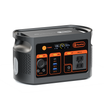
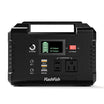

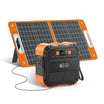
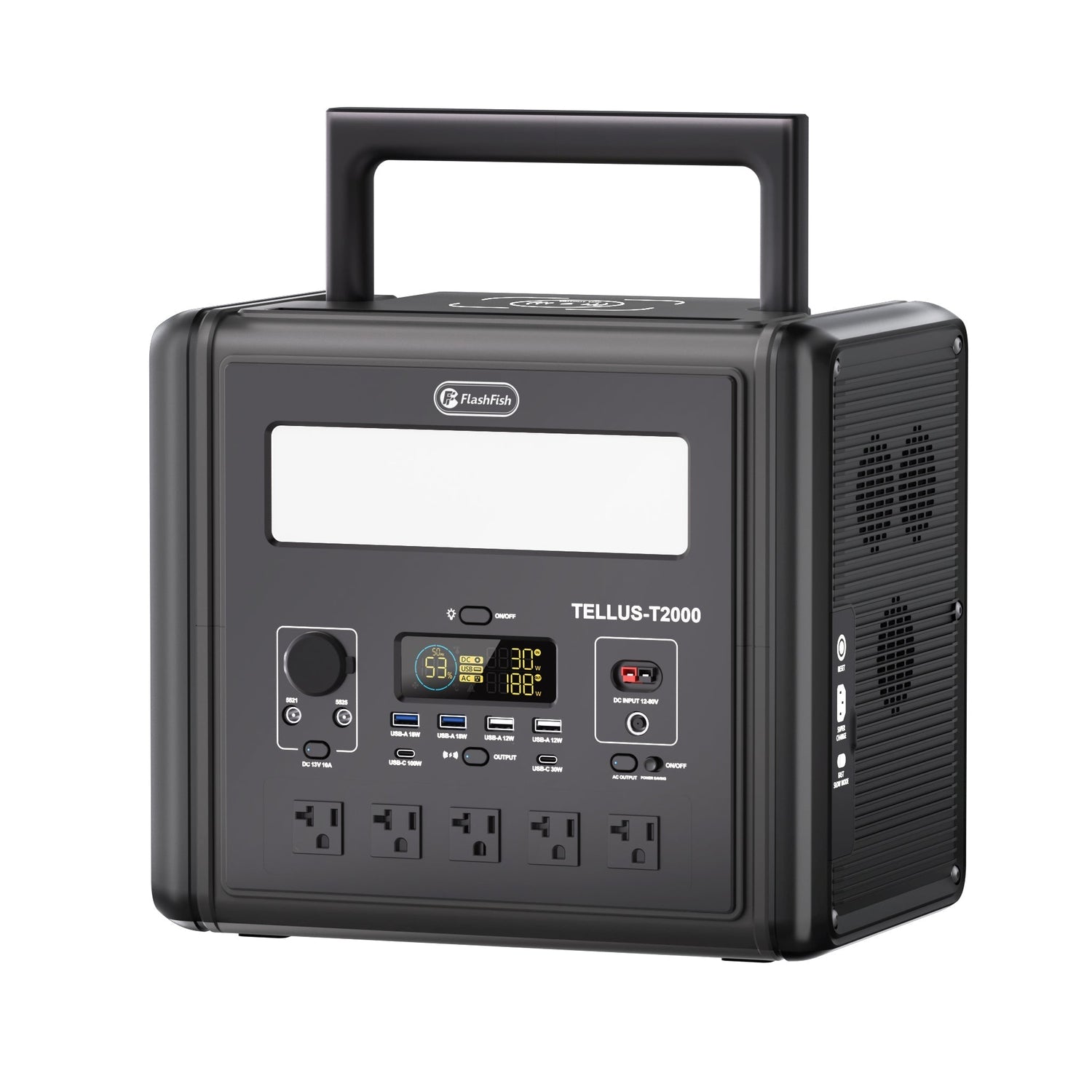
Short answer: Choose a portable power station when you need quiet, battery-based power for electronics, lights, Wi-Fi, fans, and short outage essentials. Choose a gas generator only when you need sustained high output and can run it safely outdoors, far from doors, windows, vents, garages, and living spaces.
The decision is less about which technology is "better" and more about what you need to power, where you will use it, and how safely you can operate it. CDC power outage guidance is clear that gasoline-powered engines and other fuel-burning devices can create carbon monoxide hazards in enclosed or partly enclosed spaces.
Quick comparison
| Question | Portable power station | Gas generator |
|---|---|---|
| Indoor use | Battery-based, no engine exhaust; still follow product ventilation and temperature limits | Do not use indoors, in garages, or near openings because of carbon monoxide risk |
| Noise | Quiet enough for many campsites and home use | Engine noise can conflict with quiet hours and neighbors |
| Fuel | Stores electricity; recharge from wall, solar, or compatible vehicle charging | Requires gasoline or propane and safe fuel storage |
| Best loads | Phones, laptops, router, lights, TV, fan, small appliances within output limits | Longer high-draw work when outdoor operation is safe and allowed |
| Maintenance | Battery care and periodic charging | Engine maintenance, fuel management, oil, and safe exhaust placement |
When a battery power station is the practical choice
A portable power station is usually the cleaner fit for apartment backup, campground quiet hours, home-office outages, and overnight essentials. It stores power for targeted use rather than trying to run a whole home. That makes load selection important: phones, laptops, a router, LED lights, and a fan are very different from a central AC, electric range, or large power tool.
Competitor content from EcoFlow and Jackery shows the same market pattern: shoppers are comparing quiet battery systems with fuel generators for RV, camping, and outage use. FlashFish should answer that comparison with realistic boundaries instead of treating a power station as a universal generator replacement.
When a gas generator may still make sense
A gas generator may be more appropriate for sustained outdoor high-draw work when local rules, fuel storage, noise, weather, and carbon monoxide safety are handled correctly. It is not a safe indoor backup. CDC guidance says generators and gasoline-powered engines should not be used inside homes, basements, garages, or close to windows, doors, and vents.
FlashFish product fit
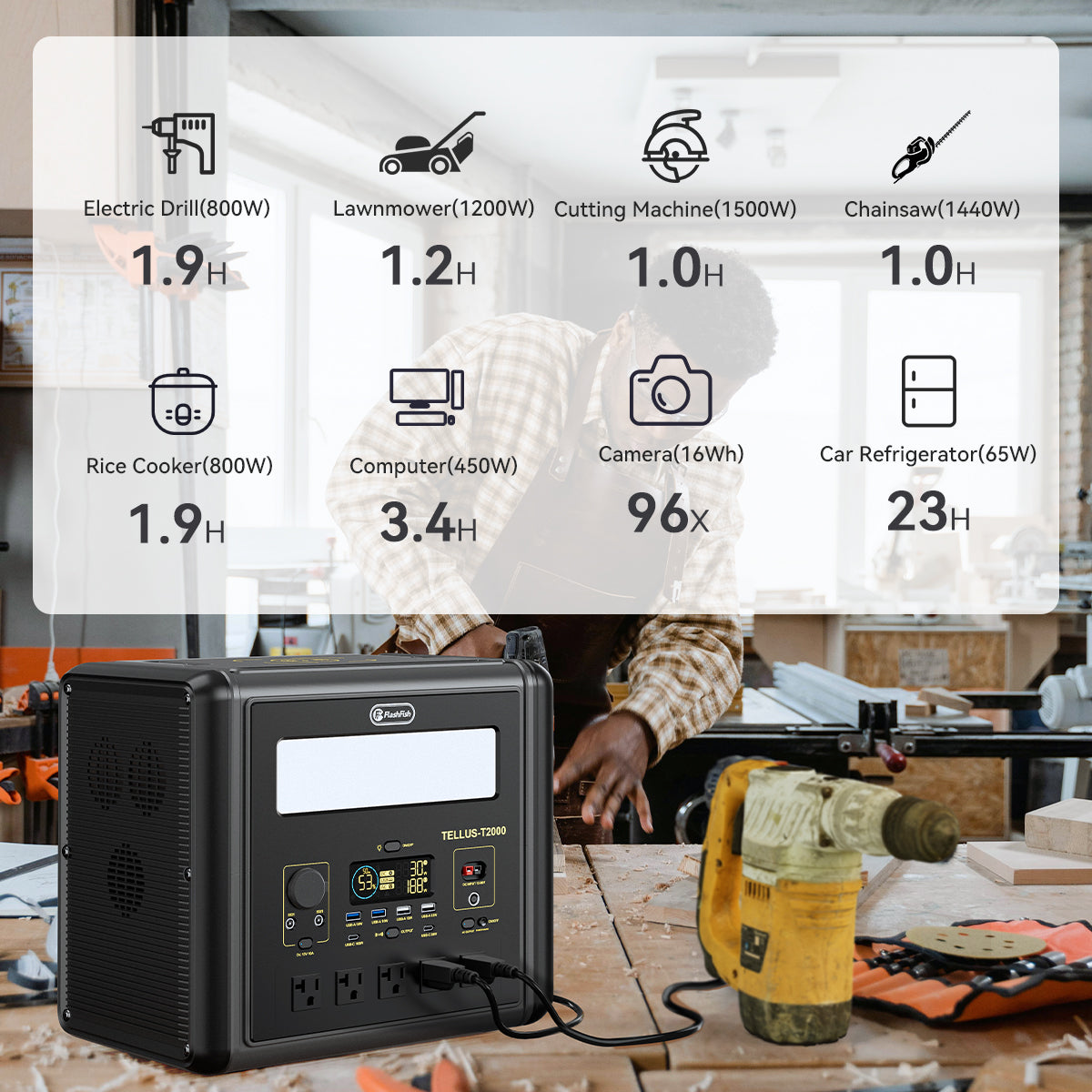
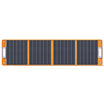
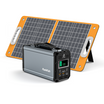
For targeted battery backup, the FlashFish T2000 Portable Power Station lists 2000W output and 1536Wh capacity for larger verified loads. The FlashFish T1200S Portable Power Station lists 1200W output and 768Wh capacity for smaller outage and camping plans. For daylight recovery, review the FlashFish solar generator kits and compatible solar panel options before assuming any panel-station pairing.
Decision checklist
- List the exact devices you need before shopping for power.
- Add running watts and check startup surge for motor loads.
- Use battery Wh x 0.85 / load watts as a planning estimate, not a guarantee.
- Choose battery power for quiet, targeted essentials.
- Use any fuel generator only outdoors and according to safety guidance and local rules.
- Test the setup before storms, camping trips, or RV travel.
FAQ
Is a portable power station the same as a generator?
No. A portable power station stores electricity in a battery. A fuel generator produces electricity by running an engine. A power station can become part of a solar generator kit when paired with compatible solar panels.
Can a power station replace a gas generator?
It can replace a generator for many short, targeted loads, but not for every high-draw or whole-home situation. Match the device watts, surge, and required runtime first.
Can I use a gas generator indoors if a window is open?
No. Follow CDC guidance: fuel-burning generators and gasoline-powered engines should stay outside and away from openings because carbon monoxide can be deadly.
Sources and product links
- CDC power outage safety guidance
- CDC carbon monoxide guidance
- Competitor signal: EcoFlow portable generator vs power station guide
- Competitor signal: Jackery RV power station vs generator guide
- FlashFish portable power stations collection
Human review checklist
- Confirm T2000 and T1200S product specs and U.S. availability.
- Keep gas-generator safety language prominent and source-backed.
- Confirm the article does not imply whole-home backup.
- Preview tables, links, and image on mobile.

Hinterlasse einen Kommentar
Diese Website ist durch hCaptcha geschützt und es gelten die allgemeinen Geschäftsbedingungen und Datenschutzbestimmungen von hCaptcha.