


Check storage before adding a battery to an interview kit. A supported session length requires the exact recorder's documented format, approved media, available space, and recording limits. If any of those are unknown, storage feasibility remains unresolved. Extra portable power does not establish that a recording will fit or that the recorder can finish saving it.
For a non-sensitive hobby interview, make the storage decision separately from the charging decision. This worksheet helps identify the missing evidence. No recorder model, media observation, or completed recording test is supplied here, so the examples illustrate the worksheet rather than approve an actual setup.
Define the recording you intend to keep
Write down the recorder model and firmware version, the selected format, the number of recorded tracks, and the planned duration of each take. Copy the media model and capacity from the actual item. Then find the recorder manufacturer's documentation for that medium and recording mode. A card's printed capacity alone does not establish that this recorder supports it.
Keep three questions separate: Is the medium supported? Is enough space available for the planned material? Does a file or session limit interrupt the intended take? An answer to one leaves the others open. Record the manual page beside each answer so that someone reviewing the plan can tell which mode it covers.
| Field | Evidence to record | Leave unresolved when |
|---|---|---|
| Recorder and format | Exact model, firmware, mode, tracks, and manual page | The documented mode differs from the selected mode |
| Approved medium | Media identity and the OEM's applicable compatibility statement | Only the connector or printed capacity matches |
| Available space | Actual free-space observation, its units, and observation time | Only nominal card capacity is known |
| Recording rate | Documented fixed total rate or clearly bounded observations | Rate variability, tracks, or overhead are unspecified |
| Take and file limits | Planned duration and documented file/session boundaries | Rollover or finalization behavior is undocumented |
| Decision | Supported planning estimate, unresolved limit, or insufficient space | A missing field has been filled by assumption |
Use a fixed-rate estimate only within its boundary
For a format with a documented fixed total rate, the payload calculation is bits per second multiplied by seconds, divided by eight to express bytes. This arithmetic accounts only for the stated payload. Keep headers, metadata, additional tracks, reserved space, and file limits as separate items. If the documentation does not quantify them, the worksheet cannot declare a complete storage margin.
Preserve units throughout the calculation. In this worksheet, decimal GB means 1,000,000,000 bytes, while GiB means 1,073,741,824 bytes. A free-space display with an unexplained unit is an unresolved input. Do not compare its bare number with a byte estimate and call the difference available headroom.
A variable-rate format needs its own documented planning method. An observation from one recording can be logged with its settings and duration, but it does not become a guaranteed rate for a different session. Likewise, available media space is independent of a portable station's stored energy.
Three hypothetical worksheet cases
Hypothetical example 1: the payload fits, but total headroom is unknown
Assume fictional documentation specifies a fixed total payload rate of 1,000,000 bits per second. A 30-minute take contains 1,800 seconds, giving 225,000,000 payload bytes, or 0.225 decimal GB. If the observed free space is 300,000,000 bytes, the payload difference is 75,000,000 bytes. With overhead and finalization requirements missing, that difference does not approve the take.
Hypothetical example 2: the format changes
A reader has a file-size observation for one track, then plans a different multitrack mode. Keep the old observation attached to its original mode. Mark the new mode's total rate unknown rather than copying the old estimate or assuming an undocumented multiplier.
Hypothetical example 3: the long take has an unresolved limit
A planned interview appears to fit the available space, but the exact recorder's continuous-session limit and file rollover behavior have not been documented. Mark the continuous-take decision unresolved. Splitting, stopping, and finalizing a recording require that recorder's own instructions; this worksheet supplies no button sequence.
Where FlashFish model selection belongs
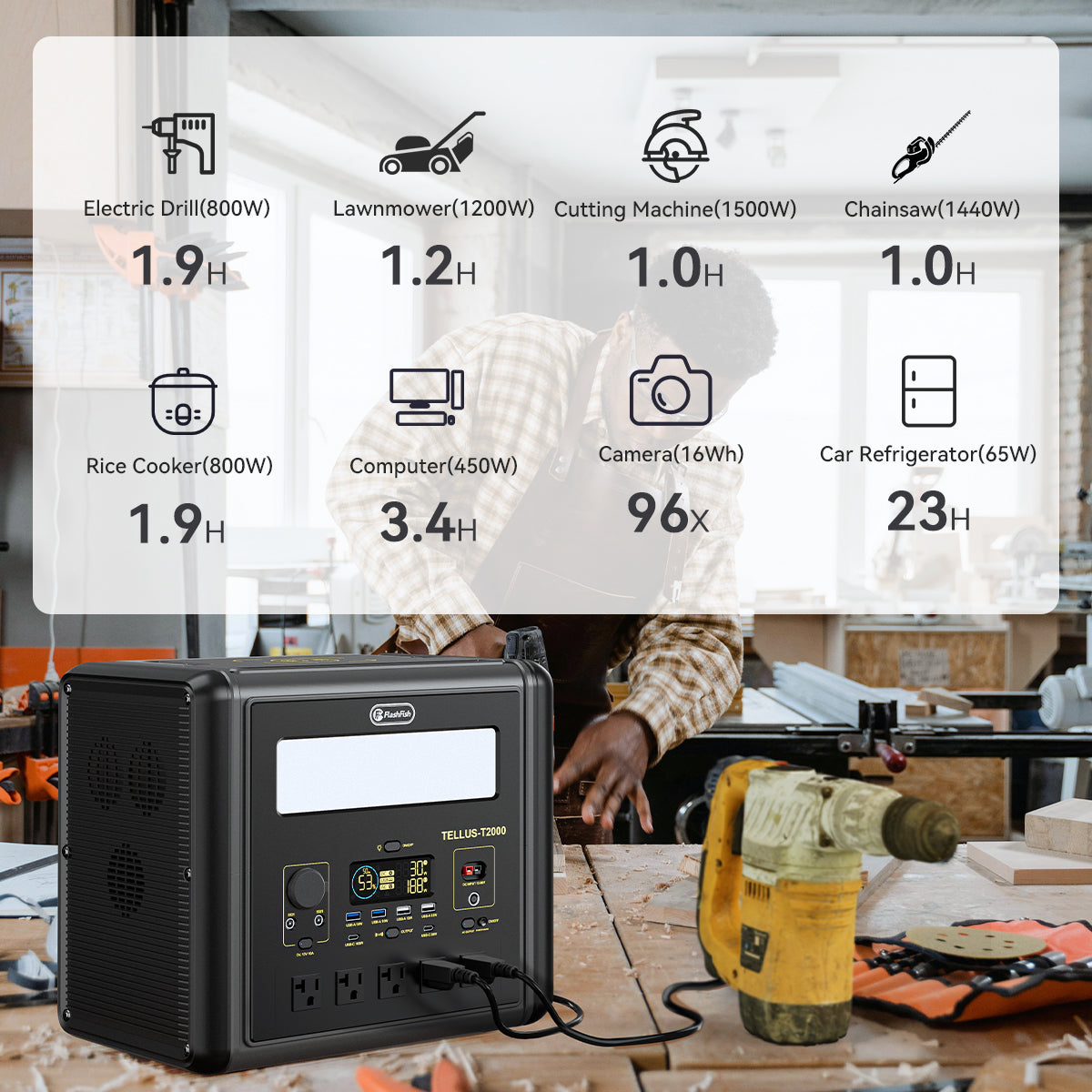
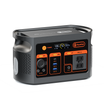
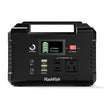
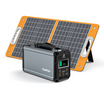
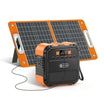
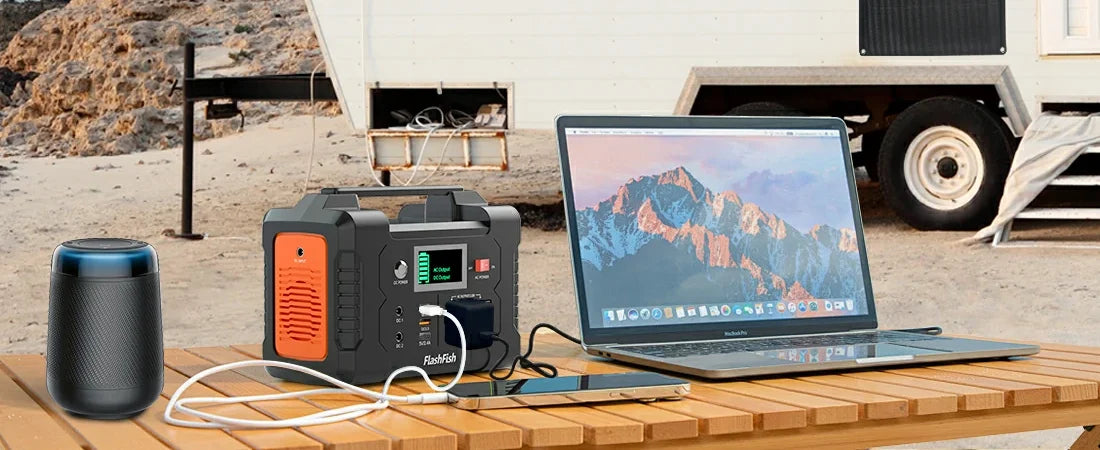
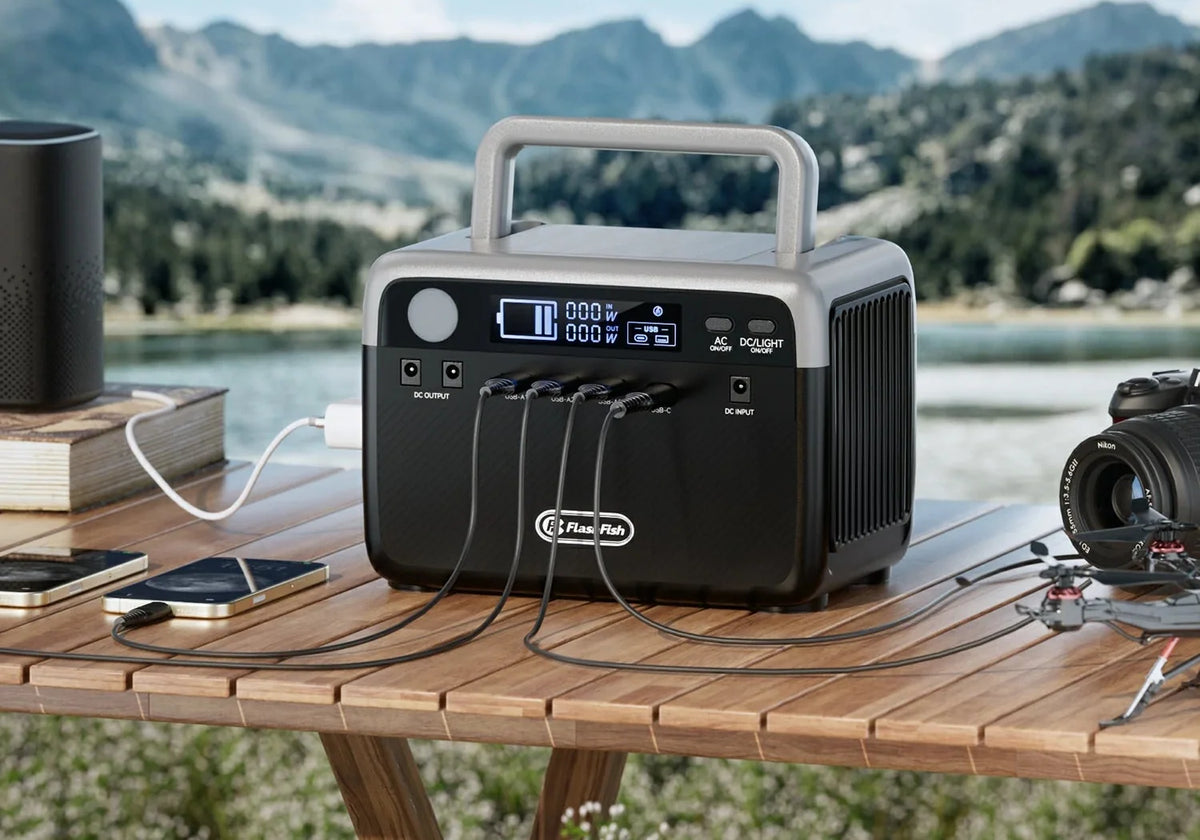
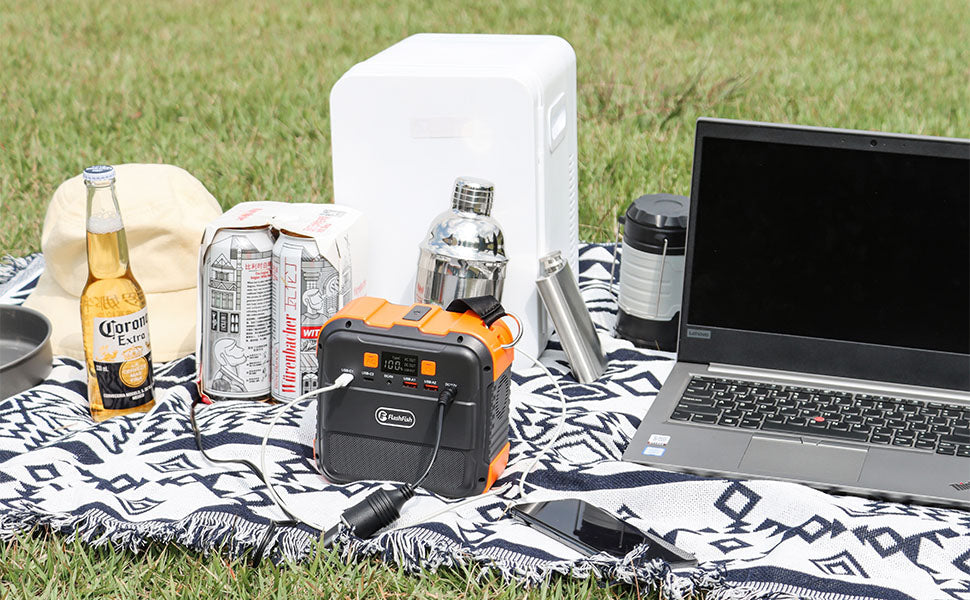
FlashFish E200 has a nominal capacity of 151Wh; E103 has a nominal capacity of 179.2Wh. Those figures describe stored energy; neither establishes recording storage, file duration, or recorder compatibility. The available E103 reference manual describes a 230V AC configuration. Confirm a U.S. unit's version from its own label and matching instructions.
After the storage worksheet is complete, a separate power review can compare the exact recorder's permitted input with the actual station, cable, and adapter documentation. To resolve this interview's storage decision, you still need the exact recorder identity, approved media, free space, and session limit. No recording runtime or charging pairing is established here.
Frequently asked questions
Can I use the card's printed capacity as free space?
Enter an actual free-space observation with units. Printed capacity does not answer how much space is currently available to this recording plan.
Does a larger power station let me record longer?
It does not resolve media or file limits. Any power-duration estimate also needs a separate device-specific assessment.
What if I cannot find the recorder's format limits?
Keep the limit unknown and request documentation for the exact recorder and selected mode. Do not convert an unsupported session into a supported one by adding a storage or battery allowance.
Complete the storage decision first
Fill in one row for each planned recording mode today. Record the unresolved items beside the relevant manual questions, without including private interview content. Once storage feasibility is documented, compare the exact FlashFish model's specifications with the separate power requirements.
For the separate station check, use FlashFish user guides to locate instructions matching the model and electrical version on your unit.
Next step: Compare FlashFish E200 specifications with your equipment list.

Hinterlasse einen Kommentar
Diese Website ist durch hCaptcha geschützt und es gelten die allgemeinen Geschäftsbedingungen und Datenschutzbestimmungen von hCaptcha.