



Compare an electric-site surcharge with a portable battery plan only after the two campsite offers match on dates, occupancy and material non-power features, and the battery plan is independently feasible for your tasks. If the sites differ in location, facilities or booking terms, record the difference as a total accommodation-price difference. You have not isolated what electricity costs.
This method is for U.S. campers comparing dated official offers for ordinary personal-device tasks. No campground quote, equipment offer or verified device plan was supplied for this article. All dollar figures below are hypothetical arithmetic examples, not FlashFish prices, typical campsite fees or predictions of savings.
First decide whether the sites are actually comparable
Save both official offers with their capture date and the exact trip dates. Match the number of nights, people, vehicles, site type, required fees and applicable taxes. Check the cancellation terms and whether the quoted total includes everything you would have to pay.
Next compare non-power features that matter to your group: location within the campground, space, surface, access and included facilities. If a powered site has a feature the non-electric site lacks, its higher price may reflect more than electricity. Do not assign that feature an invented dollar value just to make the spreadsheet produce a result.
The cleanest evidence is an explicit electricity add-on for the same otherwise equivalent reservation. Otherwise, retain a comparability check alongside the two offers. Where a material difference cannot be separated, mark the electricity premium as unisolated and compare the accommodation choices on their full merits.
| Field | What to record | Reason to withhold a result |
|---|---|---|
| Trip and offer dates | Stay dates, nights and quote capture date | Different dates or an expired offer |
| Equivalent site attributes | Occupancy, vehicles, site type, location and facilities | A material non-power difference |
| Electric and non-electric totals | Official totals on the same fee and tax basis | Required charges missing from one offer |
| Power-use rules | Applicable official permission for the intended tasks | Use not established as permitted |
| Battery plan | Exact station, charging paths, tasks and energy evidence | Compatibility or trip coverage unresolved |
| Ownership or purchase basis | Future cash for owned equipment, or a dated purchase total | Mixing a sunk purchase with a new purchase |
| Comparable result | Conditional electricity premium, or unisolated difference | A failed comparability or feasibility check |
Check permission and task feasibility independently
A lower accommodation quote does not establish permission to use your intended equipment there. Read the rules for the actual campground and dates; do not infer them from the words non-electric. If the rule is unclear, leave that check unresolved until the operator supplies an answer.
Separately list each device, its charging path, intended use and the evidence that the selected battery plan can cover it. Include the starting charge and any replenishment the plan requires. Nominal Wh is not measured delivered energy, and a port's maximum W rating is not a trip-energy budget.
If the battery plan cannot support the agreed tasks, comparing its purchase price with the site fee does not make the options equivalent. Revise the tasks only if the group accepts that change. Otherwise, keep the powered-site option and the incomplete battery option in different categories until feasibility is established.
Choose the correct equipment cost basis
For a new purchase, record the dated exact-model total, required accessories, shipping and applicable tax. Include any other incremental expense actually needed for the trip. Avoid assuming future resale proceeds, a discount or a replacement interval without evidence.
For equipment you already own, separate the historical purchase from future cash outlays. The original payment has already happened, but preparing the equipment for another trip may still require spending. A future-cash comparison and a full ownership-cost comparison answer different questions; label which one you are making.
For genuinely equivalent trips, add the documented electricity premiums over the stated schedule. Compare that sum with the equipment cost on the chosen basis. If a simplified crossover uses a constant per-trip premium, state that assumption explicitly. Future fees, trip frequency and equipment life remain unknown rather than silently fixed.
Three hypothetical comparisons
Example 1: Equivalent offers, new purchase. Assume each of six equivalent two-night trips has official totals of $120 electric and $96 non-electric, with all required site charges included. The hypothetical premium is $24 per trip, or $144 over six trips. Assume a separately feasible new equipment plan costs $180 all-in. Its upfront cost exceeds that schedule's premiums by $36. At a constant $24 premium, seven trips total $168 and eight total $192; this simplified comparison crosses the $180 cost on trip eight. That is conditional arithmetic, not a savings promise.
Example 2: Different amenities. Assume a powered waterfront site totals $150 and an inland non-electric site totals $100. The $50 difference is real within the hypothetical offers, but electricity's share is unisolated. Do not use $50 as a per-trip electricity premium or calculate a battery payback from it.
Example 3: Existing battery, future cash. Assume an already owned and independently feasible battery plan needs $12 of incremental preparation spending for one trip. Equivalent site offers differ by $20, with all other relevant future cash costs equal in this simplified example. The battery path uses $8 less future cash for that trip. This does not prove that the original battery purchase has paid for itself.
Where E103 and T300Pro belong in the worksheet
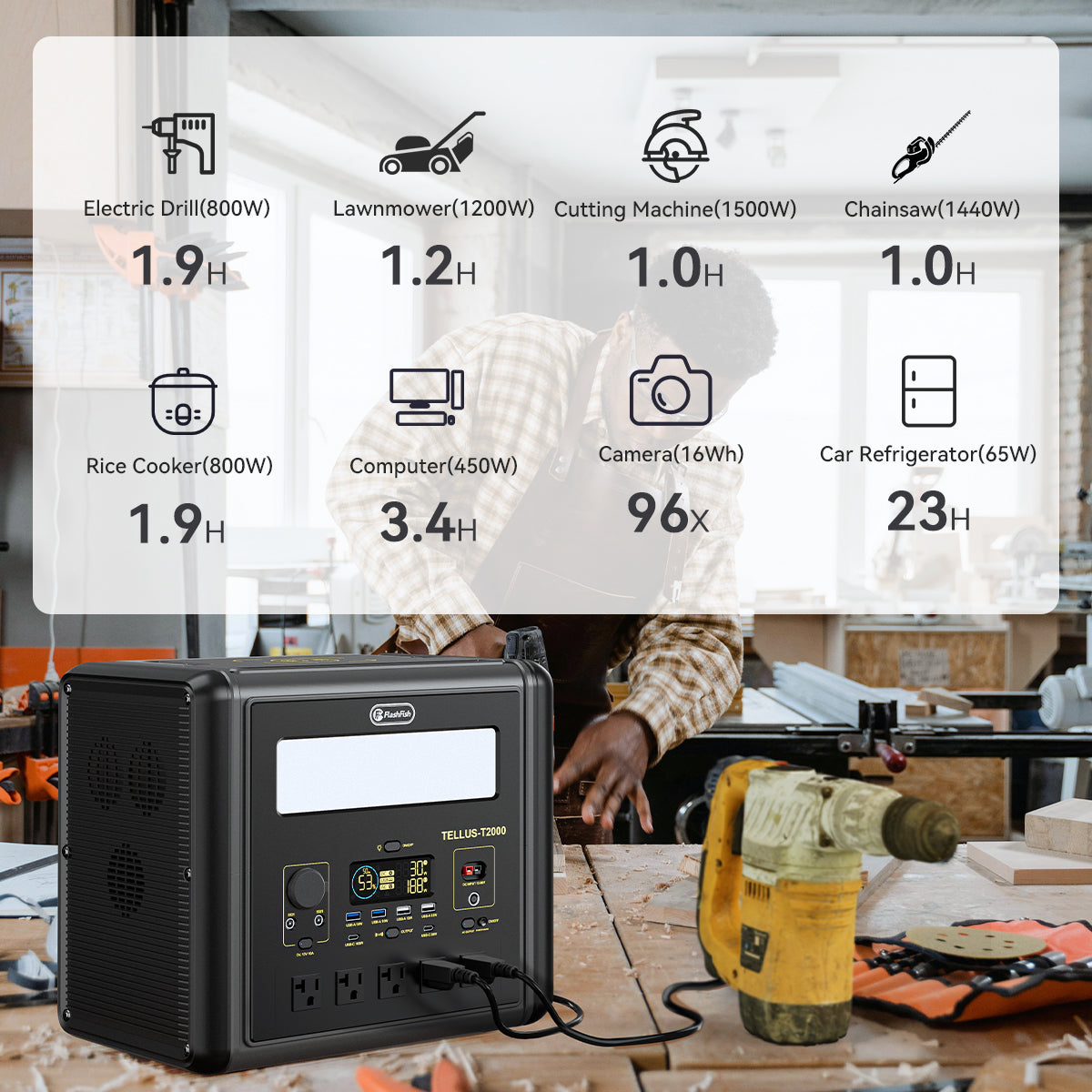
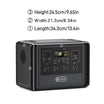
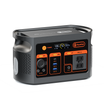
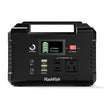
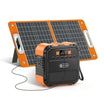
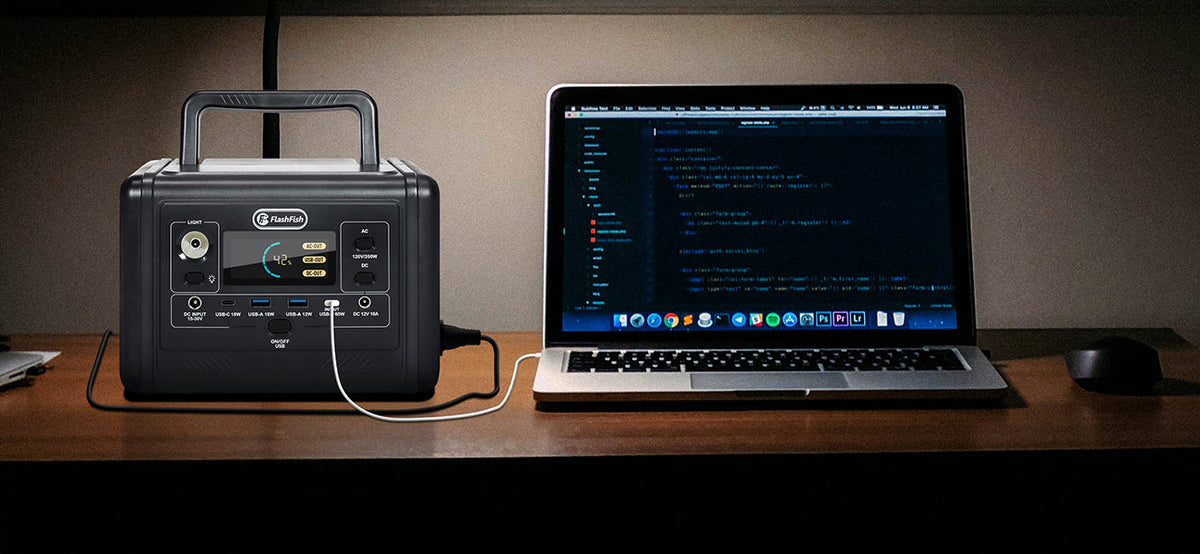
FlashFish E103 has a nominal capacity of 179.2Wh with a USB-C output rated up to 60W. T300Pro, also identified as T300PRO or TELLUS-T300Pro, has a nominal capacity of 230Wh with USB-C outputs rated up to 100W and 30W. These documented specifications make them candidates for an exact device-path review, not confirmed substitutes for a powered campsite.
The E103 manual record reviewed is a 230V version, so it cannot establish a U.S. AC match. The T300PRO record lists 120V AC, but the actual unit and attached equipment still need matching. Neither model's nominal capacity establishes your trip coverage. No current price, stock status, guaranteed runtime or suitable medical-device use is asserted here.
FAQ
Is the difference between two site prices always an electricity fee?
No. It may include differences in location, facilities, dates or booking terms. Isolate electricity only with comparable offers or a documented add-on. Otherwise keep the full price difference labeled as an accommodation comparison.
Can I calculate payback using a battery's advertised capacity?
Capacity does not establish that the battery can perform the required tasks. Complete the independent device, energy and permission checks first. Then use documented costs for a stated trip schedule, keeping future assumptions visible.
What if I cannot obtain comparable quotes?
Leave the electricity premium unisolated. You can still choose the trip you prefer based on total cost and amenities, but do not present a battery purchase as recovering an electricity fee you have not measured.
Build one defensible trip comparison today
Collect two dated official offers, mark the material differences, and finish the task-feasibility and permission checks. Then enter either the isolated premium or an explicit non-comparable result. With those inputs in place, compare exact E103 or T300Pro specifications and a current equipment quote against the plan you actually need.
Use the budget camping power guide to define the equipment tasks before obtaining an exact purchase quote.
Next step: Check the current FlashFish E103 product details and price.

Hinterlasse einen Kommentar
Diese Website ist durch hCaptcha geschützt und es gelten die allgemeinen Geschäftsbedingungen und Datenschutzbestimmungen von hCaptcha.