



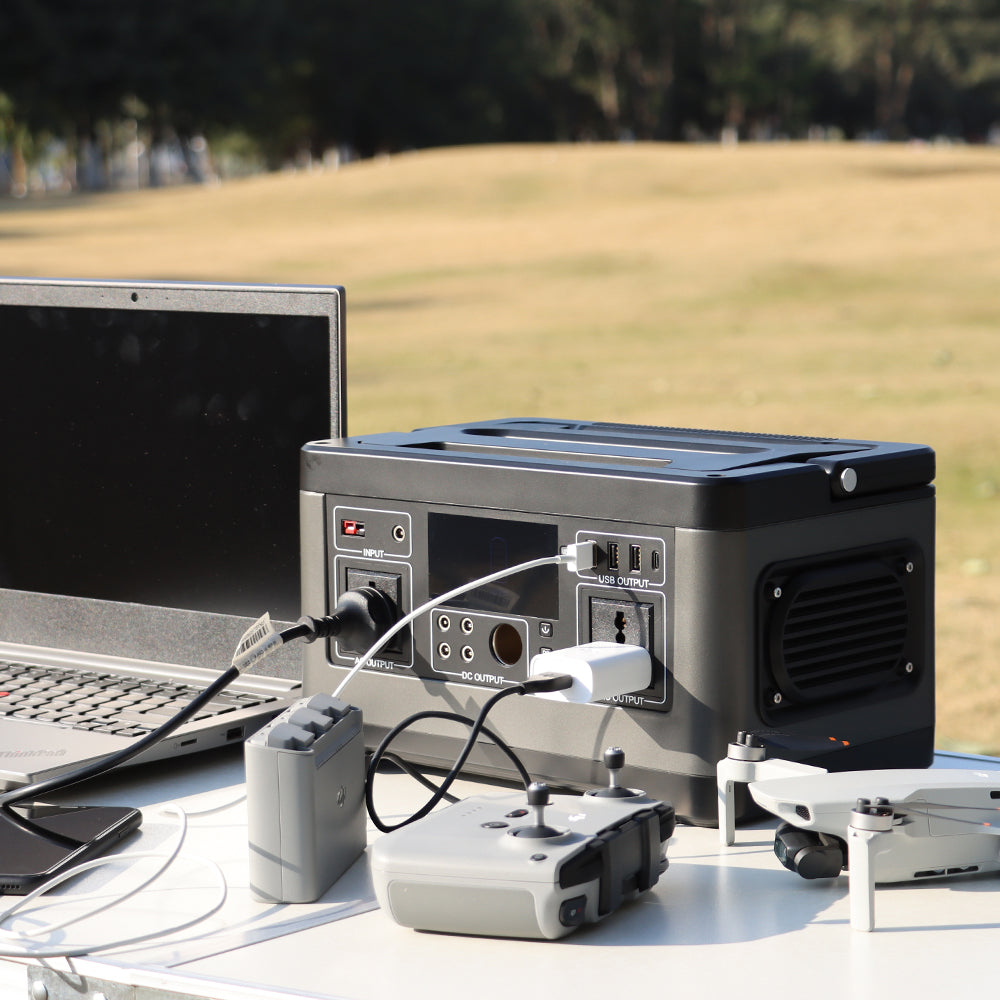
To split a shared power station purchase, start with one confirmed payable total, agree on an allocation rule, and check that everyone's contributions add up to that total. Record reimbursements separately so you do not count the same money twice. Then make a separate plan for access, storage, and maintenance: a cash contribution does not, by itself, define who gets the station or how many watt-hours someone may use.
This is a voluntary group budgeting worksheet. It uses hypothetical arithmetic rather than a current FlashFish quote, and it does not determine legal ownership, enforceable rights, credit terms, or tax treatment.
Confirm what the group is actually buying
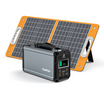
Before dividing anything, write down the exact model, selected configuration, and what the order includes. A standalone station and a kit are different purchases. Use the final checkout total for that selection, with any applicable shipping, tax, or discount shown in the quote. Keep the quote's capture time with the record.
Do not split an advertised headline price while leaving the rest of checkout for the person ordering. Conversely, do not add a guessed tax rate or a hypothetical delivery charge to a real quote. If checkout is incomplete, label the amount provisional and wait to request final contributions.
Keep optional individual purchases out of the shared total unless everyone explicitly includes them. A cable bought for one person's device does not automatically become a group expense. If the selected product or included accessories change, revise the total and obtain agreement on the revised allocation.
Choose the contribution rule before collecting money
An equal split is easy to explain when everyone agrees to the same cash contribution. A proportional split can reflect voluntary percentages or agreed weights. A capped contribution lets someone state a maximum amount, but it works only when the remaining contributors explicitly cover the balance.
None of these methods is universally fair. Equal cash contributions can coexist with unequal use. A larger voluntary payment can coexist with equal booking access. The useful outcome is an understood plan, not an assumption that the arithmetic settles every group decision.
| Contributor | Agreed basis | Target contribution | Amount already paid toward target | Remaining settlement | Separate decision still needed |
|---|---|---|---|---|---|
| Member A | Equal, percentage, or fixed cap | Enter agreed amount | Enter actual recorded payment | Target minus recorded payment | Booking and handoff |
| Member B | Use the same agreed rule | Enter agreed amount | Enter actual recorded payment | Target minus recorded payment | Storage responsibility |
| Other members | Document any exception | Enter agreed amounts | Enter actual recorded payments | Calculate each balance | Maintenance and future costs |
| Check | Record rounding allocation | Sum must equal purchase total | Do not count reimbursements twice | Explain every residual | Confirm access plan separately |
For a percentage split, multiply the confirmed total by each agreed percentage. For weights, divide each member's weight by the sum of all weights, then multiply by the total. Round to cents and allocate any rounding residual explicitly. A spreadsheet that is off by a cent still needs a decision about that cent.
Three hypothetical contribution examples
Every dollar figure below is invented solely to demonstrate the worksheet. None is a FlashFish price, quote, savings claim, or estimate of what your group will pay.
Example 1: Equal split with a rounding residual
A fictional confirmed total is $250.00 for three contributors. An exact equal share cannot be represented in cents. The group agrees that A pays $83.34, B pays $83.33, and C pays $83.33. The sum is $250.00, and the extra cent is assigned rather than silently disappearing.
Example 2: Agreed proportional shares
A fictional total is $480.00. The group agrees to shares of 50%, 30%, and 20%. Targets are $240.00, $144.00, and $96.00, totaling $480.00. Those percentages describe the payments only. They do not allocate battery capacity, charging turns, resale proceeds, or calendar access.
Example 3: A cap with an explicitly allocated balance
A fictional total is $360.00. A volunteers up to $80.00 and the other two members agree to split the remaining $280.00 equally. Targets become $80.00, $140.00, and $140.00. If B paid the entire checkout amount, A reimburses B $80.00 and C reimburses B $140.00. B's final net contribution is $140.00. The reimbursements are settlements of that purchase, not additional costs added to $360.00.
Keep the payment ledger separate from the use plan
Once contributions reconcile, record the practical arrangements in plain language. Decide who keeps the station between trips, how requests are made, what happens when two trips overlap, and who brings the documented charging equipment. Assign a person to keep the model information and applicable instructions available.
Also discuss how you will handle a canceled order, changed total, refund, future accessory request, or someone leaving the group. A refund changes the net purchase cost; it should be reconciled using an agreed rule rather than treated as unassigned spare cash.
This worksheet records preferences and payments. It does not establish ownership or resolve a dispute. If the group needs a legal arrangement, that requires separate advice and documentation. Do not label an informal contribution table a contract or presume a contribution guarantees a particular remedy.
Where T300Pro and TELLUS-T1200s enter the decision
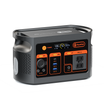
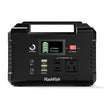
FlashFish T300Pro (T300PRO) is specified at 230Wh, while TELLUS-T1200s is specified at 768Wh. Those values help the group distinguish the product candidates; they are not amounts of energy promised to individual contributors.
Choose between candidates using the group's documented device and port requirements before splitting a quote. The larger capacity field does not establish the better shared purchase, a particular runtime, or lower cost per trip. No current checkout total is supplied in this worksheet.
Use the exact U.S. model and configuration when obtaining current product details. The TELLUS-T1200s record includes market-specific source material, so keep applicable U.S. instructions distinct from other variants. Do not assume accessories, availability, or compatibility from the model name alone.
Frequently asked questions
Does paying 40% mean I get 40% of the energy?
No such allocation follows from the contribution arithmetic. Any energy-use arrangement would need its own definition and evidence. This worksheet only divides the documented purchase cost.
What if someone has already paid a deposit?
First establish whether it is included in the confirmed purchase total and credited to the order. Record it once as payment toward the appropriate contribution. Do not subtract it from the total and also count it as an additional group payment.
Should we collect money before checkout is final?
If the group chooses to collect provisionally, clearly record that status and how any difference will be settled. A final contribution request is easier to reconcile after the exact payable total is confirmed.
Today, list the exact model candidates, agree on one contribution rule, and leave the amount blank until the purchase total is documented. Complete the separate access and storage decisions before anyone orders. Then the group can review current product details with both its equipment needs and its payment plan in view.
Next step: Check the current FlashFish T300Pro product details and price.


Hinterlasse einen Kommentar
Diese Website ist durch hCaptcha geschützt und es gelten die allgemeinen Geschäftsbedingungen und Datenschutzbestimmungen von hCaptcha.