


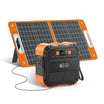
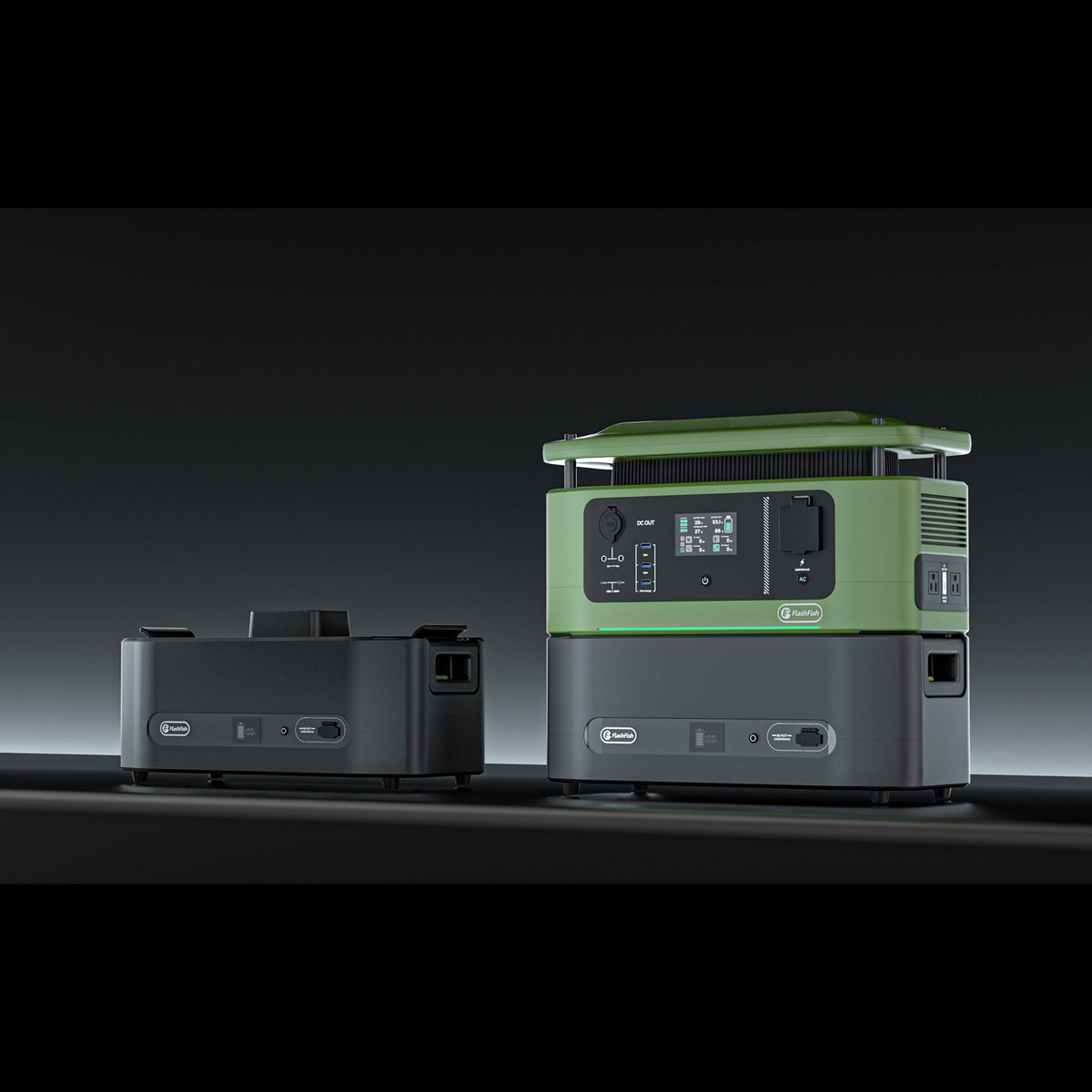
Short answer: rated power, also called continuous output, is the load a portable power station is designed to support continuously under its documented conditions. Surge or peak power is a higher, temporary limit intended for brief startup demand. Do not use the surge number as if it were continuous output. Compare the device's steady draw and startup requirement with the station manual, while also checking voltage, waveform, connector, and combined loads.
Rated power is the continuous screening number
If a station lists 200W continuous AC output, the connected AC loads must remain within that documented continuous limit. When multiple devices share the AC output, add their simultaneous demand. A 90W adapter and a 100W device can represent up to 190W by their labels, before considering startup behavior or uncertainty. Leaving practical headroom is more defensible than planning directly against the maximum.
The number on an adapter is often its maximum input or output rating, not a measurement of what the device uses every second. Use manufacturer specifications or a suitable measurement method when the distinction affects the decision. Do not infer safety or compatibility from a rough estimate.
Surge power covers brief startup demand
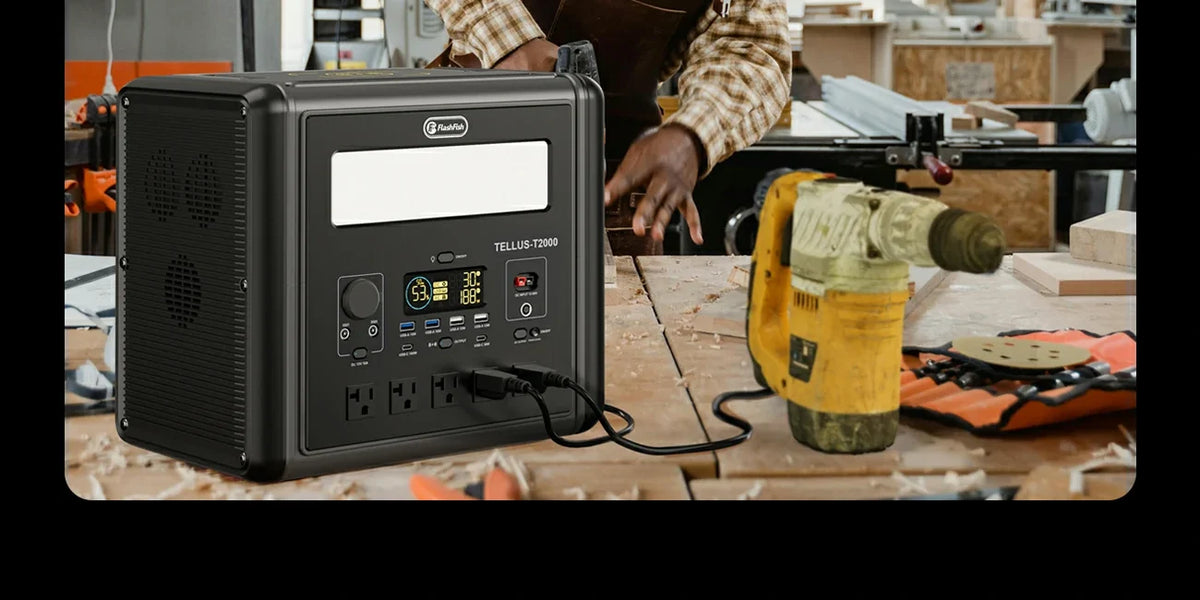
Some devices draw more power when starting than after they settle into normal operation. Motors, compressors, pumps, and certain power supplies are common examples, but the size and duration of the startup demand vary by product. A station's surge figure indicates a temporary ceiling; it does not tell you how long that ceiling is available unless the manual provides a duration.
| Question | Use this evidence | Do not assume |
|---|---|---|
| What is the steady load? | Device label, manual, manufacturer data, or appropriate measurement | Marketing category or average internet estimate |
| What is the startup demand? | Manufacturer specification or documented test method | That every device has the same multiplier |
| How long can the station surge? | Exact station manual | That peak output can continue indefinitely |
| Will the plug work? | Voltage, frequency, waveform, connector, and polarity checks | That physical fit proves electrical compatibility |
Watt-hours answer a different question
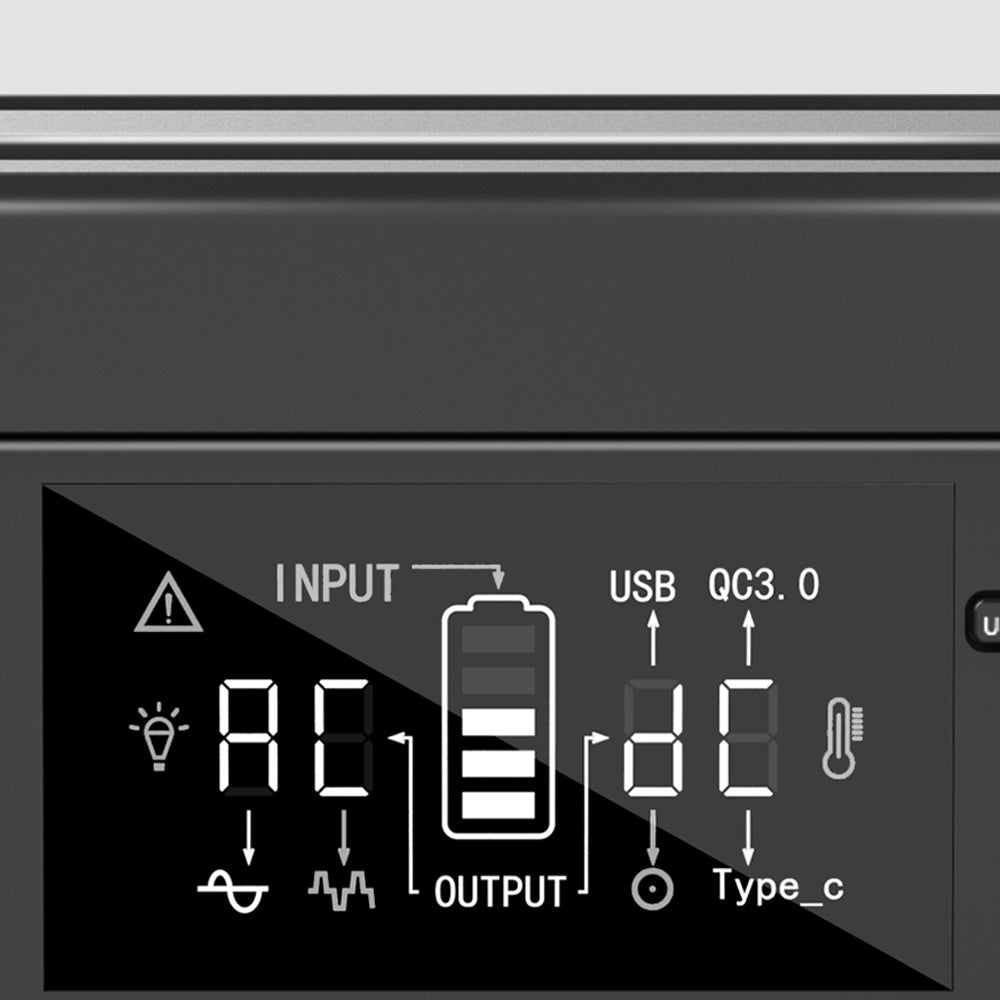
Power in watts describes a rate. Energy in watt-hours describes an amount. A 200W output limit does not mean a station stores 200Wh, and a 200Wh battery does not guarantee it can supply a 200W device. Check output capability for compatibility, then use capacity and estimated load to plan energy.
For example, a 40W average load used for two hours represents 80Wh before conversion losses. That arithmetic is useful for a budget, but real usable energy depends on the output path, temperature, battery condition, inverter efficiency, and device behavior. It is not an exact runtime claim.
Two FlashFish examples
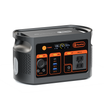
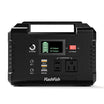
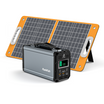
The authoritative local records list both the FlashFish E200 and T200 at 200W continuous AC output and 400W peak output. That means neither should be treated as a 400W continuous station. Their other characteristics still differ: the E200 uses modified-sine AC, while the T200 uses pure-sine AC. The waveform requirement must be checked independently from watts.
The same separation applies to output types. The E200 lists 12V DC output up to 120W, while the T200 lists a 12V DC5521 output up to 120W. Those DC limits are not replaced by the AC surge number. Each output follows its own documented limit.
A five-step label-first check
- Identify the output path. Decide whether the device will use AC, USB-C, USB-A, or DC.
- Record steady demand. Read the device and original adapter labels and consult the manufacturer manual.
- Find startup demand. For motorized or compressor loads, obtain a product-specific value rather than guessing.
- Add simultaneous loads. Include every device that may run on the same output at the same time.
- Check the full electrical match. Confirm voltage, frequency where relevant, waveform, connector, polarity, and station instructions.
Common mistakes to avoid
- Advertising a station by peak watts without stating continuous watts.
- Adding watt-hours and watts as though they measure the same thing.
- Assuming an appliance's average consumption captures startup demand.
- Ignoring other devices that will operate simultaneously.
- Using a connector adapter without verifying voltage and polarity.
- Treating an overload shutdown as a normal operating plan.
If a load is close to any documented limit, the cautious choice is to obtain better device data or select a station with appropriate headroom. A larger peak number does not resolve an unknown waveform, connector, voltage, or duty cycle.
FAQ
Is surge power the same as maximum power?
Manufacturers may use peak, surge, or maximum language differently. Use the exact manual definition, including any duration, rather than relying on the label alone.
Can a 400W surge station run a 300W appliance?
Not as a general rule. If its continuous limit is 200W, a steady 300W appliance exceeds that limit even though 300W is below the surge number.
Why does a low-rated device still trigger overload?
Possible causes include startup demand, combined loads, incorrect voltage or waveform, or a device behavior not represented by the simple rating. Stop and check both manuals instead of repeatedly resetting the station.
Does more capacity increase surge power?
Not automatically. Capacity and output capability are separate specifications. Compare both values on the exact model.
Next step: Review the FlashFish E200 specifications for your equipment list.

Hinterlasse einen Kommentar
Diese Website ist durch hCaptcha geschützt und es gelten die allgemeinen Geschäftsbedingungen und Datenschutzbestimmungen von hCaptcha.