

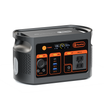
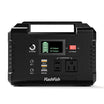

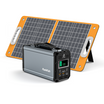
Short answer: Pure sine wave and modified sine wave describe the AC waveform produced by a portable power station's inverter. Watts and watt-hours are separate: watts describe output capacity, while watt-hours describe battery size. Pure sine AC is usually the safer default when a shopper is unsure about sensitive electronics, chargers, or motor loads, but users still need to check the device wattage, startup surge, charger label, and manual before plugging anything in.
Why inverter waveform matters
A portable power station stores energy in a battery, then uses an inverter to provide AC output. That AC output can be described as pure sine wave or modified sine wave. The waveform does not replace the need to check wattage. A device can still overload a pure sine station if it needs more power than the station can provide.
For shoppers, the practical question is not "which term sounds better?" It is "what does my device require, and which station fits the device label and manual?" Pure sine AC is generally preferred when there is uncertainty around sensitive electronics, chargers, or motor loads. Modified sine AC can support many simple loads, but it should not be treated as universally compatible.
Plain-language comparison
| AC waveform | What it means for shoppers | What still needs checking |
|---|---|---|
| Pure sine AC | Designed to more closely resemble household AC power. Often preferred for sensitive electronics, chargers, and some motor loads. | Running watts, startup surge, charger limits, device manual restrictions, and station output rating. |
| Modified sine AC | Can be suitable for many simple loads, but compatibility depends on the specific device and its power supply. | Whether the device manual allows modified sine inverter power, whether the charger runs hot or noisily, and whether the load stays within the output limit. |
FlashFish model facts to check
| Model | Waveform in product database | Capacity | AC output | Battery chemistry note | Public U.S. link |
|---|---|---|---|---|---|
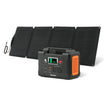
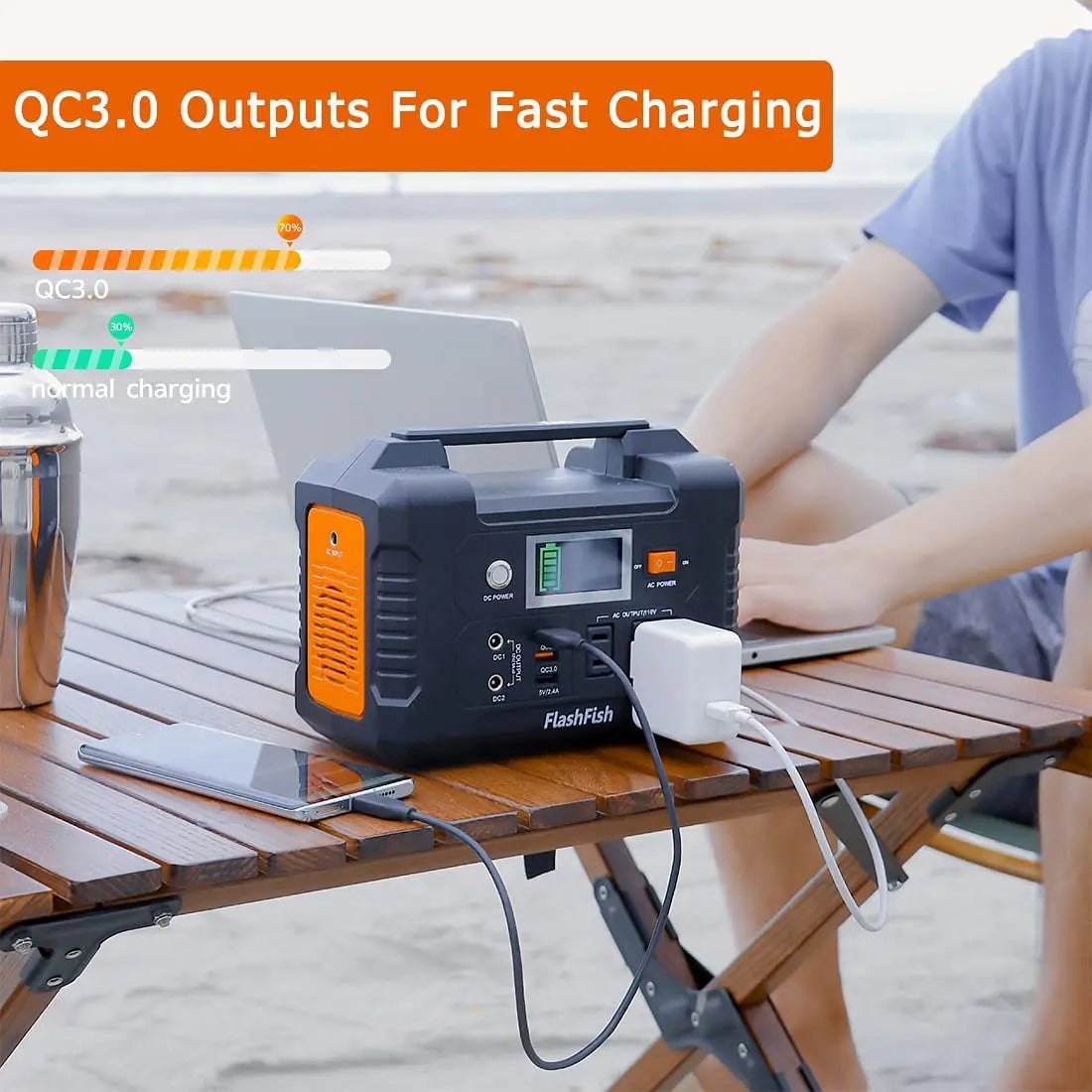
| FlashFish E200 | Modified sine AC | 151Wh | 200W continuous, 400W peak | Lithium-ion | E200 product page |
| FlashFish T200 | Pure sine AC | 153.6Wh | 200W continuous, 400W peak | LiFePO4 | T200 product page |
| FlashFish E103 | Pure sine AC | 179.2Wh | 300W AC output | The local product database does not provide battery chemistry. | E103 product page |
| FlashFish T300PRO | Pure sine AC | 230Wh | 300W continuous, 600W peak | LiFePO4 | T300PRO product page |
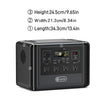
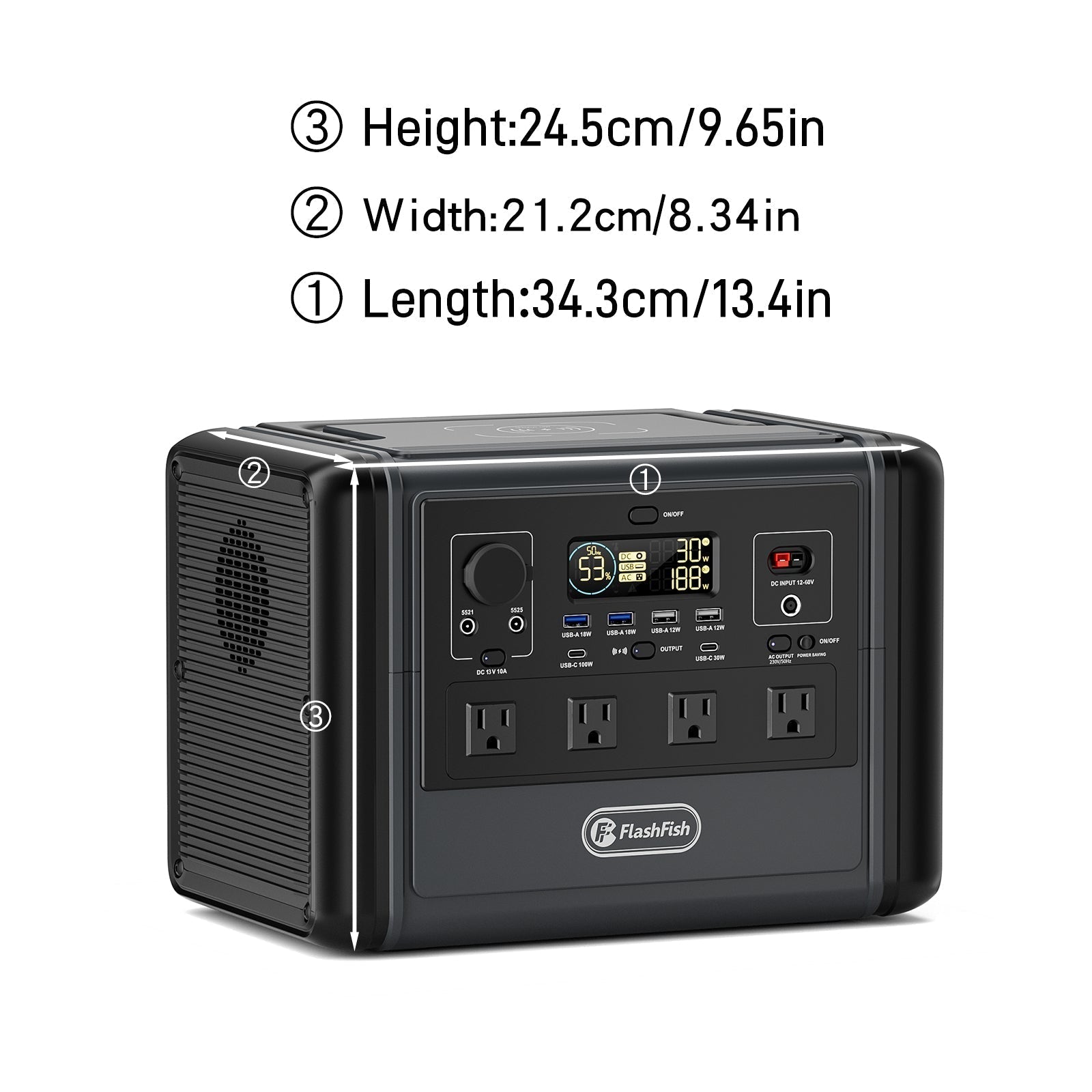
| FlashFish T1200S | Pure sine AC | 768Wh | 1200W continuous, 2400W peak | LiFePO4 | T1200S product page |
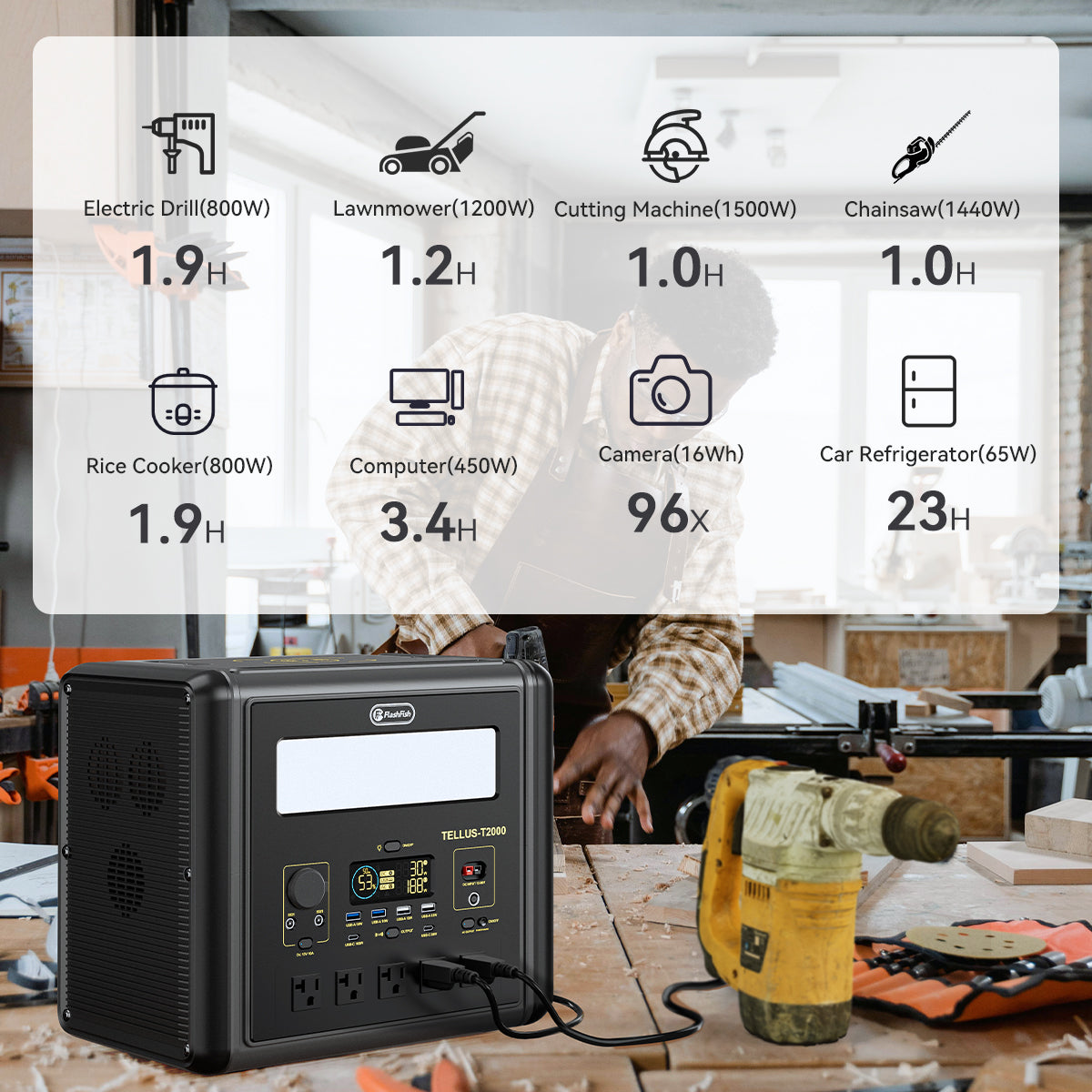
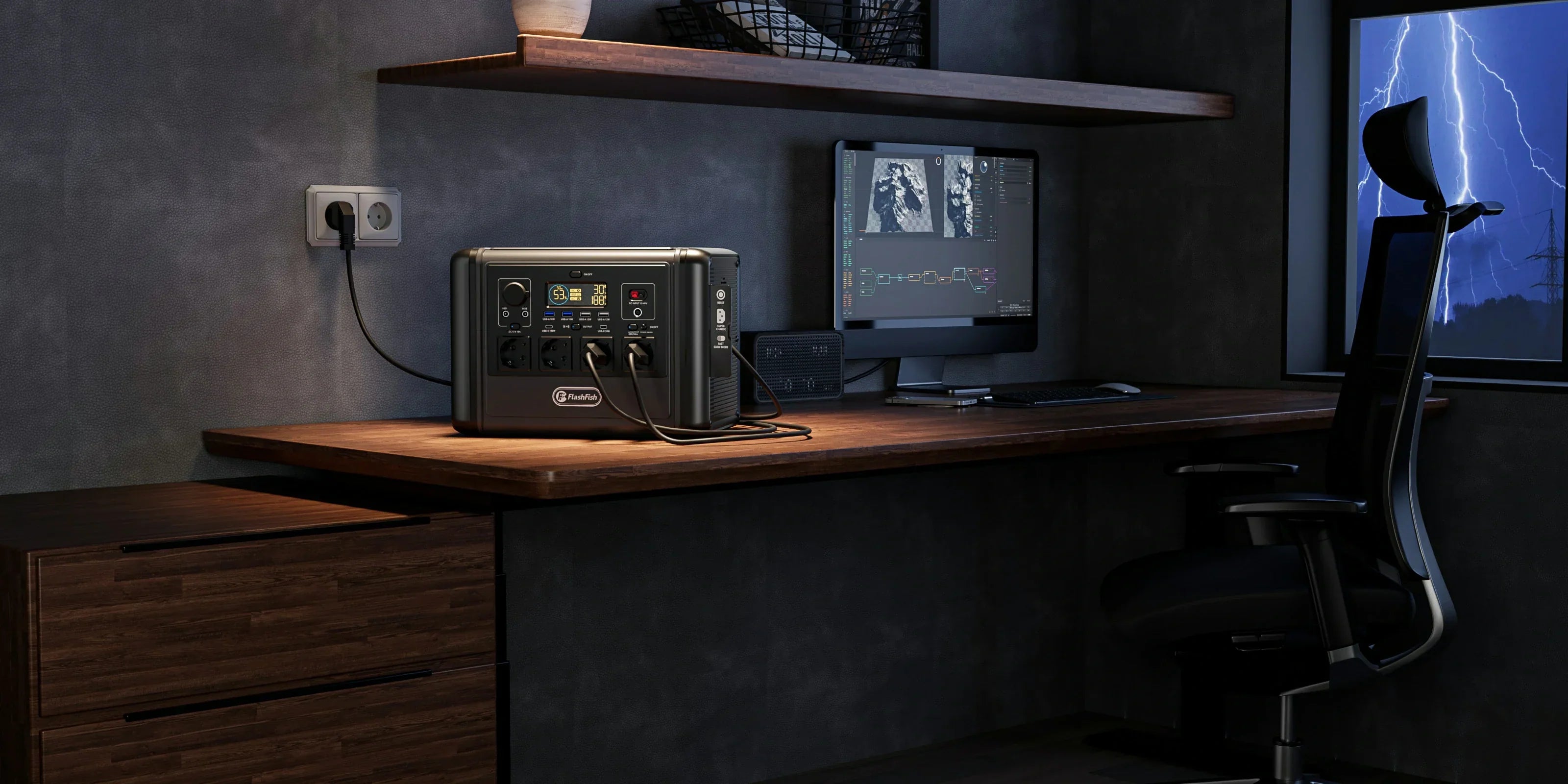
| FlashFish T2000 | Pure sine AC | 1536Wh | 2000W continuous, 4000W peak | LiFePO4 | T2000duct page |
Start with device wattage before waveform
Waveform is important, but the first filter is still power demand. Check the device label or power adapter for watts, volts, and amps. If the label lists volts and amps but not watts, the wattage estimate comes from multiplying volts by amps. That estimate still needs a margin because real-world startup draw and adapter behavior can vary.
After that, compare the device requirement with the station's continuous AC rating and peak rating. A charger or device that exceeds the station's output limit is not a fit just because the inverter is pure sine. Likewise, a low-watt simple load may not require a larger station if the manual allows inverter use and the total load stays within limits.
What to check before plugging in
- Running watts: the normal power the device uses once operating.
- Startup or surge demand: some devices briefly draw more power when starting.
- Charger label: laptop, tool, camera, and appliance chargers often state input requirements.
- Device manual restrictions: some products specify inverter type or warn against certain power sources.
- Heat and noise: if a charger or device runs unusually hot, loud, or unstable, stop using it and check the manual.
- Station warnings: follow overload, ventilation, temperature, and charging instructions from the power-station manual.
When modified sine may be enough
Modified sine AC may be enough for simple, low-risk loads that are clearly within the station's output rating and whose manuals do not prohibit that inverter type. The FlashFish E200 is the relevant example in this product group: the local product database lists it as a 151Wh, 200W modified sine AC station with 400W peak output.
That does not make the E200 a poor fit by default. It means the buyer should use it for the right jobs: compact camping charging, simple small electronics, lights, and other low-risk loads after checking compatibility. It should not be positioned as a universal match for every charger, motor, medical device, or appliance.
When pure sine is the safer default
Pure sine AC is the safer default when a shopper is unsure, especially around sensitive electronics, chargers, and devices with motors. In the FlashFish compact range, T200, E103, and T300PRO are listed with pure sine AC output in the local product database. T1200S and T2000 also use pure sine AC output in the larger-output tier.
Even then, pure sine does not remove every limit. A 200W pure sine station is still a 200W station. A device that requires more continuous power, a large startup surge, or a dedicated household circuit should not be treated as a fit without checking the device requirements and station manual.
How this affects FlashFish shoppers
If the shopper wants the lightest compact station for simple loads, the E200 can stay on the shortlist as long as modified sine compatibility is acceptable for the intended devices. If the shopper prefers pure sine AC in a compact format, T200 is the closest 200W alternative. If the device list needs more output headroom, E103 and T300PRO move into the 300W tier.
For larger camping, RV, or outage-support planning, waveform becomes only one part of the decision. T1200S and T2000 add much higher output, larger battery capacity, and more solar input headroom, but the user still needs to choose based on actual device watts, expected use time, portability, and solar charging plans.
FAQ
What is the difference between pure sine wave and modified sine wave?
They describe the shape of the AC output from the inverter. Pure sine AC is designed to more closely resemble household AC power. Modified sine AC can work for many simple loads, but compatibility depends on the device and its manual.
Does a laptop need a pure sine wave portable power station?
Some laptop chargers may work with different inverter types, but shoppers should not assume. Check the charger label, laptop or charger manual, and station output rating. If uncertain, a pure sine model is the more cautious choice.
Which FlashFish models use pure sine AC output?
The local FlashFish product database lists T200, E103, T300PRO, T1200S, and T2000 with pure sine AC output. It lists E200 with modified sine AC output.
Is modified sine wave always unsafe?
No. Modified sine AC is not automatically unsafe for every load, but it is not universally compatible either. It should be matched to simple loads, device manuals, and the station's output limits.
What should I check before plugging a device into a portable power station?
Check running watts, startup surge, the charger or device label, manual restrictions, station output rating, and any heat or overload warnings. Do not use a portable power station for medical-device backup or critical appliance safety unless the device maker and a qualified professional confirm the setup.

Leave a comment
This site is protected by hCaptcha and the hCaptcha Privacy Policy and Terms of Service apply.