


For two complete kits that meet the same documented task, subtract the heavier kit's total quoted cost from the lighter kit's cost, then divide that positive premium by the kilograms avoided. The result is dollars per kilogram saved. Use it with an absolute spending limit and a minimum worthwhile weight reduction. There is no meaningful “premium per kilogram avoided” when the mass reduction is zero or negative.
No current product prices or complete-kit quotes are reported here. The three worked examples use invented USD amounts and masses solely to explain the calculation; they are not FlashFish offers or measured kits.
Both candidates must qualify before price enters the calculation
Define one task: the same devices, required connections, intended usage period, and recharge arrangement. Confirm each candidate's documented outputs and device requirements. Where duration matters, nominal battery capacity alone does not prove completion; keep the needed usable-energy evidence unresolved until it is available.
A cheaper, lighter station that cannot meet the task is not a comparable alternative. Equally, a larger station's unused output is not automatically worth paying for. This comparison begins after feasibility, rather than awarding the lowest mass a win before checking the job.
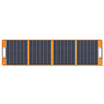
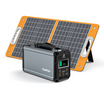
Decide which equipment travels. If charging equipment is needed during the trip, count it. If a panel, case, cable, or adapter is required for one candidate, include its cost and mass for that candidate. Include shared items consistently, even when they cancel out of the difference. A complete-kit comparison should not quietly compare one bare station with another fully packed kit.
Use accepted station weights, then add the actual accessories
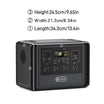
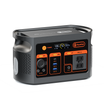
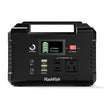
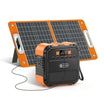
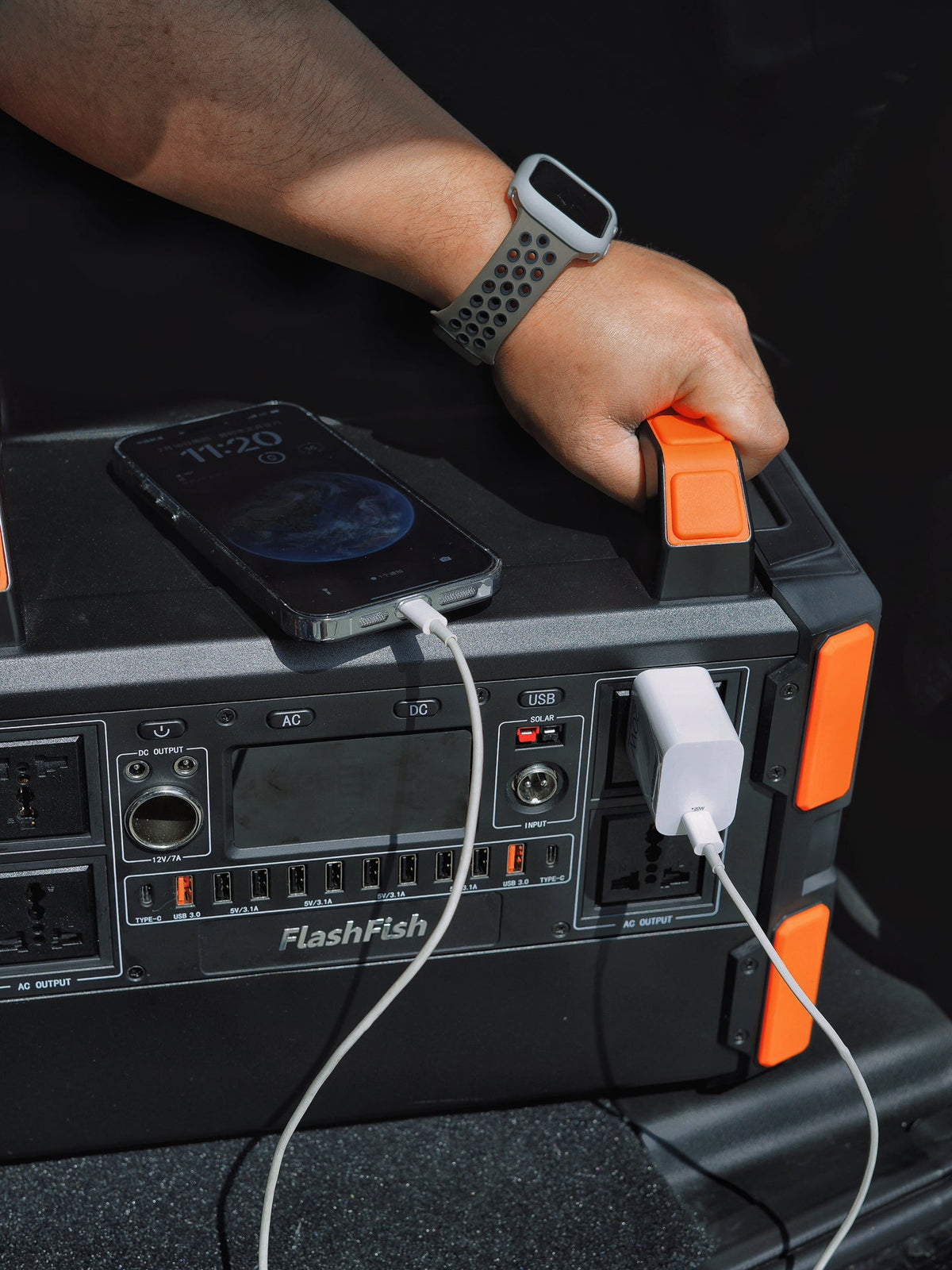
The documented net station weights are approximately 1.2kg for FlashFish A101 and 1.85kg for E200. Their bare-station difference is 0.65kg. That is a starting point, not a verified difference between the kits you will carry.
Use the net mass for the exact station and revision you are comparing; a carton weight or a different revision is a different measurement. Complete accessory masses are not available for this comparison. Weigh the actual required pieces or obtain documented masses for the exact accessories before calculating your carried total.
A101's documented battery capacity is 97.68Wh; E200's is 151Wh. Those capacities differ, so these models are not presumed interchangeable for every task. For any AC requirement, verify the actual regional version rather than adopting a voltage from a different unit. The FlashFish manual-matching guidance identifies the model and electrical-version checks to make first.
| Input | Candidate A | Candidate B |
|---|---|---|
| Same task documented as feasible | Record evidence or leave unresolved | Record evidence or leave unresolved |
| Exact configuration and dated USD quote | Station plus required purchases | Station plus required purchases |
| Delivered purchase total | Include applicable quoted tax, shipping, and fees | Use the same cost boundary |
| Station net mass | Accepted exact-model value | Accepted exact-model value |
| Required accessory mass | Actual or documented component values | Actual or documented component values |
| Complete carried mass | Station plus everything required on the trip | Same inventory boundary |
| Reader's decision limit | Maximum extra dollars and minimum useful kilograms avoided | |
Separate new cash spending from equipment already owned. An owned charger may have no new purchase cost but still adds carried mass. If comparing replacement value instead of today's outlay, label that choice and apply it to both candidates.
Calculate the premium without hiding the totals
First identify which complete kit is lighter. Then calculate:
- Mass avoided: heavier complete-kit mass minus lighter complete-kit mass.
- Extra cost: lighter complete-kit cost minus heavier complete-kit cost.
- Positive premium per kilogram avoided: extra cost divided by mass avoided, only when both differences are positive.
Keep the total extra cost visible next to the ratio. A small denominator can produce a large dollars-per-kilogram number even when the cash difference is modest. Conversely, an appealing ratio does not make a large purchase affordable. This is a personal purchasing tradeoff, not a health-benefit calculation.
Three hypothetical USD/kg examples
Example 1: A positive premium within the reader's limit
Suppose two already-qualified kits cost $160 at 2.0kg and $190 at 1.5kg. The lighter kit adds $30 and avoids 0.5kg: $30 / 0.5kg = $60/kg. A reader who chose a $40 extra-spending limit and wanted at least 0.4kg less mass would accept this tradeoff. Those limits are personal preferences, not product recommendations.
Example 2: A high ratio for a small reduction
Suppose qualified kits cost $170 at 2.0kg and $215 at 1.9kg. The premium is $45 for 0.1kg avoided, or $450/kg. If the reader requires at least 0.3kg less mass, the lighter kit fails that preference regardless of affordability. Missing accessory weights could also erase this small difference, so do not treat an incomplete inventory as decisive.
Example 3: The lighter kit costs less
Suppose qualified kits cost $210 at 2.2kg and $195 at 1.8kg. The lighter option avoids 0.4kg and saves $15. Report those two facts directly: there is no positive price premium. The signed difference is -$37.50/kg, but calling it a premium would obscure the useful result. If two kits instead have equal carried mass, do not divide by zero.
Frequently asked questions
Can I use shipping weight for the carrying comparison?
Only if that is actually the package you intend to carry and both candidates use the same boundary. For ordinary equipment packing, use net station mass plus the carried accessories. Carton gross weight answers a different question.
What if one quote excludes a required item?
Obtain that item's price before calling the total complete. Until then, show a known subtotal and the missing line. A missing item is not a zero-dollar accessory.
Is the lowest dollars-per-kilogram figure always best?
No. It does not capture your budget, how much mass you want to avoid, or whether both kits still meet the task. Keep those conditions separate instead of compressing them into a universal ranking.
Set a limit before choosing the offer
Complete the two inventories, resolve feasibility, and obtain comparable dated quotes. Write your maximum extra outlay and minimum worthwhile mass reduction before calculating. For an A101/E200 shortlist, start with their accepted net weights, then resolve the full accessory and task differences. Choose only after the complete-kit numbers support your own limit.
Method: documented net station weights and illustrative arithmetic; no current price survey, packed-kit weighing, or runtime test was performed.
Next step: Check the current FlashFish A101 product details and price.


Leave a comment
This site is protected by hCaptcha and the hCaptcha Privacy Policy and Terms of Service apply.