


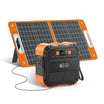
Quick answer: Choose fishing-trip power by listing the electronics you will carry, checking each device label, and matching the required output, watt-hours, ports, weight, and charging path. Keep the station away from water, mud, direct rain, and unstable surfaces; a portable power station should not be described as waterproof unless the exact model documentation says so.
Build a bankside load list
| Device | Record | Planning boundary |
|---|---|---|
| Phone or GPS | USB port and energy per charge | Power does not guarantee signal or navigation coverage |
| Camera or drone battery | Official charger input | Confirm AC or USB compatibility |
| Fish finder | Voltage, current, connector, and battery type | Do not improvise a cable |
| Light | Running watts and hours | No fixed runtime without testing |
| Small fan or pump | Running watts and startup behavior | Motor loads can change draw |
Two verified compact comparison points
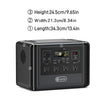
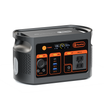
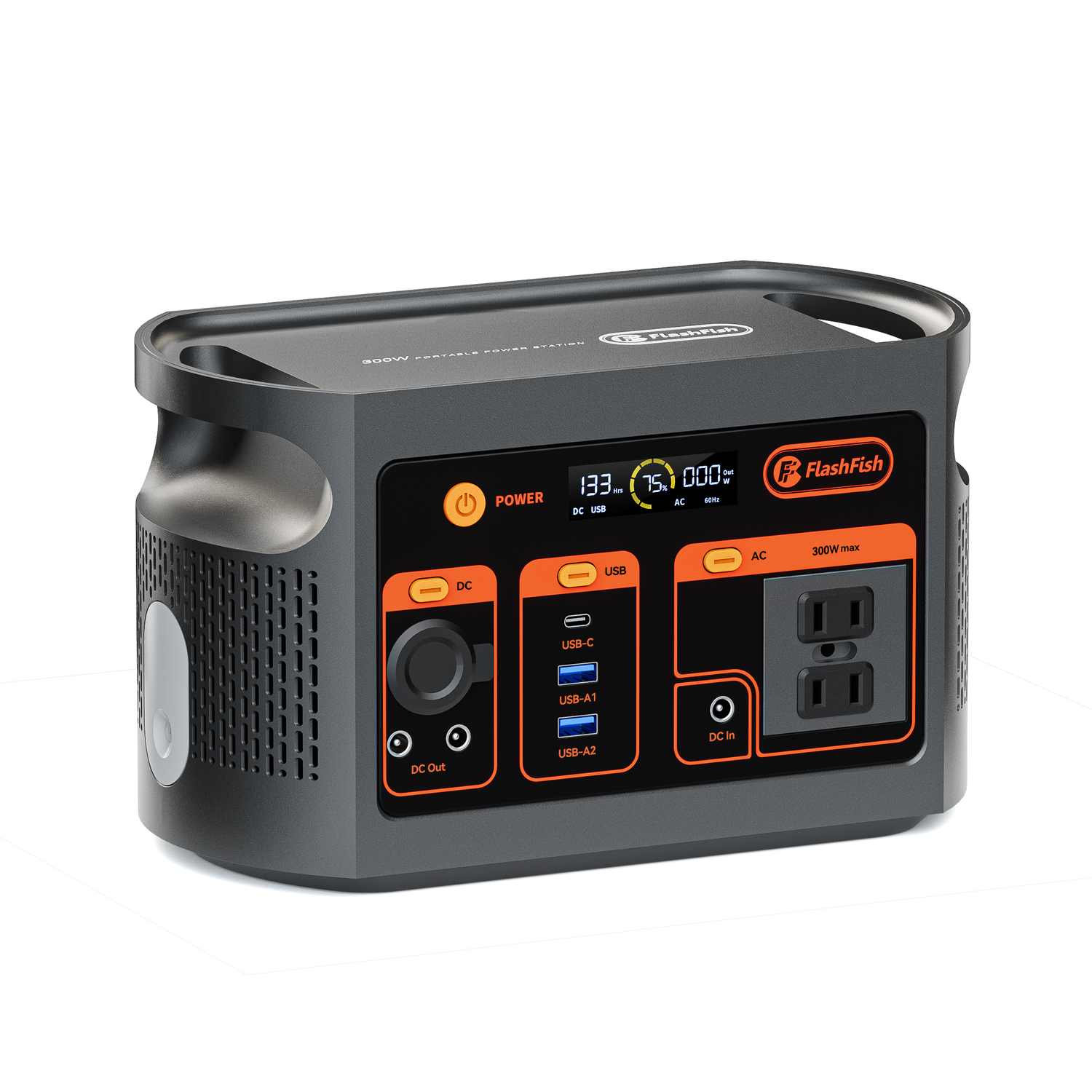
The FlashFish E103 database record lists 179.2Wh capacity, 300W continuous and 600W peak pure sine wave AC output, one USB-C PD output up to 60W, and a weight of about 3kg.
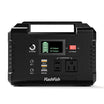
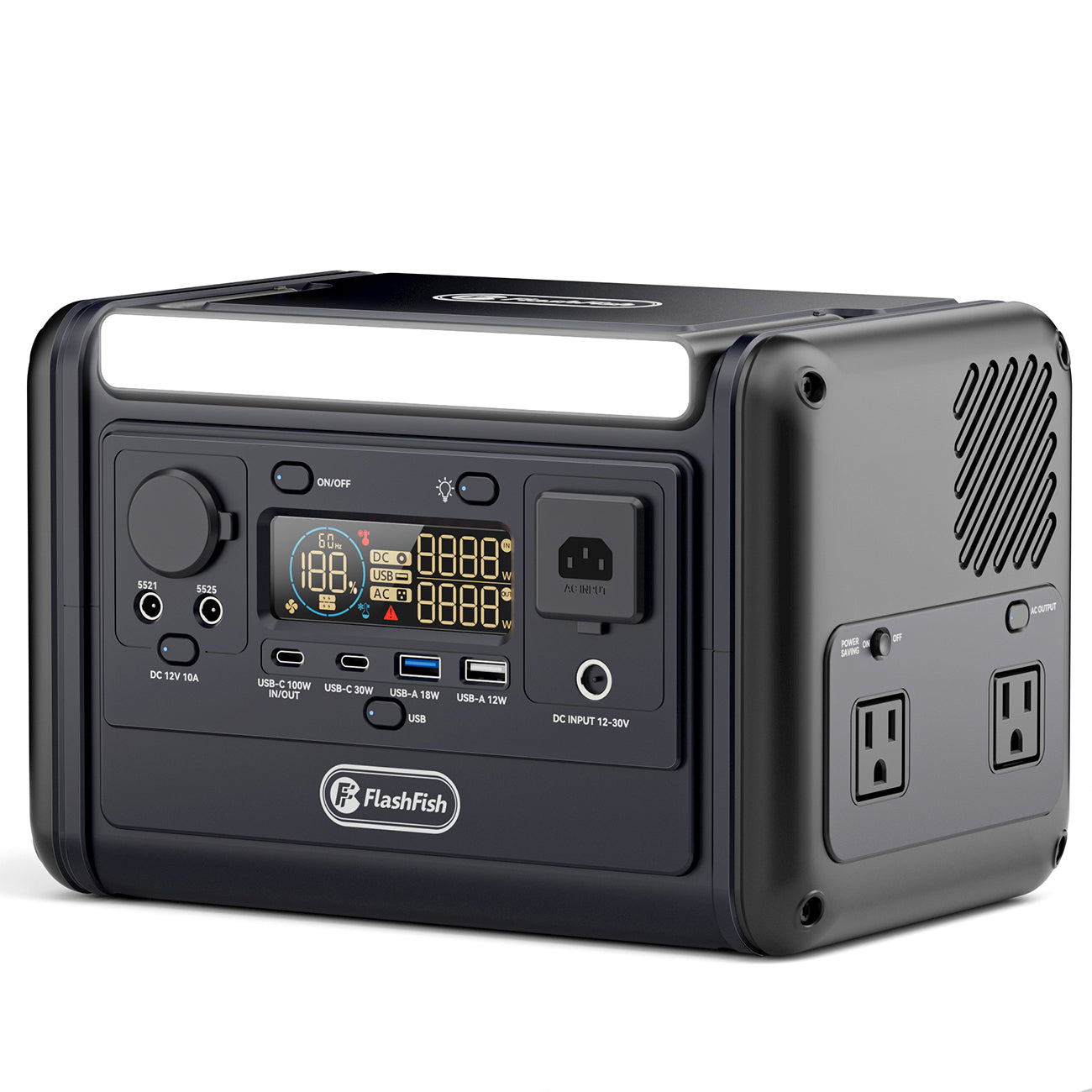
The FlashFish E200 record lists 151Wh capacity, 200W continuous and 400W peak modified sine wave AC output, and a net weight of about 1.85kg. Its manual warns against long-term AC-motor loads such as refrigerators, microwaves, and compressors.
Neither record supplies a universal fishing-device runtime, impact rating, or waterproof claim. Choose between them only after checking the exact load and waveform requirement.
Protect the station from water and impact
- Place the station above the ground on a stable, dry surface.
- Keep it outside the casting path and away from open bait, wet nets, and drink containers.
- Do not cover ventilation openings or place the unit in direct sun.
- Inspect ports and cables for moisture or damage before connecting anything.
- Stop using equipment that is wet, damaged, swollen, unusually hot, or producing an unusual odor.
Plan charging before leaving
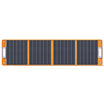
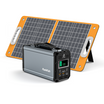
Begin with a charged station. Vehicle and solar charging can be additional paths only when the exact model, cable, connector, voltage, and current are compatible. Solar output changes with sunlight, angle, shade, weather, and temperature, so it should not be the sole assumption behind a required operating time.
Check local and site rules
Fishing sites, boats, piers, and campgrounds can have different rules for cables, charging, generators, and equipment placement. Review the site or vessel rules and keep walkways clear. Battery power does not replace required marine, communication, weather, or personal-safety equipment.
Frequently asked questions
How long will a station run a fish finder?
The product database does not provide a fish-finder runtime. Use the exact device voltage and watts, account for conversion loss and reserve, and test the setup.
Can I use a FlashFish station in rain?
Do not assume rain or water resistance. Keep the station dry and follow the exact model manual.
Which compact model is easier to carry?
The database lists E200 at about 1.85kg and E103 at about 3kg. Output, waveform, ports, and capacity still need to fit the load.

Leave a comment
This site is protected by hCaptcha and the hCaptcha Privacy Policy and Terms of Service apply.