

Compare the verified purchase total with nonrefundable loan or rental costs for the same trips and equipment. Keep refundable deposits separate and confirm each date. Missing checkout costs or provider terms leave the price winner unresolved.
This comparison is for occasional campers planning non-critical charging. It answers a finite spending question, not how many years a battery will last or what it might sell for later. First establish that each proposed unit can support the intended equipment using its documentation and relevant measurements.
Start with the actual trip calendar
List each departure and return date, then ask how the provider counts billable days. A two-night trip might include an earlier pickup or a later return. Record the provider's answer rather than assuming that nights equal charged days.
For a loan from someone you know, confirm the dates, exact unit, included charger and expected return condition. A zero borrowing fee does not automatically eliminate pickup costs or required accessories. For a rental, request the full quote for your dates, including nonrefundable fees and the stated damage or cancellation terms. No rental provider or current rental rate has been verified for this article.
Separate purchase price from checkout total
U.S. catalog prices rechecked on October 10, 2026 were USD $69.99 for the standalone FlashFish A101 variant and USD $99.99 for the standalone E200 variant. These dated catalog observations are not completed checkout totals or promises of stock or delivery.
The observation did not establish your shipping charge, destination tax, discount eligibility, required accessories or arrival date. Enter those amounts from the exact proposed order. Compare the standalone station with the quoted borrowed or rented kit; do not silently substitute a panel bundle or assume an accessory is included.
Use a purchase total P that includes the checkout amount plus necessary costs outside that order. If a required cost is unknown, mark P incomplete. Do the same for the alternative instead of letting a blank cell become zero.
Use two totals: expense and cash needed
Schedule expense for renting = sum of billable-day charges, nonrefundable fees and necessary additional costs across the planned trips. A deposit documented as fully refundable is shown separately while its refund conditions remain applicable. If it is partly retained, that retained amount becomes an expense.
Cash needed can be higher than expense. Record the deposit payment and expected refund timing to see whether money remains tied up when the next trip begins. Do not add refundable deposits to the savings calculation as though they were automatically lost. Likewise, do not assume they will be refunded early enough to fund another reservation.
| Trip dates | Billable days | Daily charge | Nonrefundable fees and extras | Refundable deposit | Purchase total | Access for dates |
|---|---|---|---|---|---|---|
| First trip: enter dates | Provider-confirmed | Quoted USD amount | Itemize | Amount and refund timing | P, paid once | Confirmed or unresolved |
| Second trip: enter dates | Provider-confirmed | Quoted USD amount | Itemize | Amount and refund timing | Do not add P again | Confirmed or unresolved |
| Third trip: enter dates | Provider-confirmed | Quoted USD amount | Itemize | Amount and refund timing | Do not add P again | Confirmed or unresolved |
Three hypothetical schedule comparisons
Every amount below is invented solely to explain the arithmetic. None is a FlashFish checkout total, rental quote or provider offer. The examples assume the options have already passed the separate equipment-fit check.
Example 1. Three trips make buying the lower assumed expense
Assume P is $140. Each of three trips has two billable days at an assumed $20 per day plus a $10 nonrefundable fee. The schedule rental expense is 3 × (2 × $20 + $10) = $150. Buying is $10 lower under these assumptions. A fully refundable $100 deposit per booking changes the payment schedule, not that $150 expense.
Example 2. One confirmed trip favors the alternative
With the same assumptions but only one trip, renting costs $50 versus a $140 purchase. Renting is $90 lower for that schedule. Possible future trips do not belong in a fixed-calendar calculation until you choose to include them. If the rate and fee stay constant, two trips cost $100 and three cost $150; buying becomes strictly cheaper at the third trip in this example.
Example 3. A loan saves money but needs date confirmation
Assume a documented free loan requires $12 of pickup expense for each of three trips and no other charge. The assumed expense is $36. If the second date is unconfirmed, however, the loan does not yet cover the full schedule. Obtain the missing commitment or price a separate alternative for that date before comparing it with P.
Product fit comes before the price winner
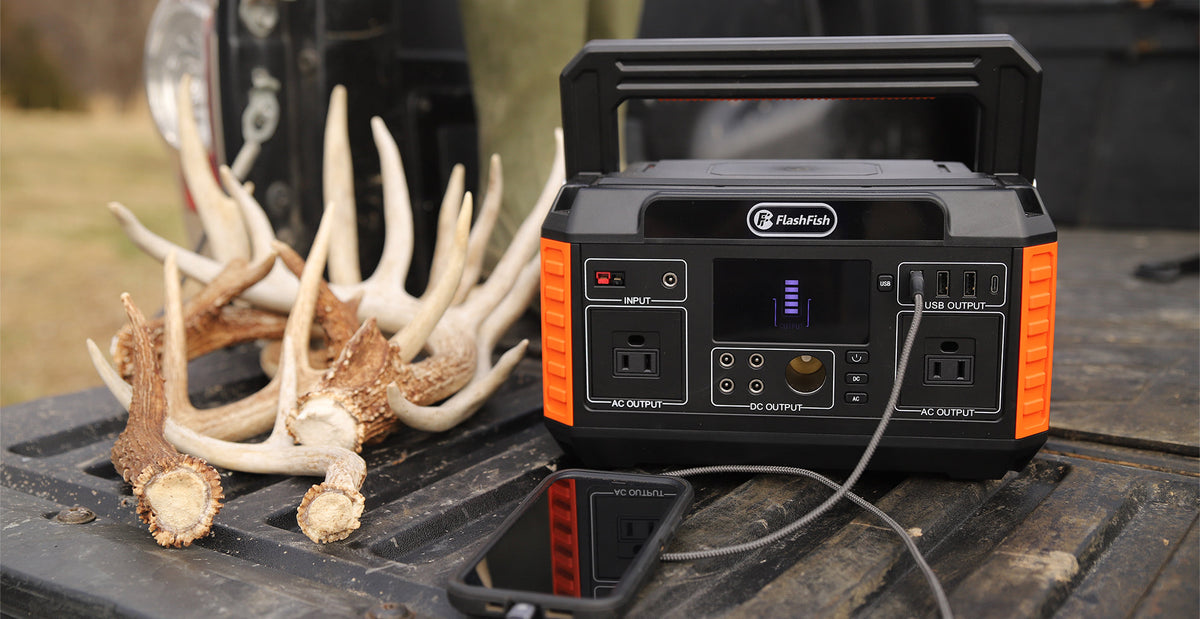
The available model documentation lists FlashFish A101 at 97.68Wh, with two USB-C and two USB-A outputs rated up to 18W. FlashFish E200 is listed at 151Wh, with two USB-A outputs up to 18W and one up to 12W. Those facts can narrow a port shortlist, but they do not establish charging speed, usable delivered energy or support for your exact devices.
Confirm the original manual, exact unit and relevant device requirements for either a purchase or a loan. A101's extracted AC record is regional; do not transfer it to an unverified U.S. unit. A cheaper option that fails the required charging arrangement is not a comparable substitute.
FAQ
Should I subtract resale value from the purchase?
For this finite out-of-pocket comparison, leave resale value out unless you have separately documented a relevant transaction basis. An expected future sale is not money available for this schedule. You can keep a separate resale scenario clearly labeled as uncertain.
How should I handle damage charges?
Record the quoted terms and identify which amounts are fixed, refundable or contingent. Do not invent a damage probability or treat a contingent maximum as an inevitable bill. Compare the ordinary quoted expense and disclose the contingent obligation separately.
What if prices or trip dates change?
Refresh the exact checkout total and date-specific quote, then rerun the rows affected. Changed billable days, fees or access can reverse the result. The dated catalog observations above are background evidence; they should not replace your current transaction details.
Choose with a completed schedule
Put the documented purchase total beside the complete loan or rental expense, cash timing and confirmed dates. If buying is lower and the equipment fits, use the A101 or E200 specifications to narrow the model decision. If the alternative is lower and covers every date, retain that arrangement. Leave the winner unresolved when a material input is missing.
Before comparing costs, use the budget camping device-load checklist to define the equipment each option must support. A smaller bill is relevant only when the same trip requirements are met.
Next step: Check the current FlashFish A101 product details and price.

Laisser un commentaire
Ce site est protégé par hCaptcha, et la Politique de confidentialité et les Conditions de service de hCaptcha s’appliquent.