

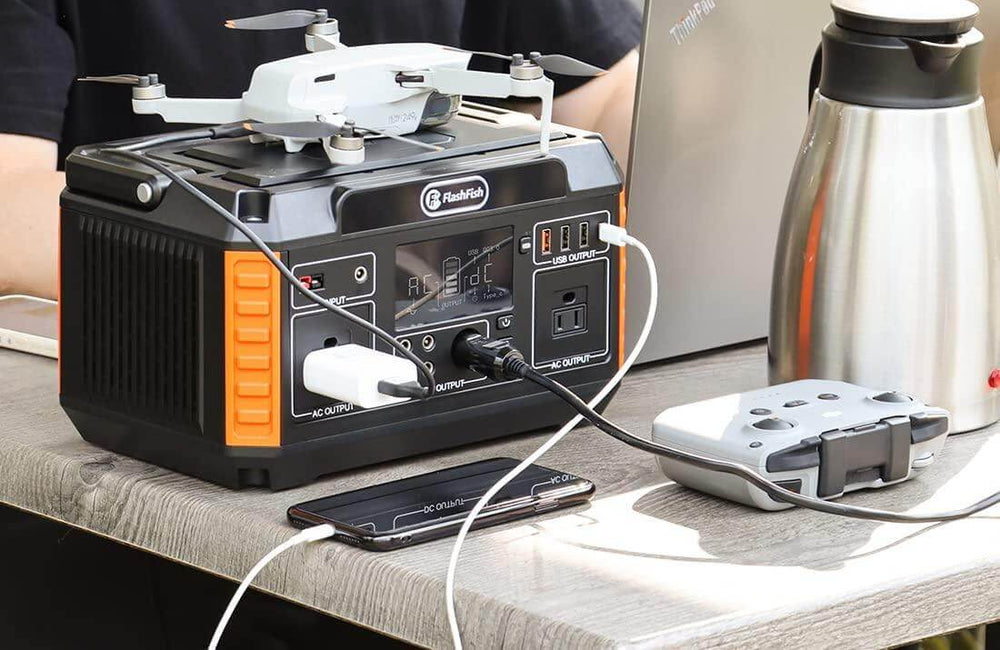
A portable power station can fit a parked-car work break better than a vehicle inverter when you want a separate, documented power path for a laptop and phone and do not want the plan to depend on the vehicle. An inverter can be appropriate only when the vehicle?s manual, the inverter documentation, and the location?s rules support that exact use. Check each device label before connecting anything.
Begin with the work-break outcome
For a short stop, the goal is usually modest: handle a message, review a document, or complete a brief task. Make the plan equally modest. Identify the laptop, phone, their original charging equipment, and any item that must run at the same time. Do not silently expand the setup into a vehicle-powered office with unknown accessories and cables.
Also decide whether the power source needs to be independent of the vehicle. That distinction, not a generic claim that one option is ?better,? is the useful starting point.
Compare the two power paths
| Planning question | Portable power station | Vehicle inverter |
|---|---|---|
| Where does the power path begin? | In the station, after it has been prepared according to its manual. | In the vehicle system, subject to the vehicle and inverter documentation. |
| What must be verified? | Station ratings, manual, device labels, cables, and any combined use. | Vehicle guidance, inverter guidance, device labels, connection method, and local restrictions. |
| What is the main decision? | Whether a separate stored-energy source fits the documented device plan. | Whether the exact vehicle-supported arrangement is permitted and documented. |
Vehicle guidance is not optional
A parked vehicle has its own operating guidance, battery limits, ventilation considerations, and location restrictions. Do not infer permission from a 12V outlet, an accessory socket, or an inverter?s advertised category. Read the vehicle owner?s manual and the inverter instructions for the exact connection path, and follow posted rules for the place where you stop.
Idling rules can vary by site and date. Rather than relying on a general rule, check the current parking-area, employer, property, or local guidance that applies to the planned break.
Use device labels to limit the plan
Record the laptop?s rated input and the information printed on its charger. Do the same for the phone and any other essential device. Then compare those details with the selected power source?s original manual. A charger?s connector fit does not by itself prove it should be used with a particular station, inverter, vehicle outlet, or adapter.
Keep simultaneous use as a separate question. A laptop and phone may look like a small setup, but additional devices, charging states, and adapters change the documented load. Avoid a runtime estimate unless it is based on the actual equipment and manufacturer-supported conditions.
Where FlashFish fits the decision
FlashFish E103 is a 179.2Wh LiFePO4 portable power station with 300W continuous pure-sine AC output. FlashFish T300Pro is a 230Wh LiFePO4 portable power station with 300W continuous pure-sine AC output. These figures provide a station-side starting point for a low-draw comparison, not a verdict about a particular laptop, phone, vehicle, inverter, or adapter.
A separate station may simplify the power path when you need the work-break plan not to rely on the vehicle. It does not remove the need to follow device manuals, keep equipment stable, and confirm the location?s rules.
A decision checklist for the next stop
- Choose the essential task and devices for the break.
- Check the laptop, phone, charger, vehicle, and inverter documentation.
- Confirm the parking location?s current restrictions, including any idling guidance.
- Select one documented power path; do not combine paths by improvising adapters.
- Stop if a label, cable, setup, or rule is unclear.
Frequently asked questions
Is a portable power station always safer than a vehicle inverter?
No universal answer applies. The correct choice depends on the exact device, power source, vehicle instructions, and location rules.
Can I use both a station and an inverter at once?
Do not assume that arrangement is appropriate. Treat each power path separately and follow the relevant manufacturer documentation.
Does a parked-car work break require idling?
Do not assume it does. Check the vehicle manual and the current rules for the specific location before planning the break.
Next step: Compare FlashFish E103 specifications with your requirements.


Laisser un commentaire
Ce site est protégé par hCaptcha, et la Politique de confidentialité et les Conditions de service de hCaptcha s’appliquent.