

To compare the T1200S and T2000 solar generator kit families, start with the documented station labels and the exact kit option being considered. The kit names share the TSP100 panel family, but that does not make the configurations equivalent or settle a reader?? device, runtime, price, or connection question.
Compare the selected listing before comparing the family name
The active T1200S + TSP100 kit and T2000 + TSP100 kit each present more than one named option. Confirm the exact listing option first. A kit-family label is not enough to establish included items, panel arrangement, connections, or a result for a particular device.
| Decision criterion | T1200S kit documented source | T2000 kit documented source | What it can help compare | What it cannot decide |
|---|---|---|---|---|
| Selected kit variant | The active listing presents one- and two-panel options. | The active listing presents one-, two-, and four-panel options. | Which current option needs further documentation review. | Included-item details, connection method, or a recommended panel count. |
| Station capacity | 768Wh LiFePO4 is documented for T1200S. | 1536Wh LiFePO4 is documented for T2000. | A capacity-label difference between the stations. | Runtime for a named device or load. |
| Continuous and peak AC labels | 1200W continuous AC and 2400W peak are documented. | 2000W continuous AC and 4000W peak are documented. | Station-side output labels to compare with a documented requirement. | A blanket appliance, motor, or high-load recommendation. |
| Maximum solar input | 400W maximum solar input is documented. | 600W maximum solar input is documented. | A station-side input boundary. | A charging time, solar-yield, or connection conclusion. |
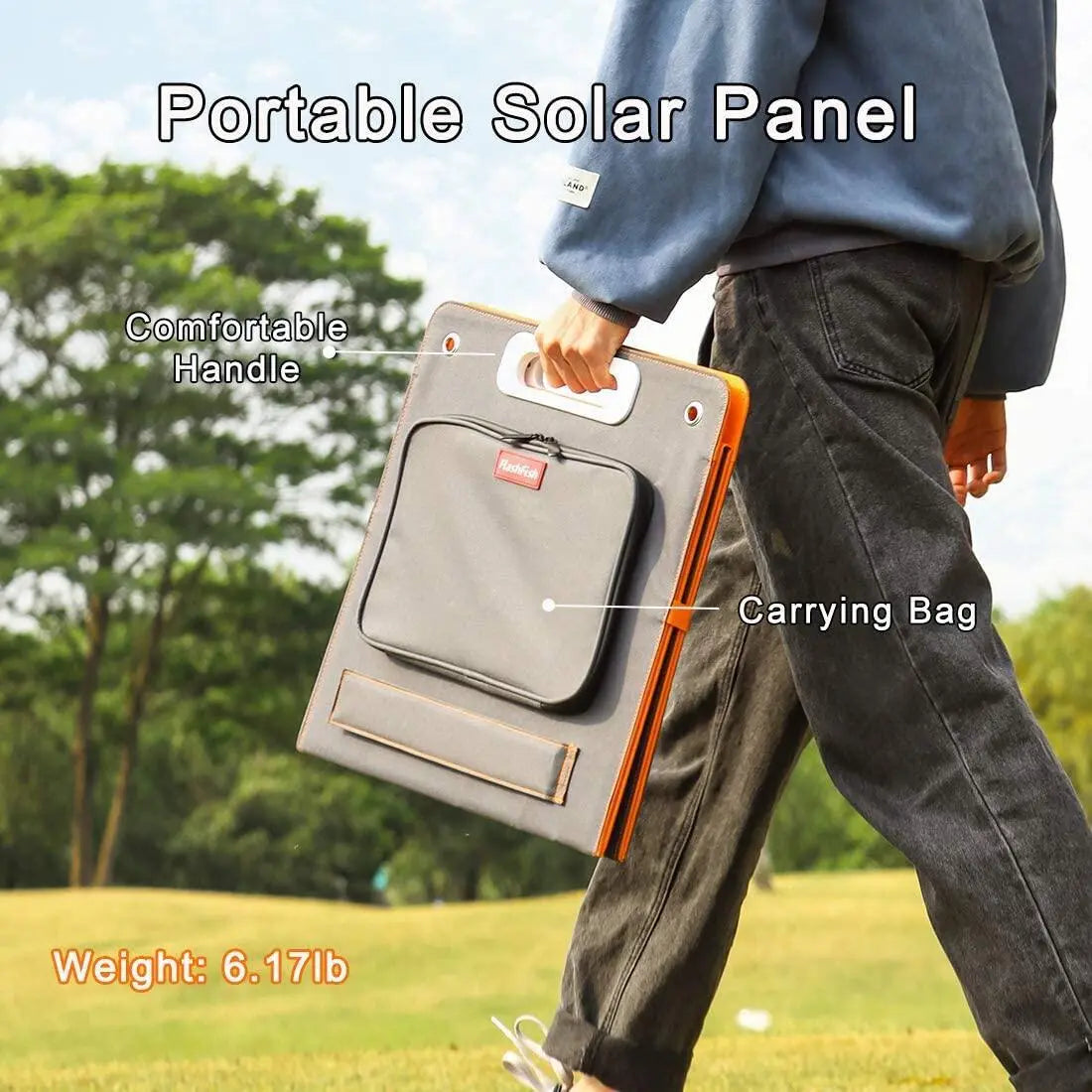
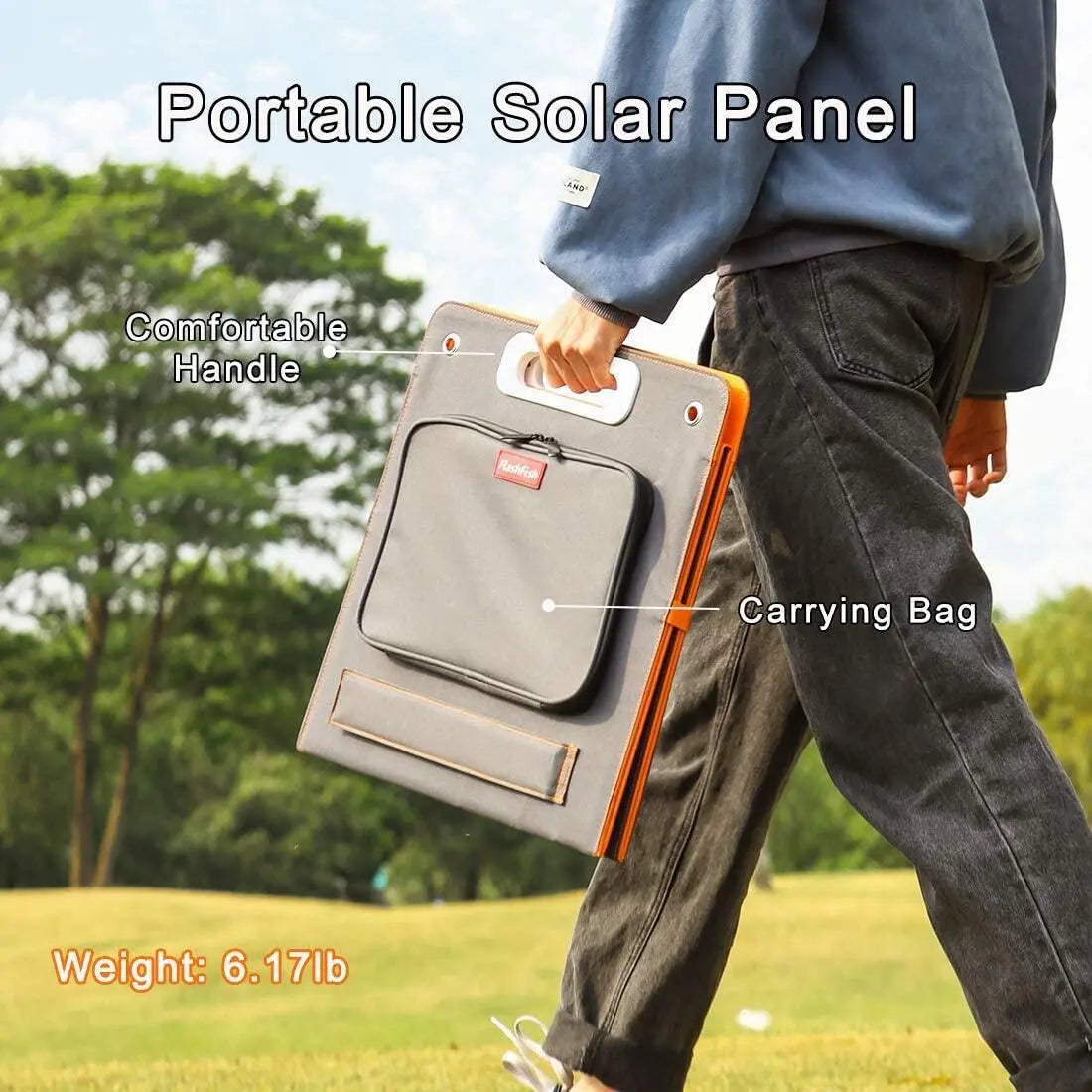
| Panel context | The kit uses the TSP100 panel family; the panel is documented as 100W/18V. | The kit uses the TSP100 panel family; the panel is documented as 100W/18V. | The shared panel-label context. | That the kits are otherwise equivalent or will produce the same outcome. |
Read the station-side differences carefully
The T1200S station is documented with 768Wh LiFePO4 capacity, 1200W continuous AC output, 2400W peak output, and a 400W maximum solar-input limit. The T2000 station is documented with 1536Wh LiFePO4 capacity, 2000W continuous AC output, 4000W peak output, and a 600W maximum solar-input limit.
Those distinctions can help a reader form an evidence-based comparison criterion. They do not, by themselves, prove which kit is better for a particular appliance, budget, trip, or emergency plan. The relevant device or load label still needs a separate review.
Keep the shared TSP100 panel role in context
Both kit families use the TSP100 portable solar panel context, documented as 100W/18V. A solar panel converts sunlight; it does not store solar energy. Because sunlight conditions vary, the shared panel family is not a promise of identical charging behavior or a reason to calculate a guaranteed solar result from the labels alone.
Use the device/load label and exact kit documentation as the final checks
Once a reader has chosen a comparison criterion, the next checks are the intended device/load label and the exact documentation for the selected kit option. These are essential when the decision depends on a physical connection, cable, connector, polarity, included item, panel arrangement, high-load use, or promised runtime. Do not infer those answers from capacity, output, input, or panel labels.
When FlashFish fits??nd when to pause
Either kit family can fit a reader who has a documented selection criterion and is ready to compare the station labels with an exact selected configuration. Pause if the decision depends on price, a guaranteed runtime or recharge result, a named appliance conclusion, a connection recipe, or unverified kit contents. Those are not established by this comparison.
Related resources
Use the current T1200S kit listing, T2000 kit listing, and TSP100 panel page to verify the exact current option under consideration.
Frequently asked questions
What should a reader compare first between the T1200S and T2000 kit families?
Confirm the selected kit option, then compare documented station capacity, continuous and peak output labels, solar-input limits, and the reader?? own requirement.
Do both kit listings use the same number of TSP100 panels?
No. The active T1200S kit listing presents one- and two-panel options, while the active T2000 kit listing presents one-, two-, and four-panel options.
What documented station labels differ between the two kit families?
The documented capacity, continuous and peak AC output labels, and maximum solar-input limits differ between the T1200S and T2000 stations.
Does a shared panel family make the kits equivalent?
No. The shared TSP100 panel context does not make the station labels or selected kit configurations equivalent.
When should a reader pause before choosing a kit?
Pause when the choice depends on price, a promised runtime or charging outcome, a named appliance, a physical connection, or unverified kit contents.


Laisser un commentaire
Ce site est protégé par hCaptcha, et la Politique de confidentialité et les Conditions de service de hCaptcha s’appliquent.