

Hurricane Season Power Outage Charging Checklist
Short answer: A portable power station is most useful during hurricane season when it is assigned to a clear charging plan: phones first, lights second, communication gear third, and comfort devices only after the essentials are covered.
For U.S. households, hurricane prep is not only about owning backup power. It is about deciding what deserves stored electricity before the storm arrives. Public guidance from Ready.gov encourages households to prepare for hurricanes and power outages ahead of time. Battery power stations fit the indoor, quiet, no-exhaust part of that plan, while fuel-burning generators require strict outdoor carbon monoxide precautions.
Build the checklist before the storm
Do not wait until the outage to decide what to plug in. Write a small priority list and keep it with your emergency kit.
| Priority | Devices | Why it comes first |
|---|---|---|
| 1 | Phones, USB battery packs, weather radio | Alerts, family contact, emergency updates |
| 2 | LED lanterns, headlamps | Safe movement at night without wasting battery |
| 3 | Wi-Fi router or hotspot, if local service still works | Outage maps, work, school, messages |
| 4 | Laptop, camera batteries, small fan | Useful only after communication and light are covered |
Use watt-hours instead of guessing
Portable power stations list capacity in watt-hours. A simple planning rule is: device watts multiplied by hours equals estimated watt-hours before losses. Real runtime will be lower because inverters, cables, temperature, and device behavior all reduce efficiency.
That is why hurricane prep should be conservative. A phone, LED light, and radio can often deliver more practical value than trying to run heavy appliances from a battery.
Where FlashFish products naturally fit
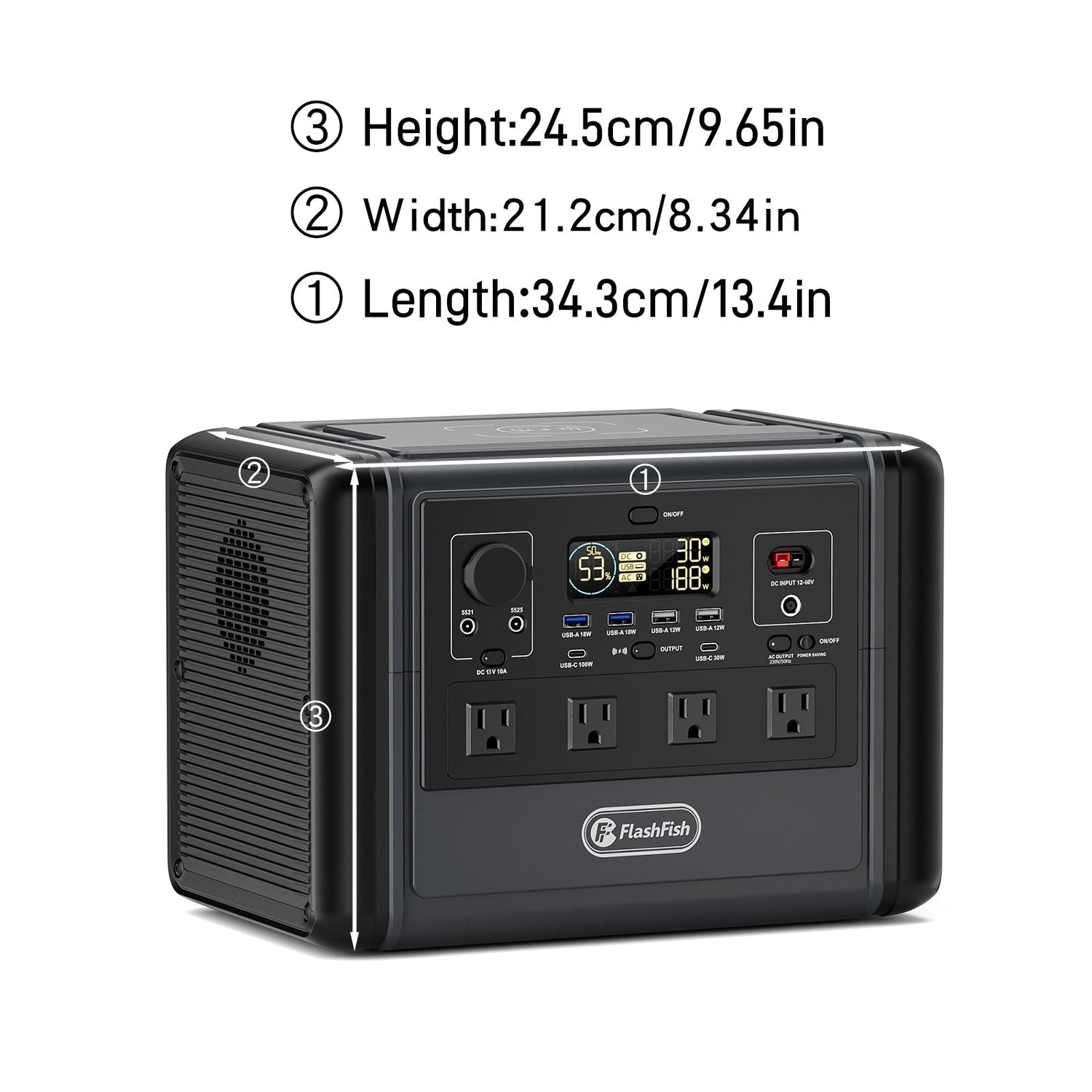
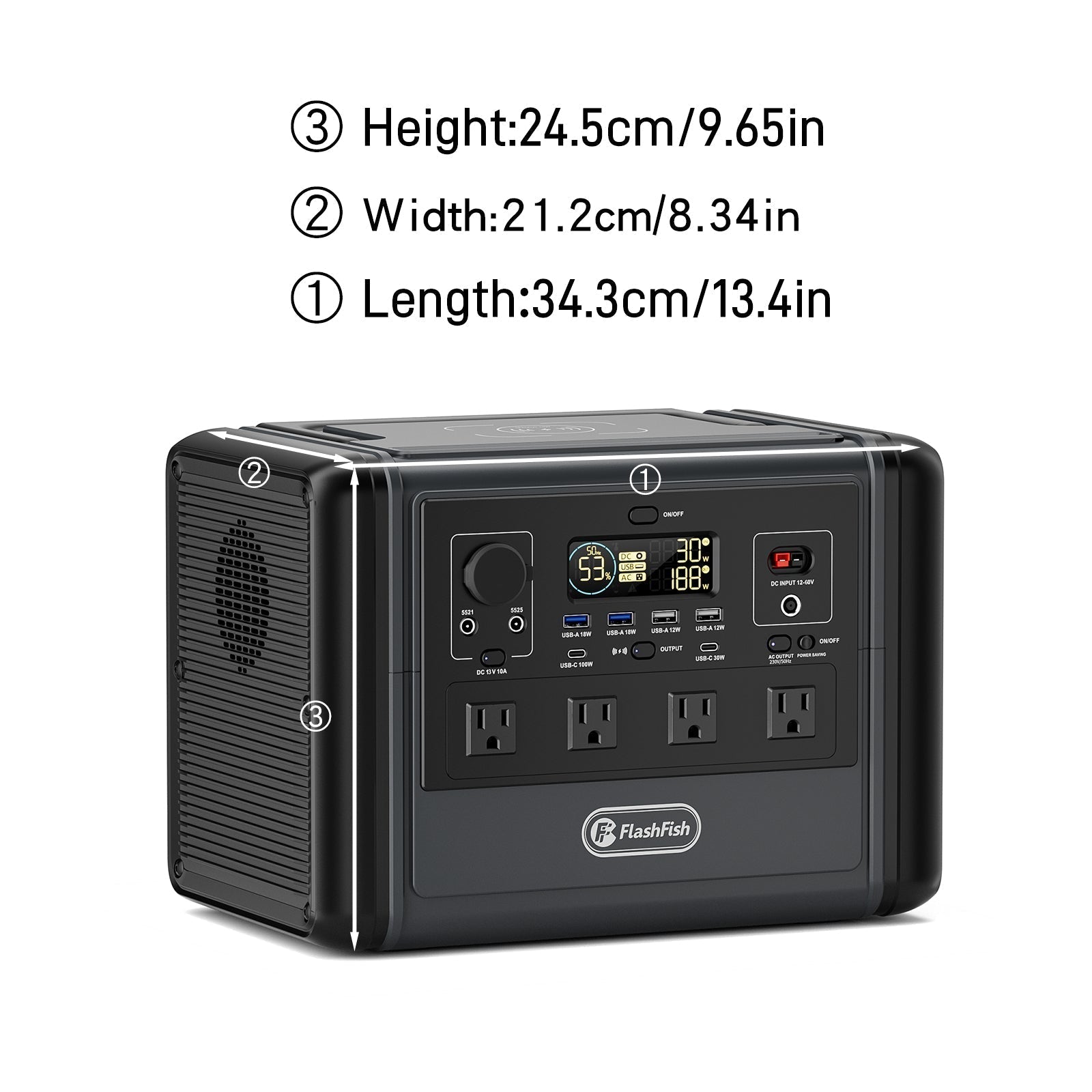
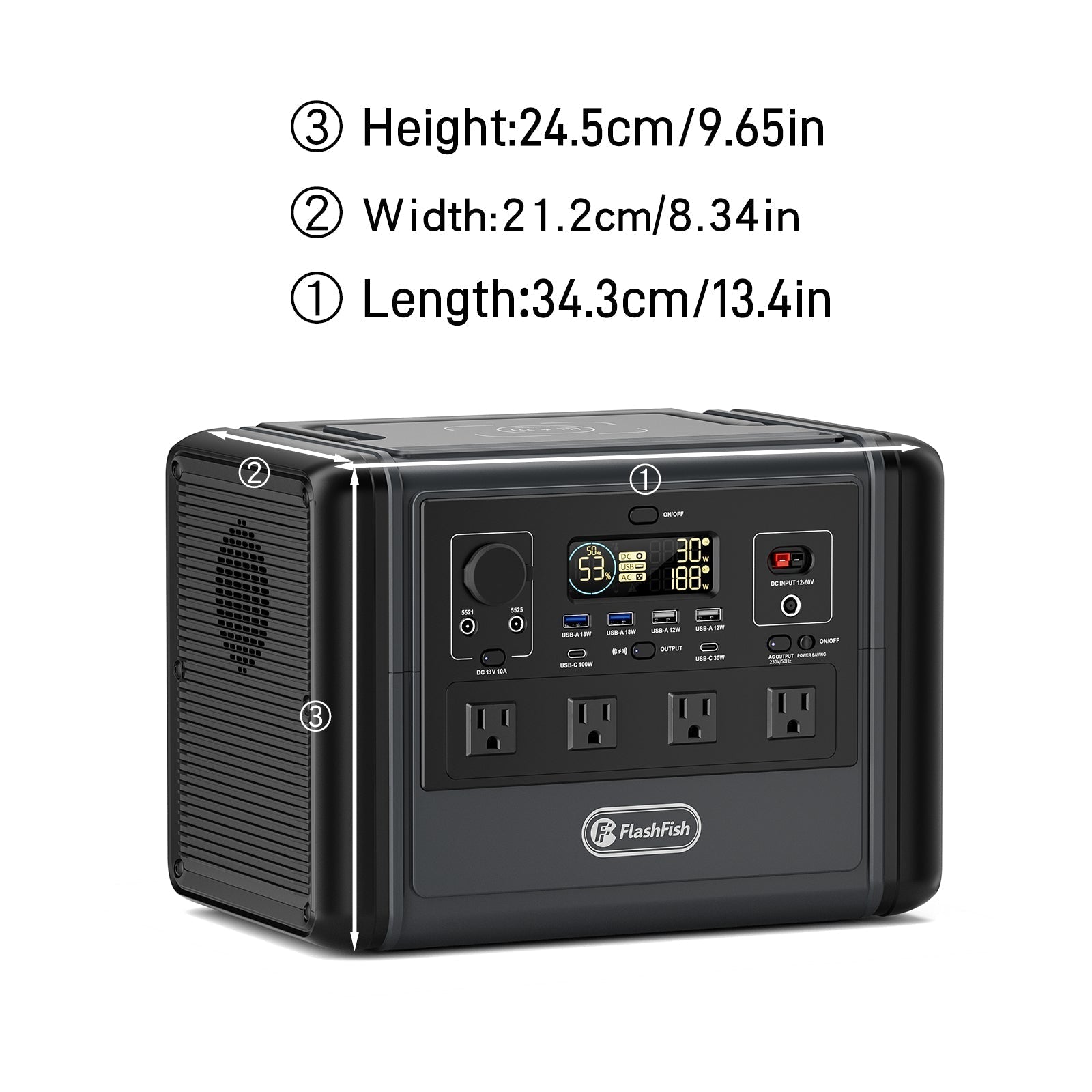
The theme of this article is hurricane-season charging priority, so the product match should follow the load list. The FlashFish T1200S Portable Power Station is a natural fit for families that want more headroom for phones, lights, router time, a laptop, and small comfort devices. The FlashFish P63 fits a mid-size emergency kit, while the compact FlashFish E200 can support a smaller charging plan.
If sun access is safe after the storm, a compatible portable solar panel such as the FlashFish TSP100 can help recover some battery during the day. Solar output depends on weather, shade, panel angle, and input limits, so treat it as backup recovery, not a guarantee.
What not to promise
- Do not promise whole-home backup from a portable power station.
- Do not claim medical-device runtime without device-specific guidance.
- Do not rely on battery power for food safety without checking official food and outage guidance.
- Do not use fuel generators indoors, in garages, or near windows.
FAQ
Should I charge the power station before hurricane season?
Yes. Check and charge it before forecasted storm windows, then review the manual for storage and recharge guidance.
Can a solar panel recharge during cloudy weather?
It may produce less power. Clouds, shade, rain, panel angle, and cable setup can reduce output. Plan with a buffer.
Which devices should I avoid?
High-draw heat appliances, large compressors, and devices with startup surge may be poor fits unless the exact device wattage and power station limits are verified.
Human review checklist
- Verify live U.S. product availability before approval.
- Check that hurricane and generator-safety claims match official guidance.
- Confirm the article does not imply whole-home or medical backup.
- Preview Shopify image, links, and mobile table layout.

Laisser un commentaire
Ce site est protégé par hCaptcha, et la Politique de confidentialité et les Conditions de service de hCaptcha s’appliquent.