

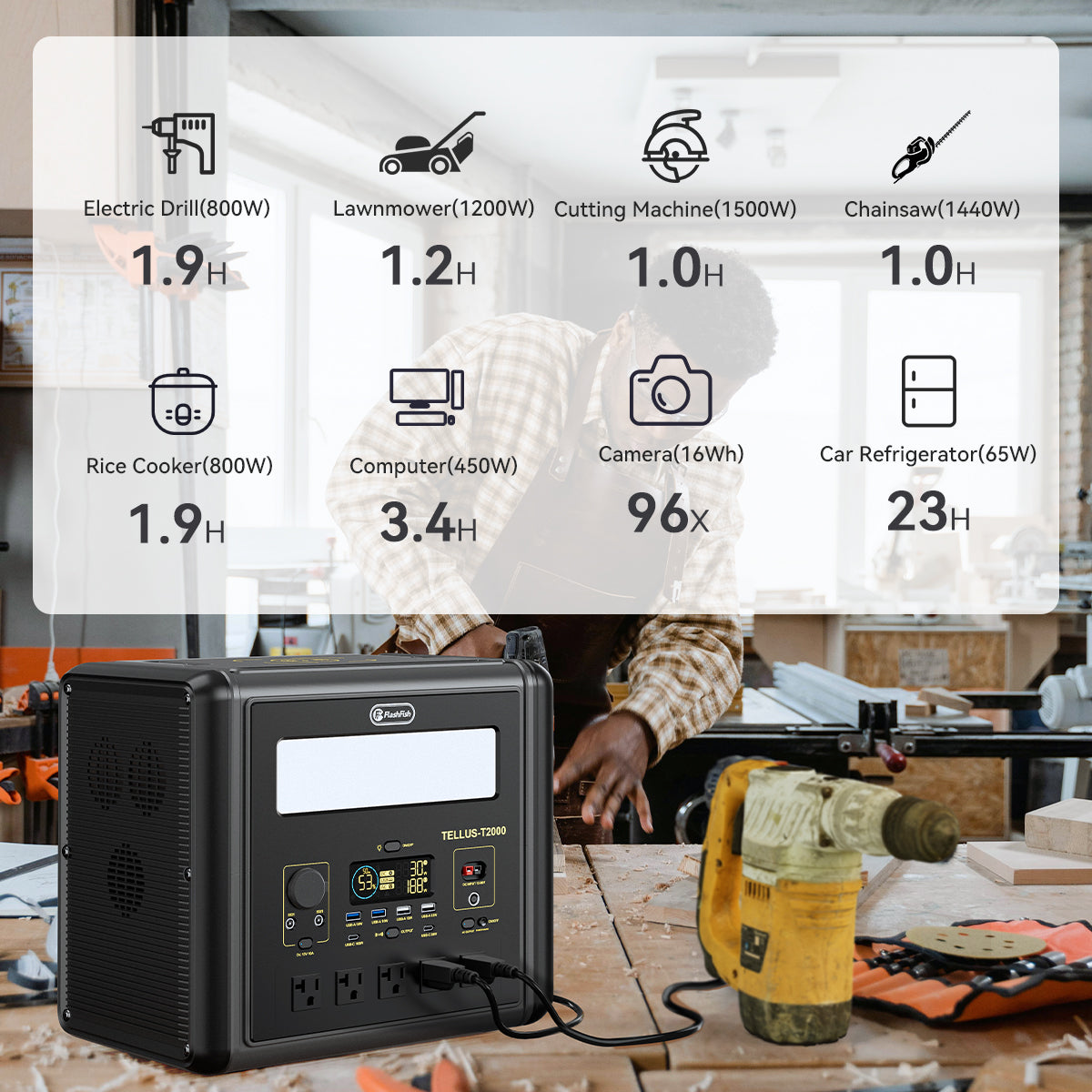
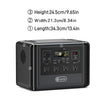
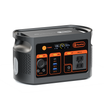
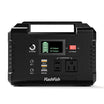

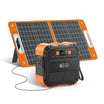
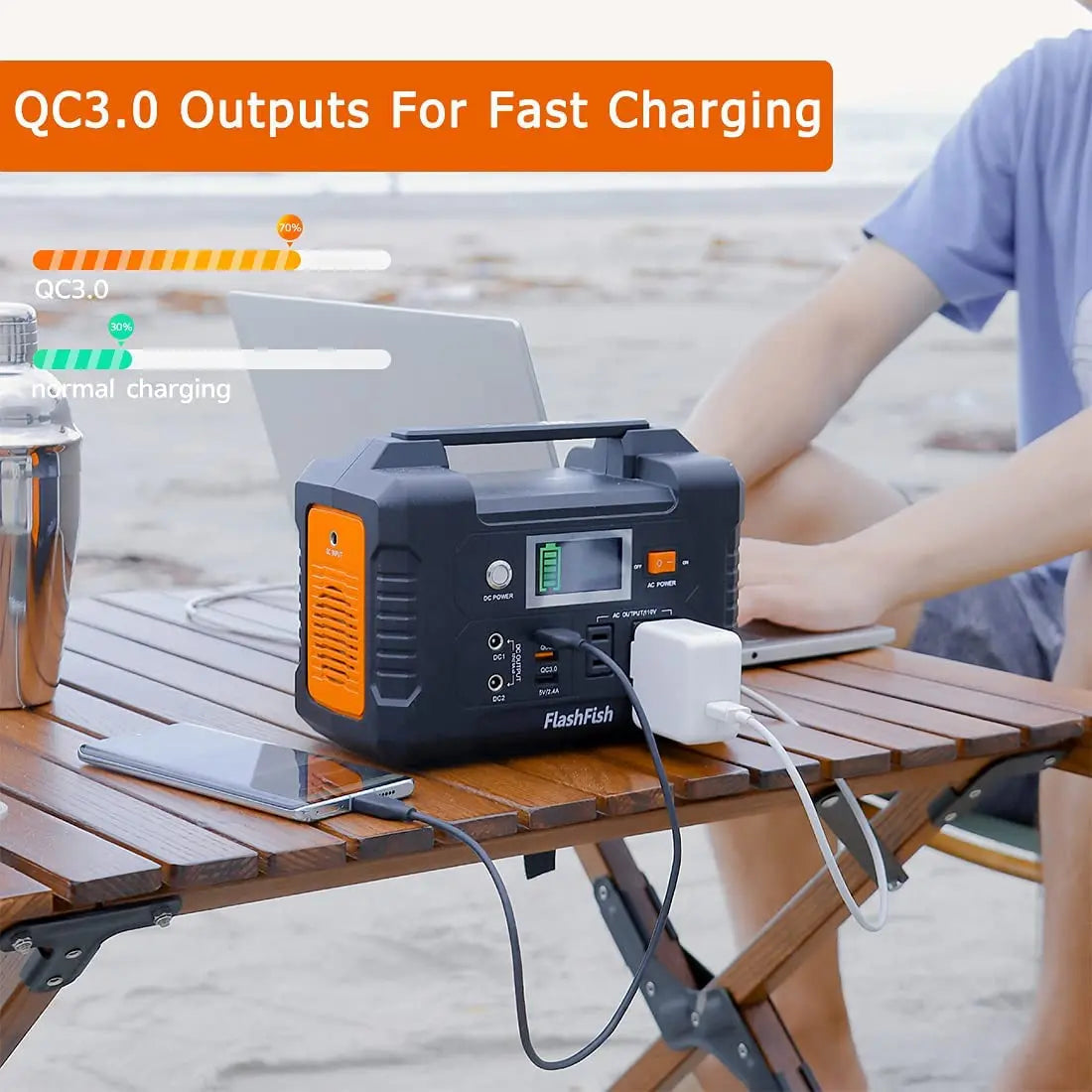
Short answer: 200W and 300W describe how much AC power a portable power station can output at one time; they do not tell you how long the battery will last. A 300W station gives more output headroom for some chargers, small fans, and mixed small loads, while runtime still depends on watt-hours and the wattage of the devices you plug in. For FlashFish shoppers, the choice usually starts with compact 200W models such as E200 or T200, then steps up to 300W models such as E103 or T300PRO when extra AC headroom matters.
200W vs 300W portable power station: the practical difference
The number on the front of a portable power station can be easy to misread. A 200W or 300W rating is mainly an output limit: it tells you the approximate maximum AC load the station is designed to support continuously. It is different from watt-hours, which describe stored battery energy.
That distinction matters for camping and short outage planning. A 300W station may let you plug in a device or small combination of devices that would be too close to a 200W limit, but it does not automatically mean longer runtime. A 200W station with careful load planning may be the better fit when the goal is lower weight and simple charging. A 300W station makes more sense when the user needs more headroom, a larger compact battery, or a pure sine AC model with additional output margin.
Quick decision table
| Output tier | Usually a fit for | Use caution with | Not the right tier for |
|---|---|---|---|
| 200W portable power station | Phones, small lights, routers, many laptop chargers, camera batteries, and simple camping electronics after checking wattage. | Multiple devices at once, larger laptop chargers, small fans, or any device with startup surge. | Heaters, microwaves, high-surge tools, large kitchen appliances, or whole-home backup. |
| 300W portable power station | More mixed small loads, some larger laptop chargers, compact fan planning, and users who want more AC output headroom. | Motor loads, appliance electronics, and any device where the label or manual requires more power than the station can provide. | Heating appliances, refrigerators as a guaranteed food-safety solution, hardwired circuits, HVAC, or whole-home backup. |
FlashFish compact model comparison
| Model | Battery capacity | AC output | AC waveform | Solar/DC input note | Weight | Best fit |
|---|---|---|---|---|---|---|
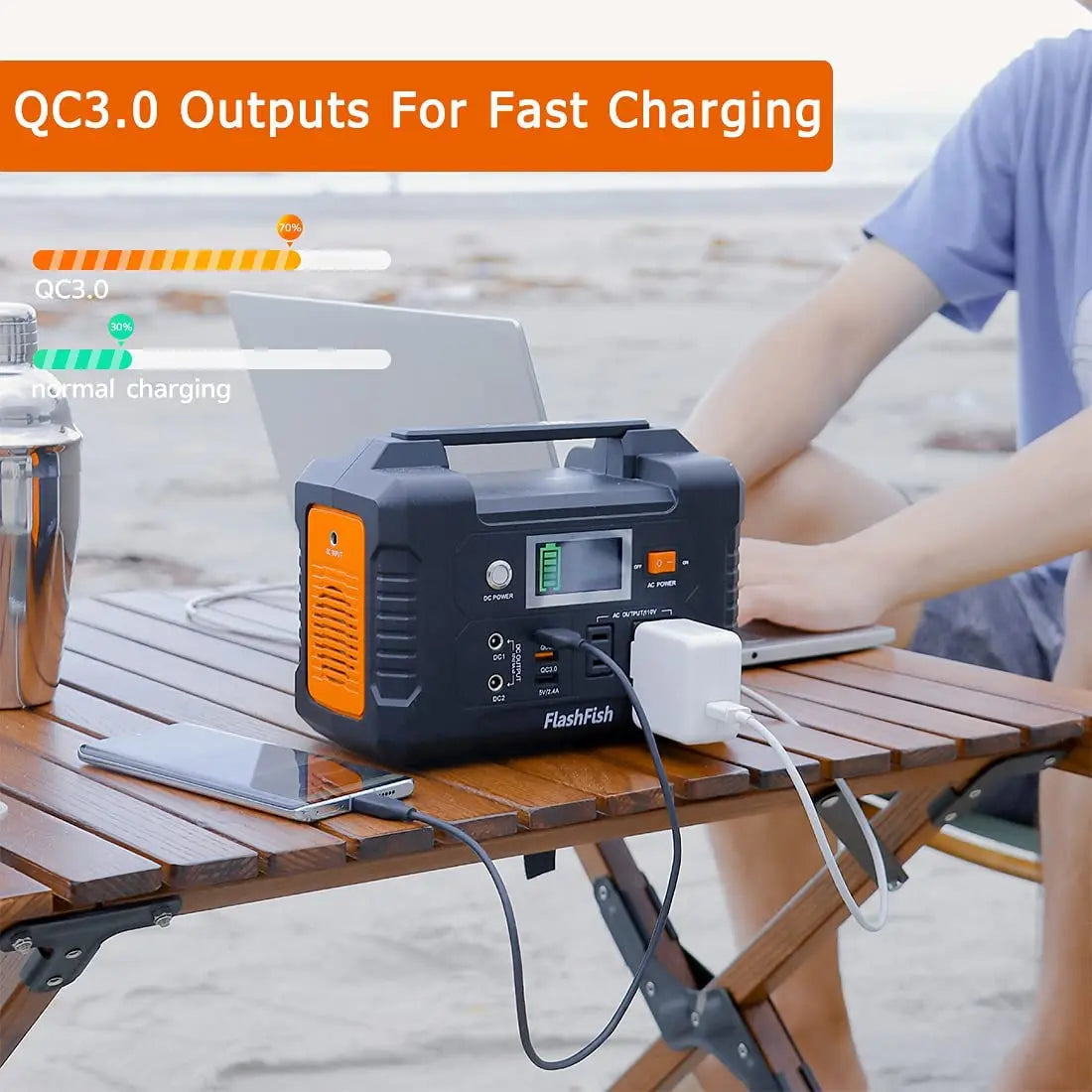
| FlashFish E200 | 151Wh | 200W continuous, 400W peak | Modified sine AC | 40W max solar/DC charging | 1.85kg | Lightweight camping, phone/light/router/laptop planning where device compatibility is checked. |
| FlashFish T200 | 153.6Wh | 200W continuous, 400W peak | Pure sine AC | 60W max solar input | 2.5kg | A 200W LiFePO4 option for shoppers who want compact size plus pure sine AC output. |
| FlashFish E103 | 179.2Wh | 300W pure sine AC output | Pure sine AC | 90W max DC charging input | 3.0kg | A compact 300W choice when extra AC headroom is more important than the lightest carry weight. |
| FlashFish T300PRO | 230Wh | 300W continuous, 600W peak | Pure sine AC | 120W max solar input | 4.5kg | A 300W LiFePO4 step-up for longer compact-station planning and more solar input headroom. |
Watts and watt-hours are not the same thing
Watts describe the rate at which a device uses power. Watt-hours describe an amount of energy over time. That is why a shopper should check both the station output rating and the battery capacity before choosing a model.
For example, a 200W station can be a good match for a single low-power camping setup if the combined load stays within its output limit. A 300W station gives more room for higher-watt chargers or several small electronics at once. Runtime still depends on the actual load and normal conversion losses, so this draft avoids fixed runtime promises for laptops, fans, routers, or lights.
Solar charging: match the panel and station input limit
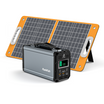
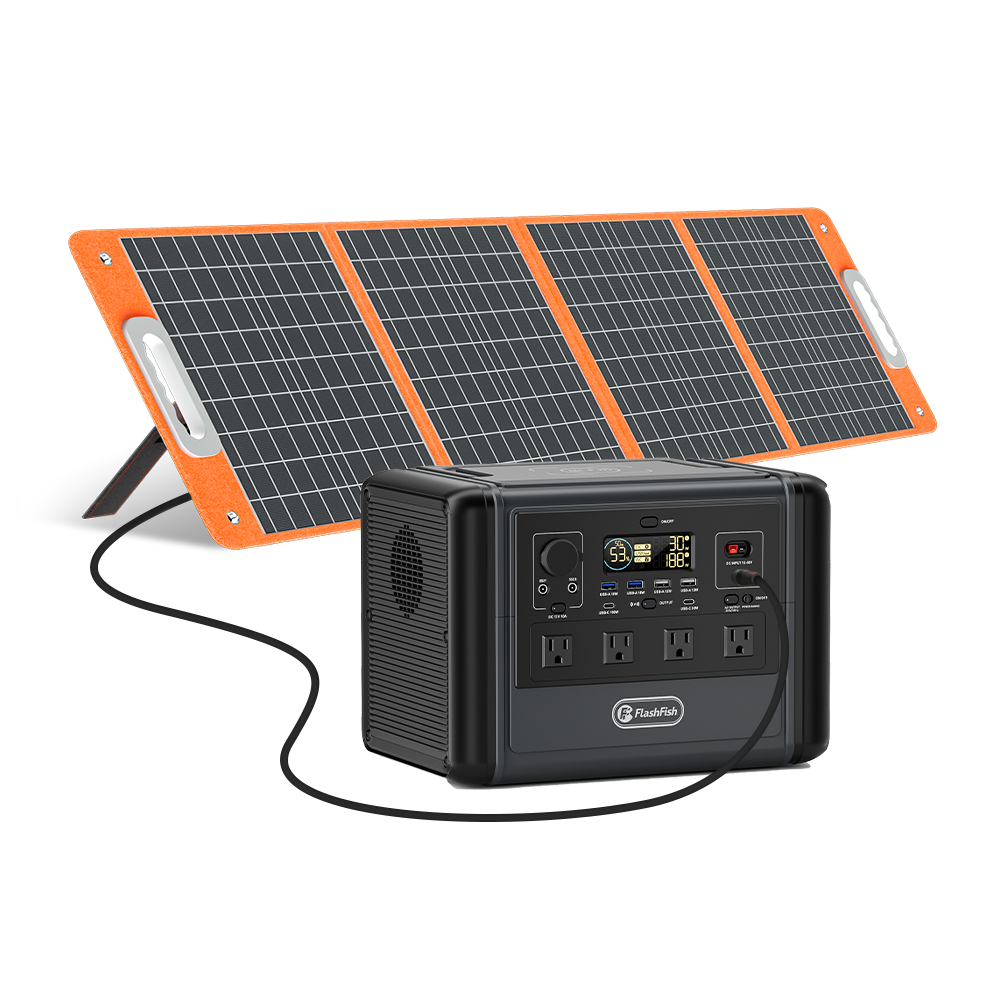
Solar planning is not only about panel wattage. The station input limit, connector compatibility, sunlight, shade, temperature, panel angle, and weather all affect charging. FlashFish compact options in this group range from the E200's 40W max solar/DC charging to the T300PRO's 120W max solar input.
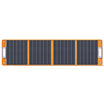
For a starter solar setup, shoppers can compare the FlashFish portable solar panels collection with the station they are considering. The TSP60 is a 60W foldable monocrystalline panel with 18V DC output, and the TSP100 is a 100W foldable monocrystalline panel with 18V DC output. The right match depends on the power station's input limit as well as the user's charging environment.
When a 200W station is the better fit
A 200W station is usually the more practical choice when the load list is modest and carry weight matters. This can include phone charging, LED lighting, a router during a short outage, small camera batteries, or a laptop charger that is clearly within the station limit. It can also make sense for campers who want a compact backup battery instead of a larger station they will rarely use.
The E200 is the lightest FlashFish option in this compact group at 1.85kg, with 151Wh capacity and 200W AC output. The T200 stays in the 200W tier but adds LiFePO4 battery chemistry and pure sine AC output in the local product database. That makes the 200W tier less about "less capable" and more about choosing the smallest station that fits the real load list.
When a 300W station is worth the step up
A 300W station is worth considering when the user expects more mixed small loads, a higher-watt laptop charger, a small fan, or a compact setup that would sit too close to a 200W ceiling. It also gives more flexibility when a device briefly draws more power at startup, although users still need to check the device label and product manual instead of assuming compatibility.
The E103 gives 300W pure sine AC output with 179.2Wh capacity. The T300PRO steps up to 230Wh, 300W continuous AC output, 600W peak output, LiFePO4 battery chemistry, and 120W max solar input. For shoppers comparing these against a 200W model, the main question is whether that extra output and battery capacity solve a real use case, not whether 300W sounds better on paper.
When to move beyond 300W
Neither 200W nor 300W should be framed as a whole-home backup tier. If the user wants to plan for a small TV or monitor, several office devices, RV electronics, or a longer essential-load setup, it may be better to compare larger models in the FlashFish portable power stations collection. The next decision layer is output watts, watt-hours, surge needs, solar input, and whether the user can handle the larger size and weight.
FAQ
Is a 200W portable power station enough for camping?
It can be enough for light camping electronics such as phones, LED lights, camera batteries, and many laptop chargers, as long as the combined device wattage stays within the station's output rating. It is not the right tier for heating appliances, cooking appliances, high-surge tools, or whole-campsite power.
What can a 300W portable power station run?
A 300W station can support a wider range of small electronics than a 200W station, but only when each device and the total combined load stay within the station's limits. It is a better fit for shoppers who need extra AC headroom for mixed small loads, not for high-watt appliances.
Does more watts mean longer runtime?
No. More watts usually means more output headroom. Runtime depends on watt-hours, actual device load, conversion losses, and how the station is used.
Should I choose a 200W or 300W station for a laptop?
Check the laptop charger label first. Many laptop chargers fit within a 200W tier, but some larger chargers or mixed-device setups may make a 300W station more comfortable. If waveform matters for the charger, also check whether the station provides pure sine or modified sine AC output.
When should I step up to a 1200W or 2000W station?
Step up when your device list includes larger AC loads, longer essential-load planning, RV/camping mixed loads, or more solar input needs. Larger stations should still be matched to actual device wattage and should not be treated as whole-home backup unless the system is designed for that purpose.

Leave a comment
Laman ini dilindungi oleh hCaptcha dan tertakluk pada Dasar Privasi dan Terma Perkhidmatan hCaptcha.