


Reporting only completed charging trials hides the attempts that stopped early and those whose outcome was never recorded. Keep every eligible start in your log, then report observed completions, observed non-completions, and unknown outcomes separately. A watt-hour average from completed sessions describes that subset; it does not describe every attempt.
This is a recordkeeping method for ordinary, non-critical device sessions, not a product reliability test. The example below is invented to show how to count attempts.
Define an attempt before you look at its result
Write down the device, intended task, starting condition, and completion rule. For example, an attempt might begin when you connect a phone for a planned charging session and end when the specified charge target is observed or the session is stopped. Choose a rule that you can actually observe. Do not redefine completion afterward to make a short session count as successful.
Give each start one ID. A duplicate photo of the same meter reading is another piece of evidence for that attempt, not another attempt. If a session never starts, keep it in a separate planned-but-not-started list. If you restart a stopped session, preserve the original and record the new start separately rather than overwriting it.
A three-attempt example
These are synthetic records for the same planned phone-charging task. They are not measurements of either FlashFish model.
| Attempt | Eligible and started? | Completion observed? | Stop or observation status | Endpoint missing? | Usable energy record |
|---|---|---|---|---|---|
| A | Yes | Yes | Target reached | No | 12 Wh for the completed task |
| B | Yes | No | Owner ended session before target | No; non-completion observed | 4 Wh partial reading; not full-task energy |
| C | Yes | Unknown | Final observation not recorded | Yes | Unknown |
The honest summary is: three eligible starts, one observed completion, one observed non-completion, and one unknown outcome. Observed completions divided by eligible starts is 1/3, or about 33%. It is not a claim that exactly two-thirds failed: C has no observed outcome. The completed-session energy summary contains one value, 12 Wh. Neither 0 Wh for C nor 12 Wh for every start is justified.
Keep stopped sessions and missing observations distinct
Record the reason as observed: owner interruption, missing final photo, or the exact device message. Do not turn an unexplained stop into a diagnosed battery fault. If a stop was required by the applicable manual, retain that fact; a desire to finish the log is no reason to resume it.
NIST's explanation of censored reliability observations shows that an observation can end before the event of interest is seen. Its subject is time-to-failure analysis. A casual charging log is not automatically that kind of study: a lost endpoint and an observed early interruption should not both be labeled equipment failure or automatically treated as statistically independent censoring.
Where A101 and T200 fit in the log
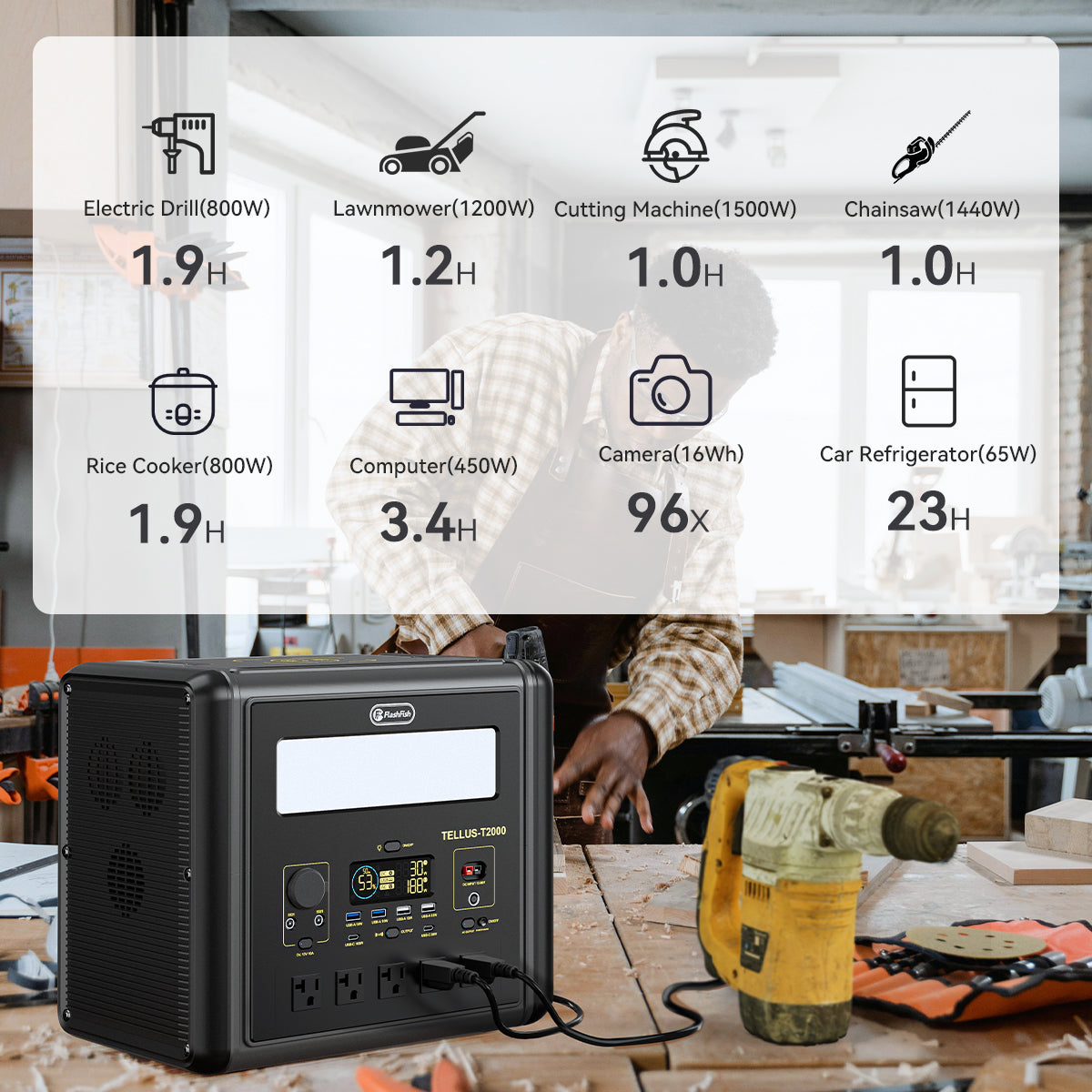
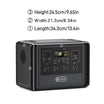
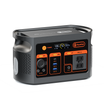
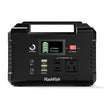
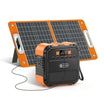
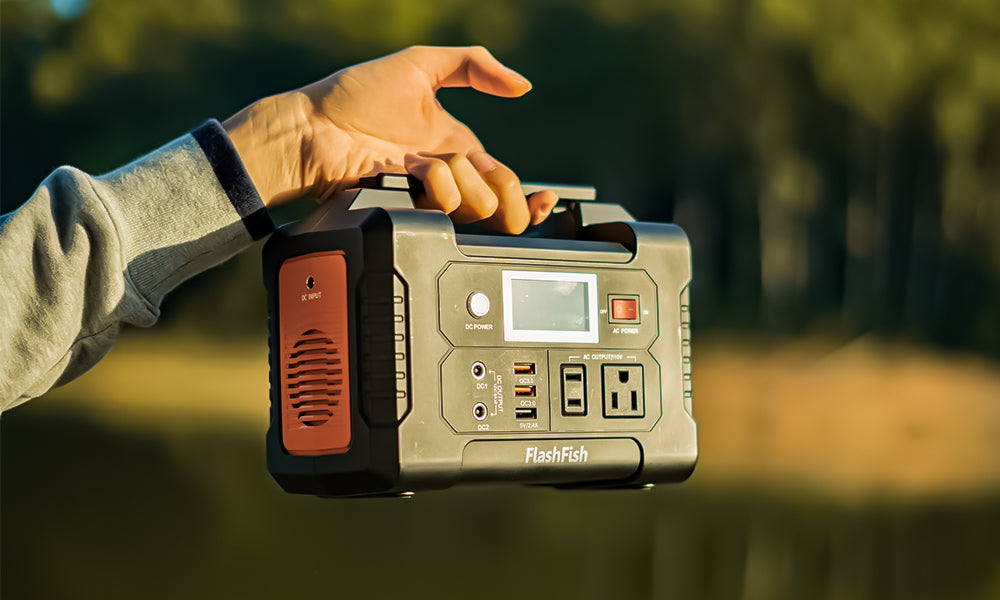
The FlashFish A101 has a documented 97.68 Wh nominal battery capacity; the T200 record lists 153.6 Wh. These are model specifications, not measured energy delivered to your phone. Record the exact model with each attempt and keep its sessions separate when summarizing results. Combining the two would obscure which setup produced each observation.
This log fits an owner who wants to understand incomplete sessions before planning another ordinary device task. It does not establish either model's runtime, next-trip success probability, or suitability for critical backup.
FAQ
Should I delete an attempt if I forgot the meter reading?
No. Retain the start, mark the energy endpoint missing, and state whether completion itself was observed. Completion status and energy availability are separate fields.
Can I average partial and completed readings together?
You can describe recorded energy up to each observation endpoint if that is the explicitly named measure. Do not call that average energy per completed task; the endpoints differ.
What should I save before summarizing?
Save the attempt list, original observations, inclusion rule, and reasons for exclusions. Your summary should let another reader reconstruct the denominator without guessing which rows disappeared.
Start with the eligible-start count, then write the three outcome counts beside it. Only after those counts are clear should you summarize the available completed-task energy readings.
Next step: Compare FlashFish A101 specifications with your equipment list.

Leave a comment
Laman ini dilindungi oleh hCaptcha dan tertakluk pada Dasar Privasi dan Terma Perkhidmatan hCaptcha.