


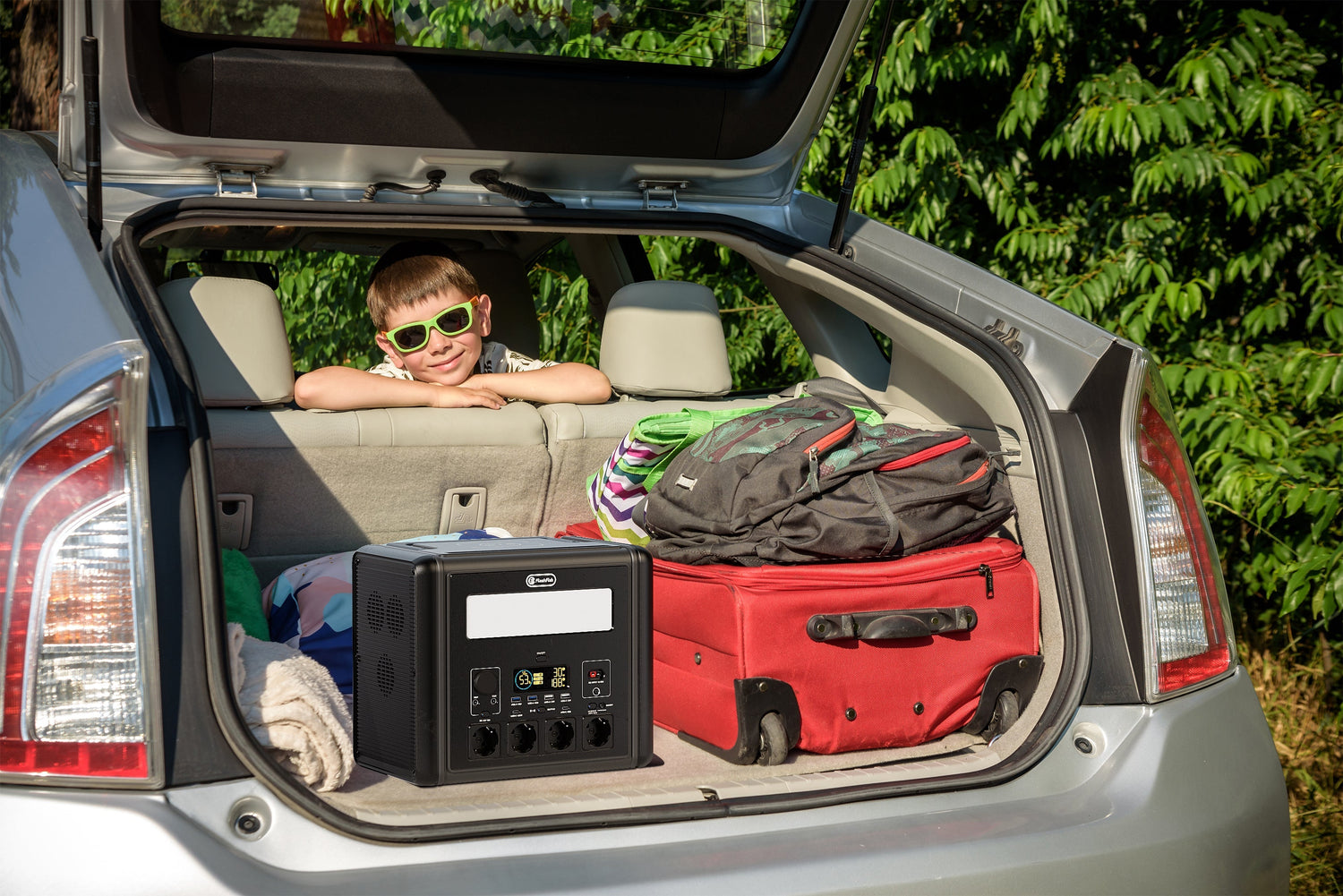
Quick answer: Choose a portable power station for tailgating by adding up the actual loads you plan to bring, checking the highest simultaneous AC wattage and any startup demand, confirming the ports and cables each device needs, and planning stored energy before relying on solar or vehicle charging. FlashFish can fit selected tailgate loads after that worksheet is clear; do not choose by party size alone.
Make a tailgate load worksheet first
Start with the devices, not the power station. For each item, find the label or manual and record the plug type, running watts, any startup demand, and how long you expect to use it. A TV or small screen, speaker, phones, LED lights, and a small fan can have very different power paths even when they all feel like ordinary tailgate gear.
Use watt-hours as a planning number, not an exact runtime promise. The U.S. Energy Information Administration explains watts and watt-hours as different measurements: watts describe power at a moment, while watt-hours describe energy used over time. A station needs enough output for the load and enough stored energy for the event plan.
| Tailgate load | What to check | Why it matters | Claim boundary |
|---|---|---|---|
| TV or small screen | Label or manual watts and plug type | Usually drives the AC output requirement | No exact runtime without device data |
| Speaker | AC, USB-C, USB-A, or battery charging path | May not need an AC outlet | No universal cable claim |
| Phones and tablets | USB-C or USB-A wattage and cable support | Determines whether direct USB charging fits | Port max is not device draw |
| LED lights | Input wattage and connector | Low loads still need the right cable | No string-light compatibility guarantee |
| Small fan | Running watts and startup behavior | Motor loads can need extra startup power | No appliance guarantee |
Separate TV power from phones and speakers
A TV or screen often determines whether you need AC output. Check its labeled running watts and do not treat a station's peak output as continuous operating power. If the screen, fan, or speaker has a motor or power brick, look for any startup or input requirement in the manual.
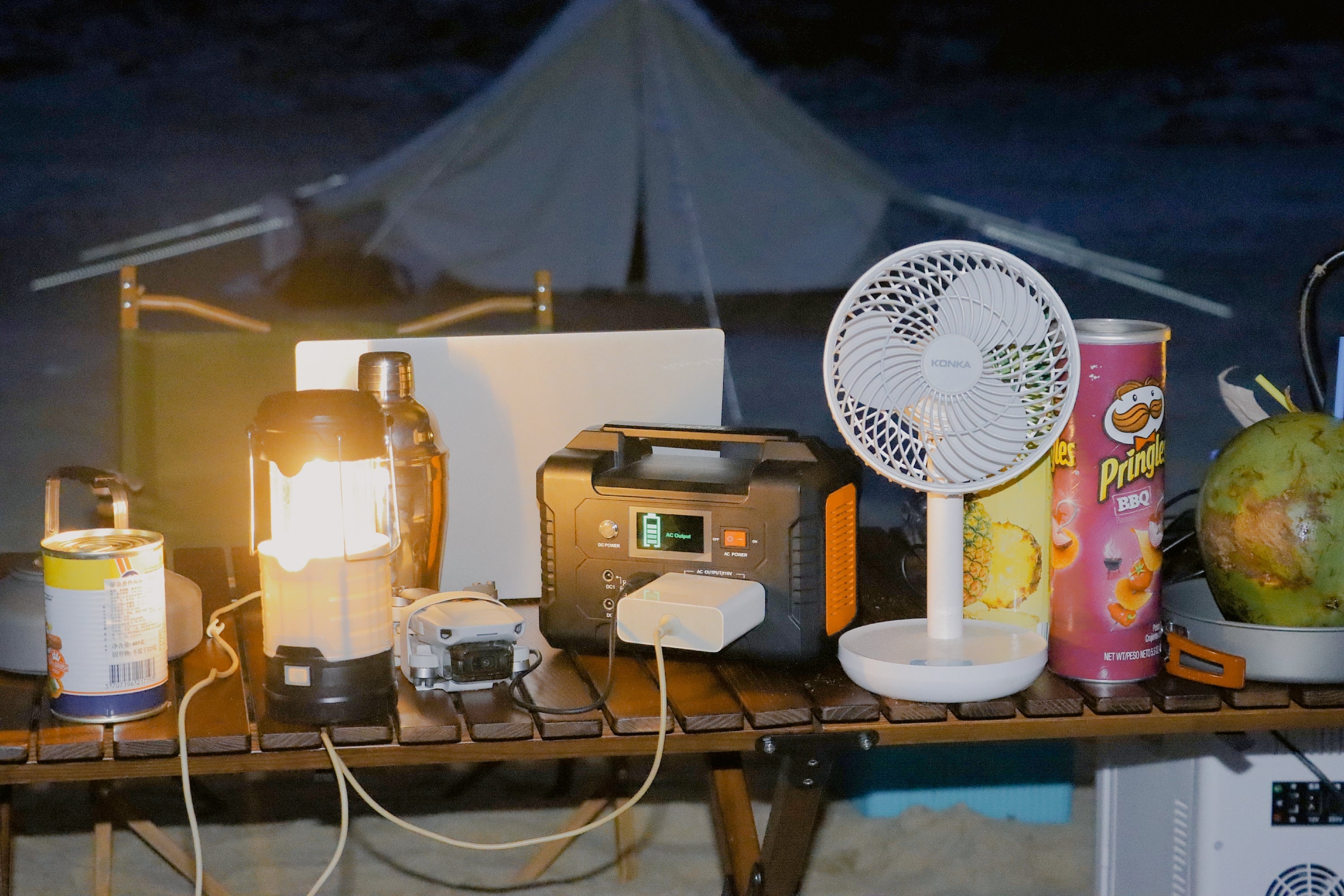
Phones, tablets, and many speakers may be better served by USB-C or USB-A when the device and cable support that path. Direct USB charging can preserve AC outlets for equipment that truly needs them, but the connector alone is not proof of compatibility. Match the required voltage, current, charging protocol, and cable rating.
Check AC, USB-C, USB-A, and 12V paths
Build the event around confirmed paths. AC outlets are useful for screens and chargers with standard plugs. USB-C and USB-A are useful for phones, tablets, compact speakers, and some lights when the device supports the available output. A 12V path should be used only when the device manual and cable match the station output.
If two or more devices need AC at the same time, add their running watts and compare that total with the station's continuous AC rating. Keep peak output separate. Peak output is a short startup boundary, not a planning number for continuous operation.
Decide whether compact or higher-capacity power fits
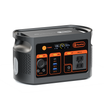
For light phone, tablet, speaker, and small-light charging, compact stations may be enough after the worksheet passes. The FlashFish A101 has 97.68Wh capacity, 120W continuous AC output, 240W peak AC output, two USB-C outputs up to 18W each, two USB-A outputs up to 18W each, and a 1.2kg listed weight. The product bundle does not provide A101 battery chemistry or AC waveform, so do not assume those values.
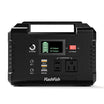
For mixed tailgate loads, the FlashFish T300PRO provides 230Wh capacity, 300W continuous AC output, 600W peak AC output, LiFePO4 battery chemistry, pure sine AC output, 120W maximum solar/DC input, 100W USB-C input/output, and a 4.5kg listed weight. It is a candidate when the worksheet shows modest AC demand plus USB charging needs, not a blanket answer for every TV or fan.
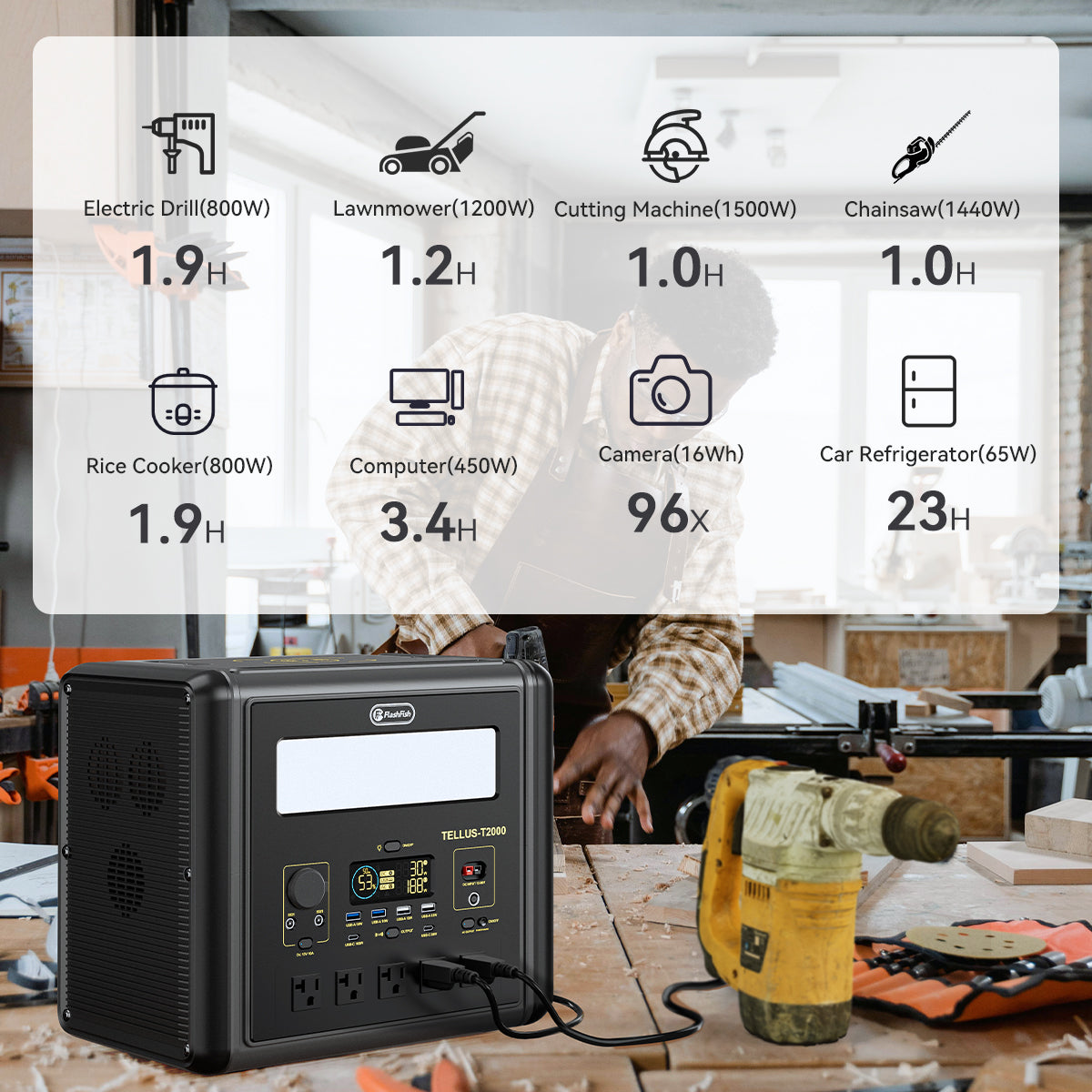
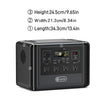
For higher-output or multi-device tailgate plans, the FlashFish T1200S has 768Wh capacity, 1200W continuous AC output, 2400W peak AC output, LiFePO4 battery chemistry, pure sine AC output, four AC outlets, 100W and 30W USB-C outputs, 400W maximum solar/DC input, and a 12.45kg listed weight. The FlashFish T2000 has 1536Wh capacity, 2000W continuous AC output, 4000W peak AC output, four AC outlets, 100W and 30W USB-C outputs, 600W maximum solar/DC input, and a 19.2kg listed weight. Use those larger examples only when the documented load and transport plan justify the weight.
Plan recharging before and after the event
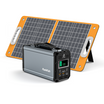
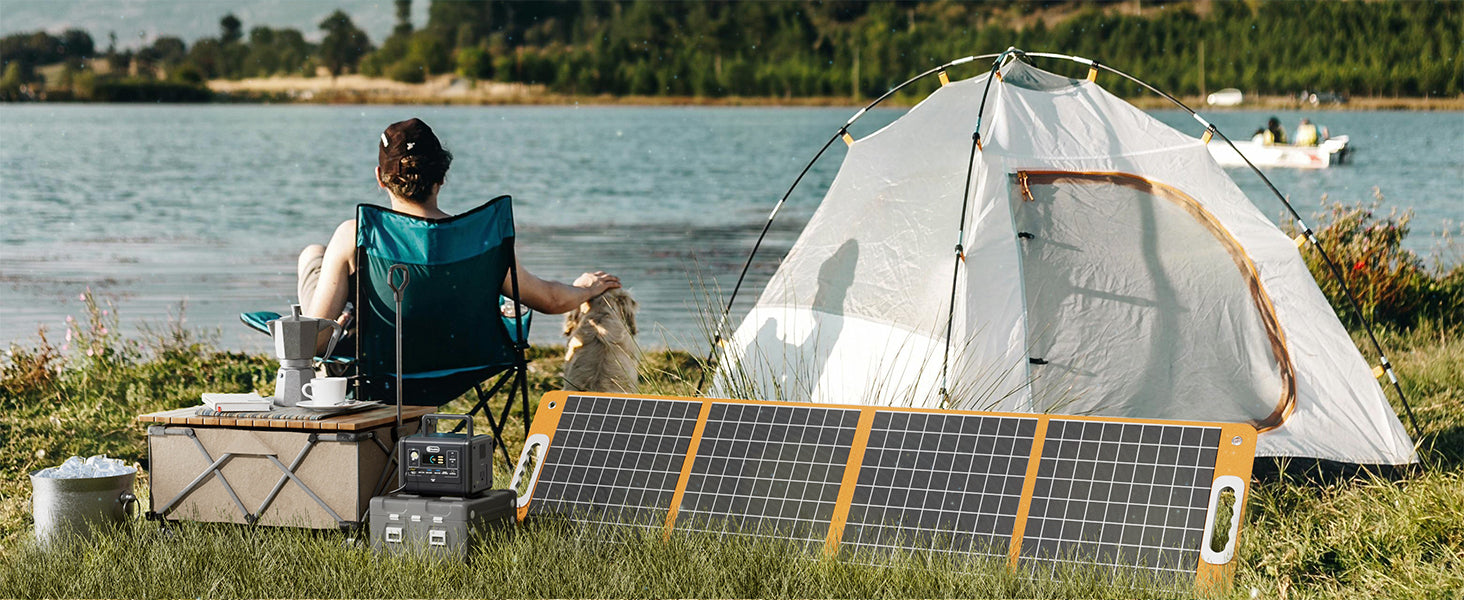
Bring enough stored energy for the loads that matter most. Solar can be useful around long outdoor events, but it depends on sunlight, setup space, orientation, weather, and compatible input limits. The U.S. Department of Energy explains solar radiation variability, which is why panel nameplate wattage should not be treated as guaranteed event output.
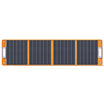
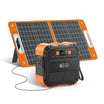
The FlashFish TSP60 is a 60W, 18V panel with USB-C output up to 45W and USB-A output up to 18W. The FlashFish TSP100 is a 100W, 18V panel with USB-C output up to 65W and USB-A output up to 18W. Panels convert sunlight to electricity; they do not store power by themselves.
What not to run from a tailgate battery setup
Keep this setup focused on selected electronics, lights, and small comfort loads that pass the label check. Cooking, heating, refrigeration, medical devices, high-surge appliances, and venue-critical equipment need separate source-backed review. Do not assume a battery station is allowed at a stadium, campus, parking lot, or event just because the load is technically possible. Check the official event or venue rules separately.
Battery stations avoid fuel-engine noise during operation. If comparing them with a fuel generator, remember that the CDC warns about carbon monoxide from fuel-burning engines. That safety context does not prove venue approval for any power source.
Where FlashFish can fit after the checklist
Use the FlashFish portable power station collection after you have the worksheet. Smaller stations can fit phones, tablets, lights, and light-duty charging when the output and ports match. Mid-size stations can fit modest mixed-device plans. Larger stations can fit higher-output or longer multi-device plans when weight, transport, and device labels all support the choice.
When FlashFish fits
FlashFish is a fit when your tailgate load list is made of documented low-to-moderate electronics, your highest simultaneous AC wattage stays within continuous output, the needed USB and AC ports are present, and you can carry the station safely from vehicle to setup point.
When FlashFish may not fit
FlashFish may not fit when the plan depends on cooking, heating, refrigeration, medical backup, high-surge tools, rain exposure, hot-car storage, or official venue permission that has not been verified. It also may not fit when the device manual does not provide enough input information to check compatibility.
Related planning guides
Before choosing a tailgate setup, compare the same ideas in the running watts vs surge watts guide, the portable power station watt-hours guide, and the portable power station vs gas generator guide. If your event setup is similar to a campsite, the camping power station guide can help with load sorting and portability tradeoffs.
Frequently asked questions
What size portable power station do I need for tailgating?
Choose the smallest station that supports your documented running watts, any startup demand, required ports, and planned watt-hours with margin. Party size is less useful than the labels on the TV, speaker, lights, fan, and chargers.
Can a portable power station run a TV at a tailgate?
It can be a candidate if the TV's official wattage and plug type fit the station's continuous AC output and your planned viewing time fits the available stored energy. Do not assume exact hours without the TV data and full load list.
Is a battery power station quieter than a gas generator?
A battery power station avoids fuel-engine noise during operation, but that does not mean every venue allows it. Check the official tailgate, parking lot, campus, or stadium rules separately.
Can I use solar panels at a tailgate?
Solar can help when sunlight, setup space, event rules, and station input compatibility all line up. It should be treated as a conditional top-up path, not a guaranteed recharge-time promise.
What should I not plug into a tailgate power station?
Avoid cooking, heating, refrigeration, medical devices, high-surge appliances, and any device whose label or manual does not confirm a safe match with the station's output and ports.

Leave a comment
Laman ini dilindungi oleh hCaptcha dan tertakluk pada Dasar Privasi dan Terma Perkhidmatan hCaptcha.