

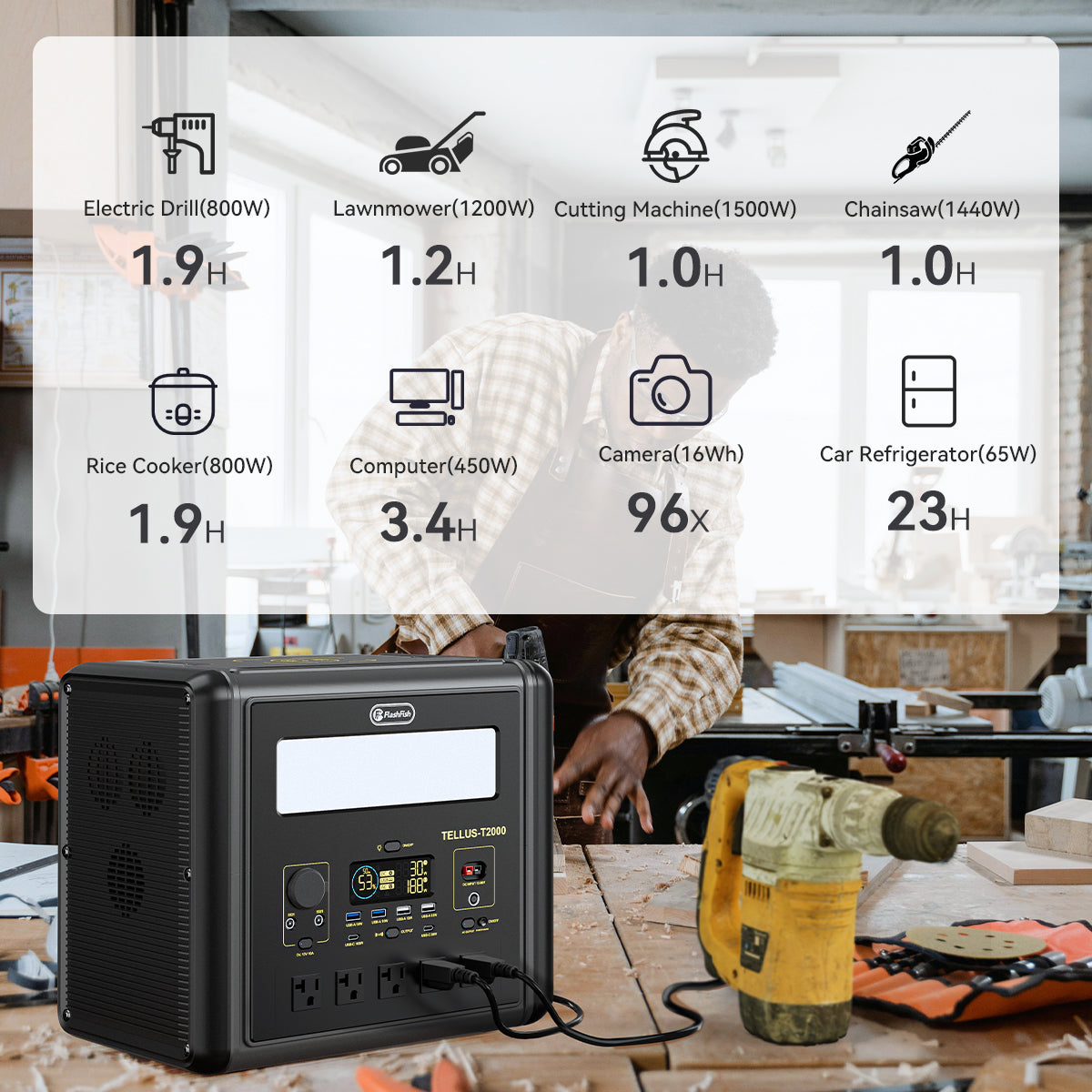

Set a personal maximum premium for faster station recharging by multiplying supported minutes of useful time saved per occasion by your chosen dollar value per minute and a fixed number of occasions. Count only time the shorter recharge actually frees for you. An input-watt rating alone provides no measured minutes saved and cannot justify a dollar premium.
This is a purchase worksheet for optional travel tasks, not a FlashFish charging-speed test. No matched E103 and T300Pro recharge logs or current purchase quotes were supplied. The calculations below use hypothetical inputs and do not rank either model's recharge speed.
Define what must be ready before timing anything
Start with the later task: the energy you need delivered through a specified output and charging path. Define the starting condition, endpoint, and task-completion requirement for each station. Two batteries reaching the same displayed percentage need not represent the same later delivered-energy task. A nominal-capacity difference makes that distinction especially relevant.
If you already have documented observations, record the exact unit, regional version, charger, cable, charging mode, output configuration, and relevant conditions. Keep the equipment and permitted procedure tied to the matching instructions. The FlashFish U.S. manual directory emphasizes exact model and electrical-version matching. It is a place to locate instructions, not evidence that a particular recharge comparison has been performed.
Do not create a faster result by assuming a charging mode, adapter, or combined input is supported. If the exact setup is undocumented, pause that candidate's time comparison and seek the matching instructions. Missing observations remain missing; a wattage label is not a substitute.
Count useful minutes rather than the entire elapsed difference
A shorter elapsed recharge may matter when you must remain present and it moves your departure earlier. It may have little time value when both options finish during a stop you would make anyway. Count the time you can actually reclaim without double-counting minutes used for another planned activity.
Use repeated comparable observations to describe a range, not only the most favorable session. Do not turn a set of overlapping results into a confident speed advantage. Where the conditions differ materially, keep the records separate instead of averaging them into a result that neither setup demonstrated.
| Field | Candidate A | Candidate B | Decision boundary |
|---|---|---|---|
| Exact station and complete kit | Enter unit and revision | Enter unit and revision | Include equipment required for the compared mode |
| Matched energy endpoints | Document start and later task | Document start and same later task | Display percentage alone is insufficient |
| Observed recharge minutes | Enter dated sessions and repeat range | Enter dated sessions and repeat range | No time advantage established without comparable records |
| Useful attended minutes saved | Enter supported time actually freed per occasion | Exclude waiting that changes nothing in your schedule | |
| Planned occasions and personal time value | Enter a fixed count and assumed USD per minute | These are personal assumptions, not product specifications | |
| Maximum premium | Useful minutes × USD/minute × occasions | Compare with a complete same-day quote difference | |
Calculate a ceiling for this one benefit
Maximum time-based premium = supported useful minutes saved per occasion × personal USD per minute × specified occasions. Use zero for the time benefit if neither option changes your available time. If the benefit has not been measured, leave it unestablished rather than entering an optimistic estimate as fact.
The result is a willingness-to-pay ceiling under your assumptions. It is not a cash saving, a return on investment, or a forecast of the station's lifetime. Use a trip count you can explain. Do not extend the calculation to every future trip just to make the premium look affordable.
Hypothetical example 1: A modest time advantage
Suppose comparable records support 15 useful minutes saved on each of eight planned occasions. You choose a personal value of $0.20 per minute. The time-based ceiling is 15 × $0.20 × 8 = $24. If a hypothetical complete-kit quote difference is $40, the quoted premium exceeds your $24 ceiling by $16. These invented amounts are not FlashFish prices.
Hypothetical example 2: Faster completion changes no plans
Suppose one option finishes 30 elapsed minutes earlier, but both finish during a stop you would take for the same length of time anyway. With no useful minutes freed, the worksheet assigns $0 to this time benefit. You might still prefer one kit for another documented reason; keep that reason separate from a recharge-time premium.
Hypothetical example 3: The repeated results change the choice
Assume comparable observations support a useful-time advantage ranging from 5 to 20 minutes. At an assumed $0.25 per minute across six occasions, the ceiling ranges from $7.50 to $30. A hypothetical $25 premium fits only the more favorable end. Treat the choice as assumption-sensitive: seek stronger comparable evidence, negotiate a smaller premium, or decline to pay for the uncertain time benefit.
Where E103 and T300Pro fit
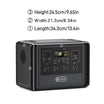
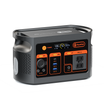
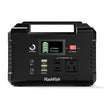
FlashFish E103 has a nominal 179.2Wh capacity; T300Pro has 230Wh. Both are candidate model identities for the worksheet. The capacity figures do not establish which recharges faster, how long either takes, or whether either meets your later task. Compare equal required delivered-energy outcomes rather than pricing a difference between unequal tasks.
The available E103 reference manual describes a 230V AC-output version. Confirm the actual U.S. unit and matching instructions rather than transferring that electrical version into a U.S. setup. This worksheet makes no AC-compatibility claim and does not use either model's input ceiling to calculate a recharge duration.
Compare the whole quote once the time evidence exists
Record same-day U.S.-dollar quotes for the exact variants, required accessories, and applicable checkout charges. A bare-station price and a kit price are different comparison boundaries. No current quote is given here, so no actual purchase premium can be calculated from this article.
If the complete quote difference exceeds your ceiling, a lower-priced option is the better fit for this time benefit alone, provided it otherwise meets your requirements. If the difference falls below the ceiling, still check product fit, documentation, and purchase terms. A favorable calculation cannot supply missing compatibility or performance evidence.
Frequently asked questions
Can I use my hourly wage as the value of time?
You can choose it as a personal assumption, but explain the choice. A reclaimed travel minute does not automatically generate income. Use a lower value or a range if that better represents your decision.
Should I include overnight recharge time?
Include only a supported change in useful time or schedule. If both options are ready when needed and you reclaim no time, the elapsed difference does not create a time-based premium in this worksheet.
What if I cannot obtain matched recharge records?
Leave the speed-based premium unestablished. Compare other documented requirements and complete quotes without declaring a faster-recharge winner.
Set your limit before choosing a kit
Write down your next trips, the later energy task, and what an earlier departure would actually be worth. Gather comparable records and matching instructions, calculate a conservative ceiling, then compare exact-model details and complete quotes. Pay for the convenience you can support with evidence and your own schedule.
For the planned model, review the T300Pro product details. Product ratings alone do not establish a recharge-time advantage.
Next step: Check the current FlashFish E103 product details and price.

Deixar comentário
Este site é protegido por hCaptcha e a Política de privacidade e os Termos de serviço do hCaptcha se aplicam.