

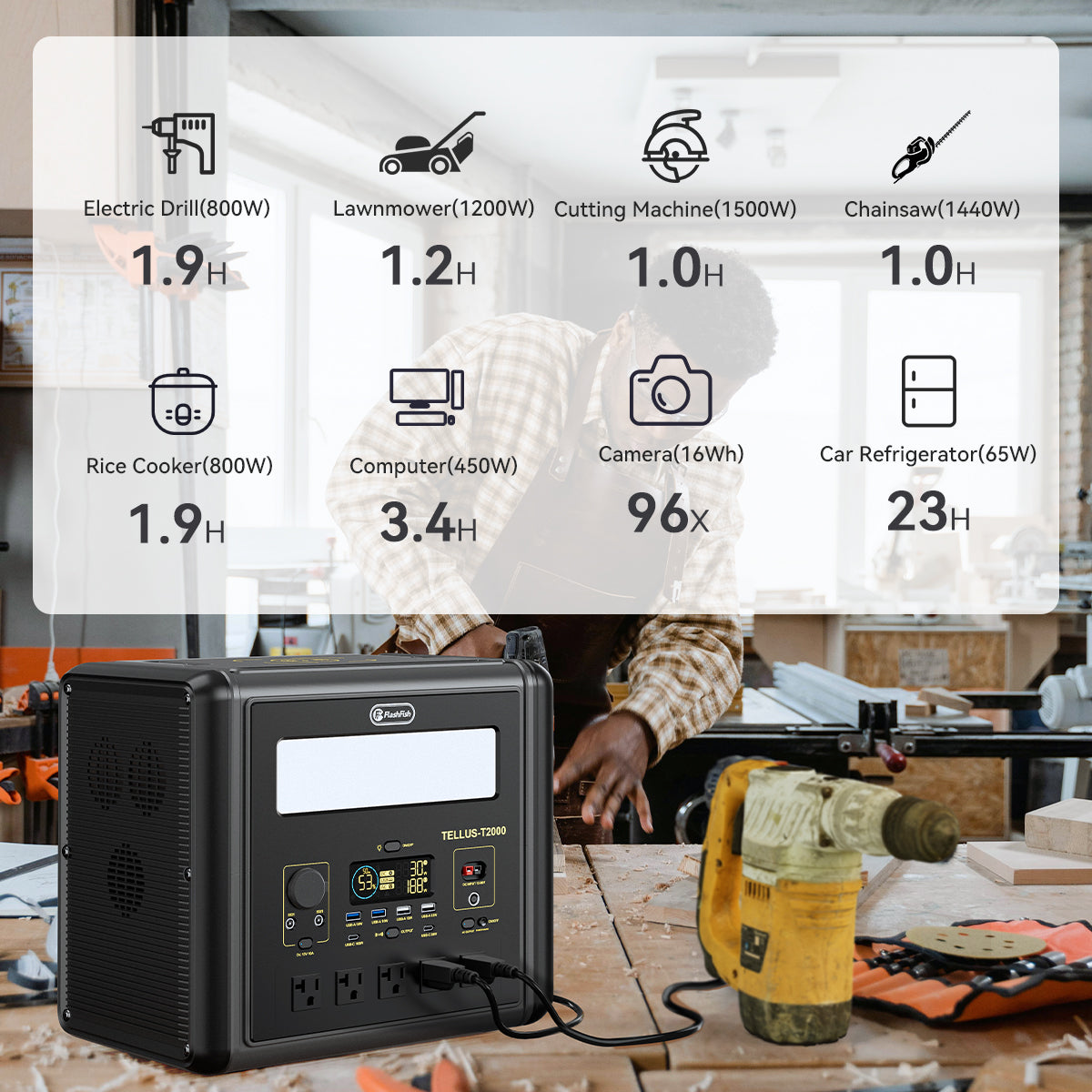
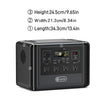
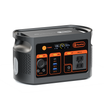
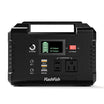

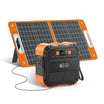
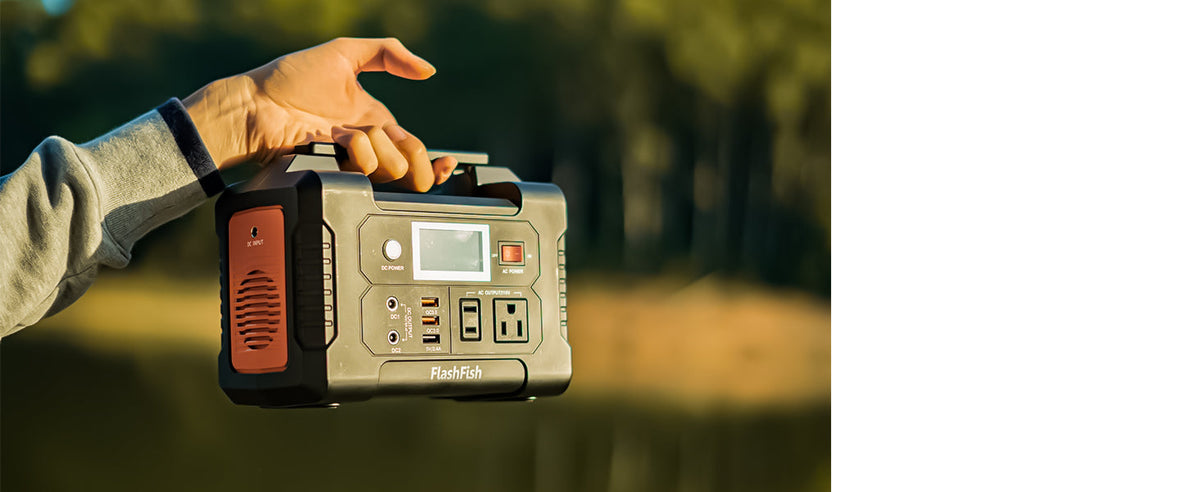
For a compact field-audio kit, compare FlashFish E200 and E103 by matching their documented outputs to the labels on the recorder, phone, and original chargers. The E200 record lists 151Wh and 200W continuous modified-sine AC output; the E103 record lists 179.2Wh, a LiFePO4 battery, and 300W continuous pure-sine AC output. Neither figure confirms that a particular recorder, adapter, or venue setup is compatible, so verify the exact connection path before buying or packing.
What matters for a recorder-and-phone kit
Field audio work is usually constrained by the smallest detail: a proprietary recorder adapter, a phone cable, a missing power brick, or an event policy. Start with the equipment you will actually carry. Photograph each label, include the original charger where the manufacturer requires one, and write down whether the planned connection is USB, DC, or AC.
Do not size the kit from a device category alone. Two recorders or two phones can have different input requirements, and an adapter's output label matters as much as the device label.
E200 and E103: documented differences
| Model record | Documented attributes | Decision use |
|---|---|---|
| FlashFish E200 | 151Wh capacity; 200W continuous AC output; modified-sine AC output; about 1.85kg net weight | Compare its size and documented output with the labeled needs of a very compact kit. |
| FlashFish E103 | 179.2Wh capacity; LiFePO4 battery; 300W continuous pure-sine AC output; about 3kg weight | Compare its additional documented capacity and output against the carry-weight and connection needs of the kit. |
The records support a comparison, not a prediction. They do not establish runtime, recording quality, cable compatibility, or whether every connected item may operate together.
Choose the output path deliberately
If a device charges through USB, confirm the device and cable specifications before assuming a USB port is the right path. If it uses an AC adapter, read the adapter's input and output label and confirm the exact market-specific power-station version. The E200 manual describes regional AC variants; the E103 product data also calls for destination-market plug and voltage verification.
A short pre-event bench check is useful: connect only the documented items, observe the device's normal charging behavior, and stop if a manual or device alert indicates a problem. Do not substitute an improvised adapter just because a connector physically fits.
Carry planning is part of the comparison
Put the power station, original adapters, labeled cables, recorder, phone, and a written packing list in the same decision. The E200 record lists about 1.85kg net weight, while the E103 record lists about 3kg. Those are product-record values, not a total kit weight; add the actual accessories and consider the route, transport method, and event rules.
Product fit for low-draw audio preparation
E200 may suit a comparison where compact carry weight is the leading constraint. E103 may suit a comparison where its documented 179.2Wh capacity and 300W continuous pure-sine AC output are relevant to the labeled equipment. In either case, choose only after validating the exact device labels, adapters, market variant, and location requirements.
Frequently asked questions
Which model is better for a recorder and phone?
There is no universal answer. Match the model record to the labels, connections, carry weight, and rules for the exact kit.
Does pure-sine output guarantee compatibility?
No. It is one documented output attribute. The recorder, its adapter, and the exact power-station variant still need manufacturer documentation.
Can I calculate the session length from Wh?
Use an exact-device plan and a supervised test instead of presenting a general runtime estimate as a guarantee.
Next step: Compare FlashFish E200 specifications with your requirements.

Deixar comentário
Este site é protegido por hCaptcha e a Política de privacidade e os Termos de serviço do hCaptcha se aplicam.