

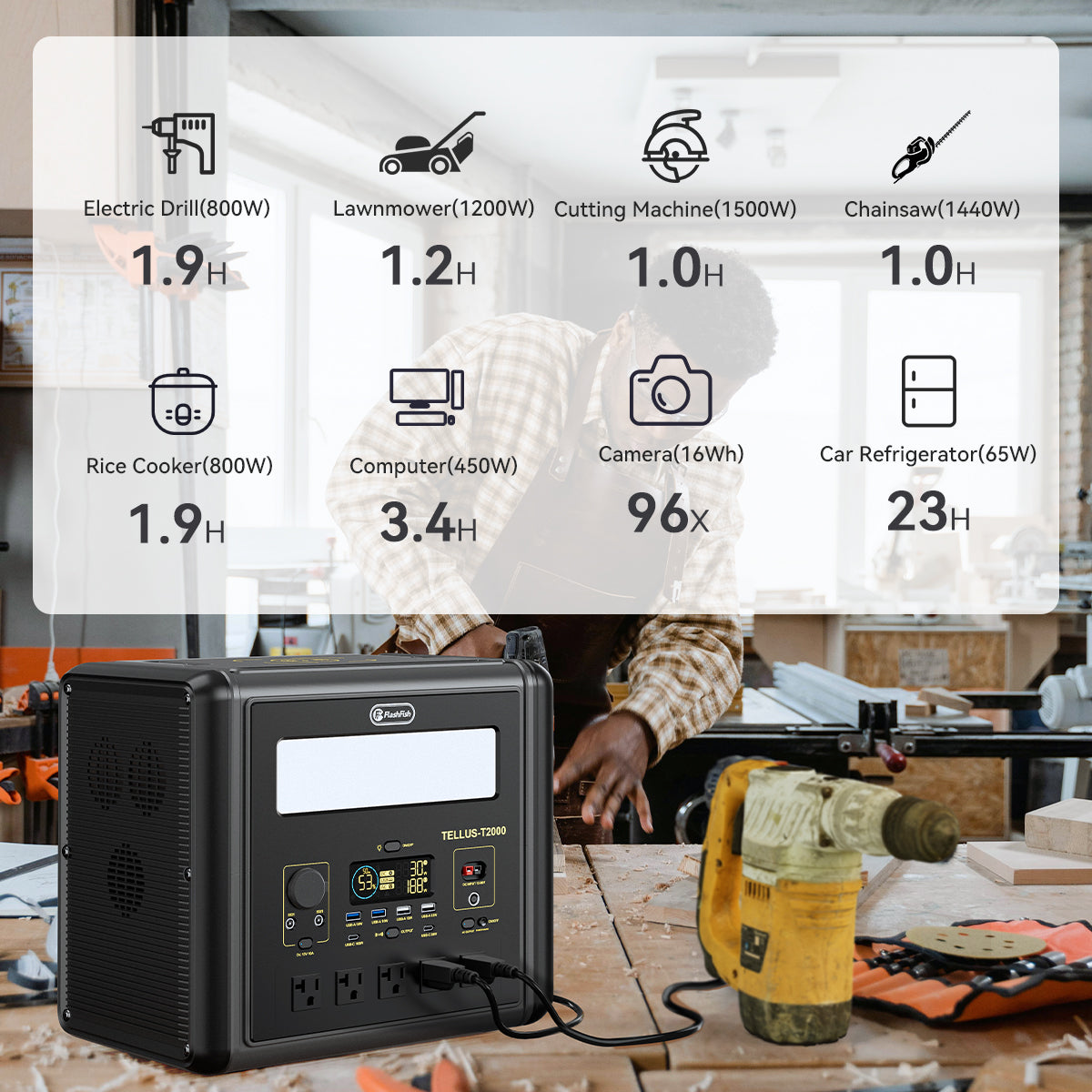
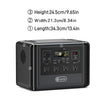
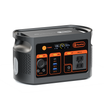
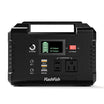

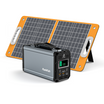
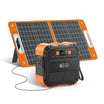

Quick answer: Estimate camping runtime by dividing battery watt-hours by the verified watts of the device, then reduce that theoretical result for conversion loss, changing loads, temperature, battery condition, and reserve. Do not treat the calculation as a promised operating time.
Use watt-hours and watts for different questions
| Rating | What it describes | Question it answers |
|---|---|---|
| Watt-hours (Wh) | Stored energy | How much energy is available before losses? |
| Continuous watts (W) | Sustained output limit | Can the station support the running load? |
| Peak watts | Short-duration output record | Is there documented headroom for startup demand? |
| Input watts | Maximum charging input record | What charging source can the station accept? |
The U.S. Energy Information Administration explains the difference between watts and watt-hours. Start with the device label or official charger, not a generic appliance estimate.
A cautious runtime worksheet
- List each device and its official running watts or energy per charge.
- Record how many devices will run at the same time.
- Check that continuous output covers the simultaneous load.
- Divide station Wh by load W for a theoretical upper-bound estimate.
- Reduce the result for conversion loss and leave reserve for changing conditions.
- Test the actual device before the trip.
The FlashFish product database does not provide one efficiency percentage that applies to every output, load, and model. For that reason, this guide does not apply a universal 85%, 90%, or 95% factor.
Verified FlashFish comparison points
| Model | Capacity | Continuous AC output | Waveform | Weight |
|---|---|---|---|---|
| FlashFish E200 | 151Wh | 200W | Modified sine wave | About 1.85kg |
| FlashFish T300PRO | 230Wh | 300W | Pure sine wave | 4.5kg |
| FlashFish T1200S | 768Wh | 1200W | Pure sine wave | 12.45kg |
| FlashFish T2000 | 1536Wh | 2000W | Pure sine wave | 19.2kg |
Capacity alone does not establish compatibility. Check waveform requirements, startup behavior, ports, cables, environment, and the model manual.
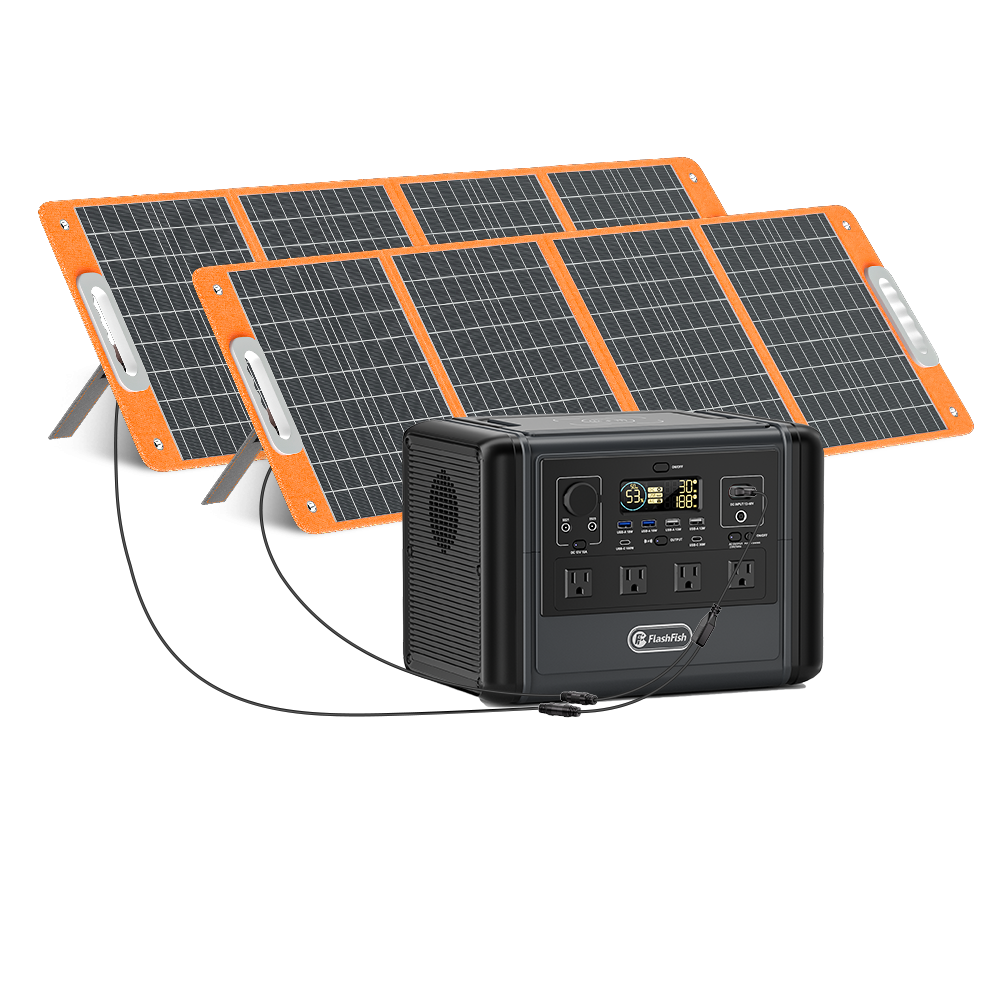
Plan solar as a variable charging source
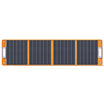
A panel's nameplate rating is not a field-output promise. The Department of Energy notes that solar yield changes with irradiance, temperature, system design, and other conditions. Review DOE photovoltaic design and energy-yield guidance, then match panel voltage, current, connector, and station input limits.
Frequently asked questions
Why is real runtime lower than Wh divided by watts?
Conversion loss, standby consumption, variable device draw, startup events, temperature, and reserve reduce the theoretical result.
Can I add the peak rating to the continuous rating?
No. Treat them as separate records. Continuous output covers sustained operation; peak output is a short-duration limit.
Is a larger battery always better for camping?
No. More capacity also adds weight and charging time. Choose after balancing verified loads, trip length, carry method, and recharge access.


Deixar comentário
Este site é protegido por hCaptcha e a Política de privacidade e os Termos de serviço do hCaptcha se aplicam.