


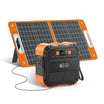

Yes. A displayed 0W does not, by itself, prove that a connected device consumed no energy. First establish which output the display measures, its documented resolution and update behavior, and whether the output is active. Then use a suitable external measurement, within that instrument's limits, if the question remains unanswered. An undocumented display threshold must remain unknown.
A small USB light or an idle accessory can leave you looking at the station screen and wondering whether anything is happening. The useful outcome is a precise observation: what the screen reported, what the device did, and what a documented measurement could establish. Avoid jumping from a screen reading to a conclusion about consumption or a faulty station.
Separate three different statements
“The screen showed zero” describes a display. “The selected output was inactive” describes an operating state, if you have verified that state using the exact manual. “No consumption was measured” describes an instrument result over a defined interval. These statements require different evidence and should not be substituted for one another.
Start by checking the units. A number marked W concerns power; a number marked Wh concerns accumulated energy. A battery percentage is a different reading again. Also distinguish a visible zero from a blank field: unless the manual defines the blank state, its meaning is unknown.
| Observation | Possible measurement boundary | Required documentation | Next bounded check |
|---|---|---|---|
| Output field displays 0W | The output or output group defined for that field | Field definition, resolution, update behavior | Record the exact field and time; do not assume whole-station coverage |
| Device is inactive and output indicator is off | Selected port's operating state | Indicator and output-control instructions | Verify the state before assigning a cause |
| Device operates while the field shows zero | Potential mismatch between observed operation and displayed measurement | Display scope and a suitable meter's instructions | Measure the relevant path if a documented method is available |
| External meter shows no change | That meter's location during that interval | Minimum measurement, resolution, counter behavior | Report the result within those limits; leave smaller changes unresolved |
A practical observation sequence for a non-critical USB device
- Identify the exact station, output port, cable, and device. Record the device's state, such as active lighting or idle mode.
- Consult the station manual for the screen field and output controls. Note any information the documentation does not provide.
- Record the display at several timestamped points while keeping the device's state consistent. Do not assign an update interval from memory.
- If external measurement is appropriate, choose a meter documented for the port, voltage, current, and charging protocol involved. Follow its placement and operating instructions.
- Record the meter's units, minimum measurable quantity, resolution, start and end readings, and any reset or interruption.
- Write the narrow conclusion the evidence supports. Keep “displayed zero” separate from “no measurable change during this interval.”
An inline meter is part of the observed configuration. Do not assume it preserves every charging negotiation or that a result from that configuration exactly describes an unmetered one. If its documentation does not support the setup, leave the measurement unresolved rather than improvise a connection.
Three examples that keep the conclusion honest
1. Rounding could hide a small value—but only hypothetically
Imagine an instrument explicitly documented to round to the nearest whole watt. A 0.3W reading would round to 0W under that hypothetical rule. This illustrates why resolution matters; it is not a threshold for any FlashFish display. Without exact documentation, you cannot assign that rule to your station.
2. The device operates while the screen stays at zero
Suppose a USB light remains visibly on during your observation and the screen reports 0W. Record both facts. Check whether the displayed field covers that USB output before deciding what the zero means. A suitable meter may answer the energy question, but the screen alone does not establish a numerical consumption value.
3. An external counter also shows no change
Suppose a documented meter's energy counter has identical readings at the beginning and end of an interval. Record “no change shown at this meter's resolution,” along with the interval and configuration. Do not turn that result into proof of absolute zero consumption. The instrument's documented limits define what remains unresolved.
Where A101 and T200 fit
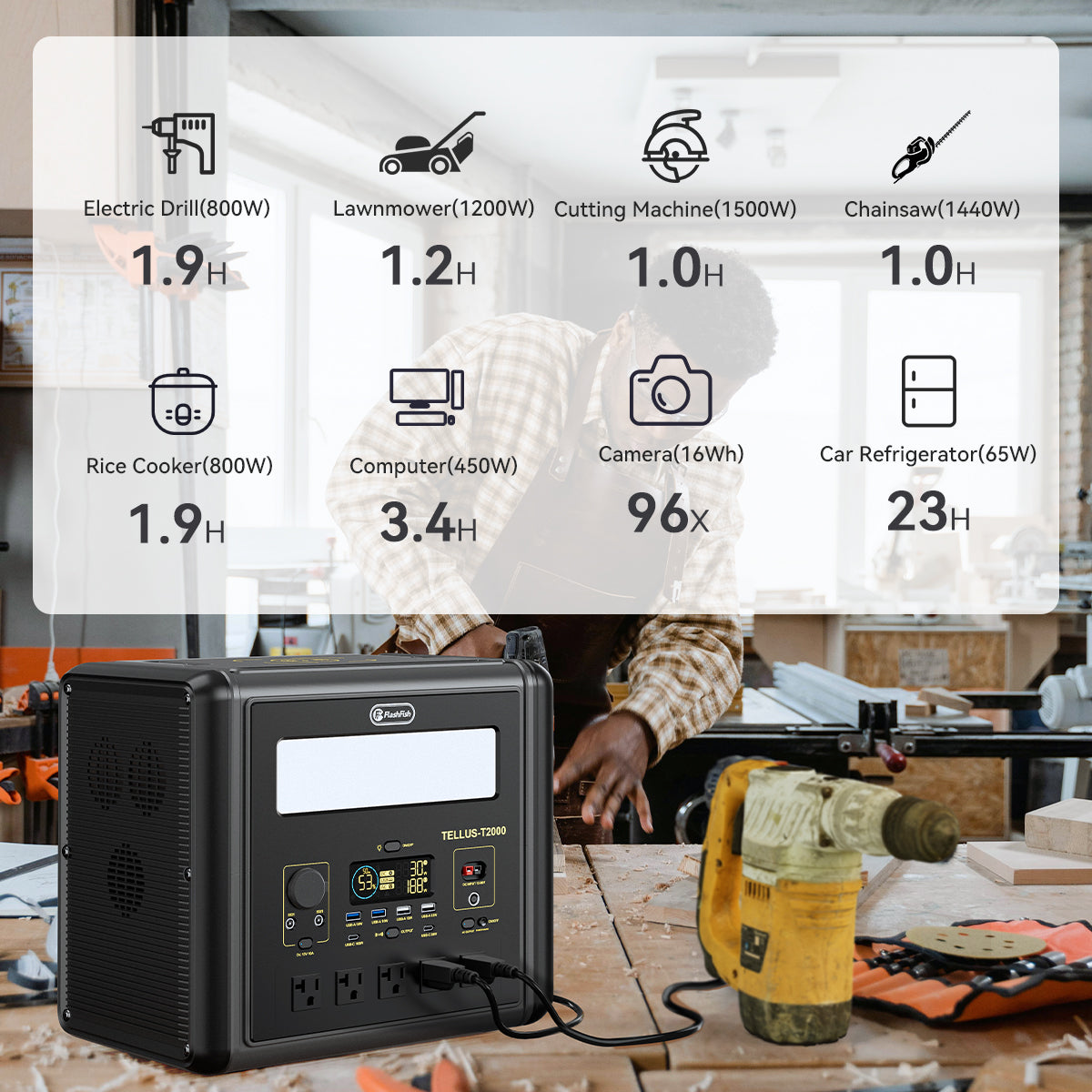
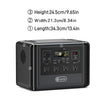
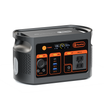
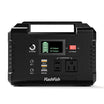
FlashFish A101 has two USB-C outputs and two USB-A outputs, each with a listed maximum of 18W. FlashFish T200 (TELLUS-T200) has a USB-C1 output rated up to 60W and a USB-C2 output rated up to 18W. Port ceilings help you choose which documented charging path to examine; they do not tell you the device's actual draw.
No numerical low-load display threshold, display resolution, or refresh interval is documented here for these models. A meter pairing for your device also remains unverified. No conclusion here depends on an assumed detection cutoff, auto-shutoff setting, or regional AC configuration.
FAQ
Does 0W mean the station is broken?
That reading alone cannot establish a fault. Record device behavior and the documented output state, then follow the exact manual's troubleshooting process if operation is unexpected.
Is a blank screen field the same as zero?
Do not treat them as equivalent unless the model's documentation says so. Write down the blank state and the surrounding indicators.
Can I use the port's maximum wattage as the device's draw?
No. A port maximum describes a specification limit. Actual consumption requires device-specific evidence or an appropriate measurement.
Turn the reading into a useful decision
Make a short observation record before changing equipment. If you are considering an A101 or T200 for a small USB setup, compare the exact port requirements and available documentation with your device. Resolve the charging path first, then judge consumption using evidence that covers that path.
Next step: Review the FlashFish A101 specifications for your equipment list.


Deixar comentário
Este site é protegido por hCaptcha e a Política de privacidade e os Termos de serviço do hCaptcha se aplicam.