


No: counting how often you plug a portable power station into a charger does not, by itself, establish its manufacturer-defined battery cycle count. A connection event records that equipment was connected. A charging-session log can record what happened during that interval. To translate either into cycles, you need the exact manufacturer's applicable definition and the measurements that definition requires.
For owners logging partial recharges between ordinary trips, the useful result is a clear session history with unknowns preserved. Do not label a plug-in tally a cycle counter or use it to predict remaining service life.
Name the unit your log actually counts
A connection event, a charging session, and a manufacturer-defined cycle are different record types. A cable can be connected without your log establishing whether energy entered the battery. An interrupted session can contain several connection events. Start and end display readings add context, but they do not supply a manufacturer's cycle-accounting rule.
Measured charging-input energy is another distinct field. Even if you have that measurement, identify where it was measured and whether the manufacturer uses that boundary for cycle accounting. Do not divide external charging energy by nominal battery capacity and assume the result is the product's official cycle count.
If the exact manufacturer explicitly provides an equivalent-cycle method, retain its definition, reference capacity, required measurements, and applicable model revision. Without that evidence, leave the conversion blank. There is no need to discard a useful session record just because it cannot answer every battery-life question.
Keep a log with separate evidence fields
| Logged event | Start and end evidence | Documented throughput | Manufacturer cycle definition | Countable unit | Unresolved conversion |
|---|---|---|---|---|---|
| Connection or reconnection | Time and observed connection status | Unknown unless separately recorded | Attach exact applicable source if available | Connection event | Cannot infer cycles from connection count alone |
| Charging interval | Recorded start/end time and display readings, if observed | Record actual measurement, units, and boundary; otherwise unknown | Do not substitute a generic definition | Observed session | Partial recharge is not automatically one documented cycle |
| Manufacturer-reported cycle value, if available | Record origin, date, model, and revision | Use only the data the definition requires | Needed to interpret the reported value | Manufacturer's defined unit | Do not assume a display or app offers this field without documentation |
Add a private station identifier so records from two borrowed or shared units do not merge. Record the charging path and any interruption you actually observed. Leave an unavailable reading marked unknown rather than reconstructing it from memory.
What E103 and T200 documentation contributes
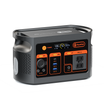
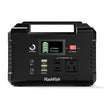
FlashFish E103 has a documented 179.2Wh LiFePO4 battery, and T200, also named TELLUS-T200, has a documented 153.6Wh LiFePO4 battery. These model identities help keep logs separate; capacity ratings do not turn charging sessions into cycles.
The E103 battery specification states “3000+ cycles to 80%+ capacity.” The T200 battery specification states “>3500 cycles with remaining capacity >80%.” These source statements describe cycle-life and capacity-retention claims. They do not provide a rule in the documentation available for this comparison for converting an owner's connection tally or partial-recharge log into the stated test-cycle count.
Do not treat these cycle-life statements as remaining-cycle allowances for your unit. The documentation available for this comparison does not establish a user-facing cycle counter or a session-to-cycle conversion method for these models. Request the exact original definition if that distinction matters to your decision. Match the regional version as well: the E103 reference manual describes a 230V AC configuration and cannot verify a U.S. unit's electrical configuration.
Three hypothetical logs and what they establish
These situations are invented to illustrate recordkeeping. They are not charging tests, recommended recharge patterns, or observations about an actual FlashFish unit.
Example 1: Several brief connections
An owner records three connections during an interrupted charging interval but has no energy measurement. The log supports three connection events and the recorded interruption history. It does not establish three cycles, one cycle, or any other cycle total.
Example 2: A partial recharge with display readings
An owner writes down the displayed charge level before and after a session. That makes the record more descriptive. Without the exact cycle definition and required measurements, however, the change in the display is not an official fractional-cycle result. Keep the readings in their own fields without calculating a cycle total.
Example 3: A secondhand station with a seller's tally
A seller supplies a list of plug-in dates but no earlier history or manufacturer-defined count. Preserve it as the seller's reported session history. It does not establish lifetime cycling, remaining capacity, or how much service life is left; none of those gaps is resolved by a low event count.
Use the log without overstating it
A session log helps you describe an interruption or explain an observed display change when seeking model-specific guidance. Its limitation is coverage: missing intervals stay missing, and a manual note may use a different definition from your worksheet. Keep original observations separate from later interpretations.
Do not deliberately add charge/discharge sessions just to make the count easier to interpret. This worksheet does not prescribe a charging routine or capacity test. Follow the exact unit's instructions; if you need a documented count, ask what the manufacturer counts and how that value can be obtained.
Frequently asked questions
Does a short top-up automatically use one cycle?
The connection or top-up alone cannot establish that. A cycle count needs an applicable definition and the data required by it. Record the session as observed, including any known readings, while leaving its conversion to cycles unresolved.
Can I add displayed percentage changes to count cycles?
Do not treat that sum as a manufacturer-defined cycle count unless the exact source explicitly supports the method for your unit. A display history and a defined throughput measurement are different evidence. The E103 and T200 documentation available for this comparison supplies no such conversion rule.
Does fewer recorded sessions mean more battery life remains?
A session tally alone cannot establish remaining capacity or remaining service life. It may omit earlier use and does not specify how cycles were counted. Retain it as history, and keep any actual condition evidence or manufacturer-reported measurements separate.
Start with a truthful session history
Create one log per station, name its countable unit, and enter only observations you have. If you are comparing E103 and T200 for a future purchase, review the exact model details and request the applicable cycle definition before using cycle claims in that decision. Leave unresolved cycle totals unknown.
For the separate chemistry-selection decision, see the portable power station battery-type guide. It does not turn a session tally into a cycle count.
Next step: Review the FlashFish E103 specifications for your equipment list.

Deixar comentário
Este site é protegido por hCaptcha e a Política de privacidade e os Termos de serviço do hCaptcha se aplicam.