


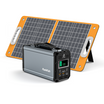
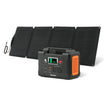
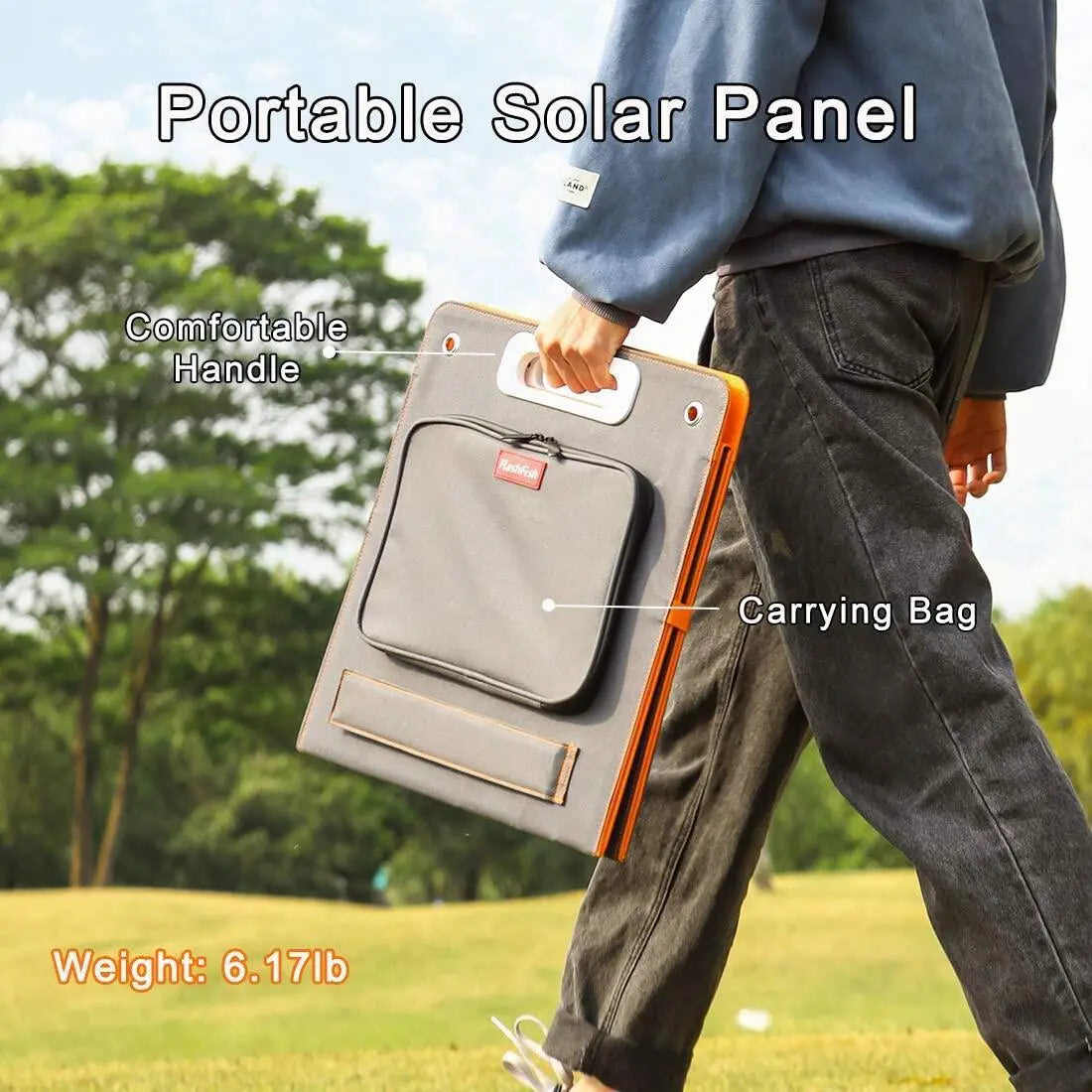
A T1200S + TSP100 solar generator kit can be a useful starting point for portable-power planning, but its labels are not a promise about a particular device, charging outcome, or physical setup. Before first use, identify the selected kit variant, read the station and panel labels separately, and compare them with the label on the device or load you intend to use.
Start with four separate checks
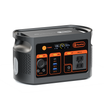
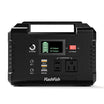
The active T1200S + TSP100 solar generator kit is listed with 1200W, 768Wh, and 100W in its title. Those figures describe different parts of the planning picture. The selected listing may offer more than one panel-count variant, so begin by confirming the exact option under consideration rather than treating the family name as a complete configuration description.
| Planning item | T1200S + TSP100 documented source | What it establishes | What the reader still verifies |
|---|---|---|---|
| Selected kit variant | The active kit listing shows T1200S + TSP100 options. | Which listing option is being considered. | The exact option selected and its current listing documentation. |
| Station capacity | The T1200S is documented as 768Wh LiFePO4. | A station-side capacity label for comparison. | Whether it meets the reader?? own use plan; no runtime result follows from this label alone. |
| AC output label | The T1200S manual documents 1200W continuous AC output and 2400W peak output. | Output labels to compare with a device or load label. | The device?? actual requirements and any question that needs product-specific guidance. |
| Solar-input limit | The T1200S manual lists a 400W maximum solar input. | A station-input planning boundary. | A connection method, selected configuration, and any charging result. |
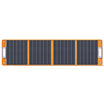
| Panel label | The TSP100 is documented as a 100W, 18V solar panel. | The panel?? rated label and its role in converting sunlight. | Sun conditions and any actual solar outcome. |
Keep the station, panel, and load labels separate
The T1200S portable power station and the TSP100 portable solar panel serve different roles. The station?? capacity and output labels describe the station. The panel?? 100W/18V label describes the panel. A solar panel converts available sunlight; it does not store solar energy for later use. Neither label replaces checking the intended device or load label.
Check the intended output path before treating the kit as a solution
Read the relevant station labeling and the label on the item you plan to power. This is especially important when the requirement is unknown, when the use involves a high-load or motor-driven item, or when the use is safety-critical. If a physical connection, cable, connector, polarity, or included-item question affects the plan, use the exact current kit documentation or ask for qualified product support rather than inferring the answer from the kit title.
Account for direct-sun conditions without projecting an outcome
Solar-panel output depends on sunlight conditions. That is a reason to treat the panel label as a planning input, not a guaranteed charging result. Avoid turning the 100W label or the T1200S solar-input limit into a recharge-time, solar-yield, or runtime calculation unless the exact use conditions and authoritative documentation support that conclusion.
When FlashFish fits??nd when to pause
This kit can fit a reader who has identified a current listing variant, can read the station and panel labels, and has a documented requirement to compare. Pause before choosing if the device/load requirement is unknown, the decision depends on a promised solar result or runtime, or a physical setup detail has not been verified in the exact kit documentation.
Related resources
Review the current T1200S + TSP100 kit listing, the T1200S station page, and the TSP100 panel page before making a configuration-specific decision.
Frequently asked questions
What do the T1200S kit?? 1200W, 768Wh, and 100W labels describe?
They describe different labels in the kit context: the T1200S station?? output and capacity labels, plus the TSP100 panel label. They should be read separately.
Why confirm the selected kit variant before planning first use?
The current listing presents more than one option. Confirming the exact option keeps a family-level name from being mistaken for a complete configuration description.
Does the TSP100 panel store electricity for later?
No. A solar panel converts sunlight; it is not an energy-storage device.
Does the panel label guarantee a charging result?
No. Sunlight conditions affect solar output, and the panel label alone does not establish a charging outcome.
What should be verified before connecting a device or load?
Check the device or load label, the relevant station labels, the selected kit documentation, and any physical-connection details that apply to the exact configuration.

Deixar comentário
Este site é protegido por hCaptcha e a Política de privacidade e os Termos de serviço do hCaptcha se aplicam.