


Portable Power Station for Low-Power Camping Devices: Auto-Shutoff Checks
A low-power camping setup needs more than a large watt-hour number. Before relying on a portable power station for a small device, check the device label, the output path you plan to use, and the station?? relevant mode and manual language. The FlashFish T1200S and T2000 manuals include a six-hour default note for USB/wireless light-load shutdown and AC power-saving-mode standby. That note is a planning prompt, not a promise that an unnamed device or every port will remain on for a fixed time.
Why a small load needs its own check
Capacity and continuous output answer important selection questions, but they do not describe every low-load behavior. A small device may use a different output path than a larger AC load, and a power-saving setting may be relevant to that path. For a camping plan, it is more useful to verify the complete setup than to assume that a larger station automatically resolves a small-load question.
| Check | What to confirm | FlashFish planning relevance | Boundary |
|---|---|---|---|
| Device label | The device?? stated input type and expected draw | It helps separate a device requirement from a station-size assumption. | Do not treat this as a compatibility claim for any unnamed device. |
| Output path | Whether you plan to use USB, wireless charging, AC, or another documented path | The path determines which station information and manual note matter. | Do not infer behavior for an unlisted port or accessory. |
| Low-load setting | The selected mode and the applicable manual wording | The T1200S and T2000 manuals note six hours for specified USB/wireless light-load and AC power-saving contexts. | Recheck the original manual; this is not a universal six-hour promise. |
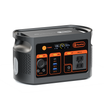
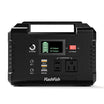
| Station sizing | Stored energy and continuous output | T1200S is listed at 768Wh and 1200W continuous; T2000 at 1536Wh and 2000W continuous. | These figures are not a runtime calculation. |
Five checks to make before camp
- Read the device label. Start with the device manufacturer?? stated input requirements rather than a guess based on device category.
- Choose the intended output path. Record the path you actually expect to use so that you can consult the relevant station documentation.
- Check the selected station mode. A power-saving or low-load setting is a separate question from a station?? capacity or output rating.
- Read the original manual. Confirm the wording for your model and the operating context before depending on a light load.
- Do a non-critical pre-trip check. Test the complete setup before travel, without treating the test as a guarantee for all conditions or for critical power needs.
Two documented examples for planning
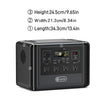
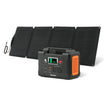
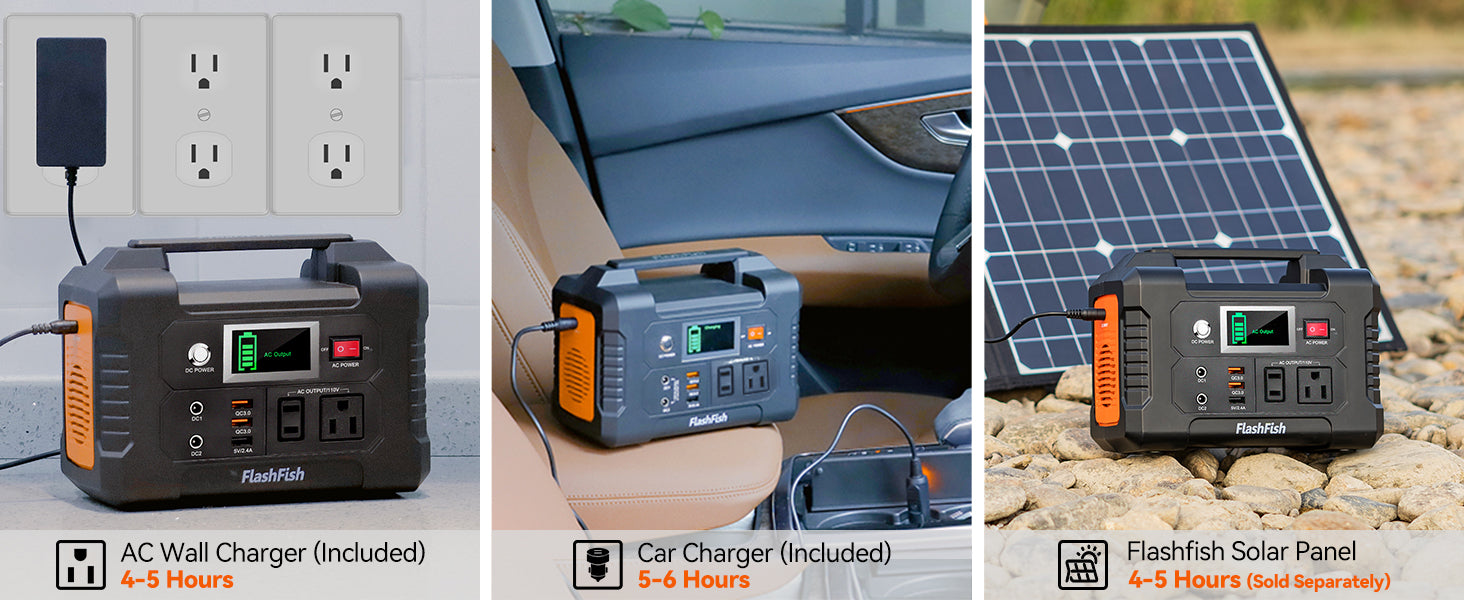
The FlashFish T1200S portable power station is listed with 768Wh capacity and 1200W continuous pure-sine AC output. Its manual includes a six-hour default note for USB/wireless charging light-load shutdown and for AC power-saving-mode standby. The note should be read in its stated context; it does not establish a fixed result for every port, load, or condition.
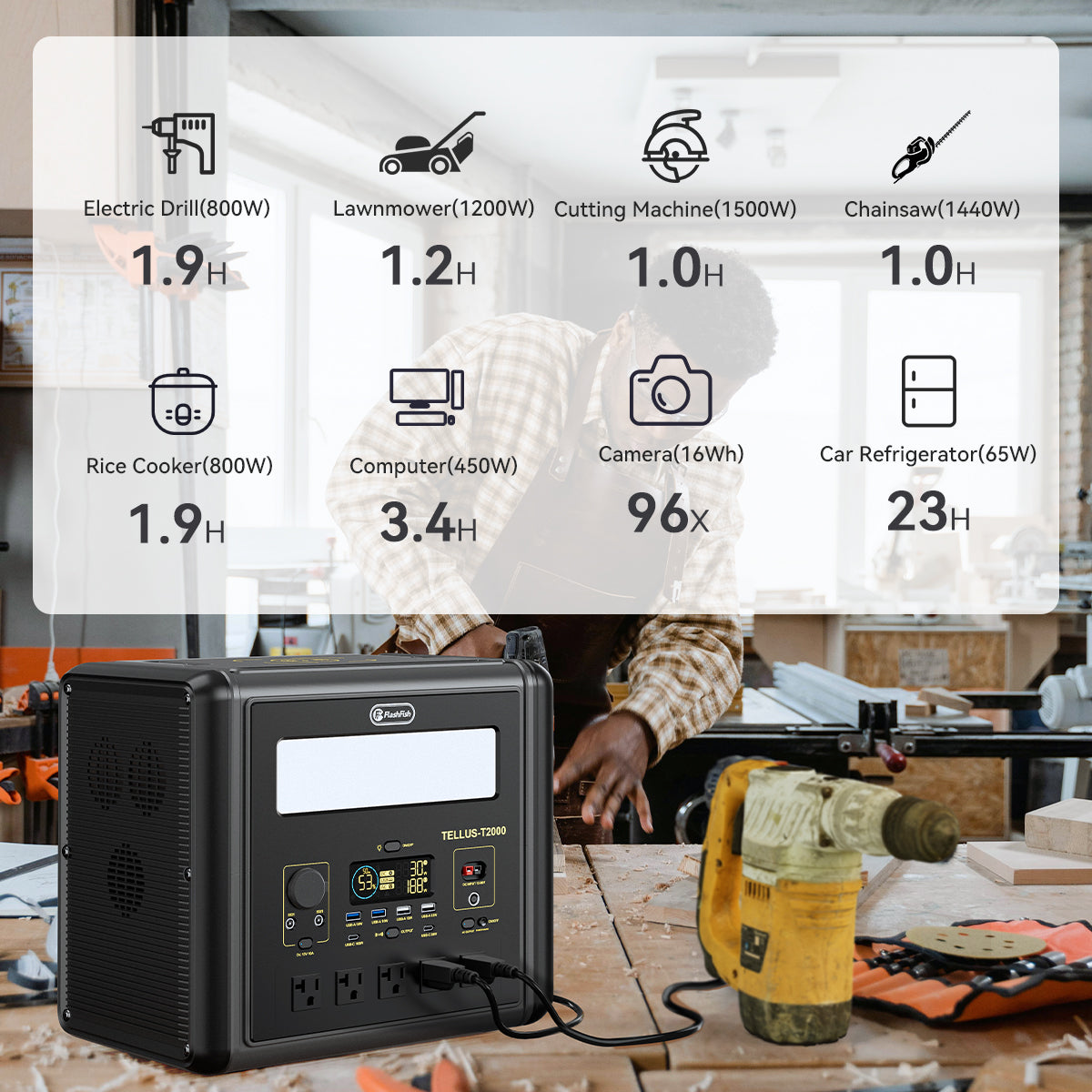
The FlashFish T2000 portable power station is listed with 1536Wh capacity and 2000W continuous pure-sine AC output. Its manual carries the same six-hour default note for the specified USB/wireless light-load and AC power-saving contexts. A higher output rating or larger capacity still does not replace the path-and-mode check.
When this approach fits??nd when it does not
This approach fits campers who can identify the device input, select a documented output path, and check the original manual before a trip. It may not fit a situation that requires an always-on, critical, or medically necessary power source. In those cases, follow the device manufacturer?? guidance and seek appropriate specialist advice rather than relying on a portable-station setting alone.
Related portable-power reading
For a plain-language overview of output types, see Portable Power Station Ports: AC, USB-C, USB-A and DC. Port type is one part of the planning check; the device label and the station?? documented mode behavior still matter.
Frequently asked questions
Why should I check low-load behavior on a portable power station?
Because capacity and output ratings do not by themselves describe how a selected mode may handle a light load. Check the device label, output path, and original manual together.
Does a higher-watt portable power station automatically suit a small device?
No. A higher output rating is only one selection criterion. It does not confirm device compatibility or low-load behavior.
What do the FlashFish T1200S and T2000 manuals say about light loads?
Each manual includes a six-hour default note for USB/wireless charging light-load shutdown and AC power-saving-mode standby. Recheck the original manual and the selected mode before relying on the note.
What should I test before taking a low-power setup camping?
Test the intended device, the documented output path, and the selected station mode in a non-critical setting. Do not treat one check as a guarantee for every condition.

Deixar comentário
Este site é protegido por hCaptcha e a Política de privacidade e os Termos de serviço do hCaptcha se aplicam.