

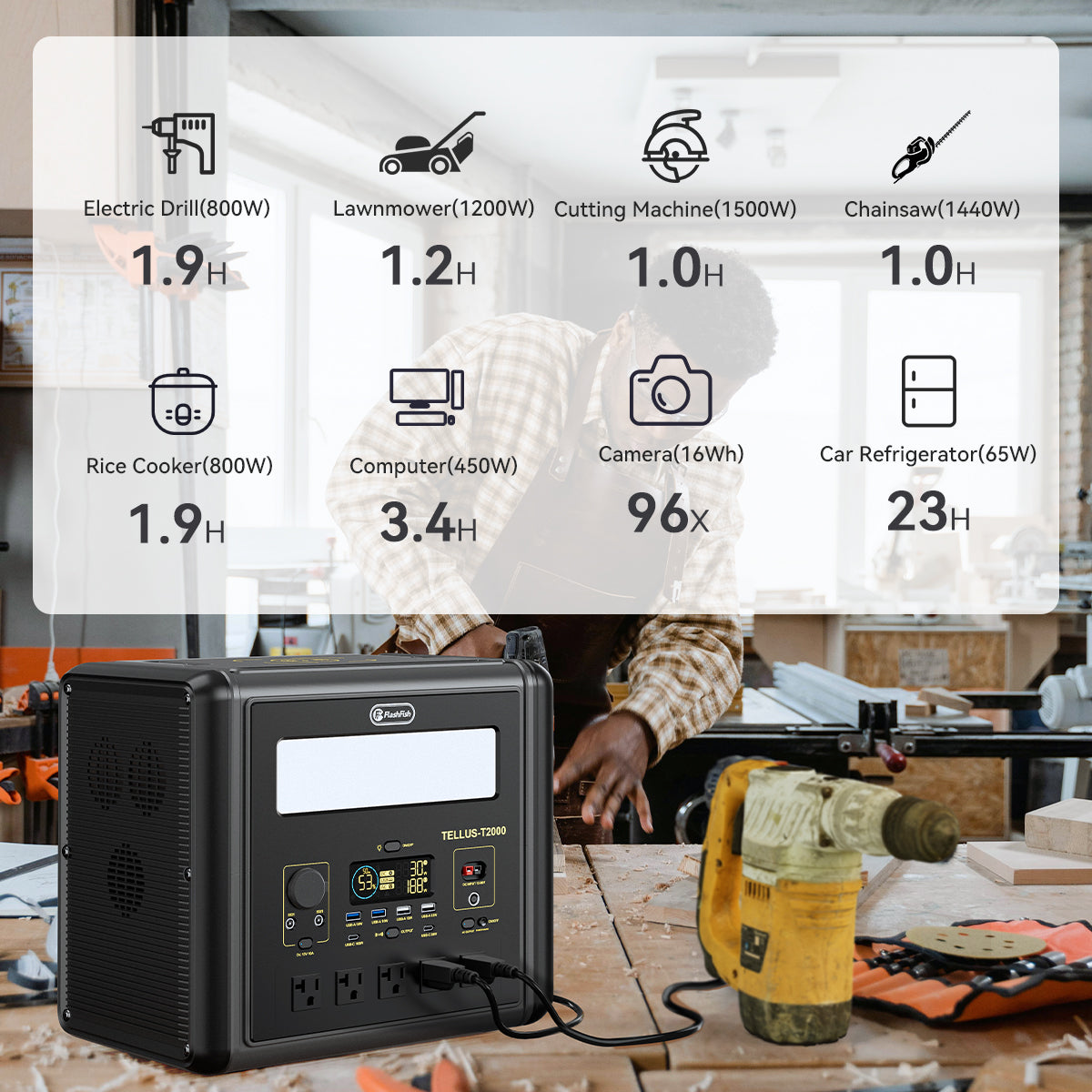
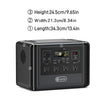

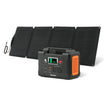
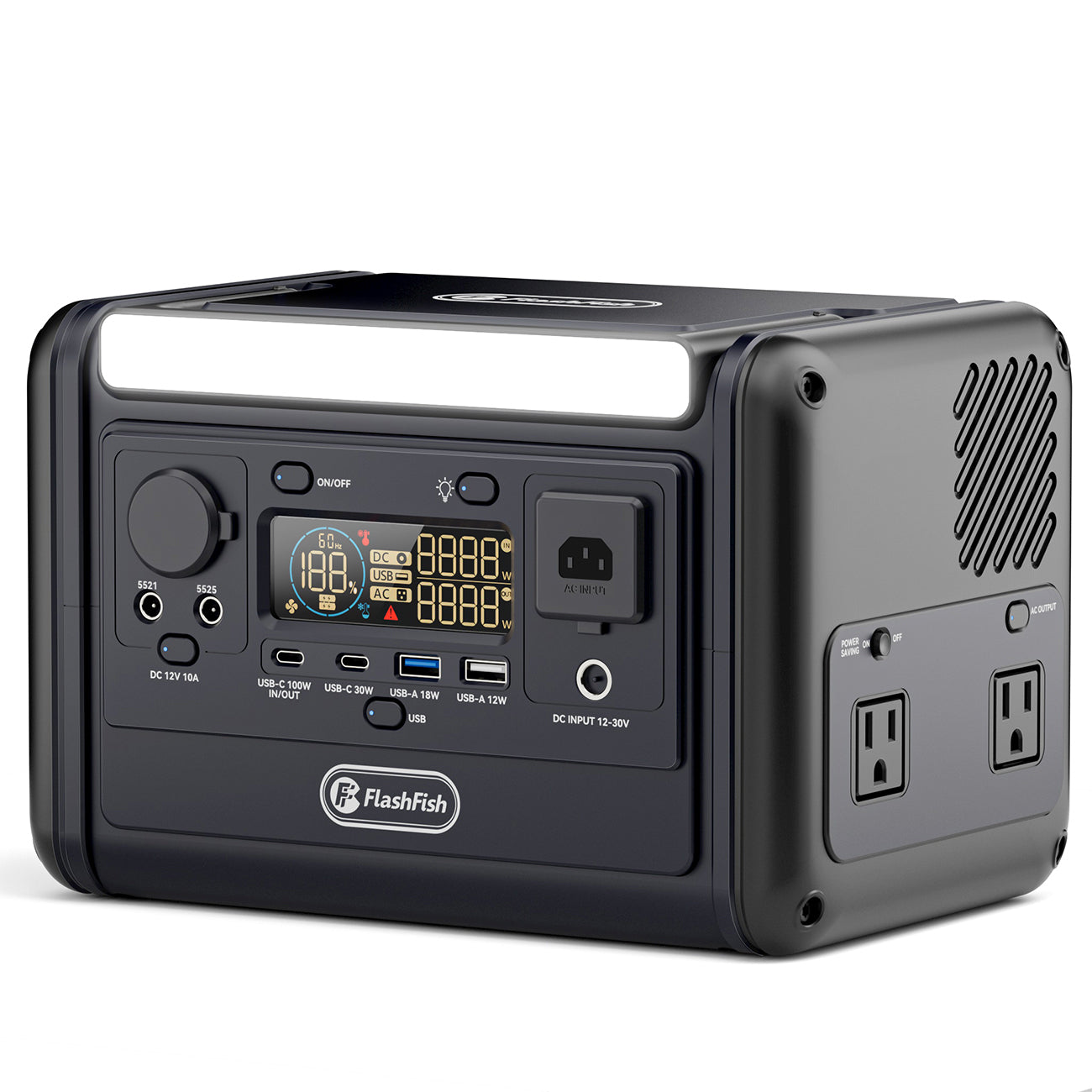
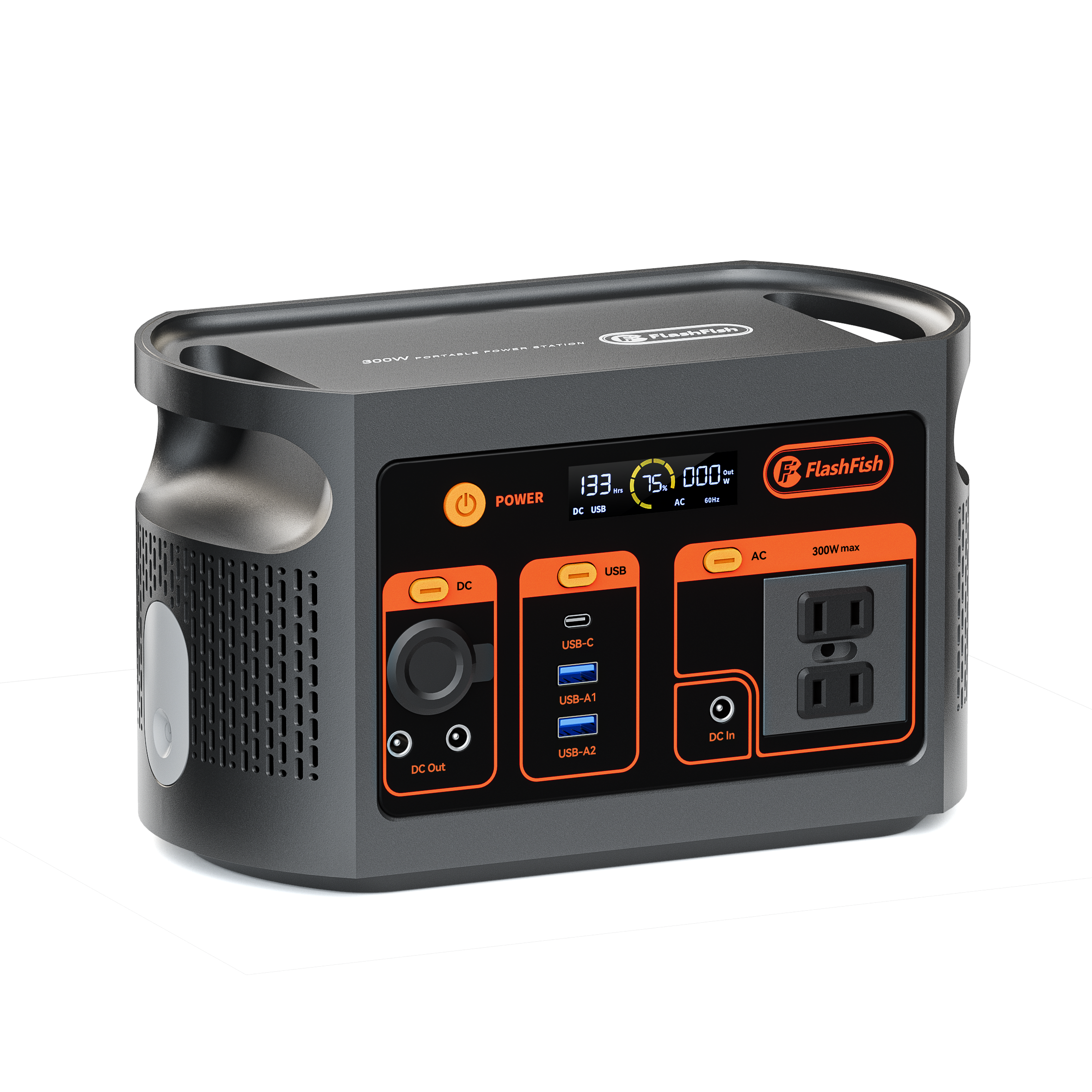
Quick answer: Read a portable power station in this order: device label, continuous output, peak record, battery watt-hours, waveform, required port, charging input, weight, and manual limits. No one rating establishes compatibility or exact runtime.
Capacity and output answer different questions
| Rating | Meaning | Common mistake |
|---|---|---|
| Watt-hours (Wh) | Stored energy | Treating capacity as a device-compatibility rating |
| Continuous watts | Sustained output limit | Ignoring simultaneous loads |
| Peak watts | Short-duration output record | Using it as continuous output |
| Input watts | Maximum accepted charging power | Promising a recharge time from the maximum alone |
The U.S. Energy Information Administration explains that watts measure power at a moment while watt-hours measure energy over time. See its electricity measurement guide.
Waveform belongs in the compatibility check
A product record may identify pure sine wave or modified sine wave AC. The connected device documentation determines what input it accepts. The FlashFish database identifies modified sine wave for E200 and pure sine wave for E103, T300PRO, T1200S, and T2000. Do not turn waveform language into universal compatibility or device-protection claims.
Battery chemistry does not replace model checks
LiFePO4 is one lithium-ion chemistry. Selected FlashFish models document LFP, while E200 documents 18650 lithium-ion cells. Compare chemistry and cycle wording, but also compare capacity, output, ports, weight, charging limits, storage instructions, and use environment.
A BMS is one protection layer
The battery management system monitors selected conditions and can trigger model-specific responses. The exact protection list must come from the exact model. A BMS does not make damaged cables, blocked vents, water exposure, overload, or an incompatible charger acceptable.
Ports have individual and shared limits
AC, DC, USB-A, USB-C, vehicle sockets, and wireless charging are separate paths. Check the power limit and supported protocol for the port you will use. Some models also have shared limits across multiple ports, so the sum of printed port maximums may not be available simultaneously.
Charging input needs a complete electrical match
For solar or vehicle charging, match voltage range, current limit, maximum watts, connector, and polarity. Panel wattage alone is not enough. For AC charging, use the allowed cable and input mode from the model documentation.
EPS and UPS are not interchangeable promises
An EPS feature can provide a transfer path for selected loads, but switching time and device tolerance matter. The T300PRO manual describes its EPS as a non-professional UPS with about 20ms switching. That record does not establish support for every computer, server, medical device, or continuous-service requirement.
Frequently asked questions
Does a 2000W station run every device below 2000W?
No. Startup demand, waveform, voltage, frequency, power factor, device behavior, environment, and manual restrictions also matter.
Can I calculate exact runtime from Wh?
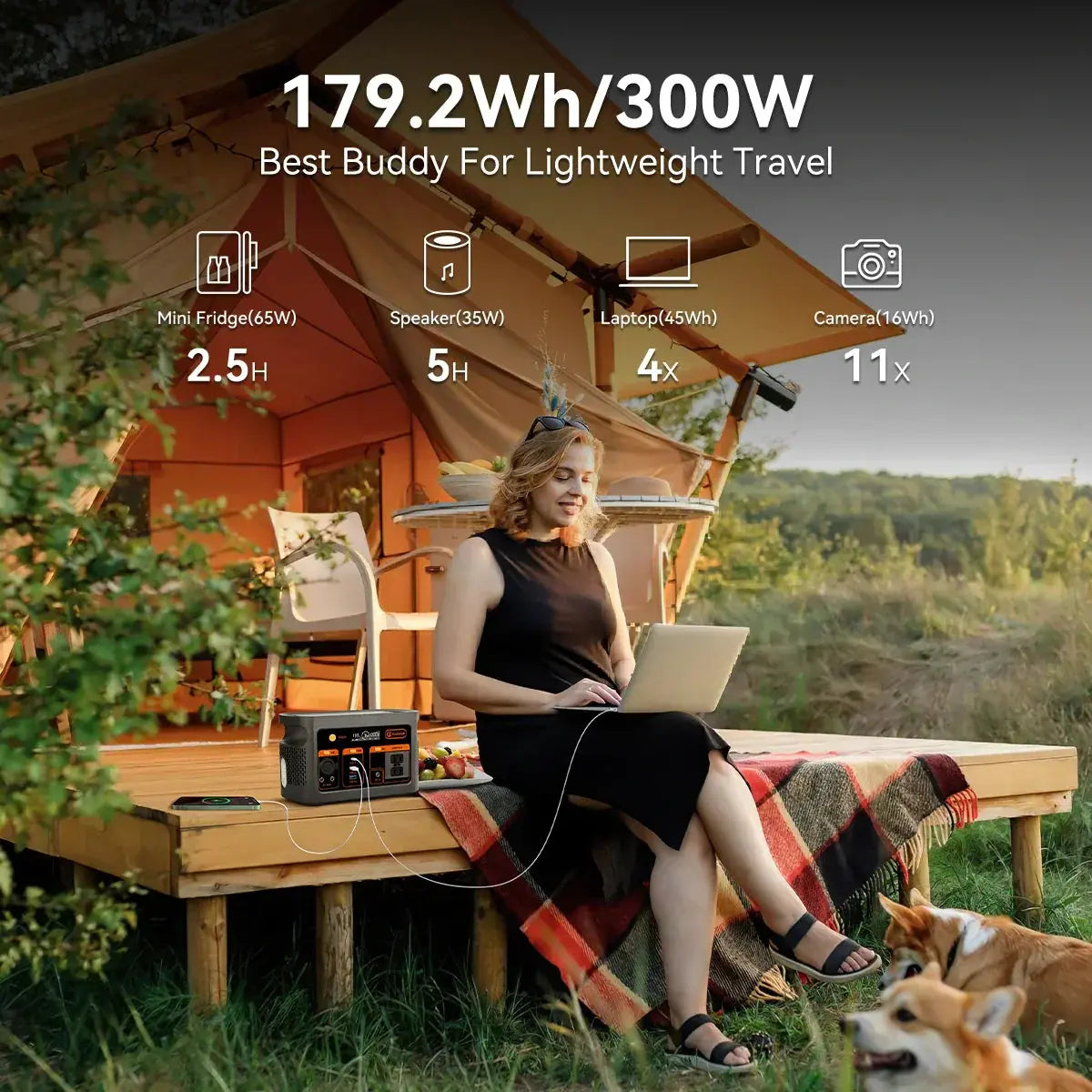
No. Wh divided by load watts is only a theoretical starting point before losses, changing draw, temperature, battery condition, and reserve.
Where should I compare FlashFish models?
Start with the FlashFish comparison page, then verify the current product page and manual for the selected model.

Deixar comentário
Este site é protegido por hCaptcha e a Política de privacidade e os Termos de serviço do hCaptcha se aplicam.