


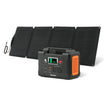
Quick answer: A portable battery and compatible solar panel can add a limited charging path to a blackout plan, but the plan must begin with selected loads and stored energy. Solar input varies with conditions and cannot guarantee continuous service. Verify the device label, station output, battery capacity, panel voltage, connector, current, and input limit before relying on a setup.
Separate the battery from the solar panel
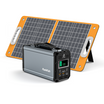
The power station stores energy and supplies connected devices. The solar panel is one charging source. A panel does not directly create a fixed runtime, and a battery does not make an incompatible appliance safe to connect.
Prioritize outage loads
List communication, task lighting, and another selected device whose exact requirements have been checked. Record running watts, startup demand, voltage, connection, and expected hours. Use that list to screen station output and then estimate the capacity requirement.
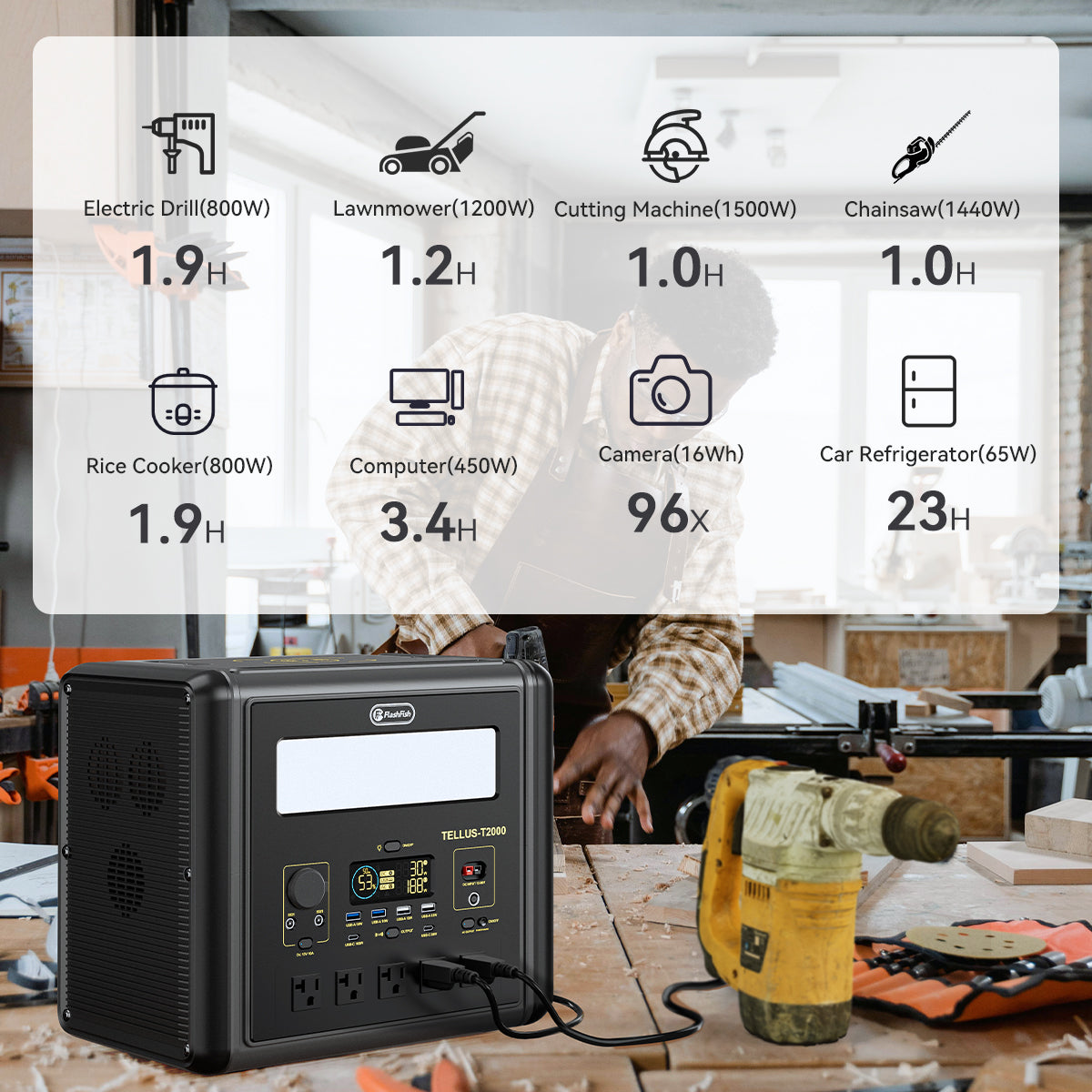
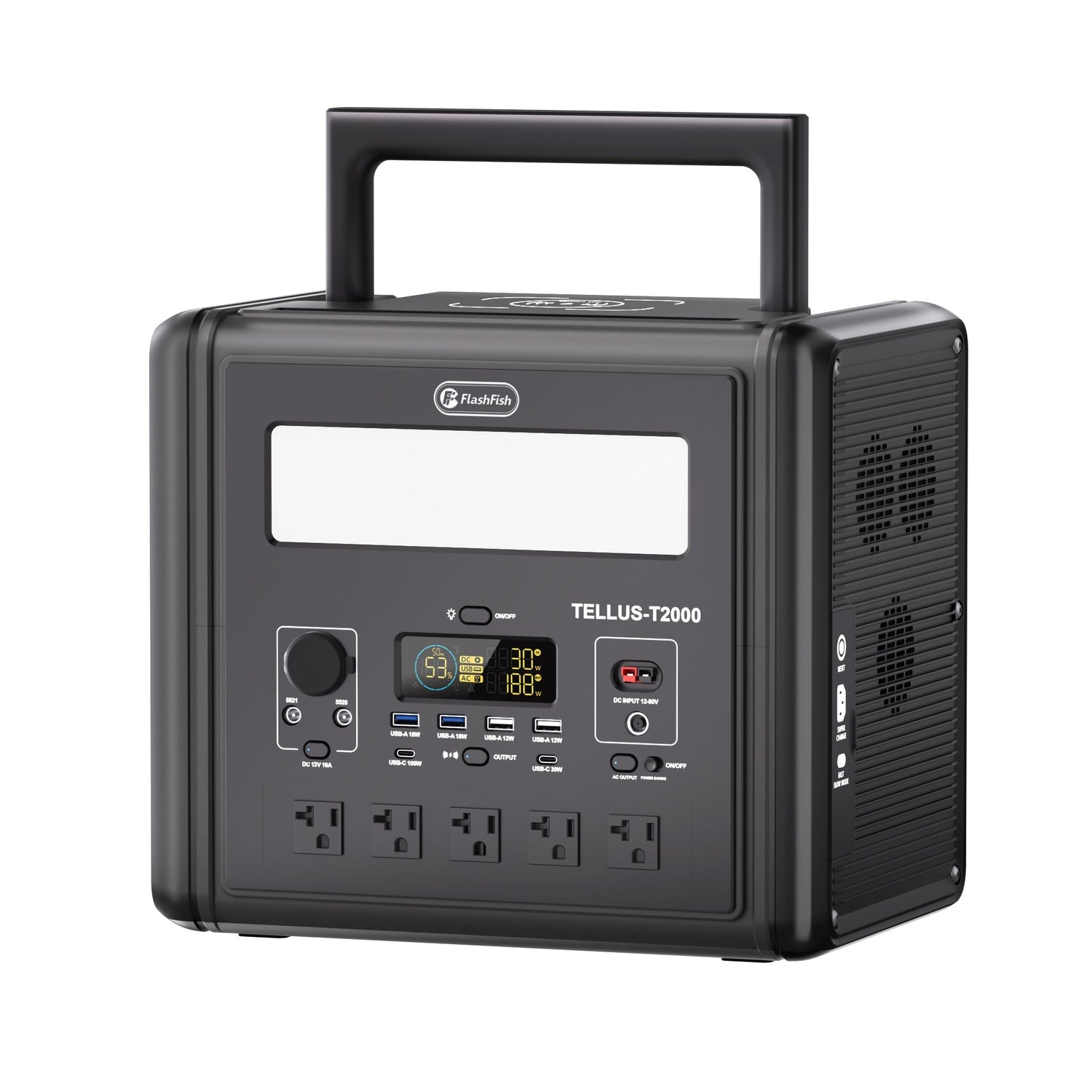
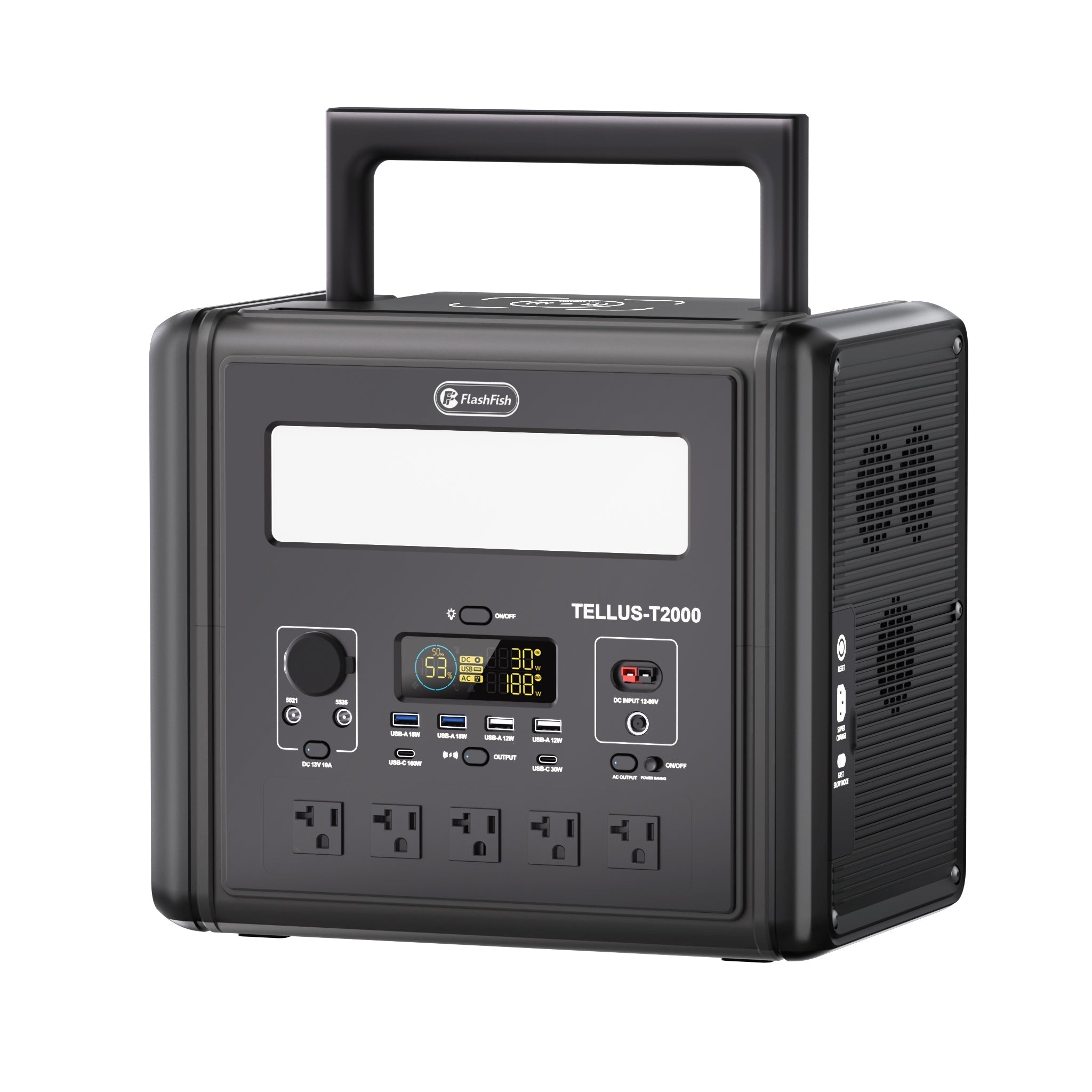
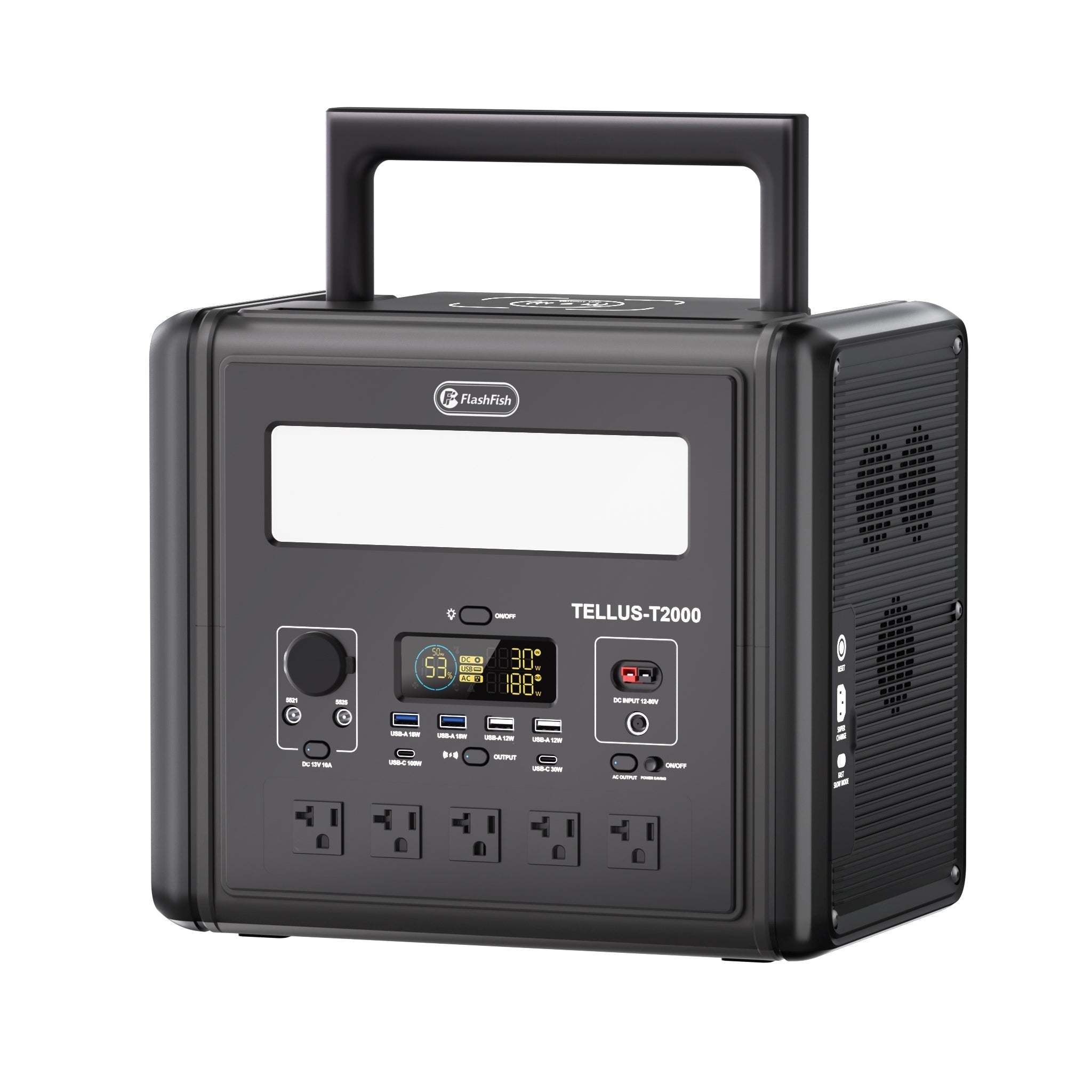
Use FlashFish T2000 as a documented example
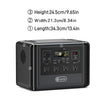
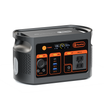
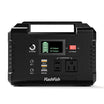
The product manual records 1536Wh capacity and 2000W continuous, 4000W peak pure sine wave AC output for FlashFish T2000. It also lists four U.S. 120V/60Hz AC outlets. Those records establish limits; they do not establish a universal appliance list or fixed runtime.
Verify the solar charging path
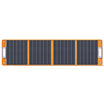
FlashFish T2000 solar input is listed at 12-80V, 10A, 600W maximum through an Anderson connection. Check the panel's operating voltage, current, connector, polarity, and cable. Do not connect a panel based on nominal wattage alone.
Plan for variable solar input
Clouds, shade, panel angle, temperature, dirt, short daylight, and the station's input controls can reduce actual charging. The U.S. Department of Energy explains these energy-yield factors in its photovoltaic system design and energy yield guide.
Prepare the complete outage plan
- Charge the battery before expected severe weather.
- Test the intended devices and cables.
- Keep the station dry and ventilated.
- Maintain communication, supply, and evacuation plans that do not depend on one power product.
- Use official power outage guidance for household safety.
Compare current stations and panels through the FlashFish solar generator kit collection, then verify the exact model and bundle documentation.
Frequently asked questions
Does a 600W solar input mean the station always receives 600W?
No. It is a maximum input record. Actual input depends on the panel, conditions, and complete electrical match.
Can I estimate runtime from capacity alone?
No. The load, conversion losses, temperature, battery condition, and device behavior also affect duration.
Should solar be the only charging plan?
No. Start with charged stored energy and treat compatible solar as an additional variable source.

1 comentário
Jorge Aguirre
I am writing to report an issue with my Portable Power Station, Model E200. The unit is currently not providing output power from either the USB ports or the AC outlets, despite the LED indicator showing a ¾ full charge.
I previously contacted you regarding this matter but have not yet received a response. I am again requesting your guidance on the next steps to resolve the problem, including repair, replacement, or other appropriate remedy.
Thank you for your prompt attention and I look forward to your response.
Deixar comentário
Este site é protegido por hCaptcha e a Política de privacidade e os Termos de serviço do hCaptcha se aplicam.