


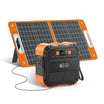
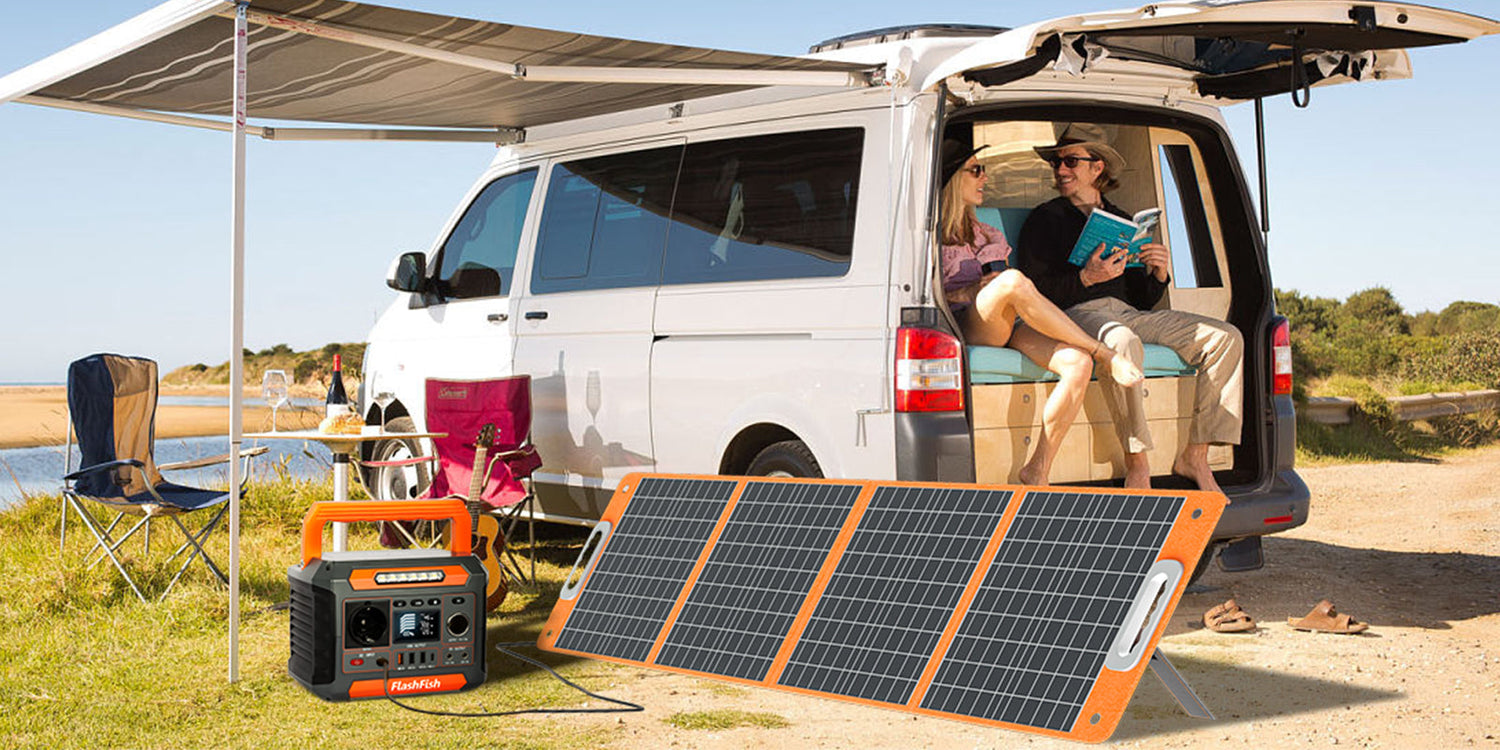
Short answer: A 300W portable power station is best for carefully checked camping electronics such as phones, cameras, LED lights, small fans, and compatible laptop charging. It is not selected by the word "camping" alone. Check the device label, running watts, startup demand, port type, and how long the device must run before choosing FlashFish E103, T300PRO, or a larger station.
What a 300W portable power station is good for
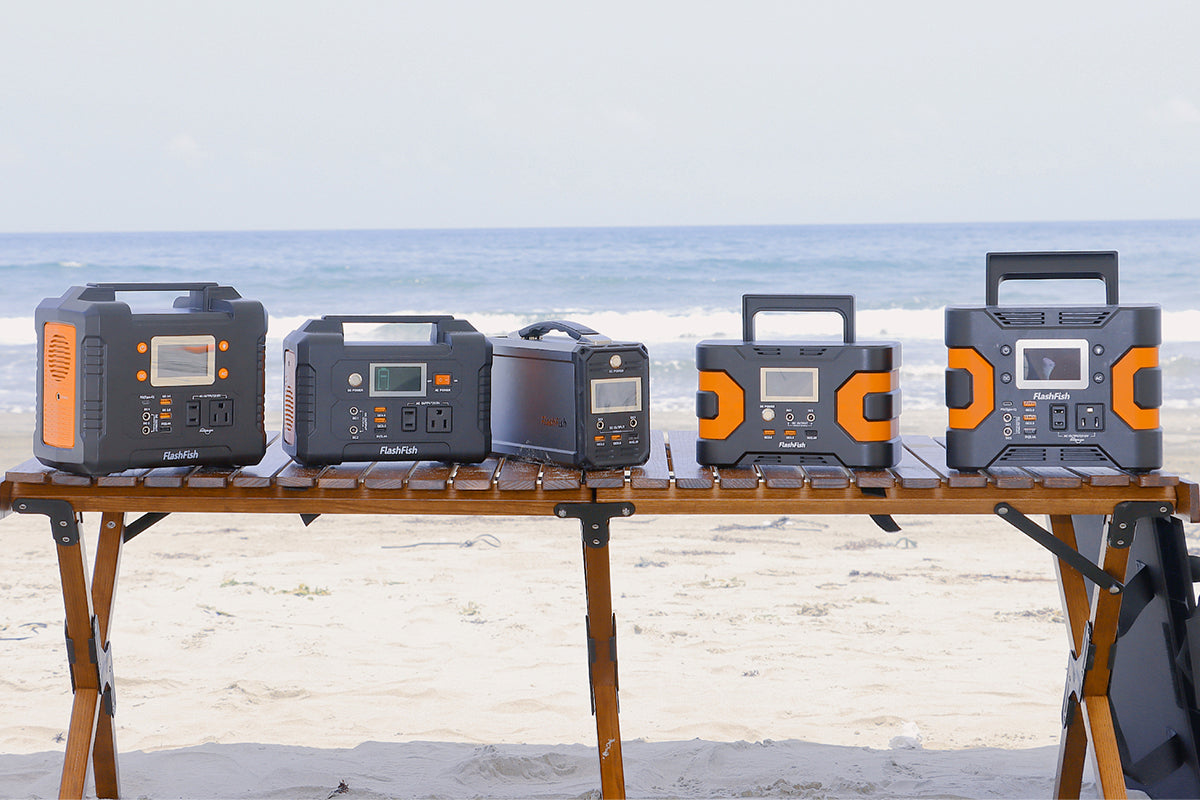
A 300W-class station gives more AC headroom than a very small 120W or 200W unit while staying easier to pack than a large home-backup station. For camping, that makes it a practical middle tier for organized small-device power. The FlashFish portable power stations collection is the right place to compare compact and larger options after the load list is clear.
The most useful way to plan is to separate device categories from device labels. "Fan," "laptop," or "light" is only a category. The actual charger or device label tells you the watts and port requirement that matter.
300W planning table
| Camping load | What to check first | 300W fit logic | When to step up |
|---|---|---|---|
| Phones and camera batteries | USB-A, USB-C, or AC charger requirement | Usually a low-load planning case when ports match | When many devices must charge together for longer trips |
| LED lights | Running watts and plug type | Often fits if total simultaneous load remains modest | When lights are part of a larger campsite or vendor setup |
| Small fan | Input rating and run plan | Can fit if wattage and connector path are compatible | When cooling is safety-critical or exact runtime is required |
| Laptop charger | USB-C wattage or AC adapter rating | May fit when the charger requirement stays inside the station limit | When the laptop requires a higher-power charger |
| Small AC accessory | Running watts plus startup demand | Only after both values fit the output rating | When motor startup or heat-producing load is uncertain |
FlashFish models that fit the 300W conversation
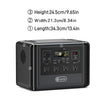
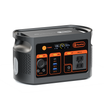
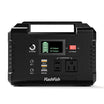
The FlashFish E103 is documented as a 179.2Wh portable power station with 300W pure-sine AC output and up to 90W DC charging input. It is a compact choice when the load needs 300W-class AC headroom but does not require a large battery.
The FlashFish T300PRO is documented as a 230Wh LiFePO4 portable power station with 300W pure-sine AC output, 600W peak output, and up to 120W solar input. It adds more stored energy and stronger documented input/output headroom than the smaller E103 record.
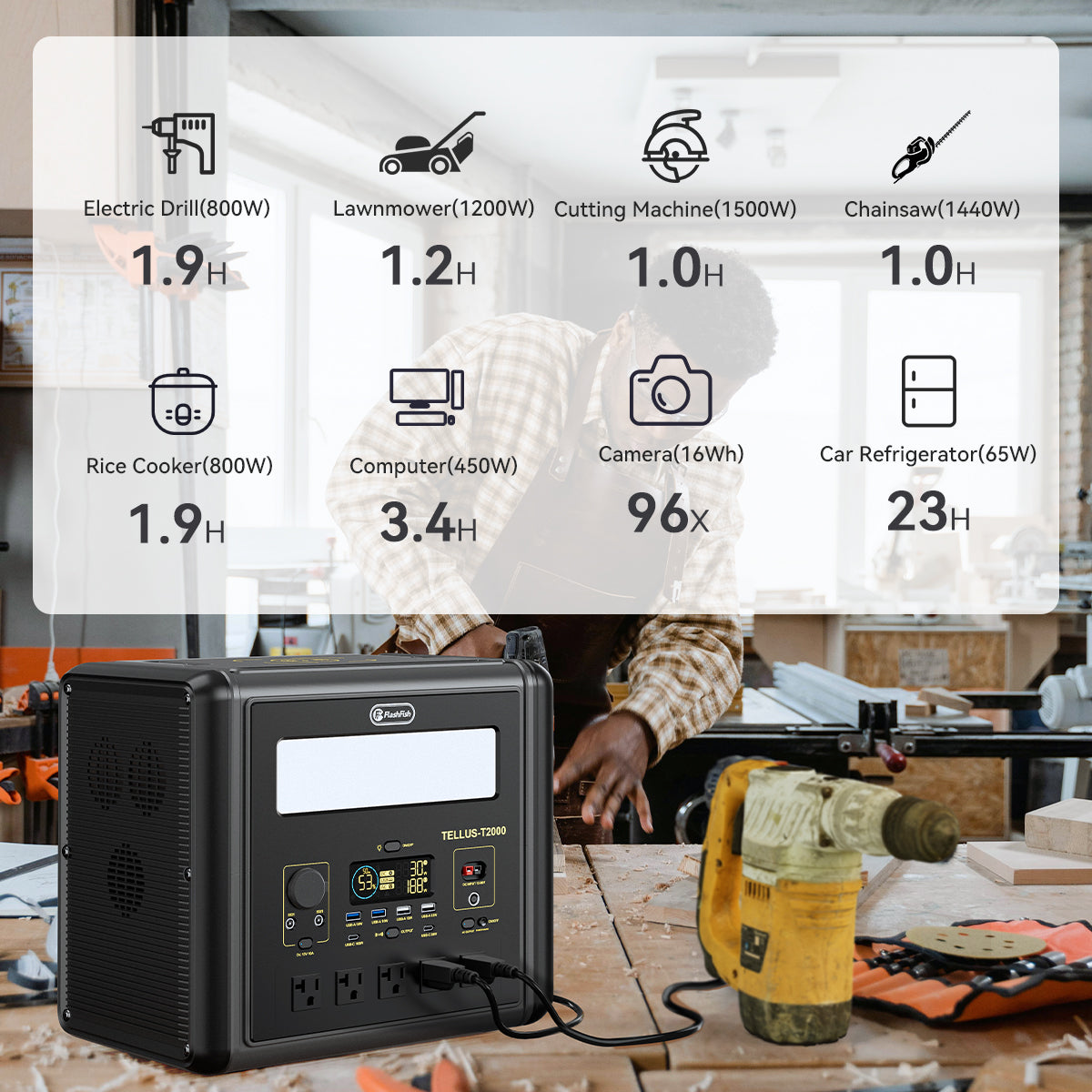
If the load list is well below 300W and carry weight matters most, compare the FlashFish T200. If the plan includes larger appliances, longer multi-device use, or more battery reserve, compare FlashFish T1200S or FlashFish T2000 instead.
Use watts and watt-hours separately
Watts tell you whether a station can support the load at a moment in time. Watt-hours help estimate the energy budget. A station can have enough watt-hours for a device but still be wrong if the device draws too many watts. A station can also have enough watts but not enough stored energy for the desired trip length.
For this reason, do not treat "300W" as a runtime promise. It is an output class. Runtime depends on the device draw, inverter losses, battery state, temperature, and how many devices run at once.
Solar charging expectations
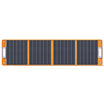
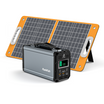
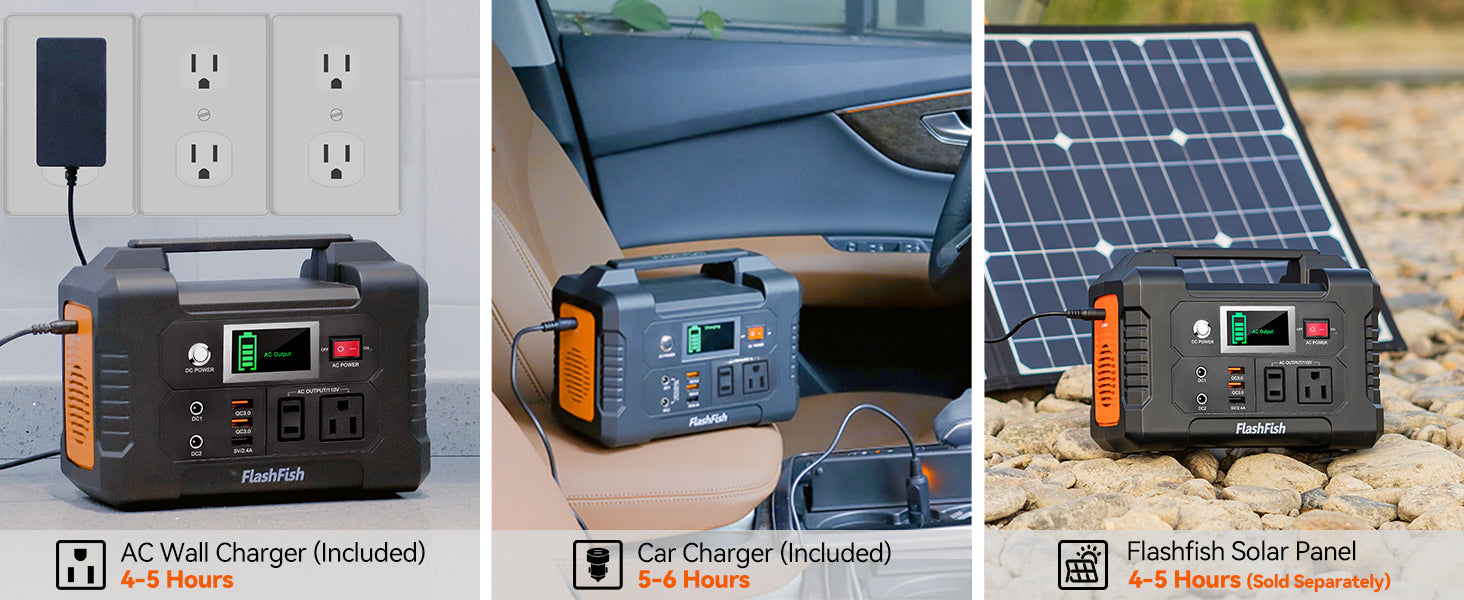
A small solar generator plan pairs a station with a compatible panel, but the panel rating is not a guaranteed recharge speed. With FlashFish, compare station input limits before choosing a panel. T300PRO lists up to 120W solar input; E103 lists up to 90W DC charging input in the available record. Panels such as the FlashFish TSP100 and FlashFish TSP60 should be checked against the station input range, connector path, sunlight, angle, and shade.
When 300W is the wrong size
Move down if the trip only needs phone charging and a small USB accessory. Move up if the plan involves a refrigerator, microwave, pump, heater, air conditioner, medical equipment, whole-home backup, or any device with unknown startup behavior. For those cases, a category name is not enough; the manual and device label control the decision.
Decision checklist before buying
- List every device and charger you want to power.
- Write down each running watt value and startup requirement where available.
- Mark which devices run at the same time.
- Choose the port path: AC, USB-C, USB-A, DC, or solar input.
- Compare both output watts and watt-hours.
- Choose a larger FlashFish model when the plan has no clean margin.
FAQ
Can a 300W portable power station run camping lights and phones?
Often yes, when the chargers and total simultaneous load match the station's port and output limits. Exact charge counts are not promised here.
Can a 300W station run a laptop?
It depends on the laptop charger. Check the USB-C or AC adapter requirement and compare it with the station's documented output.
Is 300W enough for RV camping?
It can support a small electronics plan, but it is not a full RV power system. Larger AC loads and longer trips usually need more capacity and output.
Should I choose E103 or T300PRO?
Choose E103 for a smaller 300W-class plan. Choose T300PRO when the documented 230Wh LiFePO4 battery, 600W peak rating, and 120W solar input better fit the plan.
Does solar input mean fixed recharge time?
No. Solar output depends on panel fit, sunlight, angle, temperature, shade, and cable path.

Leave a comment
This site is protected by hCaptcha and the hCaptcha Privacy Policy and Terms of Service apply.