


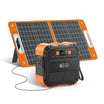
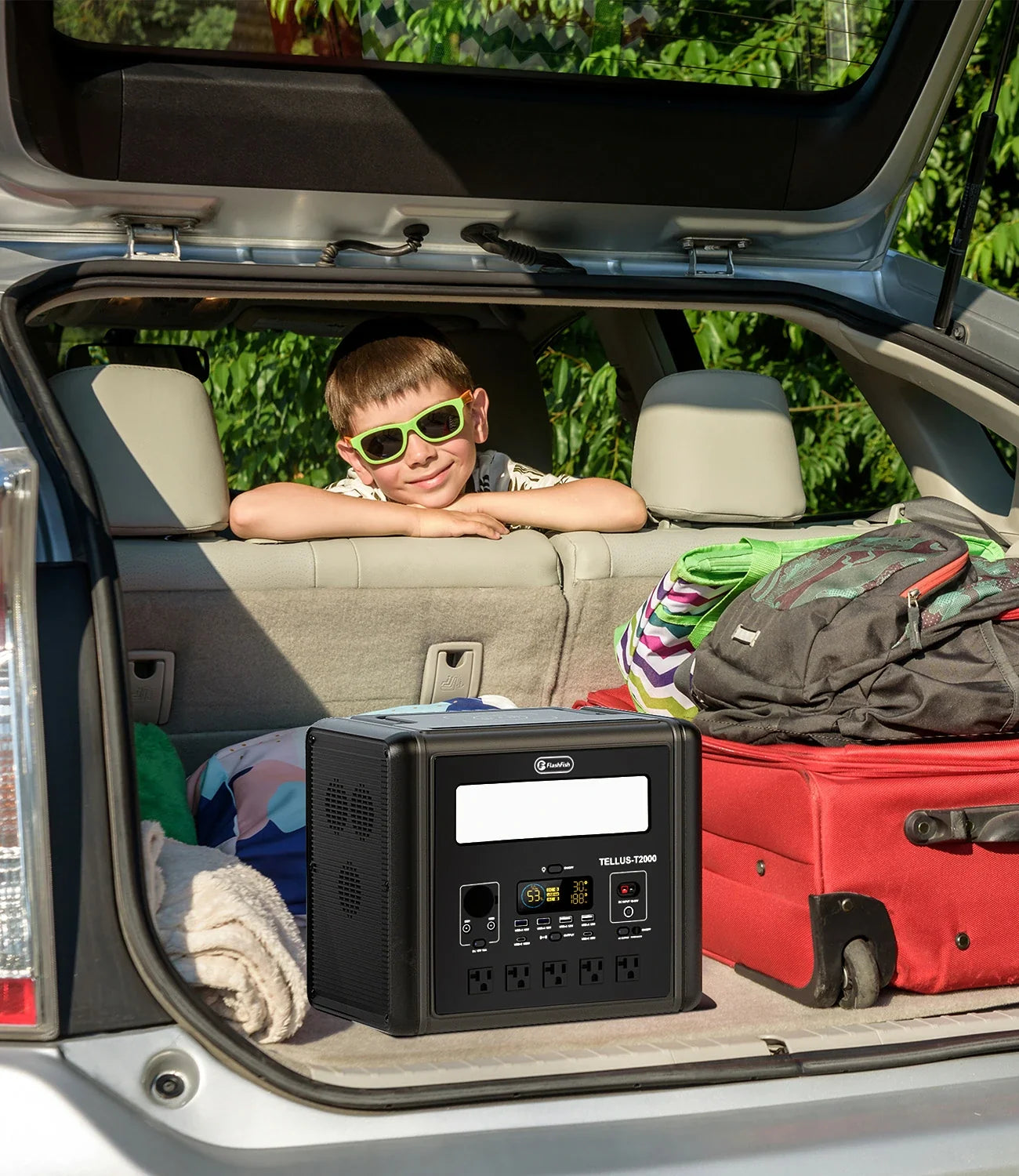
Quick answer: Add the projector, speaker, streaming device, and phone-charging loads that will run together, then estimate watt-hours for setup time plus the full feature. A station's watt rating answers “can it start and run?” while watt-hours answer “is there enough energy for the planned duration?” Both must pass, with reserve, before movie night.
Start with the projector label, not its screen size
The projector is usually the anchor load, but two projectors with similar brightness claims can draw very different power. Read the rating label on the projector or its supplied adapter. Record the normal mode you will use and check the manual for power-saving, lamp, laser, or brightness settings that change consumption. Do the same for an amplified speaker, soundbar, streaming stick, Wi-Fi device, and every charger.
Do not use lumen claims as a substitute for watts. Lumens describe light output under a stated test method; they do not tell you the electrical demand of the complete backyard setup.
Build one simultaneous-load row
| Item | Read from | Planning question |
|---|---|---|
| Projector | Rear label and manual | Which picture mode will run for the feature? |
| Speaker or soundbar | Power adapter label | Is it on AC continuously or using its own battery? |
| Streaming device | Adapter or USB requirement | Will it draw from the projector or the station? |
| Phone and hotspot | Approved chargers | Are they essential during the movie? |
| Ambient lighting | Light and adapter labels | Can it be switched off after seating? |
Add the watts for anything that can be on at the same moment. Compare that total with continuous AC output, not peak or surge marketing. Keep headroom so a brief change in projector or audio demand does not put the plan at the limit.
A movie-length example that you can replace with your labels
Assume, only for illustration, a projector averaging 250W, a powered speaker at 40W, a streaming device at 5W, and phone or hotspot charging at 15W. The combined planning load is 310W. If you reserve 25 percent of rated energy for conversion losses, battery condition, and uncertainty, the simple estimate is:
Estimated hours = rated watt-hours x 0.75 / average watts.
Using that assumption, 768Wh x 0.75 / 310W is about 1.9 hours, while 1536Wh x 0.75 / 310W is about 3.7 hours. These are not measured FlashFish runtimes and do not establish compatibility. A different projector mode, colder or hotter conditions, extra lights, battery condition, or higher conversion loss can change the result. Include setup and post-movie time, not just the film's listed duration.
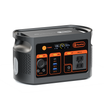
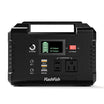
FlashFish T1200S and T2000 decision points
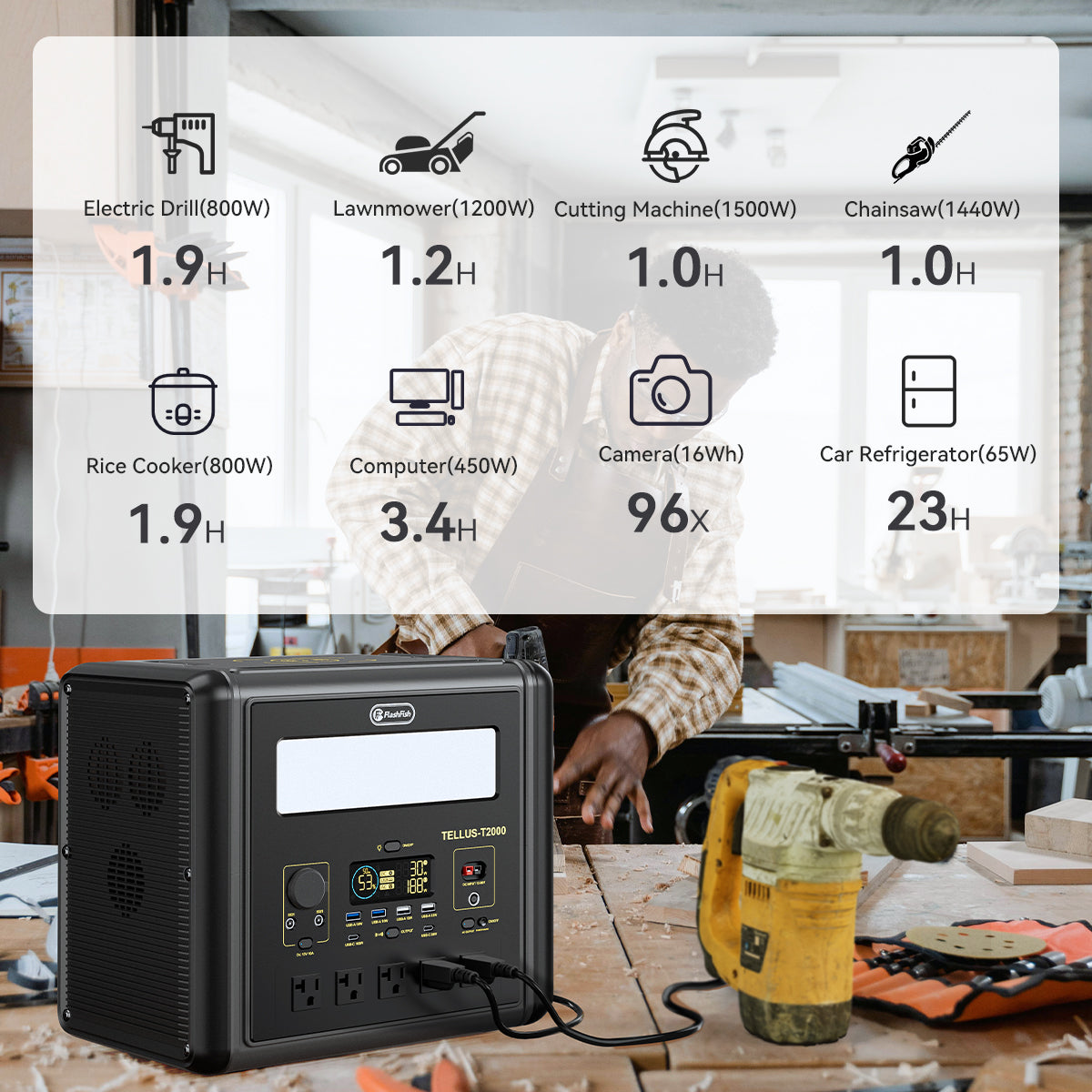
| Documented station fact | FlashFish T1200S | FlashFish T2000 |
|---|---|---|
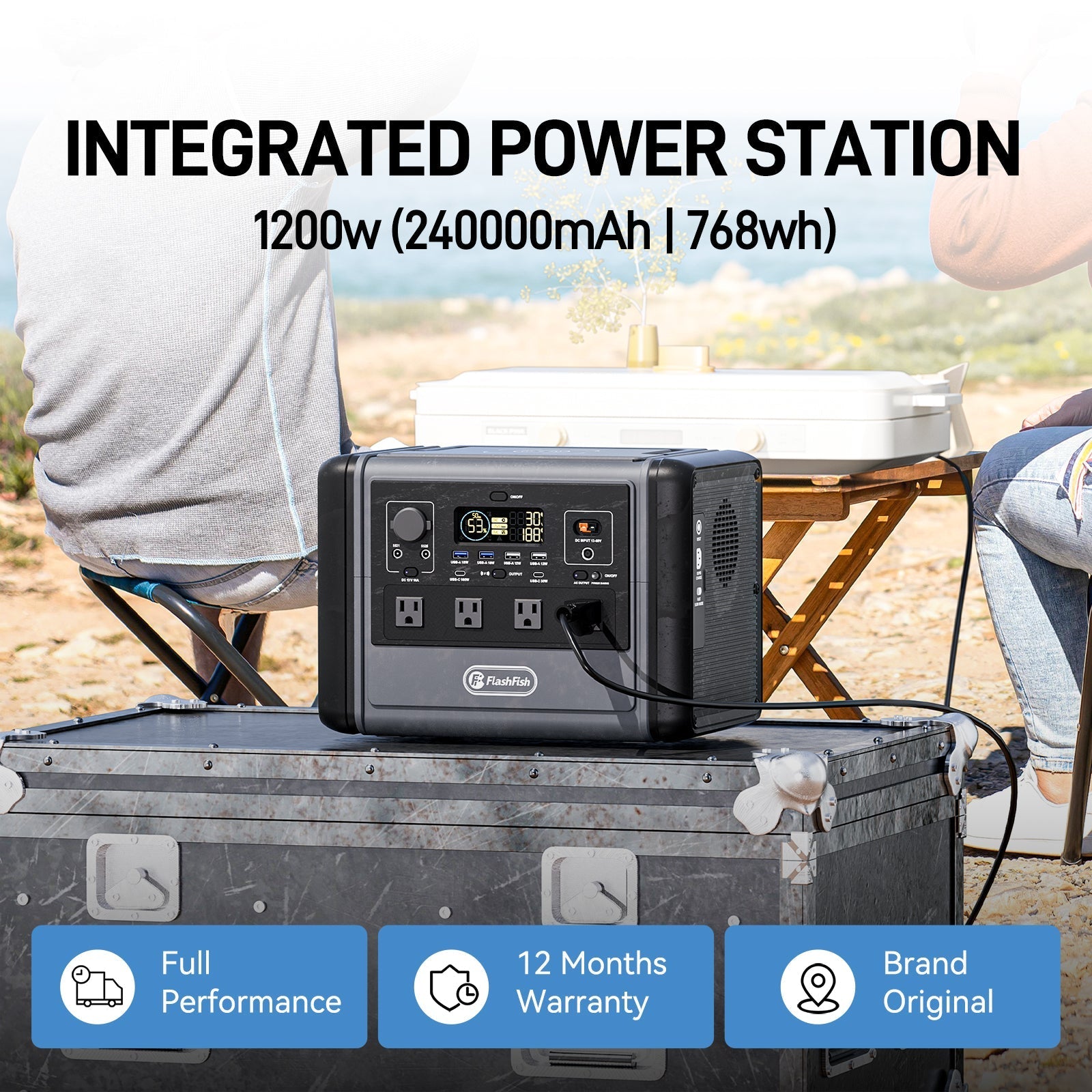
| Battery energy | 768Wh | 1536Wh |
| Continuous pure-sine AC output | 1200W | 2000W |
| Peak AC output | 2400W | 4000W |
| AC outlets | 4 | 4 |
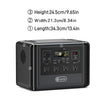
| Approximate weight | 27.45 lb | 42.33 lb |
The FlashFish T1200S may fit a moderate verified load when the energy calculation covers the complete event with reserve. The FlashFish T2000 doubles the documented energy and raises the output ceiling, but it also adds about 14.9 lb. Choose from the calculation and carry plan, not from the larger number alone.
Test the exact signal chain before inviting guests
- Charge the station and all devices fully.
- Connect the projector with its normal source, cable length, and picture mode.
- Add the speaker, streaming device, hotspot, and chargers one at a time.
- Run a feature-length rehearsal, including setup and shutdown time.
- Note the station's displayed load and remaining percentage at fixed intervals.
- Repeat after changing any projector mode, speaker, extension cord, or streaming setup.
This rehearsal also exposes non-power problems: HDMI handshake failures, weak Wi-Fi, audio delay, fan noise, blocked ventilation, and a screen that is not bright enough before sunset.
Outdoor cable and weather boundaries
Put the station on a stable, dry surface where ventilation openings remain clear. Route cords away from the audience and do not place connections on wet grass. If an extension cord is necessary, select one marked and sized for outdoor use and the connected load. The U.S. Consumer Product Safety Commission's extension-cord guidance explains the fire and shock risks associated with unsuitable or damaged cords.
A canopy is not a lightning shelter. The National Weather Service recommends an outdoor-event plan that identifies who monitors weather, when activity stops, and where people go. If thunder is heard, move guests to a substantial building or hard-topped vehicle. Protecting the equipment is secondary to moving people to safety.
Plan a graceful fallback
- Download the movie legally before the event when the service permits offline viewing.
- Keep the speaker charged so it can operate without AC if supported by its maker.
- Turn off decorative lighting and nonessential phone charging first.
- Have an indoor or reschedule decision before the forecast becomes uncertain.
- Set a minimum remaining percentage that ends the event rather than deeply exhausting the plan.
The existing projector and speaker label guide explains the first equipment check. This page adds the combined-load, movie-duration, and site-safety decisions for a complete backyard setup.
FAQ
Can a portable power station run a projector and speaker at the same time?
It can only be determined from the exact projector and speaker labels. Add the simultaneous watts, include streaming and charging accessories, compare the total with continuous output, and calculate whether usable energy covers the planned movie length.
How many watt-hours does a backyard movie need?
Multiply the measured or labeled average watts by setup, movie, and shutdown hours, then add a reserve for conversion losses and uncertainty. Projector model, picture mode, speaker type, and event length make a universal watt-hour answer unreliable.
Should I choose the FlashFish T1200S or T2000 for a movie night?
Use the T1200S when the verified load and duration fit its 768Wh energy and 1200W continuous output with reserve. Consider the T2000 when the calculation needs its larger 1536Wh energy or 2000W continuous output and the extra weight is acceptable.

Leave a comment
This site is protected by hCaptcha and the hCaptcha Privacy Policy and Terms of Service apply.