


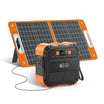

Quick answer: Plan portable power for outdoor photography by listing every battery charger, laptop adapter, and light you expect to use, then compare each label's input and running-power requirements with a station's documented output limits. Leave capacity headroom for conversion losses and for changes to your shoot plan; a watt-hour rating is an energy budget, not a guaranteed number of charges.
Start with the gear that actually has to be recharged
A landscape sunrise, wedding portrait session, or remote editing stop can involve more than a camera body. Make a simple list: each camera battery charger, laptop power adapter, light charger, phone, card reader, and any other item that will be connected. Photograph the label on each charger before packing. Record the input voltage, the listed watts or amps, the connector type, and whether you will use AC, USB-C, or another output path.
That label-first list prevents a common mistake: choosing a station based on a camera kit's name rather than the electrical requirements of its individual chargers. It also separates essential gear from nice-to-have gear when the day runs longer than expected.
Use output and capacity as two different checks
Output answers whether a connected item stays within the station's documented limit. Capacity answers how much stored energy is available for the whole plan. Both checks matter. A station can have enough energy on paper but lack an appropriate output path for a particular charger; a station with suitable outputs can still be too small for the full shooting and editing list.
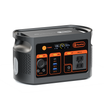
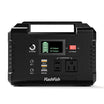
For example, the FlashFish E103 is documented with 179.2Wh capacity, 300W continuous pure-sine AC output, and a 60W USB-C PD output. The FlashFish T300PRO is documented with 230Wh capacity and 300W continuous pure-sine AC output. These figures help set a planning range; they do not establish that a particular camera charger, laptop, light, cable, or simultaneous setup is compatible.
Build a conservative shoot-day power plan
- Mark the items that are mission-critical, such as the camera-battery charger and the laptop needed for card backup.
- Read each item's manufacturer label and manual, including any limits for its supplied power adapter or USB-C charging.
- Choose one charging path at a time on paper and total the listed loads that could run together.
- Keep headroom instead of planning right at a station's continuous-output limit.
- Use the station display and connected-device behavior as a reason to stop and reassess, not as a substitute for label checks.
Outdoor conditions make fixed predictions unreliable. Battery age, temperature, editing workload, charger behavior, and conversion losses can all change the result. Pack spare charged camera batteries when the shoot has a hard deadline.
Choose the connection path deliberately
Use the output path specified by the device maker. If a laptop charger requires AC, check the adapter label and the station's continuous AC rating. If a charger uses USB-C, verify its requested profile and cable before assuming a USB-C port will work as intended. Do not substitute an adapter, cable, or splitter unless its maker documents the use and ratings.
For a compact photography kit, a lower-energy plan may be enough when it focuses on camera batteries and small accessories. Add laptop editing or lights only after verifying their labels and planning the combined load. That decision is more useful than treating a portable power station as a universal camera accessory.
What to pack besides the station
- The original or manufacturer-approved charger and cable for every essential battery.
- A photographed copy of each charger label and a written priority list.
- Spare charged camera batteries and a backup storage process.
- Weather protection and a stable, dry place to set equipment during use.
Check the product manual and the current product page before purchase or departure. Regional outlet and voltage configurations, included accessories, and current availability require confirmation at the time you buy.
FAQ
Can a portable power station recharge camera batteries and a laptop together?
Possibly, but only after you verify the charger and laptop-adapter labels, the required connection paths, and the combined load against the station's documented limits. Do not infer compatibility from the device category.
How many camera batteries will a portable power station charge?
There is no reliable universal number. It varies with the battery, charger, energy losses, battery condition, and other connected equipment. Treat capacity as a planning budget rather than a charge-count promise.
Is the E103 or T300PRO the better photography choice?
Choose only after comparing the exact gear list. The E103 is documented at 179.2Wh and the T300PRO at 230Wh; both have documented 300W continuous pure-sine AC output. Your charger labels, laptop adapter, desired connection path, and required headroom determine the fit.


Leave a comment
This site is protected by hCaptcha and the hCaptcha Privacy Policy and Terms of Service apply.