


Possibly-but start by comparing the battery charger's documented AC input and plug with a selected station's verified output. A cordless-tool battery voltage or brand name by itself is not enough to determine whether the charger is a fit.
The useful question is not "Can this station charge this brand?" It is "What does this exact charger require, and what does the current station documentation confirm?" Keeping that question narrow helps prevent a charger comparison from turning into an unsupported claim about the tool or battery.
Find the label and the manual
Locate the charger model number, its input voltage and frequency, the labeled watts or amps, and the plug. Then read the charger manual for stated restrictions, adapters, and operating instructions. Record the source of each detail rather than filling gaps with a battery-pack label or a generic online estimate.
If the charger and battery labels show different figures, that is expected: they describe different parts of the system. The charger input is the starting point for a station-output comparison. The battery label does not substitute for it.
Compare three sets of information
Keep the charger, battery, and station in separate columns. The charger column contains its documented AC input, plug, and instructions. The battery column identifies the battery information relevant to its manufacturer's charging guidance. The station column contains the verified output documentation for the exact product and market.
Only after the three columns are complete should you consider a conclusion. Do not calculate charge counts or charge duration from incomplete fields, and do not infer a match from a shared brand, a USB-C port, or a battery voltage.
What a station output number does not prove
An output number is one specification in a larger check. It does not by itself confirm the charger's plug, regional requirements, stated restrictions, or behavior in a particular setup. Capacity is another separate specification, not a promise about battery-charge counts.
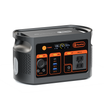
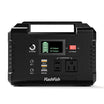
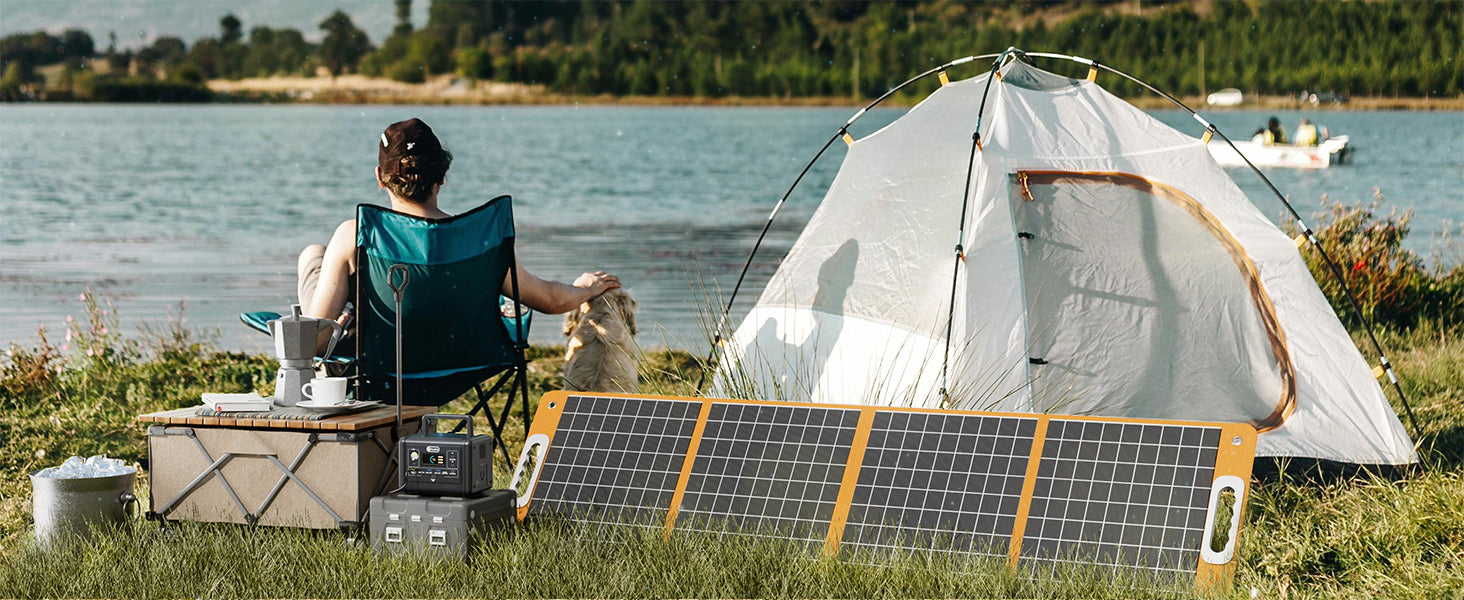
The active FlashFish T300PRO portable power station may be a product to compare once the exact charger information and current product documentation are available. It is not a blanket compatibility statement for cordless-tool chargers.
Ask the manufacturer when the record is incomplete
Ask the charger or tool manufacturer which input details and restrictions control the charger's use. Ask the station manufacturer to confirm the current product documentation for the output path you intend to evaluate. Do not replace either answer with a general claim about portable power.
For terminology, see the portable-power waveform overview and the ports guide. Those references explain categories; the exact charger label and product documentation still control the comparison.
Questions readers often ask
Can a USB-C port replace a charger's AC adapter?
Do not assume so. Follow the charger manufacturer's documented input and adapter instructions.
What if the charger and battery labels differ?
Use the charger label and manual for the charger-input comparison; use the battery manufacturer's guidance for battery-specific requirements.
Why is this different from charging a small radio or headlamp?
Each device and charger has its own documented input path. A conclusion for one device category does not transfer automatically to another.

Leave a comment
This site is protected by hCaptcha and the hCaptcha Privacy Policy and Terms of Service apply.