


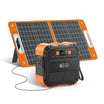
Portable Power Station for Power Outages: What to Run First
Short answer: During a power outage, a portable power station is most useful when you use it for the first layer of essentials: phone charging, a Wi-Fi router if service is still available, LED lighting, a laptop, small fans, and other low-to-moderate-watt devices. It is not a whole-home generator, and it should not be treated as a substitute for professional medical backup power.
For U.S. households, the practical question is not only "How big is the battery?" It is "Which loads deserve battery power first?" Public outage guidance from Ready.gov and health guidance from the CDC both point toward planning before the outage, using power sources safely, and avoiding carbon monoxide risks from fuel-burning generators. A battery power station helps with the quiet, indoor-friendly part of that plan because it stores electricity rather than burning fuel.
Start with an outage priority list
Before comparing models, write a short list of what you actually need to keep running. A useful U.S. home outage list often looks like this:
| Priority | Typical devices | Why it matters |
|---|---|---|
| Communication | Phones, radio, small tablet | Weather alerts, family contact, emergency updates |
| Light | LED lamp, rechargeable lantern | Safer movement after dark without wasting battery |
| Connection | Wi-Fi router, modem if local service is live | Remote work, outage maps, messaging |
| Comfort | Small fan, heated blanket with caution, laptop | Short-term comfort and work continuity |
| Food planning | Small cooler accessories, phone reminders | Most refrigerators are better managed by keeping doors closed; check public food-safety guidance before making claims |
If a medical device is part of your plan, use the device maker's instructions and your clinician's guidance. Do not guess from a general blog runtime table.
Use watt-hours to avoid overpromising runtime
Battery capacity is usually listed in watt-hours (Wh). A simple planning formula is:
Battery watt-hours / device watts = rough hours before losses.
Real runtime is lower because inverters, cables, temperature, device startup draw, and battery protection all create losses. For a practical planning buffer, estimate conservatively instead of using perfect math.
| Example load | Planning wattage | Why it fits a battery-first plan |
|---|---|---|
| Phone charging | 10-20W | High value, low drain |
| LED desk lamp | 5-15W | Low drain and safer than candles |
| Wi-Fi router | 10-30W | Useful if internet service still works locally |
| Laptop | 45-100W | Good for work windows and schoolwork |
| Small fan | 20-60W | Often more realistic than trying to run heavy appliances |
Where FlashFish T1200S and T2000 fit
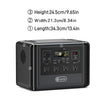
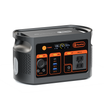
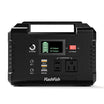
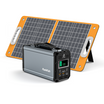
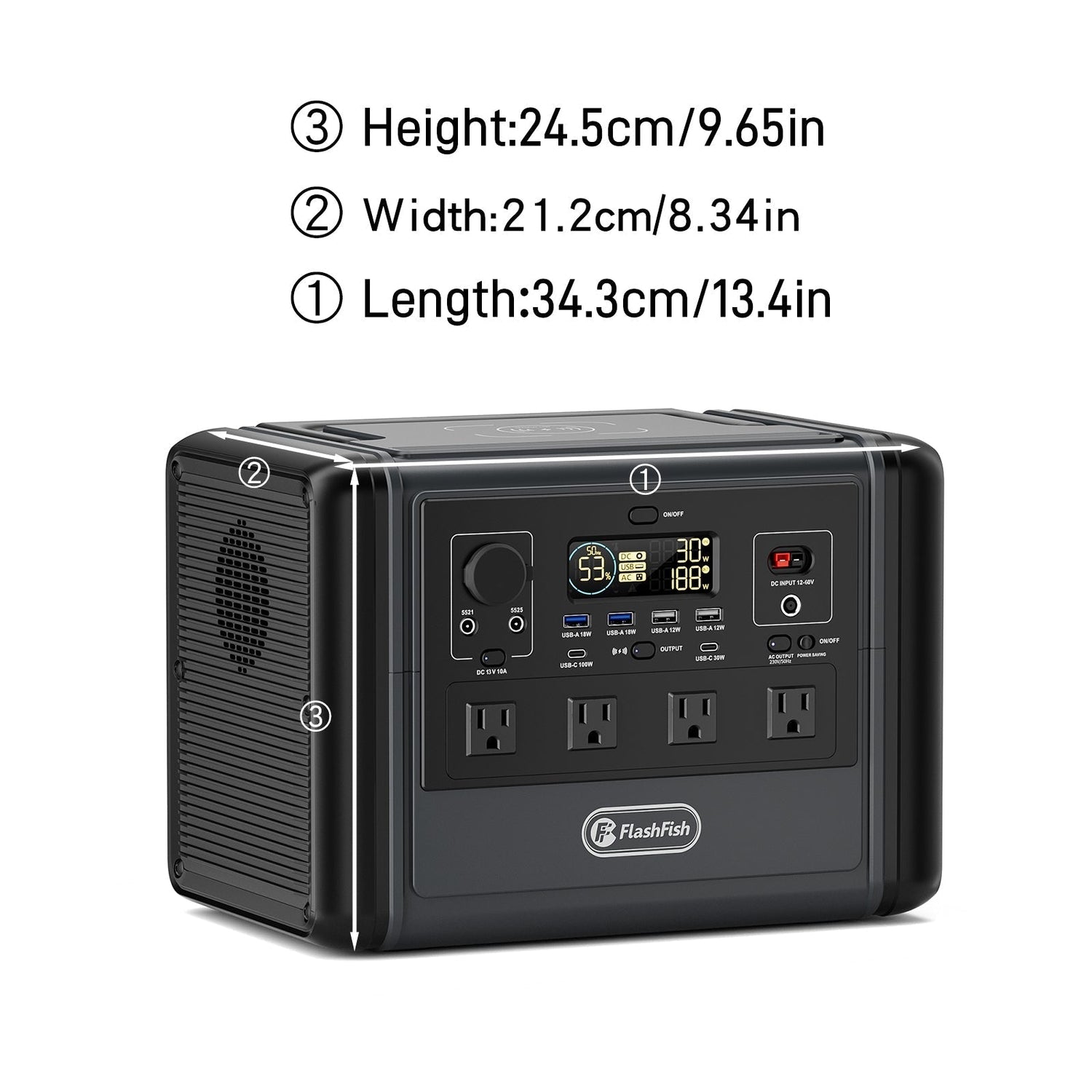
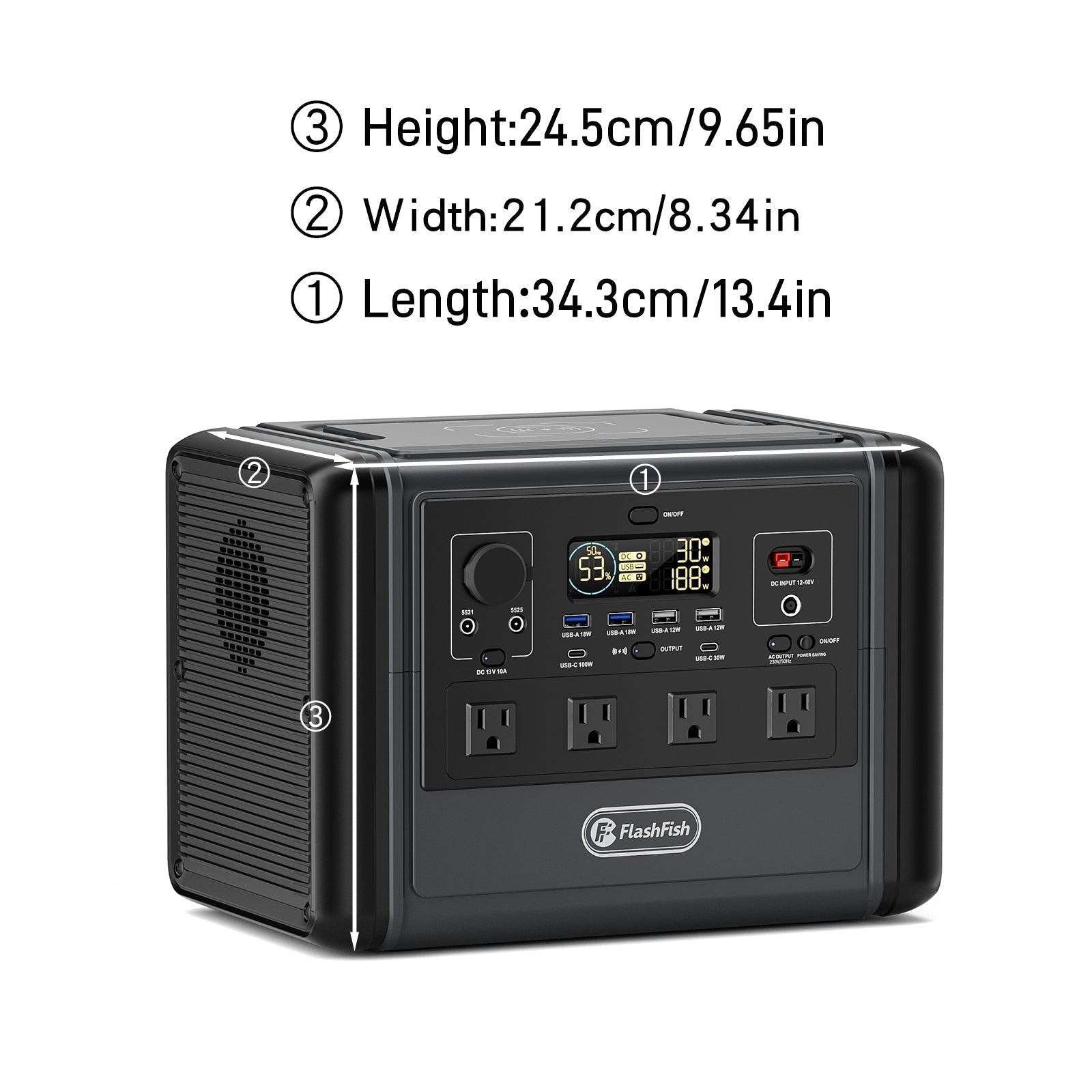
The FlashFish T1200S Portable Power Station is a practical middle-to-large battery option for households that want a stronger outage buffer than a small camping unit. Its product title lists 1200W output and 768Wh capacity, and live U.S. Shopify data shows the U.S. plug and solar-kit variants are active and available today.
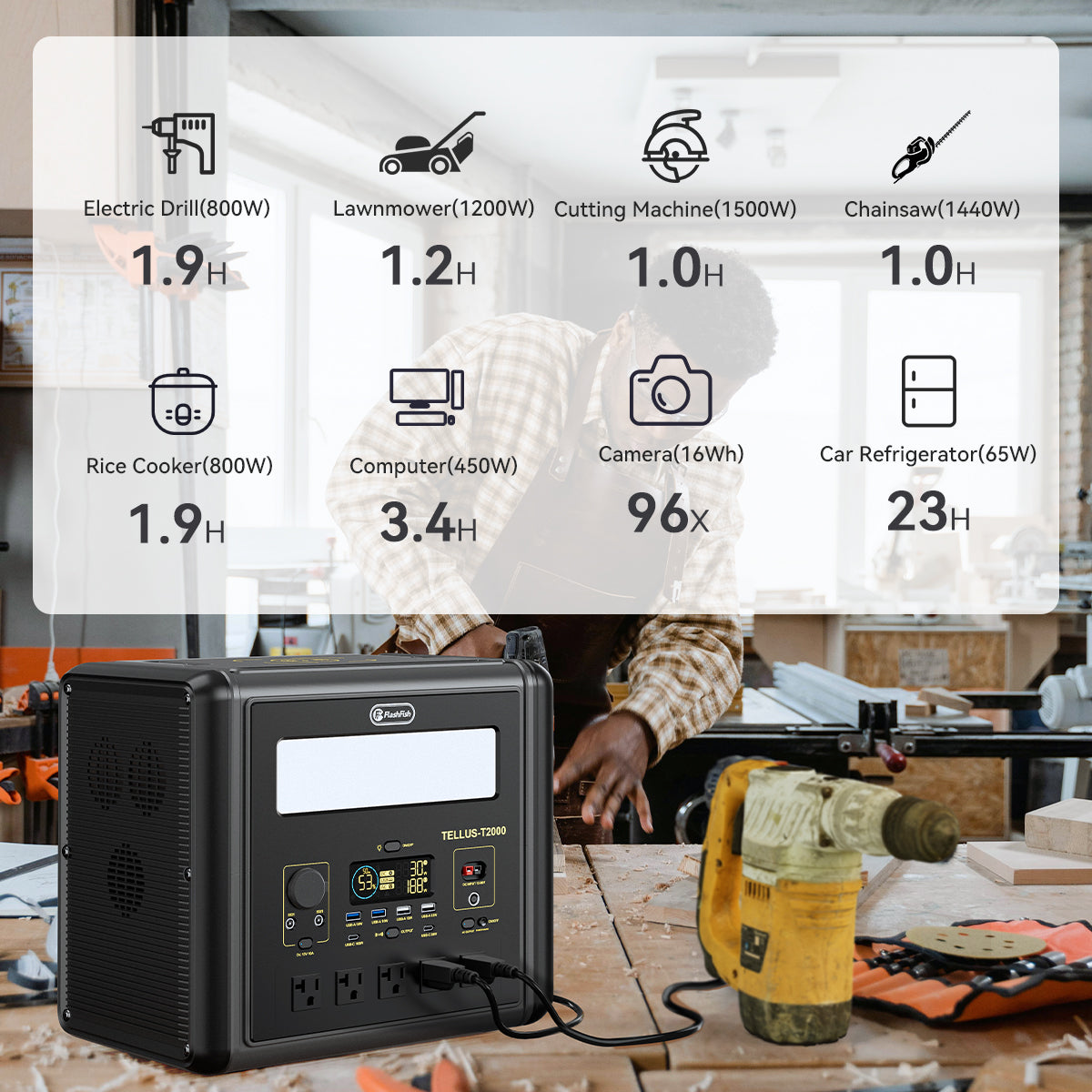
For larger backup planning, the FlashFish T2000 Portable Power Station gives more capacity for longer work windows, router/light/fan combinations, or solar-paired backup planning. It should still be used with realistic load selection instead of whole-home expectations.
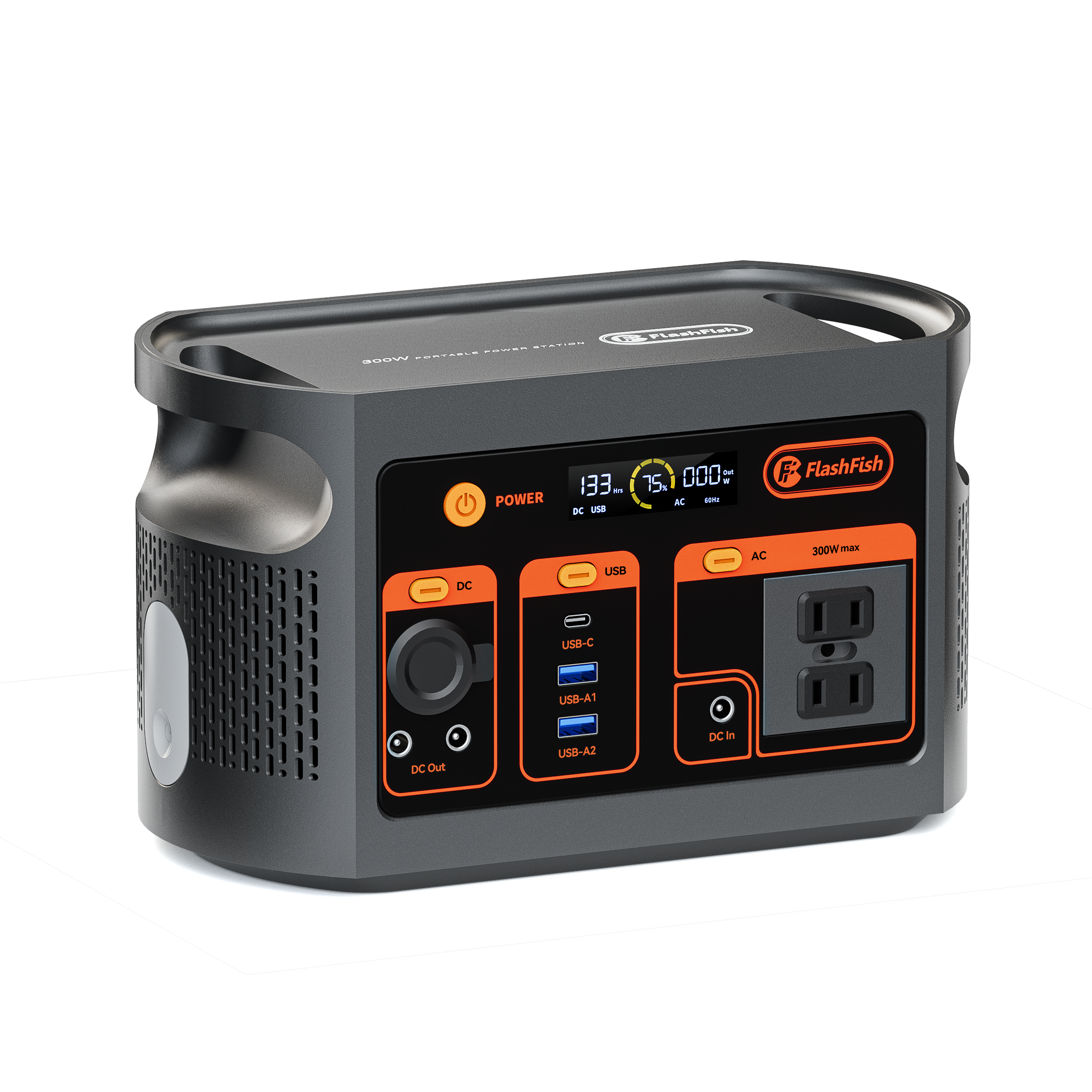
Smaller options such as the FlashFish E103, FlashFish T300PRO, and compact FlashFish E200 can still be valuable when the job is phones, lights, router time, or a short laptop session.
Battery power station vs fuel generator
A battery power station is quiet, rechargeable, and does not create exhaust while discharging. A fuel generator can support different loads, but U.S. safety guidance repeatedly warns about carbon monoxide hazards when combustion equipment is used too close to living spaces. That is why many households use a portable power station for indoor essentials and keep any fuel generator plan outdoors, ventilated, and compliant with local instructions.
A simple outage packing list
- Fully charged portable power station before storm season.
- Phone charging cables and a small power strip rated for your use.
- LED light or lantern instead of relying on high-watt lamps.
- A printed list of device wattages and what to unplug first.
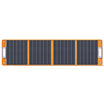
- Solar panel plan if you expect multi-day outages and have safe sun access.
- Manual review of product instructions before connecting any appliance with startup surge.
FAQ
Can a portable power station run a refrigerator?
Some larger power stations may run certain refrigerators for limited periods, but startup surge and duty cycle vary. For this article, the safer advice is to follow public food-safety guidance, keep refrigerator and freezer doors closed when possible, and calculate the specific appliance wattage before relying on battery power.
Is a portable power station safe indoors?
A battery power station does not burn fuel while discharging, so it avoids the exhaust risk of fuel generators. Still, use the product according to its manual, keep vents clear, avoid wet locations, and do not overload outlets.
Which FlashFish model should I start with?
Choose by priority load. For phones, light, router, and short laptop sessions, compact and mid-size models may be enough. For longer outages or multiple essentials, compare the T1200S and T2000, then match the battery to the devices you actually plan to run.
Human review checklist
- Verify current U.S. product availability and variant status before approval.
- Confirm all product links resolve on www.flashfishtech.com.
- Confirm no medical-device, refrigerator-runtime, or whole-home backup claim is overstated.
- Check featured image and alt text in Shopify preview.

Leave a comment
This site is protected by hCaptcha and the hCaptcha Privacy Policy and Terms of Service apply.