

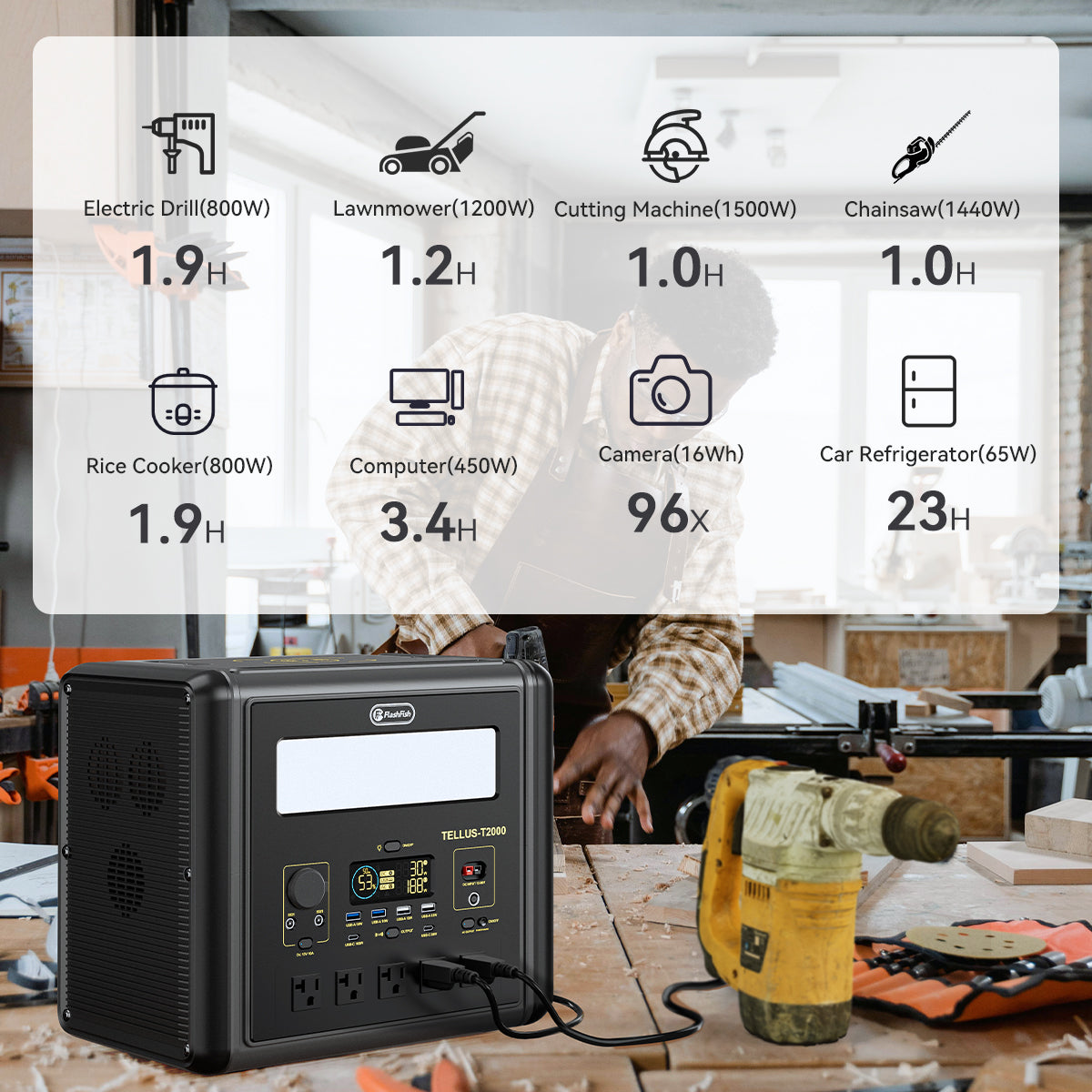
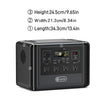
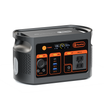
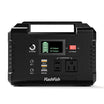

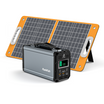
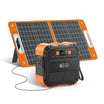
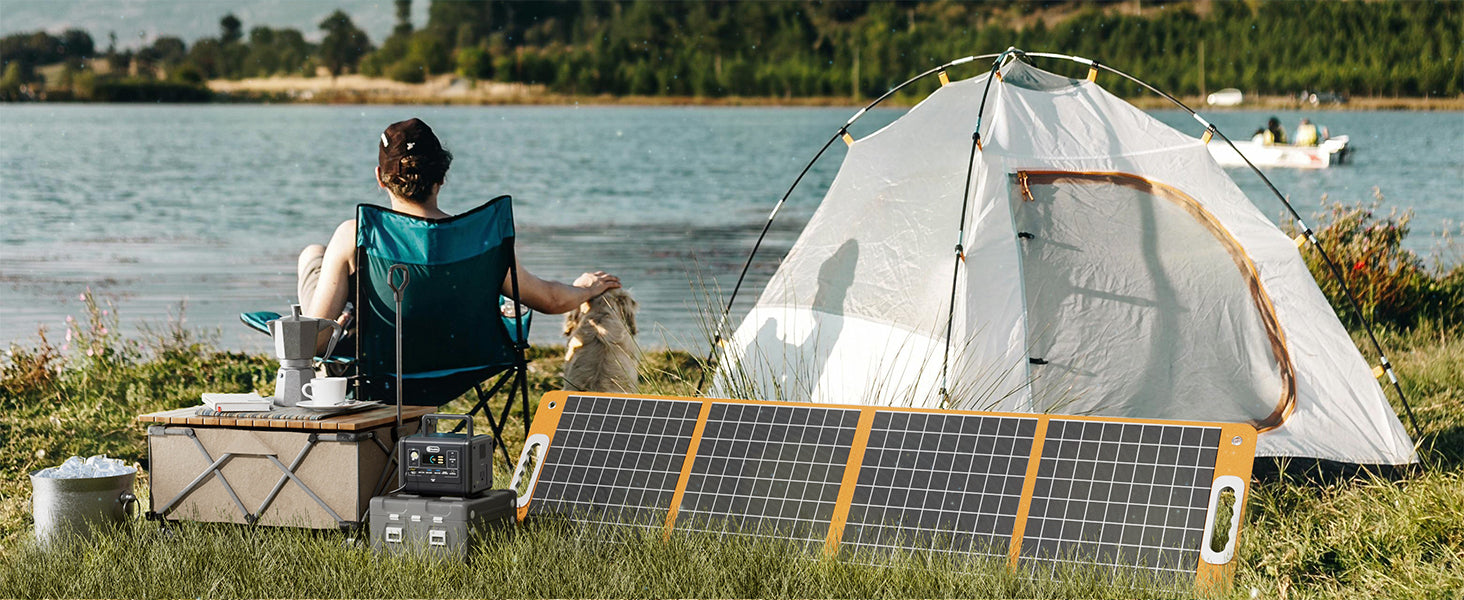
Quick answer: The FlashFish A101 is the lighter option at 1.2 kg, with 97.68 Wh and 120 W continuous AC output. The T200 is 2.5 kg, with 153.6 Wh, 200 W continuous pure-sine AC, and a documented USB-C PD port up to 60 W. Device power, charger compatibility, and required runtime still determine which model fits.
A101 vs T200 specifications
| Field | A101 | T200 | Decision use |
|---|---|---|---|
| Capacity | 97.68 Wh | 153.6 Wh | Stored-energy planning |
| Continuous AC | 120 W | 200 W | Supported continuous load |
| Peak AC | 240 W | 400 W | Startup boundary, not continuous output |
| AC waveform | Not provided in the available product documentation | Pure sine wave | Do not infer the A101 waveform |
| Weight | 1.2 kg / 2.64 lb | 2.5 kg / 5.5 lb | Carry tradeoff |
| USB-C | 2 PD ports, up to 18 W each | 1 PD port up to 60 W; 1 PD port up to 18 W | Compatible-device charging |
| Maximum documented input | 40 W DC | 60 W solar/DC; 60 W USB-C | Recharge-path planning |
| Battery chemistry | Not provided in the available product documentation | LiFePO4 | Keep the A101 value unknown |
Choose lower carried weight or greater capability
The A101 is 1.3 kg lighter. That difference can matter on a day trip or a walk-in route where every item must be carried. Practical portability still depends on the station, cables, and all other packed gear.
The T200 more than doubles the carried weight of the A101, but it provides higher documented capacity, continuous and peak AC limits, and a higher USB-C maximum. That can make it the more suitable candidate when those capabilities match the actual device requirements.
Capacity and output solve different problems
The T200 stores 153.6 Wh compared with 97.68 Wh for the A101. The U.S. Energy Information Administration's electricity guide distinguishes power from energy. Capacity helps compare stored energy, but it does not establish exact runtime. Device behavior, conversion losses, standby use, temperature, and output path affect usable time.
For AC loads, compare the official device running and startup requirements with the station limits. Do not use the 240 W or 400 W peak figure as a continuous rating. If the load exceeds 120 W continuous on the A101 or 200 W continuous on the T200, that model is not a fit.
USB-C, USB-A, AC, and DC differences
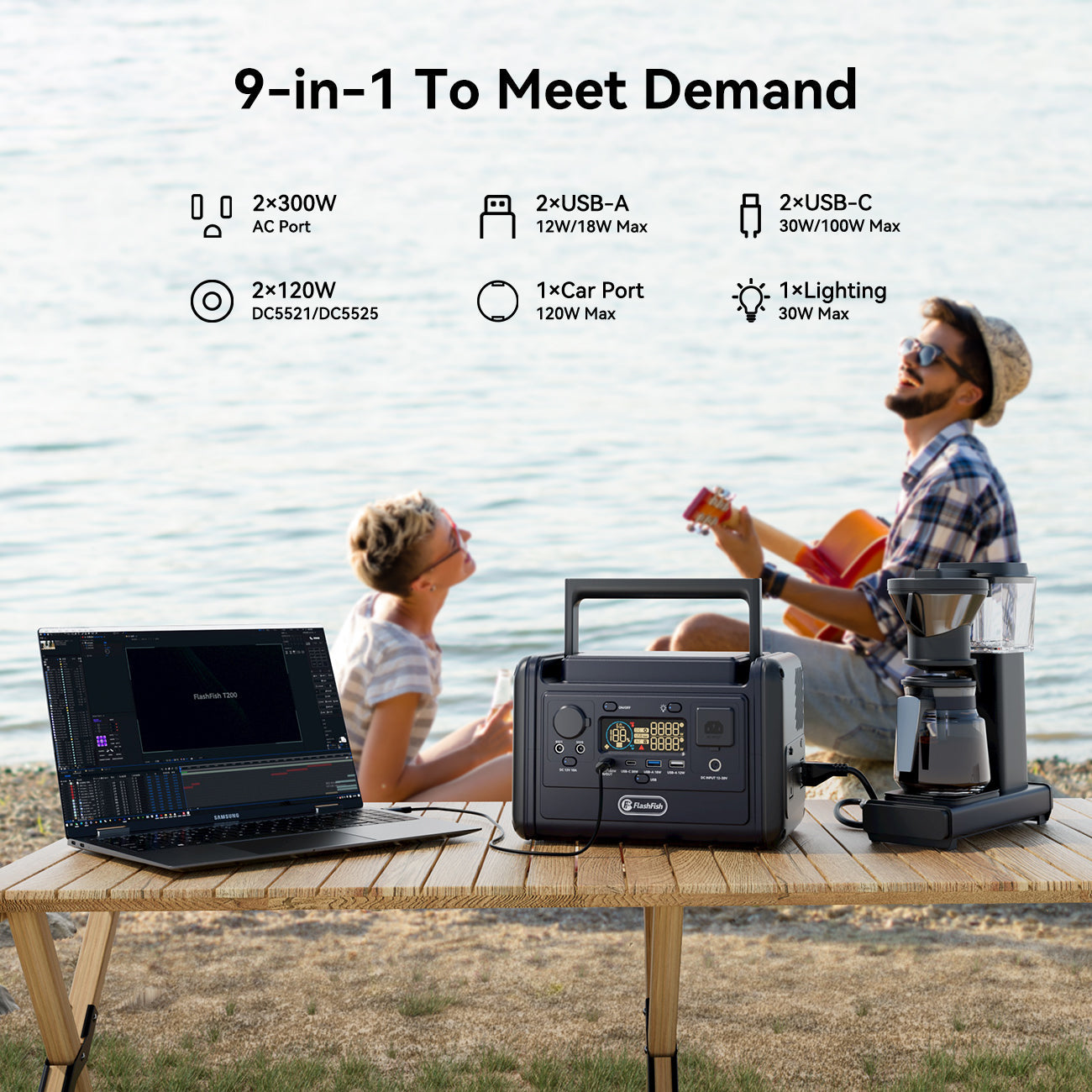
The A101 has two USB-C PD outputs rated up to 18 W each and two USB-A outputs up to 18 W each. The T200 has one USB-C PD output up to 60 W, another up to 18 W, and two USB-A outputs up to 18 W.
The T200?? 60 W USB-C port is a candidate for a compatible USB-C laptop or other higher-power device, not a universal compatibility promise. The device and cable must support a matching Power Delivery profile. Check the official device documentation before relying on that connection.
The waveform evidence is different
The T200?? AC output is documented as pure sine wave. The available product documentation does not provide the A101?? waveform, so it should remain unknown. If a device requires a particular AC waveform, do not assume the A101 meets that requirement.
Charging-input differences
The A101 has a documented maximum DC charging input of 40 W. The T200 supports up to 60 W through its solar/DC input and up to 60 W through USB-C input. These limits help identify possible charging paths, but they do not guarantee an exact recharge time.
For solar charging, check the panel?? voltage, current, connector, and polarity against the station manual. The U.S. Department of Energy's solar radiation overview explains why available sunlight and field conditions affect input.
Which model fits each kind of trip?
Day trips and minimum-weight packing
Consider the A101 when low carried weight is the main constraint and every planned device stays within its documented output and port limits.
Walk-in camping with more charging demand
Consider the T200 when the route can accommodate 2.5 kg and the trip benefits from its additional stored energy, higher AC limit, documented pure-sine output, or 60 W USB-C PD port.
Car-adjacent camping
Either model may fit light loads near a vehicle. Choose from the device list rather than the campsite label: higher-power or longer-duration requirements may point beyond both models.
When neither model fits
Choose neither station when a device exceeds the supported output, needs an unverified port or waveform, requires more energy than your plan can support, or conflicts with environmental or operating instructions. The broader portable power station collection can be reviewed after those requirements are clear.
Frequently asked questions
Is the A101 or T200 better for walk-in camping?
The A101 minimizes carried weight. The T200 adds capacity and output but is 1.3 kg heavier. The route, total gear, and device requirements determine the better fit.
Which model can charge a compatible USB-C laptop?
The T200 has a USB-C PD output up to 60 W, making it the stronger candidate. Compatibility still requires a matching laptop and cable profile.
Does the A101 use LiFePO4 cells?
The available FlashFish product documentation does not provide the A101 battery chemistry, so this value should not be assumed.
Is the A101 pure sine wave?
The available product documentation does not provide the A101 AC waveform. The T200 is documented as pure sine wave.
Can either model run a specific camping appliance?
Check the appliance?? official running watts, startup demand, connection, and waveform requirements against the station manual. A model name alone is not enough to confirm compatibility.

Hinterlasse einen Kommentar
Diese Website ist durch hCaptcha geschützt und es gelten die allgemeinen Geschäftsbedingungen und Datenschutzbestimmungen von hCaptcha.