


Quick answer: Choose a camping power station by checking four things in order: the running and startup watts of every device, the watt-hours needed across the trip, the ports and charging standards those devices require, and how far you must carry the station. Output watts and stored watt-hours solve different problems, so neither number is enough by itself.
Start with your camping loads, not a product size
Make a list of what you expect to power and find each device?? official electrical requirements. Record the running watts, any startup surge, the connection type, and how long you expect to use it. Use the device manual or manufacturer label rather than an estimate from a similarly named appliance.
A station is not a fit when a required load exceeds its supported continuous output. A peak rating is a short startup boundary, not permission to run a device continuously at that level. If a device manual does not provide enough information to check the load, resolve that gap before choosing a station.
Understand watts and watt-hours
Watts describe power at a moment; watt-hours describe energy used over time. The U.S. Energy Information Administration's electricity guide explains this distinction. It matters because a station may have enough output to start a device but not enough stored energy for the planned duration. Conversely, a high-capacity station still cannot support a device whose power demand exceeds the relevant output limit.
Use watt-hours as a planning comparison, not as an exact-runtime promise. Conversion losses, standby use, temperature, device behavior, and the chosen output path affect usable time. Add up your planned energy needs, leave a practical margin, and treat the result as a selection range rather than a guaranteed duration.
Check every required port
Match each device to a documented port: AC outlet, USB-C, USB-A, or DC. A connector that physically fits does not prove electrical compatibility. Voltage, current, power limit, charging protocol, polarity, and cable support can all matter.
For USB-C equipment, compare the device and cable requirements with the station?? documented USB-C Power Delivery output. A port?? maximum rating does not guarantee that every laptop or other device will accept that profile or charge at that speed.
Make carrying distance part of the decision
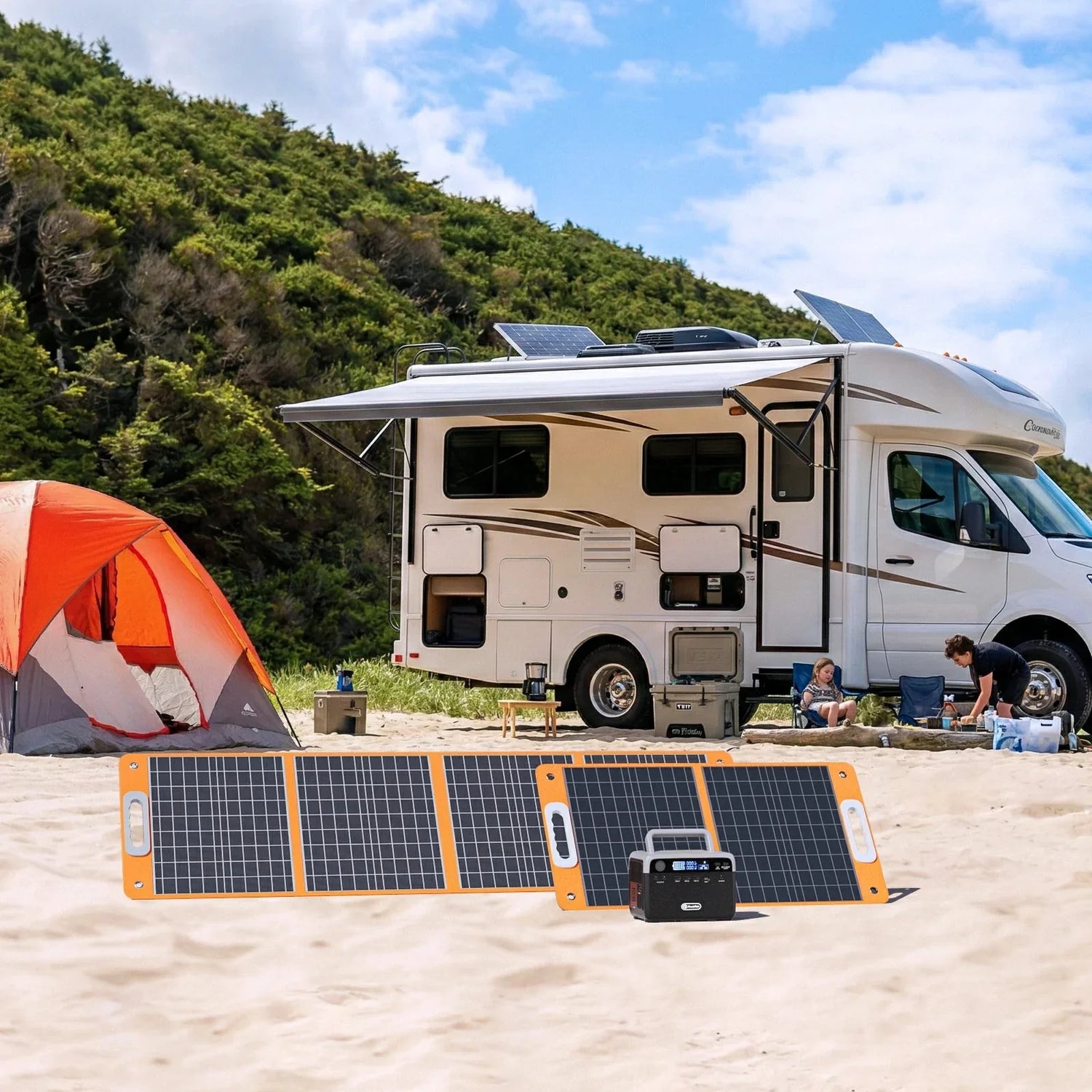
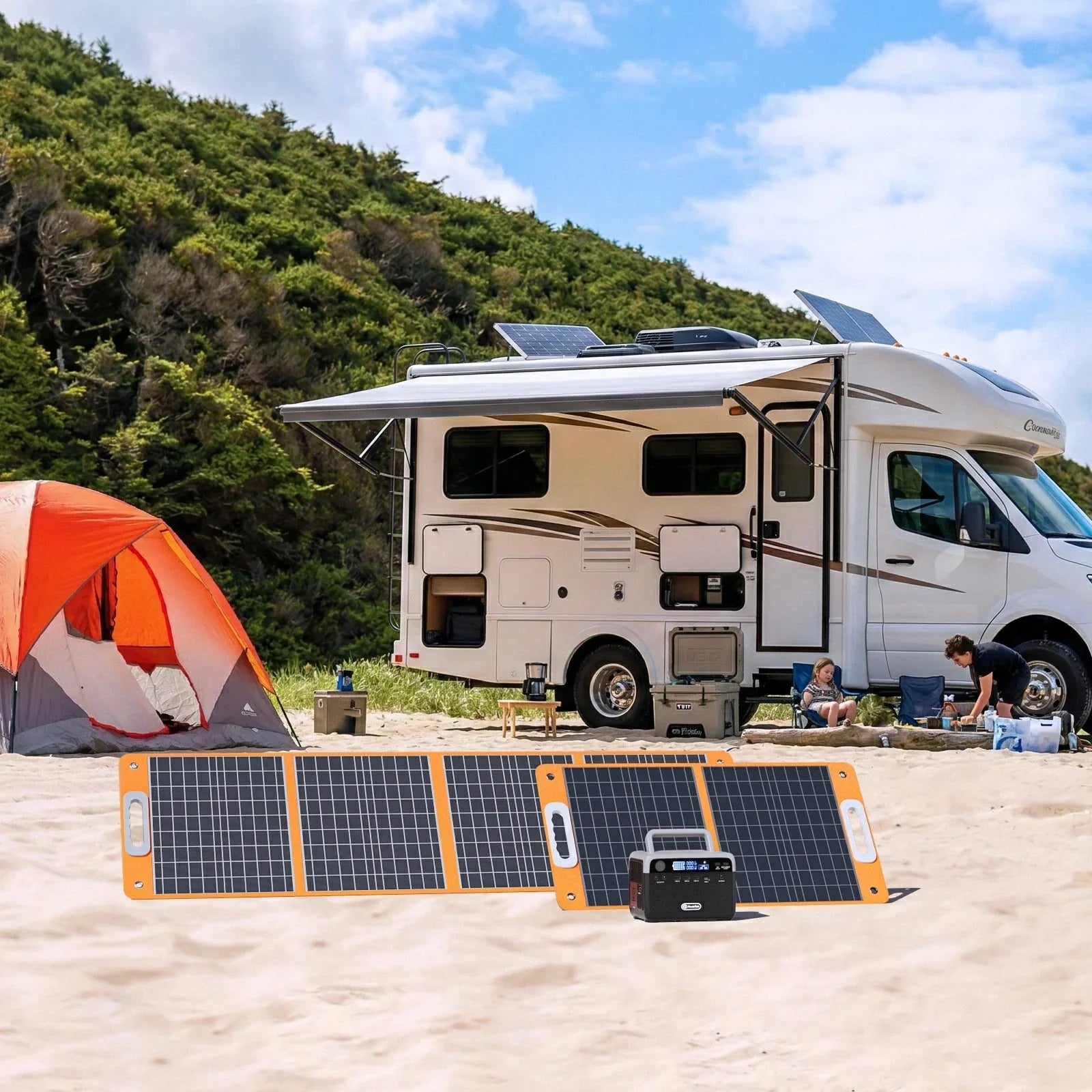
Portability depends on the whole route and the rest of your gear. A station that is reasonable beside a parked vehicle may be impractical on a long walk to a campsite. Include the station, cables, adapters, and any solar panel in the carried load.
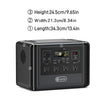
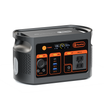
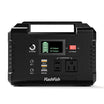
FlashFish examples show the range clearly. The A101 is 1.2 kg with 97.68 Wh and 120 W continuous AC output. The T200 is 2.5 kg with 153.6 Wh and 200 W continuous AC output. The T300PRO is 4.5 kg with 230 Wh and 300 W continuous AC output. These are decision examples, not a ranking.
Use higher-output stations only when the load requires them
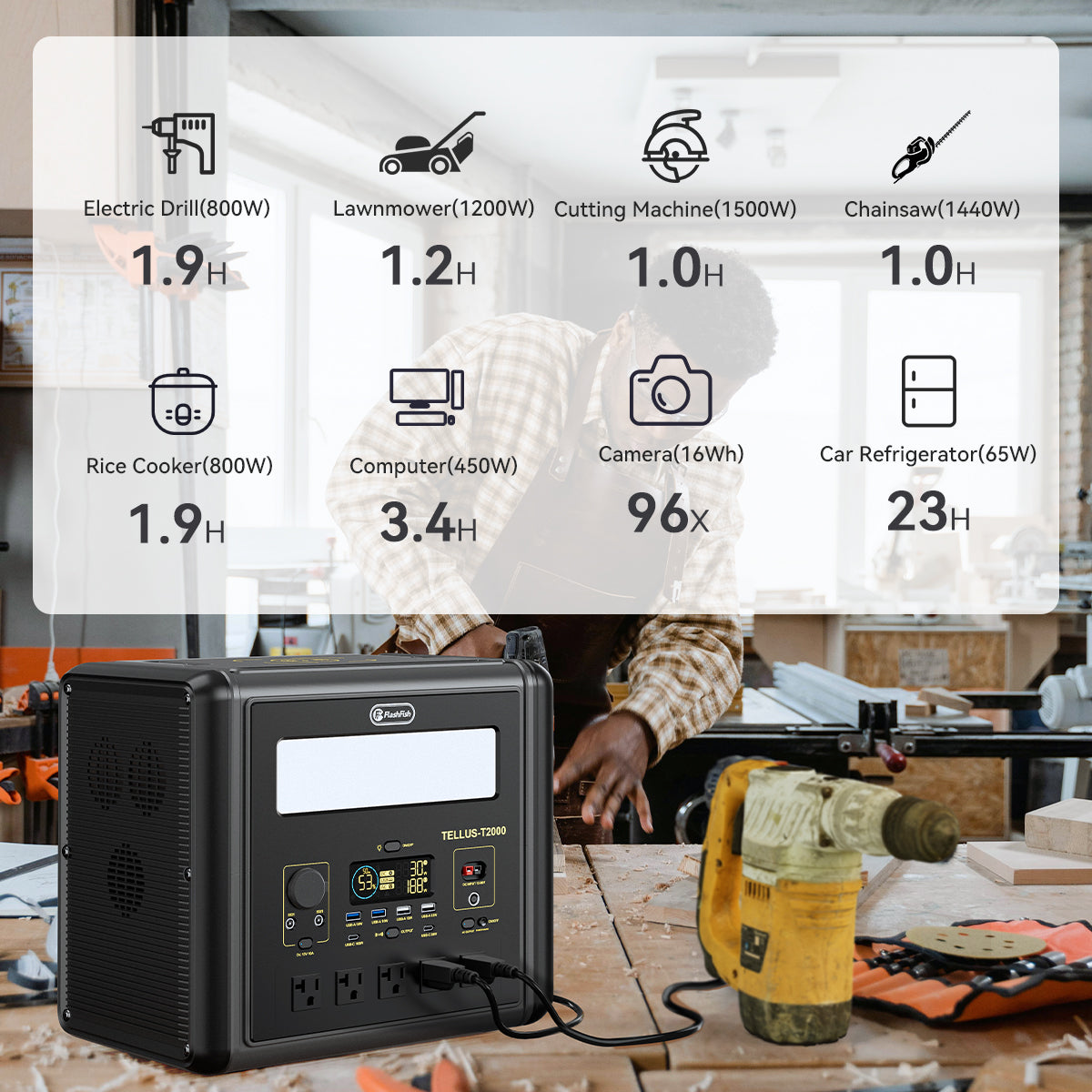
Car-adjacent camping can make a heavier station practical. The T1200S provides 768 Wh and 1200 W continuous AC output at 12.45 kg. The T2000 provides 1536 Wh and 2000 W continuous AC output at 19.2 kg. They illustrate higher-capacity boundaries, but their weight makes route and handling considerations more important.
Do not choose a larger station simply because its headline numbers are higher. Choose it when documented load, energy, port, and transport requirements justify the tradeoff.
Plan recharging without assuming solar yield
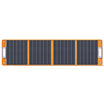
Start the trip with enough stored energy for essential use. A solar panel can provide a recharge path, but nameplate wattage is not guaranteed campsite output. The U.S. Department of Energy's solar radiation overview explains how available solar energy changes with location, time of day, season, landscape, weather, and orientation.
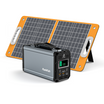
Before pairing a panel and station, verify the station?? input voltage range, current and power limits, connector, and polarity against the panel documentation. Connector fit alone is not compatibility.
A practical selection sequence
- List every device and obtain its official running, startup, and connection requirements.
- Reject stations that cannot support the required output or port.
- Estimate trip energy in watt-hours and add a practical margin.
- Decide what weight and packed size the route can support.
- Verify every cable, charging protocol, and input path.
- Treat solar charging as conditional support, not guaranteed daily energy.
Browse the FlashFish portable power station collection only after defining those requirements. If no model supports the output, energy, port, environmental, or manual requirements, choose a different solution.
Frequently asked questions
What size portable power station do I need for camping?
The right size is the smallest practical option that supports every required device?? running and startup watts, supplies the planned watt-hours with margin, has the correct ports, and remains manageable for your route.
Is wattage or watt-hours more important?
Both matter. Watts determine whether the station can support the load; watt-hours help plan how much energy is available over time.
How much weight is practical for a walk-in campsite?
There is no universal cutoff. Consider distance, terrain, other gear, and who will carry the full packed load.
Do I need a solar panel?
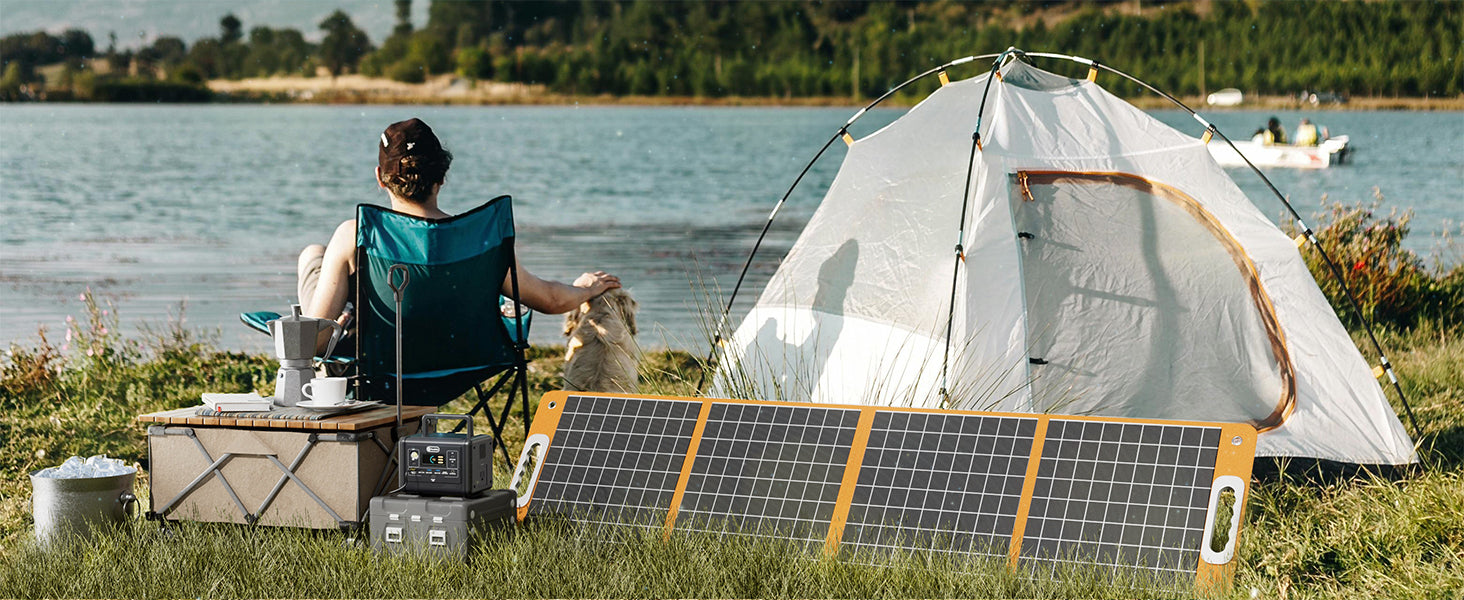
Not necessarily. Plan enough stored energy first. Add a compatible panel when the trip length and available sunlight make recharging useful.
Can I use a portable power station inside a tent?
Do not rely on a universal rule. Check the exact model manual, ventilation and clearance instructions, weather exposure, and campsite rules before deciding where to operate it.

Hinterlasse einen Kommentar
Diese Website ist durch hCaptcha geschützt und es gelten die allgemeinen Geschäftsbedingungen und Datenschutzbestimmungen von hCaptcha.