

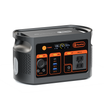
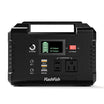

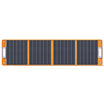
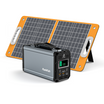
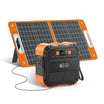

Short answer: pair a FlashFish solar panel with a power station by checking four things before you connect anything: input voltage range, maximum input watts, connector type, and the use case you are trying to support. A bigger panel is not automatically better if the station can only accept a lower solar input.
This guide is for shoppers building a small solar generator kit around FlashFish TSP100, TSP60-class panels, and FlashFish stations such as E200, T300PRO, T1200S, and T2000.
The four checks
| Check | Why it matters | Rule |
|---|---|---|
| Voltage range | The panel output must sit inside the station input range. | Compare the panel's output voltage with the station's solar input spec. |
| Maximum input watts | The station caps how much solar power it can accept. | Do not size the panel setup beyond the station input limit without a clear reason. |
| Connector | Wrong connectors can prevent charging or create unsafe adapters. | Use the provided cable or a compatible adapter listed for the panel and station. |
| Use case | A phone-and-light kit needs less panel than a higher-capacity outage setup. | Match panel size to battery size, recharge window, and daily loads. |
FlashFish station and panel pairing table
| Power station | Solar/DC input from product database | Panel pairing note | Best fit |
|---|---|---|---|
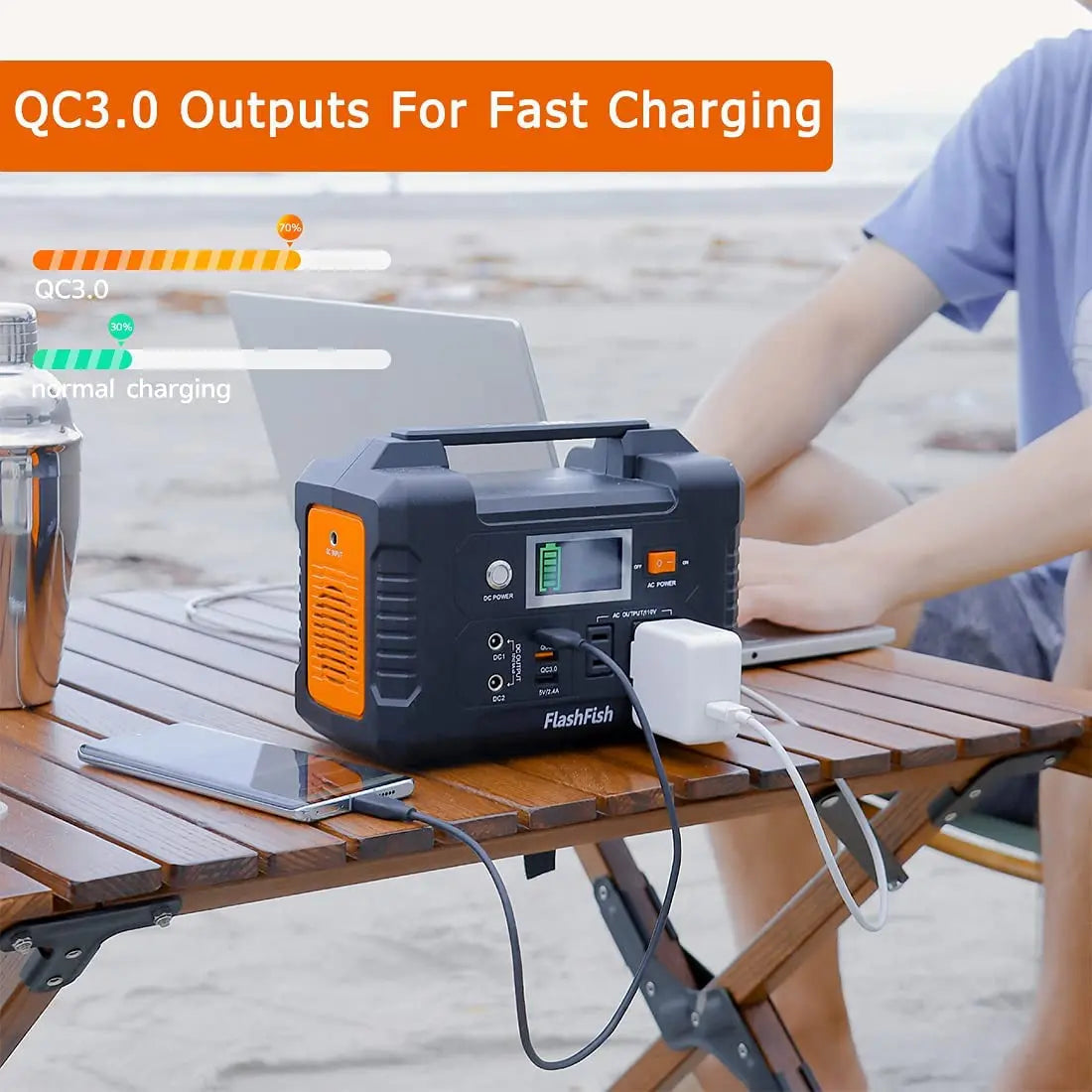
| E200 | 11-24V, 40W max solar/DC input. | TSP60 can be used as a practical kit path, but the station can only accept up to its 40W input limit. | Phones, lights, and compact camping power. |
| T200 | 15-30V, 60W max solar/DC input. | TSP60-class panel is the natural match; TSP100 may be oversized for the input cap. | Small LiFePO4 AC-outlet kit. |
| T300PRO | 12-30V, 120W max solar input. | TSP100 is a stronger match because the station can accept more than 60W in good conditions. | Beginner solar generator for phones, lights, and small fans. |
| T1200S | 12-50V, 400W max solar input. | One or more TSP100 panels can make sense when connector and voltage limits are respected. | Larger camping, home-office, and light outage backup. |
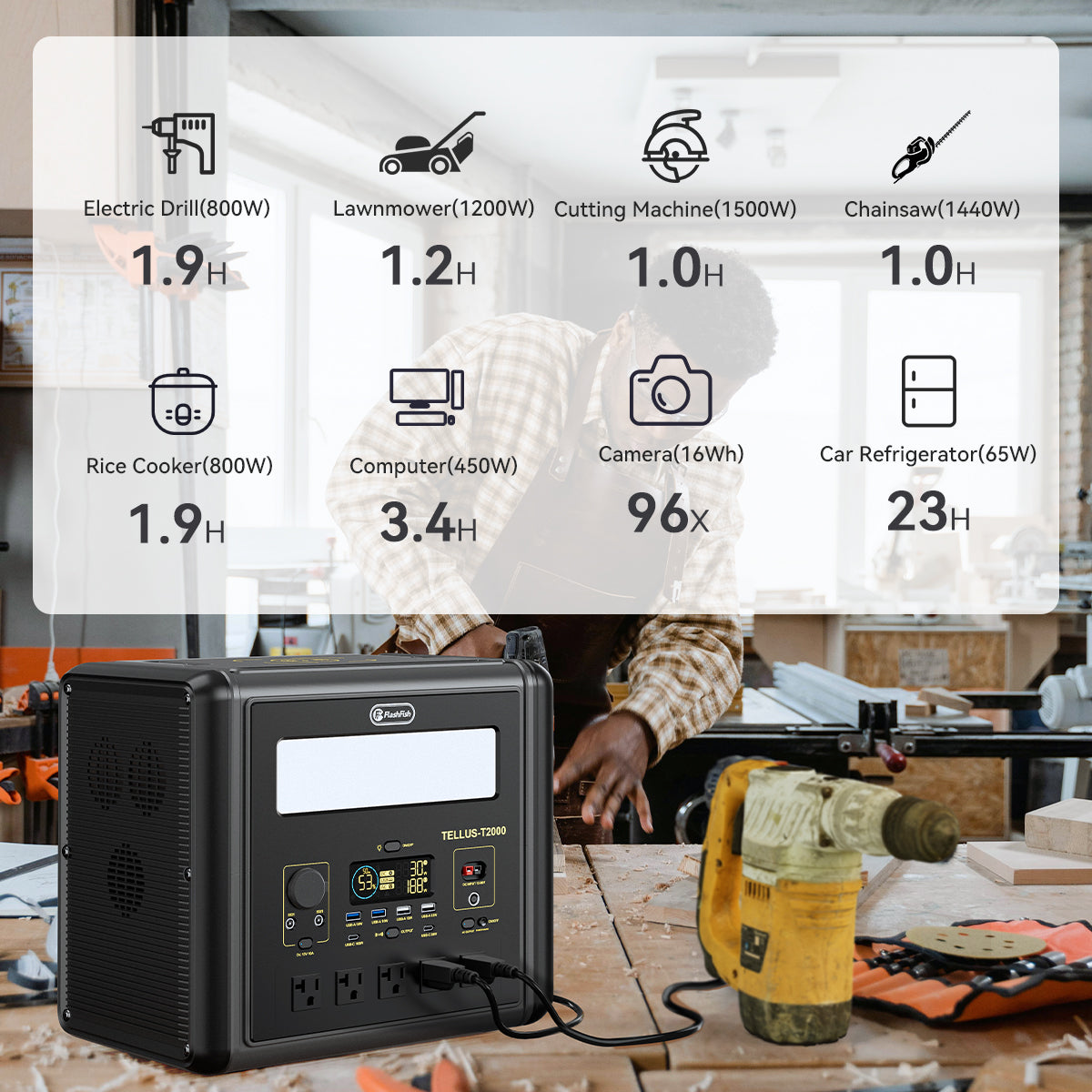
| T2000 | 12-80V, 600W max solar input. | Higher-capacity station for multi-panel planning; check total wattage, wiring, and connector path. | Higher-capacity kit planning and longer recharge windows. |
Panel facts to verify
- TSP100 is listed as a 100W, 18V foldable panel on the U.S. product page. The local product database lists 18V DC output, 5.6A current, 100W max, USB-C output up to 65W, and USB-A QC3.0 output up to 18W.
- TSP60-class panels in the product database are listed as 60W, 18V panels with 3.34A DC output, USB-C output up to 45W, and USB-A QC3.0 output up to 18W.
- The DC Y splitter product title states it connects two solar panels with a total 200W max, but you still need to stay inside the station input limit.
Beginner pairing examples
| Goal | Simple starting point | Why |
|---|---|---|
| Lowest-friction starter kit | E200 + TSP60 kit | Station and panel are sold as a kit, with a clear compact camping role. |
| Small solar generator for beginners | T300PRO + TSP100 | T300PRO has a 120W max solar input, so a 100W panel fits the input tier better than it does on a 40W-cap station. |
| Outage and work-from-camp reserve | T1200S + TSP100 panel path | More battery and higher solar input create a stronger base for mixed loads. |
| Large-capacity kit planning | T2000 + multiple TSP100 options | Higher input ceiling supports larger solar planning, but wiring and connector checks matter more. |
Solar output caveats
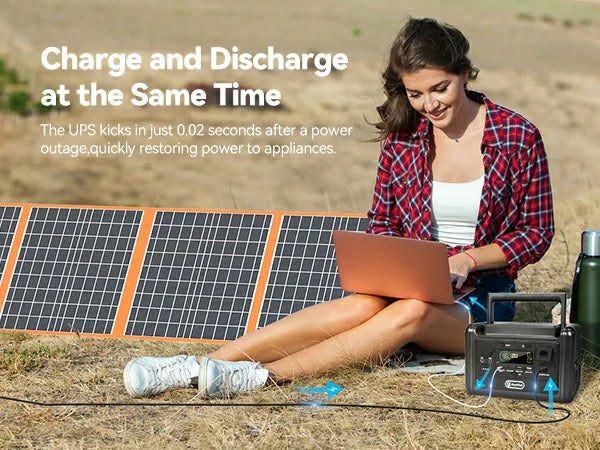
Solar-panel wattage is a rated maximum, not a promise that you will get that output at camp. Shade, clouds, sun angle, heat, cable losses, and panel placement all matter. The Department of Energy's solar radiation basics explain why available sunlight changes by location and conditions. Plan with margin and test the setup before relying on it for outage or overnight use.
Common mistakes
- Buying a 100W panel for a station that only accepts 40W and expecting a 100W charge rate.
- Connecting panels in a way that exceeds voltage or watt limits.
- Assuming a USB-C port on a panel replaces the station's solar input.
- Skipping connector checks because two products are from the same brand.
- Using solar as the only recharge plan for a critical load.
FAQ
Can I use a 100W solar panel with a small power station?
Sometimes, but the station input limit decides the actual accepted power. If a station accepts only 40W or 60W, a 100W panel will not turn it into a 100W charging setup.
Is TSP60 or TSP100 better for beginners?
TSP60 fits lower-input compact stations better. TSP100 is more useful for stations such as T300PRO, T1200S, or T2000 that can accept higher solar input.
Can I connect two solar panels to one FlashFish power station?
Only if the station input range, total wattage, connector path, and splitter rating all fit. The DC Y splitter listing states a total 200W max, but station limits still apply.
Should I buy a kit or separate station and panel?
A kit is simpler for first-time buyers. Separate station-and-panel buying can work well when you understand input limits and want a more specific setup.

Hinterlasse einen Kommentar
Diese Website ist durch hCaptcha geschützt und es gelten die allgemeinen Geschäftsbedingungen und Datenschutzbestimmungen von hCaptcha.