

Short answer: Map each cancellation date to the money the written rental terms let the provider retain. Keep prepaid cash, eventual retained charges and refund timing in separate columns. If no real offer is available, use a clearly labeled hypothetical policy to practice the calculation; do not treat its deadlines or refund amounts as an available rental deal.
Collect the terms before calculating a loss
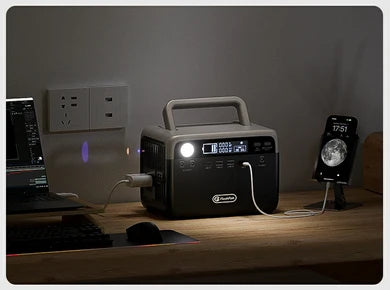
A daily rental price does not answer what happens when a trip is cancelled. Save the exact quote and cancellation terms together, including the version date. Record which product and accessories the quote covers. A request for a portable station does not prove that an E200 or T200 rental is available locally, and this guide identifies no actual provider or offer.
Before paying, find the cancellation deadline, the controlling time zone and the accepted notice channel. Ask what constitutes received notice. Separate cancellation before collection from a no-show, early return, date change and a provider-cancelled booking. If the agreement does not explain an event, leave its cost unresolved instead of borrowing a rule from a different section.
| Record | What to enter | Why it matters |
|---|---|---|
| Quote and terms date | Saved offer, covered kit and policy version | Prevents mixing a price with unrelated conditions |
| Cancellation deadline | Calendar date, time, time zone and receipt rule | Determines the applicable tier |
| Prepaid cash | Rental payment, fees and any separate security deposit | Shows money initially unavailable |
| Retained charge | Explicit fee or percentage and its calculation base | Determines eventual cancellation cost |
| Refund timing | Provider processing rule and payment-method uncertainty | Shows when cash may become available again |
| Unresolved event | No-show, reschedule or exception not covered | Prevents an unsupported refund assumption |
One hypothetical policy, three cancellation dates
Illustration only: Assume an unnamed provider has a $120 rental charge plus a $10 booking fee, all prepaid. For this exercise only, the booking fee is nonrefundable. The imaginary agreement retains none of the rental charge for cancellation before November 25, 2026 at noon Pacific Time; half from that deadline until November 27 at noon Pacific Time; and all thereafter. It promises to initiate the eligible refund within five business days. There is no security deposit, tax or other fee in this simplified example. These are invented teaching inputs, not market terms.
| Hypothetical notice received | Prepaid cash | Retained rental charge | Total eventual cost | Eligible refund |
|---|---|---|---|---|
| November 24 at 9 a.m. Pacific | $130 | $0 | $10 | $120 |
| November 26 at 9 a.m. Pacific | $130 | $60 | $70 | $60 |
| November 28 at 9 a.m. Pacific | $130 | $120 | $130 | $0 |
The arithmetic is prepaid cash minus the eligible refund: $130 minus $120 equals $10, $130 minus $60 equals $70, and $130 minus $0 equals $130. The half-charge tier uses half of $120, not half of the combined $130. Read the real agreement's percentage base before repeating that calculation.
Cash tied up is different from the final cost
In the first hypothetical case, $130 has already left the customer's account even though only $10 is eventually retained. Until the $120 refund arrives, the customer cannot count it as available for a replacement plan. A promise to initiate a refund is also different from a confirmed credit in the account. Record both the refund request and the received credit instead of assigning an unsupported arrival date.
A refundable security deposit, if a real agreement has one, needs a separate row with its release conditions. Do not add it to final cancellation cost merely because it is temporarily held. Equally, do not assume it will be released if the written conditions remain unresolved.
Use the table before committing
Enter the actual trip dates, identify the next deadline and ask the provider to resolve ambiguous terms in writing. Compare known committed cash across the cancellation dates that matter to you. Do not calculate an expected loss without defensible probabilities, infer a legal entitlement or assume a credit is equivalent to a cash refund. If the numbers cannot be completed, keep the booking decision open.
FAQ
Can I use the published daily rate as my cancellation exposure?
Only if the actual cancellation terms make that the applicable retained amount. Prepaid fees, percentage bases and deadline tiers may require a different calculation.
Does a rescheduling credit count as a refund?
Keep it separate. Record the credit's expiry, eligible uses and conditions; do not subtract it as returned cash unless the agreement and completed transaction establish a cash refund.
Does this example establish FlashFish rental terms?
No. It describes an unnamed hypothetical agreement. A purchase listing for E200 or T200 is not a rental offer or a cancellation policy.
Method: the table applies explicit fictional terms to three fictional notice dates. No booking, provider policy, refund entitlement or customer outcome was verified.
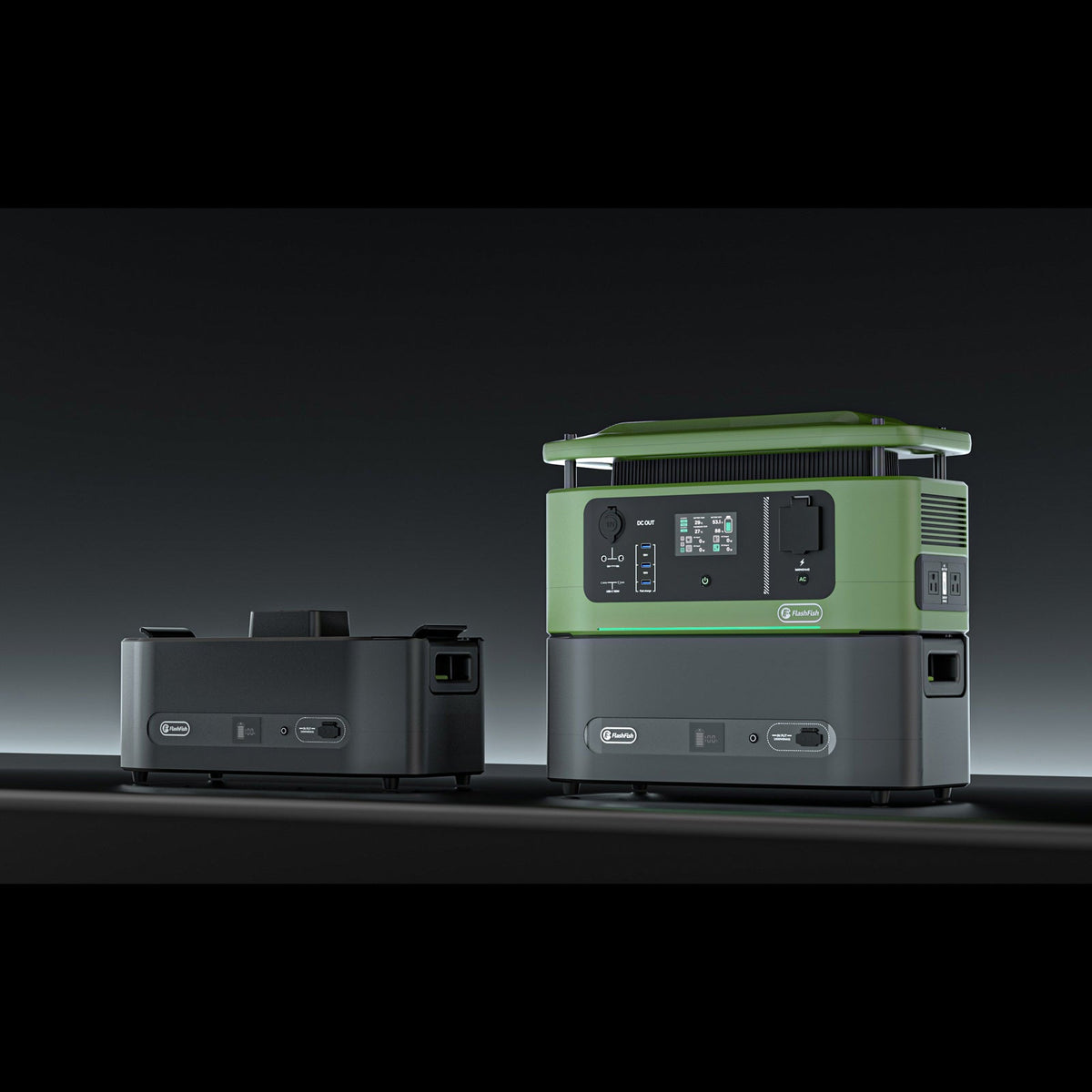
Next step: Review the FlashFish E200 product details.

Dejar un comentario
Este sitio está protegido por hCaptcha y se aplican la Política de privacidad de hCaptcha y los Términos del servicio.