

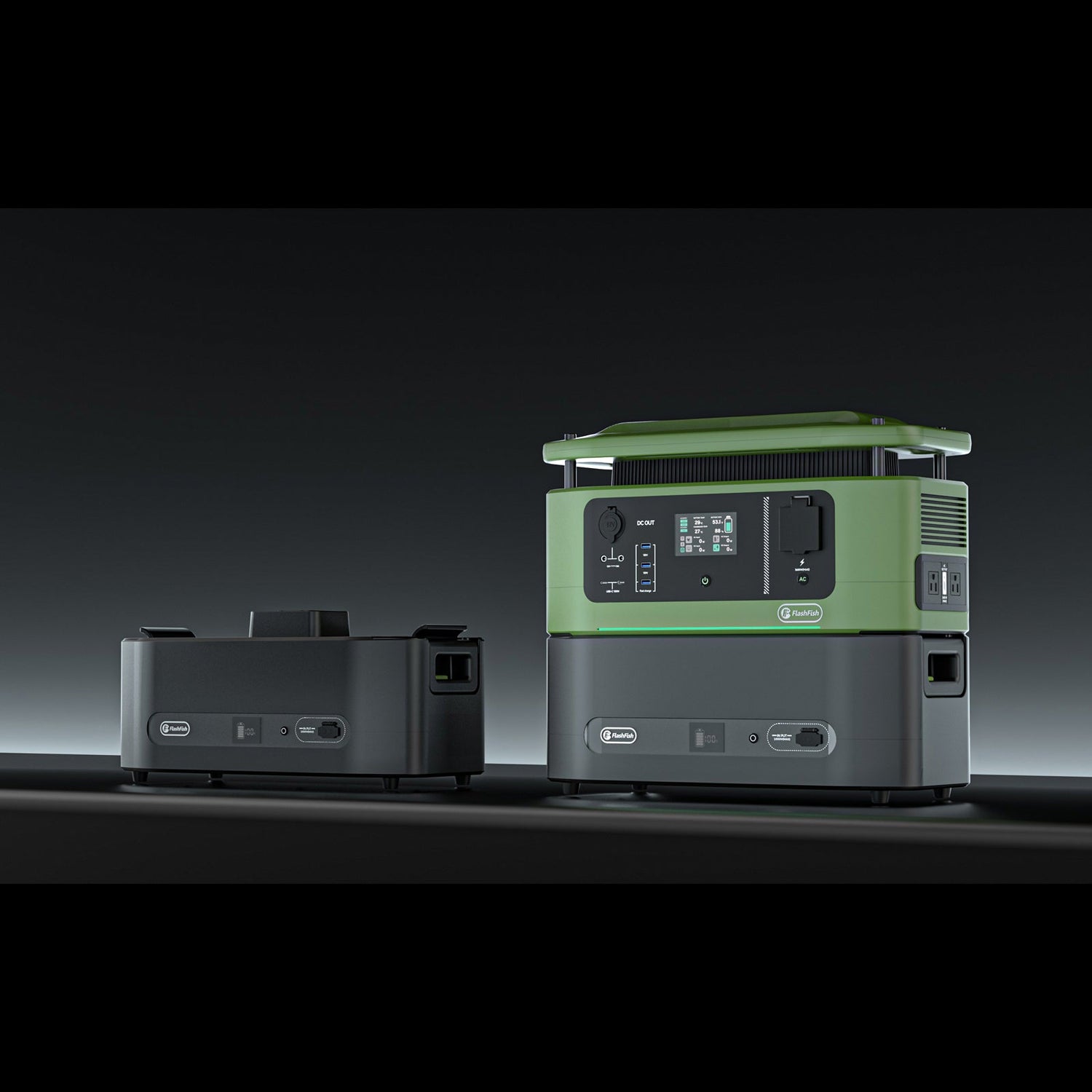
Short answer: Compare the FlashFish E103 and T1200S by matching their documented capacity, output, ports, and transport weight to a verified equipment list. Neither model’s specifications alone prove that tablets, headphones, lights, or their adapters are compatible.
Build the equipment list before comparing models
A portable listening station may include tablets, headphone charging cases, a small light, original power adapters, and cables. List the label on each item, whether it will be charging or in use, and the site’s rules for temporary power. Keep the list with the equipment so a substitute cable or device does not silently change the plan.
Documented model records at a glance
| Record | FlashFish E103 | FlashFish T1200S |
|---|---|---|
| Capacity | 179.2Wh | 768Wh |
| Battery chemistry | LiFePO4 | LiFePO4 |
| Continuous AC output | 300W pure sine wave | 1200W pure sine wave |
| USB-C record | One USB-C port up to 60W | USB-C1 up to 100W; USB-C2 up to 30W |
| Listed weight | About 3.0 kg / 6.61 lb | 12.45 kg / 27.45 lb |
These values describe the bundled product records. Confirm the exact U.S. model, label, included accessories, port behavior, and current documentation before relying on a particular connection.
Use transport and layout as real decision factors
The E103 record is the lighter of the two listed models, while the T1200S record lists substantially more capacity and continuous AC output. That difference may matter to an organizer moving equipment between rooms, tables, or permitted event spaces. It does not by itself say which model is “enough” for a listening station.
Choose a location that lets staff inspect controls and keep cables away from walking paths. The station should not become a substitute for reviewing each tablet’s, charger’s, and headphone system’s own instructions.
Check the ports without making a compatibility guess
For each device, compare its manufacturer-specified input and cable with the station’s labeled output. Do not infer that a USB-C shape, an AC outlet, or a higher wattage figure means a connection is appropriate. If documentation is incomplete, use a documented alternative or leave the device out of the event plan.
Plan the station around the learning session
For a short, temporary station, decide which devices are necessary for the lesson and which are optional. A simple sign-out list, labeled cables, and a staff check before opening can prevent accidental substitutions. Review venue permission and accessibility needs before arranging any cables or equipment on a public table.
Frequently asked questions
Does the T1200S automatically support more listening devices?
Its record lists higher capacity and continuous AC output, but the number and type of supported devices depend on the documented ratings and connection requirements of the entire setup.
Is the E103 better for a small station?
It is listed at a lower weight, which can matter for transport. The better choice still depends on verified equipment labels, session needs, and site rules.
Should an organizer use AC or USB-C?
Use the path specified by the device maker and verify the station’s exact labeled port. Do not choose a port solely because it is available.
Next step: Compare FlashFish E103 specifications with your requirements.

Dejar un comentario
Este sitio está protegido por hCaptcha y se aplican la Política de privacidad de hCaptcha y los Términos del servicio.