

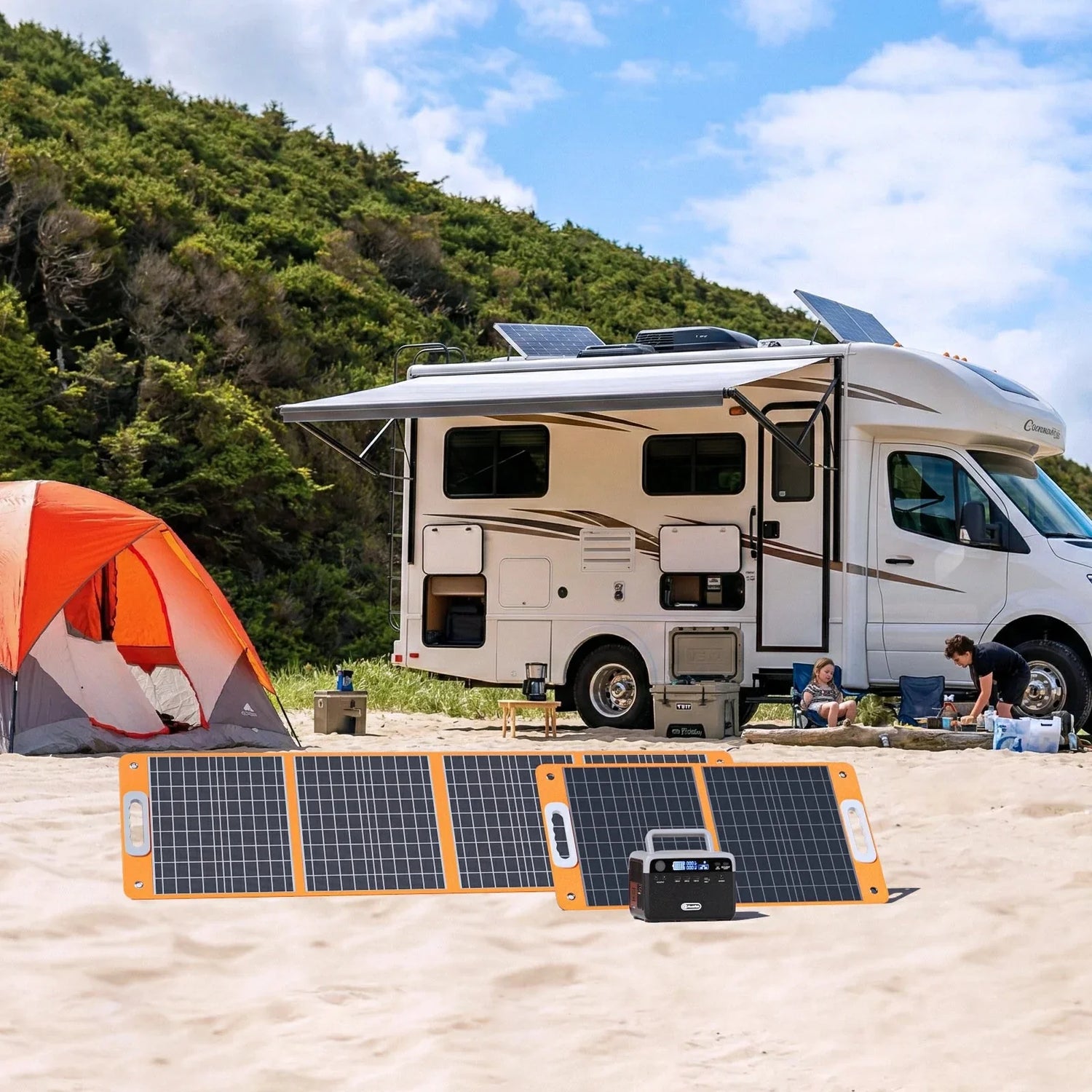
Choose one larger power station when a group needs one central source, a higher single-device output limit, or more energy in one unit. Choose two smaller independent stations when separating people, tents, or low-power loads is more useful. Two stations remain separate: they do not create one higher-output AC outlet. Decide from the highest single-device load and total energy need before deciding how many stations to bring.
The U.S. Energy Information Administration electricity-measurement guide supports the article's core distinction: power demand and stored energy are different planning variables. A group should therefore check the highest single-device watt load, then estimate watt-hours for each assigned station.
One large station vs two smaller stations
| Decision factor | One larger station | Two independent smaller stations |
|---|---|---|
| Highest single-device load | Can support a higher load when it stays within that station's limits. | Each device must stay within the limit of the station serving it. |
| Startup demand | One unit's supported peak applies. | Peak ratings do not combine across units. |
| Energy planning | Energy is managed in one battery. | Energy is split; each load group needs its own budget. |
| Locations | Best when the group can gather around one dry power area. | Useful for separate tents or activity areas. |
| Ports | One port set must cover the group. | Two separate port sets may reduce swapping. |
| Charging logistics | One unit to monitor and recharge. | Two charge states, input limits, and cable sets to manage. |
| Carry and storage | One heavier object. | Weight can be carried and stored as separate units. |
| If one unit is depleted | The central supply is unavailable until recharged. | The other unit may still serve its assigned compatible loads, but uninterrupted service is not guaranteed. |
Two stations do not become one bigger outlet
Do not add two watt ratings and assume one device can use the total. Unless a product manual explicitly supports a compatible expansion method, each station has its own inverter, outlet limits, waveform, ports, battery, and charging behavior. Do not connect AC outputs together, improvise transfer wiring, or daisy-chain stations.
Watt-hour values can help compare stored-energy quantities, but arithmetic totals do not prove equal usable energy, runtime, compatibility, or charging performance. Keep every load assigned to one station and within that station's documented limits.
Verified FlashFish examples
| Model | Capacity | Continuous / peak output | AC outlets | Weight | Planning role |
|---|---|---|---|---|---|
| T1200S | 768Wh | 1200W / 2400W | Four; pure sine wave | 12.45kg (27.45lb) | Centralized higher-output example. |
| T300PRO | 230Wh | 300W / 600W | Two; pure sine wave | 4.5kg (9.92lb) | Independent smaller-station example. |
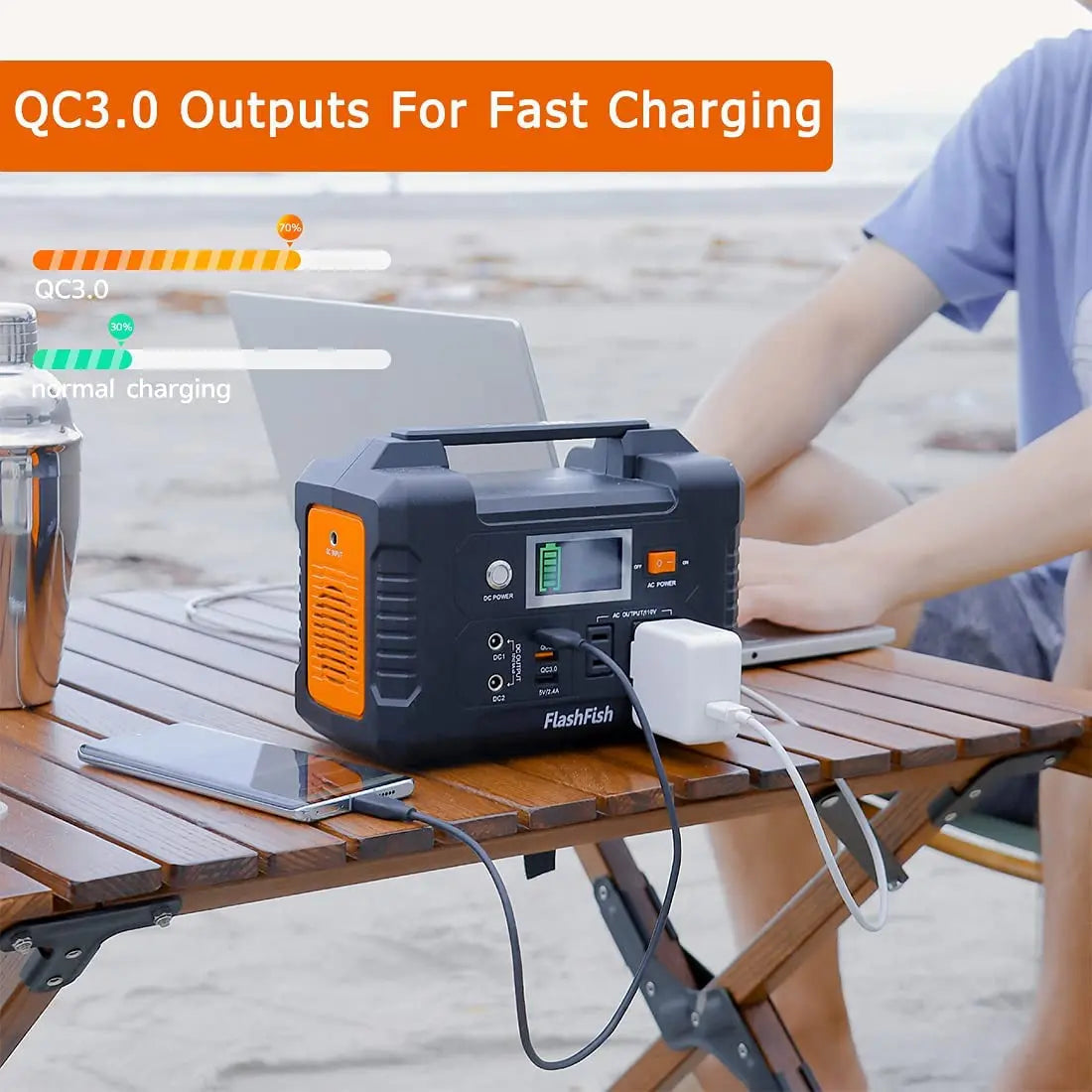
| E103 | 179.2Wh | 300W continuous | Pure sine wave | 3.0kg (6.61lb) | Compact independent example for compatible 300W-class loads. |
| E200 | 151Wh | 200W / 400W | One; modified sine wave | About 1.85kg (4.08lb) net | Compact independent example; check waveform compatibility. |
| A101 | 97.68Wh | 120W / 240W | One | 1.2kg (2.64lb) | Compact independent example for compatible low-power loads. |
Use the FlashFish portable power station collection to compare available configurations after completing the group's load plan.
Choose one larger station when
- one device requires more continuous or peak output than a smaller unit provides;
- the group wants a central, supervised charging area;
- one unit has the necessary outlets and ports;
- vehicle access makes the unit's weight practical; and
- one charging and battery-status workflow is easier to manage.
Choose two independent smaller stations when
- every assigned load fits the individual station serving it;
- tents or activity areas need physically separate power;
- separate people can carry the units;
- the group is prepared to track two energy budgets; and
- different port groups are useful.
Make a group load-assignment worksheet
| Load label | Running watts | Startup watts | Planned hours | Required port | Assigned station |
|---|---|---|---|---|---|
| Load A | ____ | ____ | ____ | ____ | ____ |
| Load B | ____ | ____ | ____ | ____ | ____ |
| Load C | ____ | ____ | ____ | ____ | ____ |
| Load D | ____ | ____ | ____ | ____ | ____ |
Copy values from each device label or official manual. For every station, total simultaneous running watts and check the largest startup demand. Estimate energy separately for the loads assigned to that station.
When neither arrangement is ready
Stop and verify the plan if a high-startup load is unknown, the setup depends on unsupported cabling, no dry placement is available, or there is no realistic recharge plan. Product count cannot correct an incompatible load.
Frequently asked questions
Is one large power station better than two small ones for camping?
Neither arrangement is universally better. One larger station favors centralized power and a higher single-unit output limit; two smaller stations favor physical separation when every load fits its assigned unit.
Can two portable power stations combine their wattage?
Not by default. Treat them as independent unless the exact product manual explicitly documents a supported expansion method. Never connect their AC outputs together.
Does two-station capacity equal one larger battery?
Adding nameplate watt-hours gives an arithmetic total only. It does not make the stations one battery or guarantee equal usable energy, runtime, ports, waveform, or charging behavior.
Which setup is easier for separate tents or activity areas?
Two smaller units can be more flexible because each area can have an independent station. The tradeoff is managing two charge states, load limits, and cable sets.
What should a group assign to each station?
Assign loads by location, required port, running watts, startup demand, and planned energy. Keep each device within the documented limits of the one station serving it.

Dejar un comentario
Este sitio está protegido por hCaptcha y se aplican la Política de privacidad de hCaptcha y los Términos del servicio.