

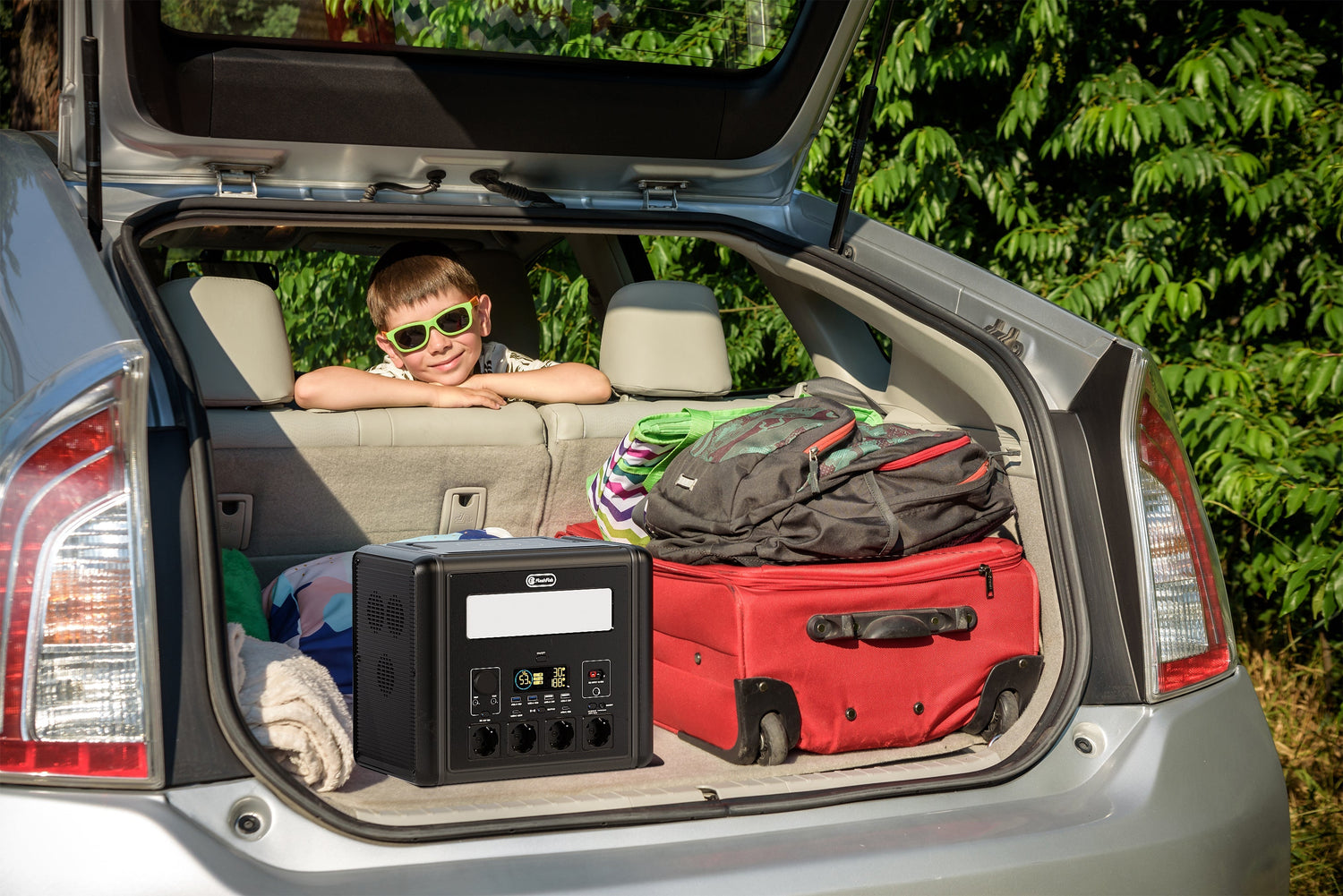
Car camping and walk-in camping call for different power-station tradeoffs. Vehicle access can make a heavier, higher-capacity station practical when the loads justify it. At a walk-in campsite, carry distance, terrain, and the weight of the complete gear load matter more. Before choosing, total the devices that may run together, check their startup requirements, list the ports you need, and estimate energy use in watt-hours.
For the sizing terms used below, the U.S. Energy Information Administration electricity-measurement guide is the reference point: watts describe power demand, while watt-hours help estimate energy used over time. That is why this guide separates running watts, startup demand, and stored watt-hours before mentioning any product.
Start with access, not headline watts
A station is only one part of the load you must move. Include cables, lights, a solar panel if you plan to use one, and the rest of your camping gear. A short, level walk from a parking space is different from a long route over uneven ground, even when both sites are described as walk-in.
- Map the carry: note distance, terrain, stairs, and whether a cart is allowed.
- Add the complete weight: count the station and every power accessory.
- Check running load: add the watts of devices that may operate simultaneously.
- Check startup demand: a device may briefly require more power when it starts.
- List ports: count AC outlets, USB ports, and DC connections you actually need.
- Plan energy: use each device's label or manual to estimate watts multiplied by hours.
Car camping vs walk-in camping
| Decision factor | Car-access campsite | Walk-in campsite |
|---|---|---|
| Carry effort | A heavier unit may be manageable when unloading near the site. | Distance, terrain, and total packed weight deserve priority. |
| Capacity headroom | More stored energy may make sense for a group or longer device list. | Carry only the capacity supported by a realistic load plan. |
| Outlet count | A central station can serve a shared activity area. | Fewer, carefully selected devices may reduce the ports required. |
| Solar panel | Transporting and placing a panel may be easier. | Add the panel, cables, and accessories to the carry calculation. |
| Reason to go smaller | Simple phone, light, and USB charging needs. | Lower carried weight and a short device list. |
| Reason to go larger | Verified higher-output loads or greater energy needs. | Only when the load plan requires it and the carry is acceptable. |
Compare verified FlashFish examples
| Model | Capacity | Continuous / peak output | Relevant port note | Weight | Conditional fit |
|---|---|---|---|---|---|
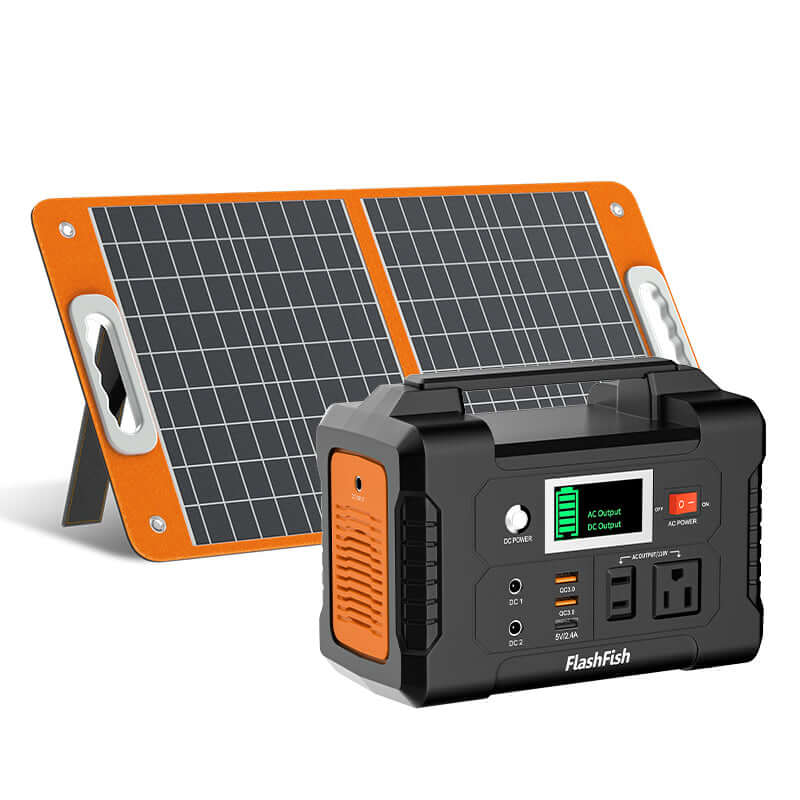
| A101 | 97.68Wh | 120W / 240W | One AC outlet plus USB-C and USB-A outputs | 1.2kg (2.64lb) | A compact example when the device list stays within its limits. |
| E200 | 151Wh | 200W / 400W | One modified-sine-wave AC outlet and USB-A outputs | About 1.85kg (4.08lb) net | A compact step up in stored energy; confirm waveform compatibility. |
| T300PRO | 230Wh | 300W / 600W | Two AC outlets and documented USB-C options | 4.5kg (9.92lb) | For a broader device plan when its added weight is acceptable. |
| T1200S | 768Wh | 1200W / 2400W | Four AC outlets | 12.45kg (27.45lb) | A car-access or base-camp example, not a default walk-in choice. |
Browse the FlashFish portable power station collection after defining the load and carry requirements. Continuous output must cover the combined running load. Peak output describes supported short startup demand, while watt-hours help with energy planning. None of these values alone promises compatibility or runtime.
When a compact station fits
A compact station may fit when the trip centers on low-power devices, the required ports are present, and every device stays within the station's output limits. This can be useful for a walk-in site, but ??asy to carry??is personal: evaluate the full pack and route rather than treating a product weight as a universal cutoff.
When a larger station may fit
A larger station may make sense when vehicle access is close, the group needs more energy, several devices must connect at once, or one verified load exceeds a compact unit's continuous or peak limit. Extra capacity is not automatically better if it adds weight that the trip does not need.
When neither choice is ready
Pause the purchase decision when device loads are unknown, connector or waveform compatibility is unclear, there is no safe dry place for the station, or the recharge plan depends on unverified solar conditions. Read the device and station manuals before connecting equipment.
Frequently asked questions
What size portable power station is practical for car camping?
Choose from the highest simultaneous running load, startup demand, required ports, and estimated watt-hours. Vehicle access may make a heavier station practical, but it does not make unused capacity necessary.
How heavy should a power station be for a walk-in campsite?
There is no universal cutoff. Consider route distance and terrain, then add the station, cables, panel, and all other packed gear before deciding what you can carry safely.
Is a small power station enough for phones, lights, and camera batteries?
It can be when each device's documented input, combined running watts, charging time, and required ports fit the station. Check every device label or manual rather than relying on a generic device category.
When is a T1200S-class station worth carrying?
It may fit a car-access or base-camp plan when verified loads require its higher output, greater stored energy, or four AC outlets. Its 12.45kg weight should be part of the trip plan.
Should I include a portable solar panel in the total packed weight?
Yes. Include the panel, cables, adapters, and any case or stand. Also confirm that usable sunlight, placement space, and station input compatibility justify bringing it.

Dejar un comentario
Este sitio está protegido por hCaptcha y se aplican la Política de privacidad de hCaptcha y los Términos del servicio.