

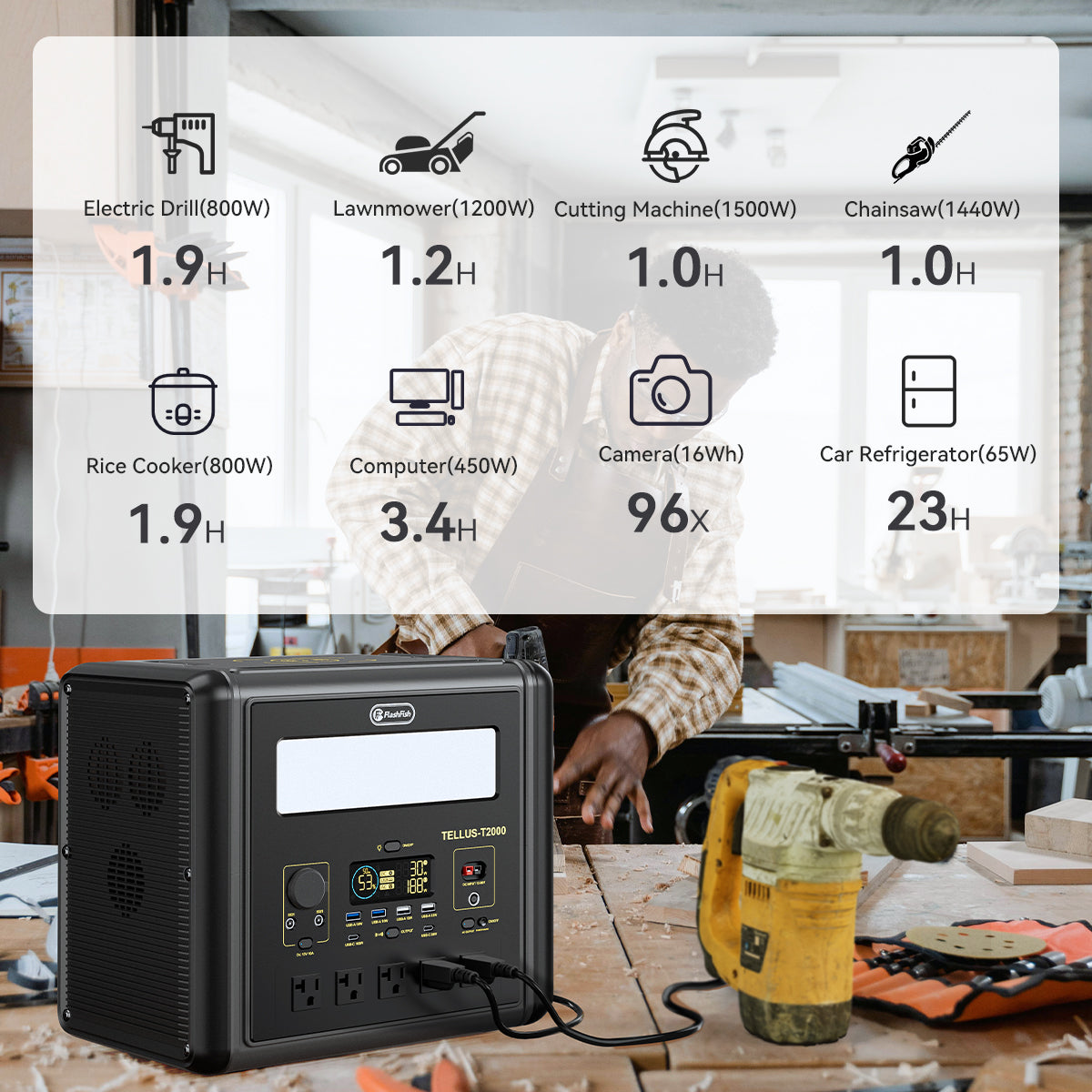
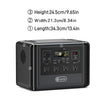
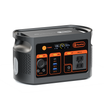
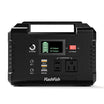

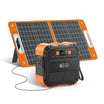

The FlashFish E200 is best planned as a compact 151Wh, 200W portable power station for phones, small USB accessories, lights, and selected low-watt AC devices after checking the device label. Documented E200 specs list 400W peak AC output and 40W max solar/DC charging. Do not use it as an exact runtime promise or a universal device-compatibility claim.
E200 is for compact loads, not every device
The E200 is a small portable power station for simple charging plans. It can be useful when you need a carryable battery with AC and USB-A output for low-power gear, but the load has to fit the station. Start with the device label, not a general category such as "laptop," "fan," or "router."
If a device needs more than the E200's supported output, has a high startup surge, requires pure sine wave AC, or depends on a port the E200 does not document, choose a different station class.
E200 facts to know before planning
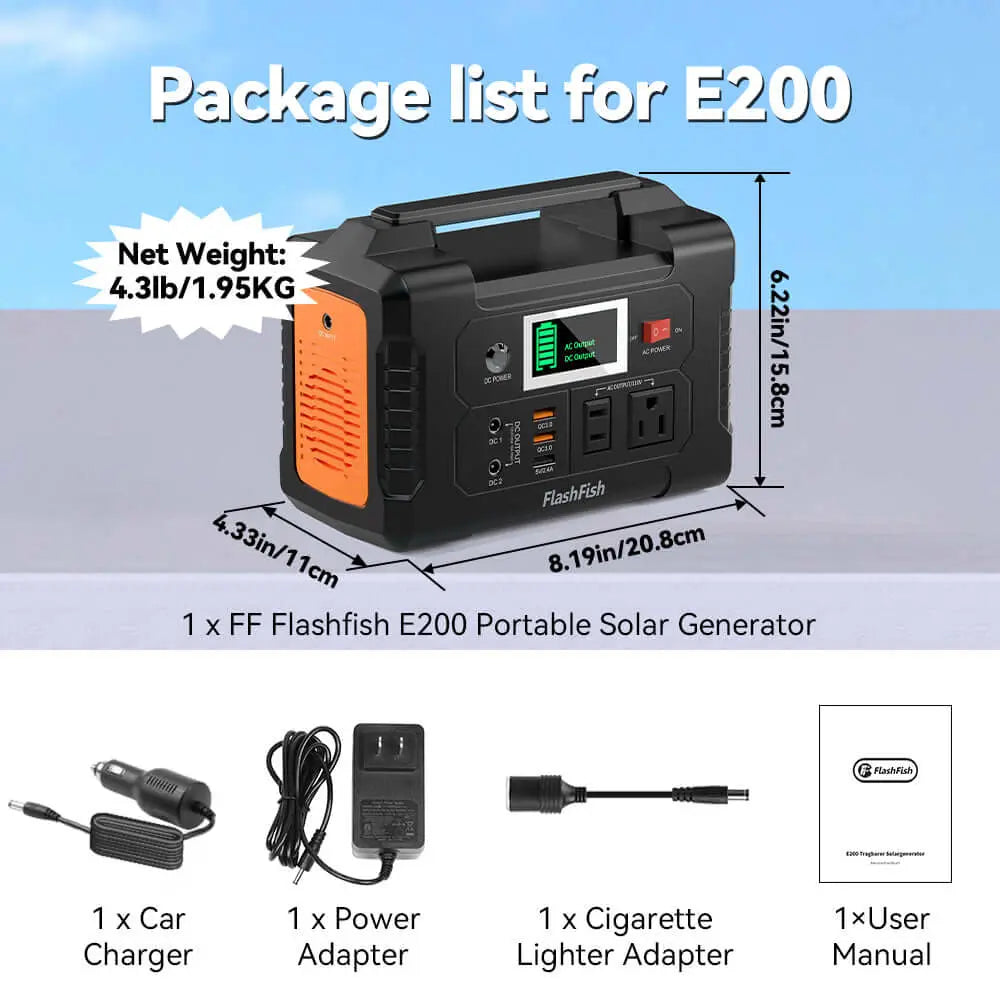
- Capacity: 151Wh.
- AC output: 200W continuous AC output.
- Peak AC output: 400W peak output.
- AC waveform: modified sine AC output.
- Charging input: 40W max solar/DC charging.
- USB: USB-A output is documented; USB-C output is not documented in the E200 specs used here.
- Weight: 1.85kg.
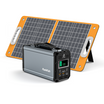
The current U.S. Shopify product page for the FlashFish E200 portable power station is active. The FlashFish E200 + TSP60 solar generator kit is also active in the current discovery data.
Common E200 use-case categories
Phones and small USB devices
The E200 can be planned around USB-A charging where your device cable and charging needs support that path. Do not claim a fixed number of phone charges unless the device battery, charging losses, and conditions are verified.
Lights and small accessories
Small lights and accessories may fit when their label wattage and connector match the E200's documented output. Keep weather exposure separate from power planning; the product data used here does not support rain-safe or outdoor-exposure claims.
Selected low-watt AC devices
Some low-watt AC devices may fit if their running watts and startup behavior stay within supported limits. The E200's modified sine AC output also means waveform-sensitive devices need extra caution.
Light camping and desk backup
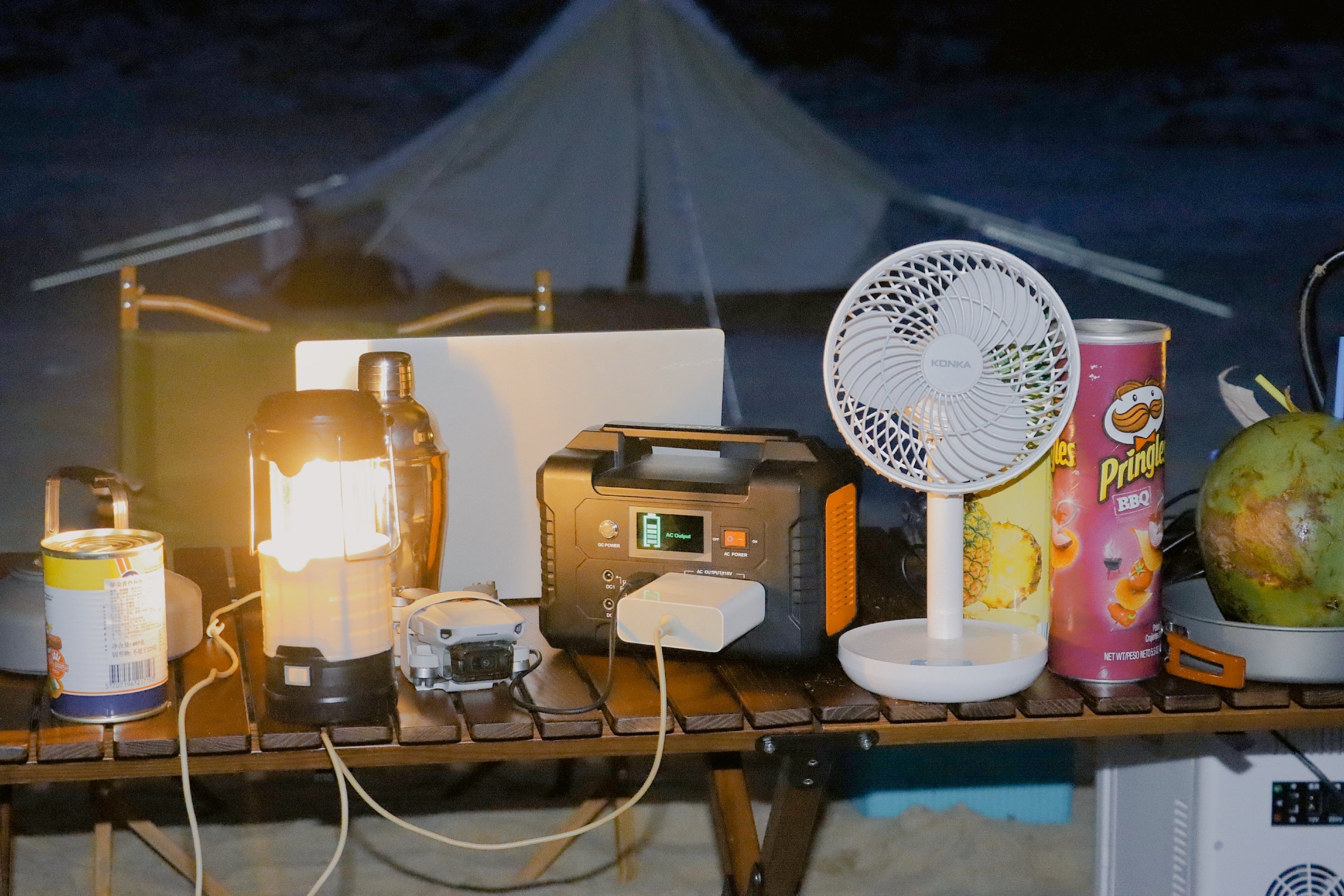
The strongest E200 plans are simple: phones, lights, small accessories, and occasional low-watt AC use. For desk backup, check each adapter label and avoid assuming that every laptop, monitor, router, or fan will fit.
Solar top-up with a compatible panel
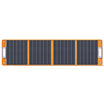
The E200 can be paired with a solar charging path when the panel and input limits fit. A panel is a charging source, not extra battery storage, and sunlight, angle, shade, temperature, and setup conditions affect output.
E200 planning table
| Use case | What to check | E200 fit logic | Boundary |
|---|---|---|---|
| Phone charging | Cable and charger needs | USB-A planning where the device supports it | No exact charge count |
| Small lights | Label watts and connector | USB or low-watt AC path | No outdoor or weatherproof claim |
| Laptop or tablet | Official charger wattage and AC/USB path | AC only if within supported output; USB-C is not documented | No universal laptop claim |
| Router or hotspot | Official adapter/input | Low-watt AC path after label check | No internet uptime claim |
| Solar top-up | Panel compatibility and sunlight | E200 kit or TSP60 path where active | No recharge-time guarantee |
What E200 is not the right fit for
Do not plan the E200 for high-draw appliances, whole-home backup, refrigeration safety, medical devices, hardwired backup systems, or devices that require guaranteed runtime. Avoid waveform-sensitive equipment unless the equipment maker says modified sine AC is acceptable.
How to decide between E200, T200, and T300PRO
Use E200 when the priority is compact 151Wh storage, light-device charging, USB-A support, and selected low-watt AC loads. Step up to T200 when you need the product data's documented LiFePO4 chemistry, pure sine AC, and 60W USB-C input/output path. Consider T300PRO when you need more output headroom, more capacity, 100W USB-C input/output, and a 120W solar/DC input class.
That is not a price recommendation. It is a criteria-based upgrade path: port needs, waveform, capacity, input limits, and output headroom.
When the E200 + TSP60 kit makes sense
The E200 + TSP60 kit can make sense when you want compact storage plus a portable solar charging path for beginner planning. It is best for users who understand that the station stores energy and the panel only produces charging input under suitable sunlight. It is not a promise that the station will fully recharge in a fixed number of hours.
When FlashFish fits
The E200 fits users who want a small station for phones, small USB accessories, lights, and selected low-watt AC loads with careful label checks. It also fits users who want a simple solar-kit path and accept that solar output varies in the field.
When FlashFish may not fit
Choose another station class if you need USB-C output on the E200, pure sine AC from the E200, more than 200W continuous AC output, more stored energy, faster solar/DC input, or support for devices that require verified compatibility.
Related planning guides
- How Long Can a FlashFish E200 Power a Laptop?
- FlashFish E200 vs T200
- Portable Power Station Watt-Hours Explained
- Portable Power Station Ports: AC, USB-C, USB-A and DC
FAQ
What can FlashFish E200 be used for?
FlashFish E200 can be used for compact charging plans such as phones, small USB accessories, lights, and selected low-watt AC devices after checking the device label and port path.
Can FlashFish E200 charge a laptop?
It may support some laptop charging through AC only when the official charger label fits the E200's documented output and the device accepts the power path. Do not assume universal laptop compatibility.
Does FlashFish E200 have USB-C output?
The E200 specs used here do not document USB-C output. Use USB-A and AC planning unless a newer verified source is approved.
Can FlashFish E200 work with a solar panel?
Yes, documented E200 specs support a 40W max solar/DC charging path, and the current U.S. product page includes an active E200 + TSP60 kit. Solar charging depends on compatibility and sunlight conditions, so do not rely on a fixed recharge time.
When should I step up from E200 to T200 or T300PRO?
Step up when you need documented USB-C support, pure sine AC, more input capacity, more stored energy, or more continuous AC output headroom than the E200 provides.

Leave a comment
This site is protected by hCaptcha and the hCaptcha Privacy Policy and Terms of Service apply.