

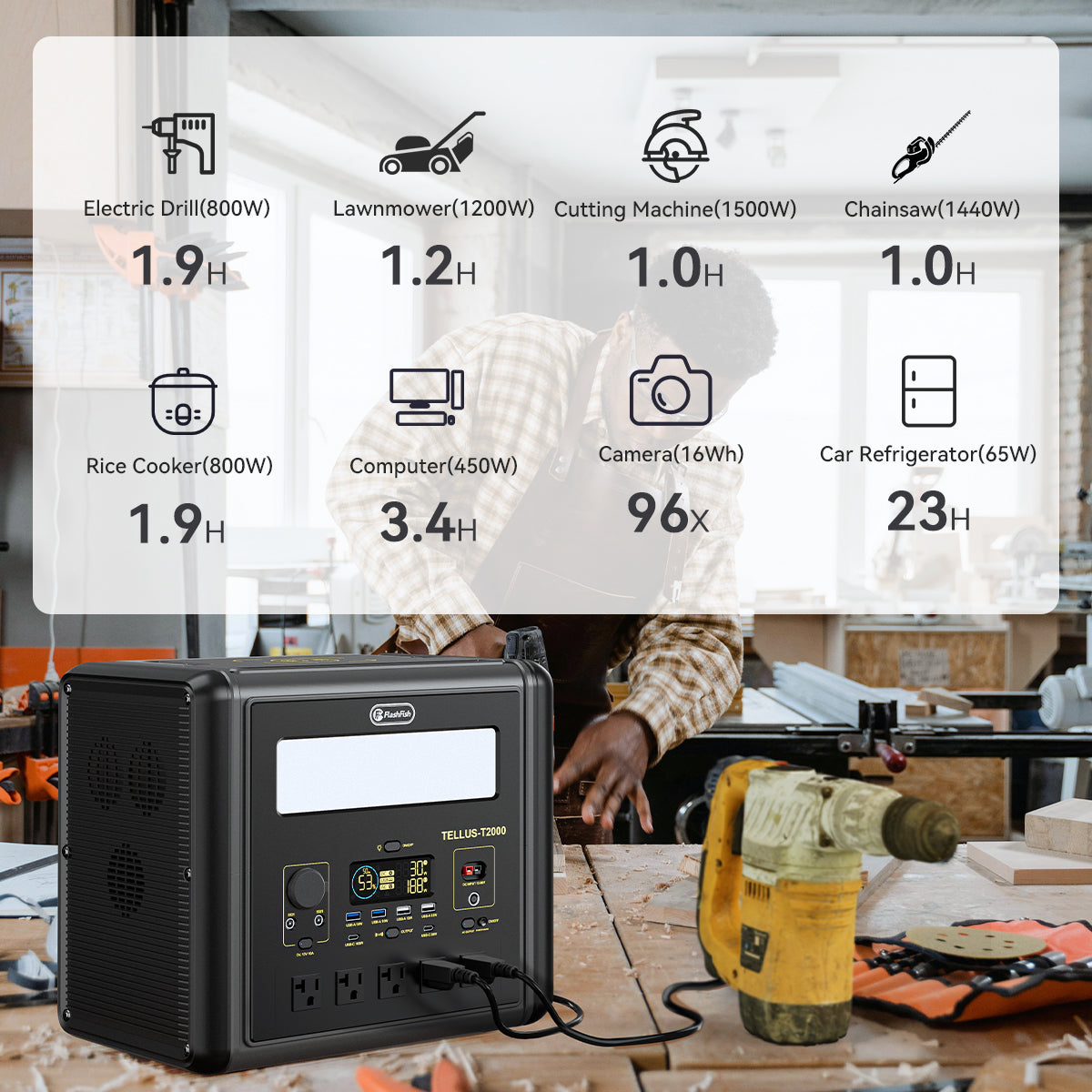
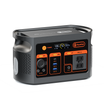
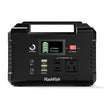

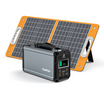
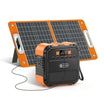

Quick answer: A storage temperature range does not establish a charging temperature range. A general “operating temperature” entry also leaves a charging-specific field unresolved unless the exact model's instructions explicitly connect them. Match each statement to its model, electrical version, source, and mode. If the charging or storage limit is missing, request the applicable instruction instead of extending a different range.
For U.S. owners comparing FlashFish E200 and T200 documentation, the useful question is which activity a number describes. This guide compares the scope of the records. It does not approve a location, prescribe a warming or cooling procedure, or suggest testing the limits.
Separate charging, discharge, storage, and general operation
Charging means adding energy to the station; discharge means supplying energy to a connected load. Storage describes keeping the unit between uses under its applicable instructions. General operation is a broader label whose meaning must come from the document containing it. Do not silently rewrite that heading as “charging.”
Make a separate row for each mode even when several ranges appear identical. That preserves the original scope. A source that supplies one row but leaves another blank has not supplied a complete environmental instruction set.
Keep units and wording with the values. A heading, footnote, or separate caution may determine what the range covers. Converting Celsius to Fahrenheit can make the numbers easier to read, but conversion cannot resolve a missing mode, product revision, or measurement location.
What the E200 and T200 specifications distinguish
The table below summarizes manual-derived specifications; it does not establish instructions for your individual unit. The reviewed E200 source covers 110–230 V variants, while the T200 source is identified as a U.S. manual. Confirm the original manual pages, electrical version, revision, and full qualifications before using an entry as an operating instruction.
| Model | Mode and field wording | Recorded value | Source scope | Unresolved inference or question |
|---|---|---|---|---|
| E200 | General operation | −10°C to 40°C | E200 manual-derived specifications; multi-voltage source | Does this entry cover discharge only or other modes? It does not fill the blank charging field. |
| E200 | Charging | Not provided | Same model specifications | Request the exact U.S.-applicable charging instruction. |
| E200 | Discharge | Not provided as a separate field | Same model specifications | Request the original context for the general operation entry. |
| E200 | Storage | Not provided | Same model specifications | Request the exact storage instruction; do not copy T200's range. |
| T200 / TELLUS-T200 | Charging | 0°C to 40°C | T200 manual-derived specifications; source identified as U.S. | Confirm the matching original page, revision, and full conditions. |
| T200 / TELLUS-T200 | Discharge | −10°C to 40°C | Same model specifications | Do not extend this lower endpoint to charging. |
| T200 / TELLUS-T200 | Storage | −20°C to 40°C | Same model specifications | Do not extend this range to either active mode. |
These entries summarize extracted manual information; the original headings and qualifications were not independently verified for this guide. The reviewed E200 specifications do not provide separate charging, discharge, or storage ranges. An unavailable value does not mean that the product has no limit. Obtain the applicable original instructions before making a use decision.
Three examples of scope errors to catch
Example 1: A storage entry is used to justify charging
An owner sees the T200 storage entry and asks whether its lower endpoint also applies with a charger connected. The storage row cannot answer that question. The record has a separate charging row with a different range. Confirm the applicable original instructions rather than treating the storage row as authorization.
Example 2: “Operating” is relabeled as “charging”
An E200 comparison sheet repeats the recorded general operation range under a charging heading. That changes the claim. Correct the comparison sheet to preserve “general operation,” mark charging as not provided, and ask which original instruction governs charging for the exact electrical version. Do not resolve the blank by borrowing T200's numbers.
Example 3: A room reading becomes a battery-temperature claim
A storage-area thermometer gives a room reading, and an owner wants to treat it as proof of the battery's internal condition. The reviewed specifications do not establish that equivalence or define a sensor procedure. Ask what temperature the applicable manual means and how its instruction should be followed. This article supplies no waiting period or equilibration test.
Build a source record before making a use decision
- Record the exact model from the label, including suffixes and the regional electrical version.
- Save the manual title, revision if shown, language, and page containing the relevant instruction.
- Copy the full mode heading and associated qualifications into your notes.
- Separate the range itself from any unanswered questions about conditions or measurement.
- Request clarification when the label, manual, and extracted record do not align.
The FlashFish U.S. User Guides directory asks readers to match the model and electrical version and seek the correct document when the manual and label conflict. A directory listing is a route to a document; it does not prove that an individual unit matches that document.
A useful support question is: “My label identifies this model and electrical version, and my manual shows this revision. Which page gives the charging temperature instruction, what temperature does it refer to, and are there additional conditions?” Attach a clear label image and the page that caused the question. Keep the reply with the unit's records.
How this changes an E200 versus T200 comparison
The reviewed T200 specifications distinguish charging, discharge, and storage. The E200 specifications provide a general operation entry without separate values for those three modes. That makes the reviewed T200 mode distinctions more explicit; it does not prove superior environmental performance or establish that E200 can be used over a wider range.
If a particular charging environment determines your choice, unresolved documentation is a reason to obtain an exact instruction before selecting either model for that use. Capacity, chemistry, output rating, and protective features cannot fill a missing environmental instruction.
Frequently asked questions
Does “optimal temperature” replace the mode-specific range?
No. The T200 record also has an optimal-temperature field, but that is a distinct label. Preserve the charging, discharge, and storage distinctions and confirm the original context. An optimal entry does not supply instructions for a different mode or model.
Can a protection feature establish the limit for me?
A listed protection feature does not supply missing instructions or an approved test procedure. Do not use a shutdown or protection event to discover a temperature boundary. Obtain the applicable documentation instead.
What should I do when two sources disagree?
Keep both statements with their model, mode, date or revision, and source. Request a matching clarification. Do not combine the broadest endpoints into a new range, and do not treat a more recent webpage as an automatic replacement for the product's instructions.
Make documentation part of the product decision
Prepare a mode-by-mode sheet for your exact E200 or T200, mark every unresolved field, and obtain the missing instructions. With that sheet complete, compare the model's documented conditions with your intended use before choosing it for the job.
Next step: Compare FlashFish E200 specifications with your requirements.


Leave a comment
Situs ini dilindungi oleh hCaptcha dan berlaku Kebijakan Privasi serta Ketentuan Layanan hCaptcha.