

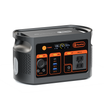
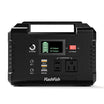

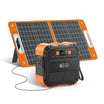
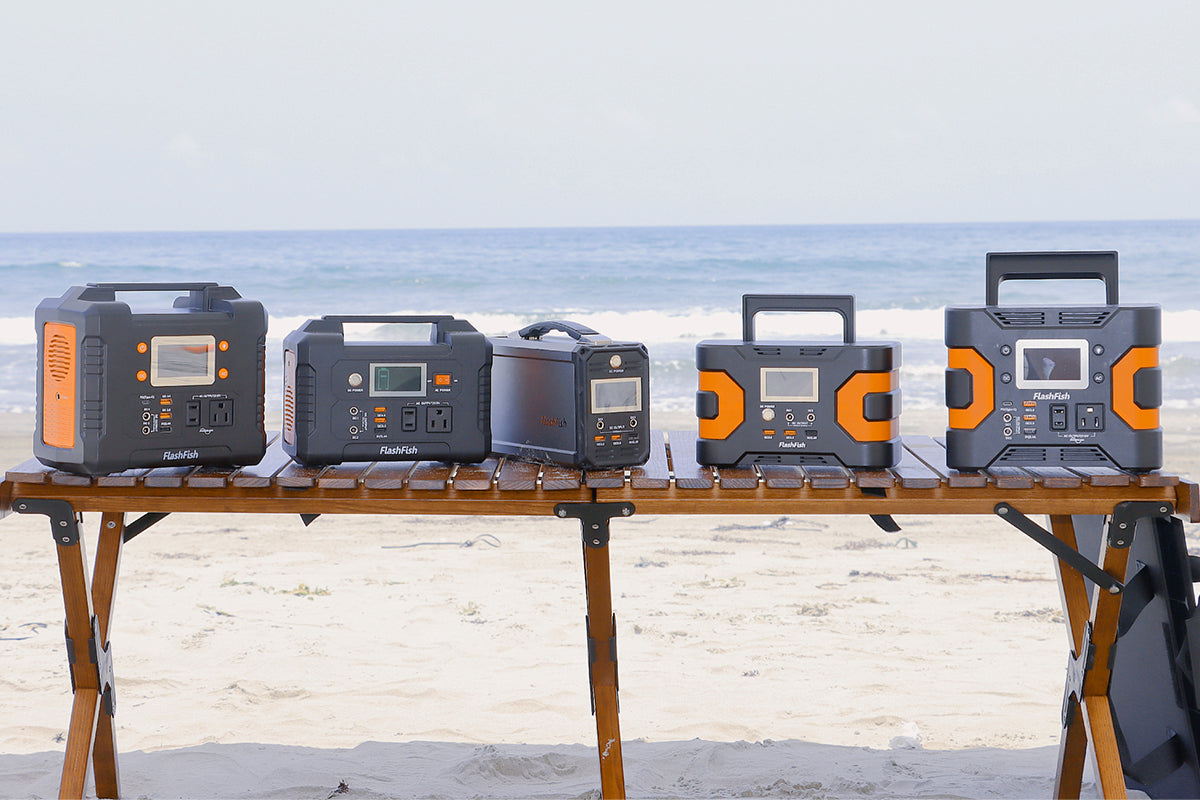
Short answer: Choose FlashFish T200 when lower weight, documented LiFePO4 chemistry, 200W pure-sine AC, and flexible 60W USB-C input/output are the priority. Choose FlashFish E103 when the load needs up to 300W continuous AC, slightly more stored energy, and more DC output flexibility. Both are compact stations, but neither is a universal appliance or exact-runtime solution.
FlashFish T200 vs E103 at a glance
| Planning factor | FlashFish T200 | FlashFish E103 |
|---|---|---|
| Capacity | 153.6Wh | 179.2Wh |
| Continuous AC output | 200W | 300W shared maximum |
| Peak AC output | 400W | Not provided in the available documentation |
| AC waveform | Pure sine wave | Pure sine wave |
| Battery chemistry | LiFePO4 | Not provided in the available documentation |
| Highest USB-C output | 60W | 60W |
| DC output | 12V / 10A / 120W | 12V shared 120W maximum |
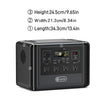
| Weight | 2.5kg | About 3kg |
Choose T200 for portability and a clearly documented battery path
The FlashFish T200 stores 153.6Wh and provides 200W continuous pure-sine AC with a documented 400W peak. It weighs 2.5kg and includes a USB-C1 path up to 60W for both input and output, a second USB-C output up to 18W, and USB-A outputs for compatible accessories.
T200 is the cleaner choice when the load list stays comfortably below 200W and the user values lower carry weight. It can fit phones, cameras, lights, compatible USB-C laptops, and selected low-watt AC devices after label checks. The documented LiFePO4 chemistry and cycle-life statement may also matter to shoppers who want those facts explicitly supported.
The 400W peak figure is not a 400W continuous rating. A device with a high startup demand or a running load above 200W needs another class even if it starts briefly.
Choose E103 for more AC headroom
The FlashFish E103 increases capacity to 179.2Wh and continuous pure-sine AC output to a shared 300W maximum. It also has one USB-C output up to 60W, two USB-A outputs up to 18W each, DC5521 outputs, a car-style DC output, and a built-in light.
E103 is the better fit when a verified device load falls between the T200's 200W ceiling and E103's 300W ceiling, or when the additional DC connections match the equipment plan. Its roughly 3kg weight remains compact, although T200 is lighter.
The available E103 documentation does not provide a verified peak AC figure or battery chemistry value. This comparison therefore does not infer either one. Check current original documentation before treating chemistry as a purchase requirement.
Which model fits common scenarios?
USB-C laptop charging
Both models document a USB-C output up to 60W. A laptop must accept that charging path, and some higher-power laptops may charge slowly or not at all. Compare the laptop's official charger requirement and use a suitable cable.
Camping lights, cameras, and phones
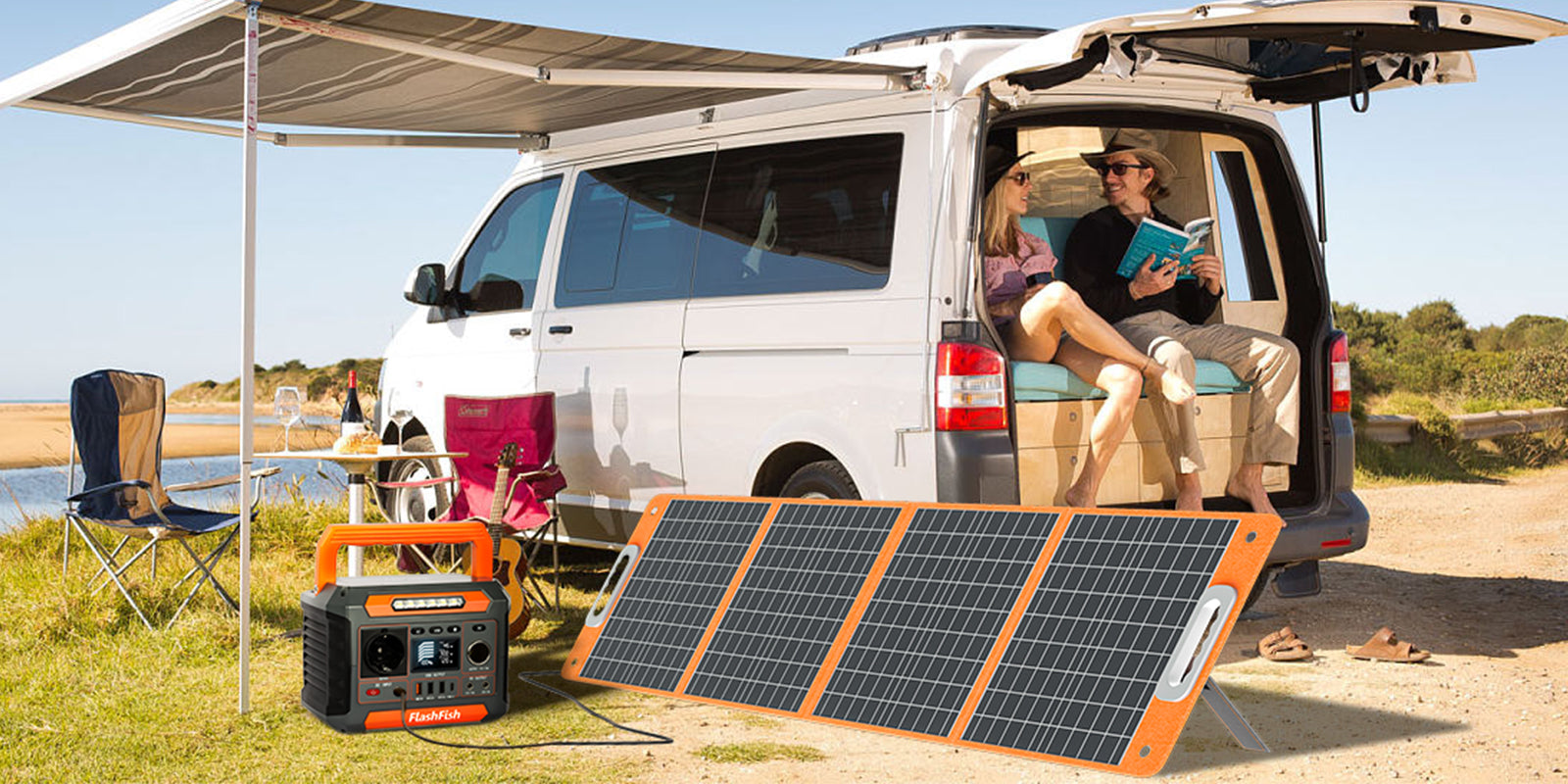
Either station can organize a modest campsite electronics plan. T200 is easier to carry; E103 provides more capacity and AC headroom. Keep both dry and within their operating guidance. A product category does not create a weatherproof claim.
Selected AC electronics
T200 fits devices whose running and startup requirements stay within its 200W continuous and 400W peak limits. E103 can support selected loads up to its 300W shared AC maximum, but no peak figure is claimed here. Check simultaneous demand as well as individual device labels.
Solar top-up planning
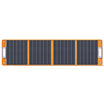
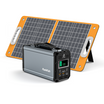
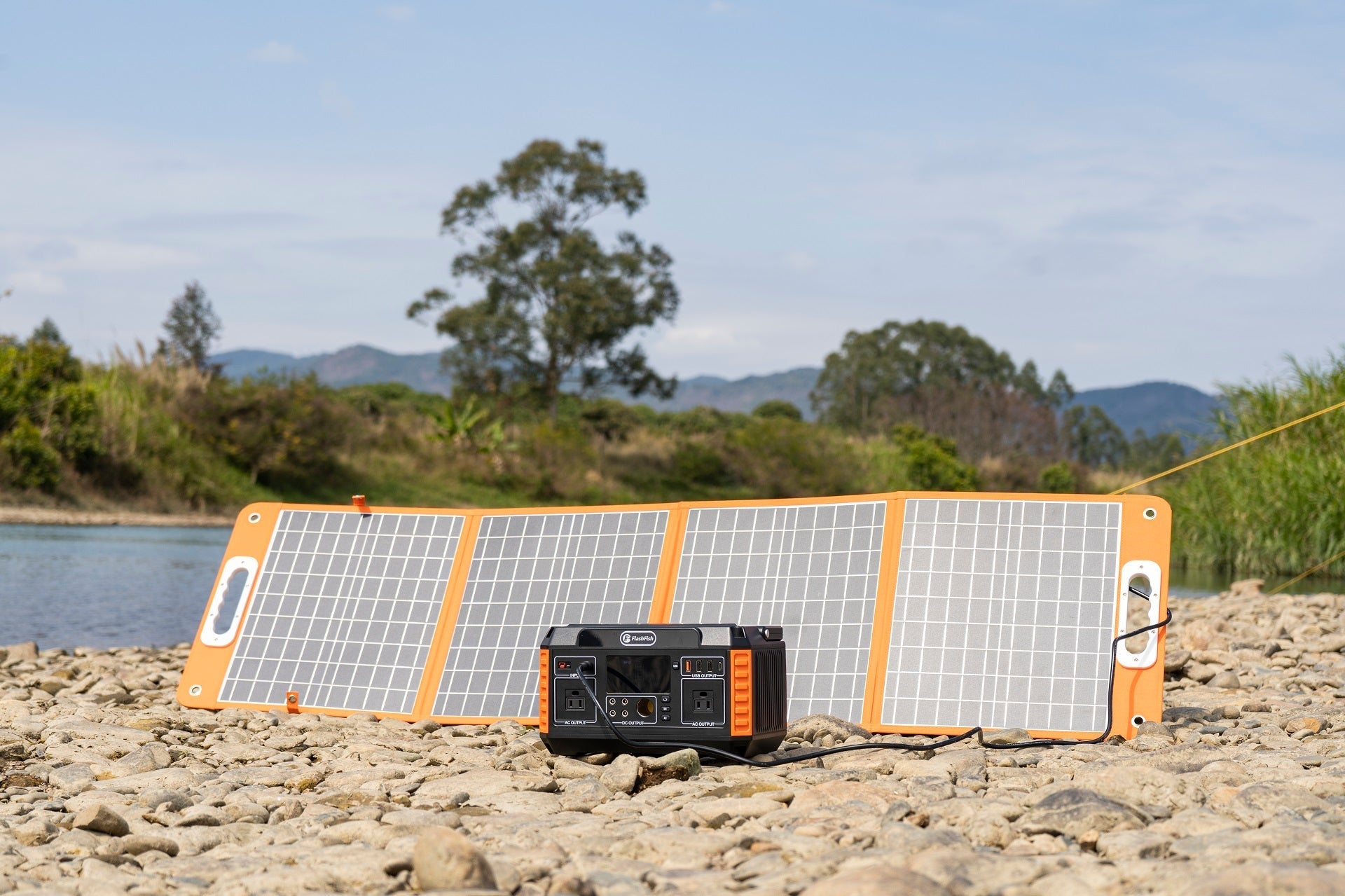
T200 documents a 15-30V, 60W maximum solar input path. E103 documents a 12-30V DC input path up to 90W. Connector, voltage, current, cable, sunlight, angle, and shade all affect a real setup. Maximum input is not a recharge-time guarantee.
Decision checklist
- Write down the largest running load and any startup demand.
- Choose T200 only when the AC plan fits its 200W continuous limit.
- Choose E103 when verified AC demand needs the 300W class.
- Compare required USB-C, USB-A, DC, and AC connections.
- Decide whether 2.5kg versus about 3kg changes how often the station will be carried.
- Use watt-hours as an energy budget, not an exact runtime promise.
When neither model is the right fit
Move to another station class when the plan includes high-draw appliances, uncertain motor startup, whole-home or hardwired backup, medical or safety-critical equipment, food-safety guarantees, or a required runtime that has not been tested. A 200W or 300W compact station should not be selected from appliance category alone.
Related FlashFish planning guides
For a larger 300W comparison, read FlashFish T300PRO vs E103. For T200's next output tier, see FlashFish T200 vs T300PRO for Camping. The portable power station port guide explains AC, USB-C, USB-A, and DC planning.
FAQ
Is FlashFish T200 or E103 more powerful?
E103 has the higher continuous AC limit at 300W versus T200 at 200W. T200 has a documented 400W peak; the available E103 documentation does not provide a peak figure.
Which model has more capacity?
E103 stores 179.2Wh, compared with 153.6Wh for T200. Neither number is an exact runtime promise.
Do both models have pure sine wave AC?
Yes. Pure sine wave AC is documented for both T200 and E103.
Do both models use LiFePO4 batteries?
LiFePO4 is documented for T200. The available E103 documentation does not provide a verified battery chemistry value, so this guide does not make that claim for E103.
Which model is better for camping?
T200 favors lower carry weight and loads below 200W. E103 favors more AC headroom and slightly more capacity. The better choice depends on the actual device list.

Leave a comment
Situs ini dilindungi oleh hCaptcha dan berlaku Kebijakan Privasi serta Ketentuan Layanan hCaptcha.