

Quick answer: Start with the labels on every light, charger, game accessory, and power adapter you plan to use. Add the labeled input or output watts only where the manufacturer instructs you to do so, compare that plan with the power station’s documented limits, and keep household appliances out of a casual game-night setup unless their labels and manuals support the plan. For an outdoor table, cable placement and the host’s rain plan matter as much as the station size.
Build the plan around the table, not a guess
A good backyard game night has a simple power boundary: tabletop lights, phones, and small labeled accessories are one planning category; kitchen, heating, cooling, and other household appliances are another. Write down each item before setting it on the table. Include the device name, the power label, the adapter label if it has one, and the connector or plug it actually uses.
Do not treat a battery capacity number as a promise of a particular evening’s runtime. Screen brightness, charging state, accessory behavior, and combined loads can change the result. If an item has a start-up requirement, a proprietary adapter, or unclear documentation, leave it off the plan until its manual is checked.
A simple host checklist
- List the lights, phones, chargers, and game accessories you expect to power.
- Read the labels and manuals before choosing an output path.
- Keep the station on a stable, dry surface with clear access to its controls.
- Route cords where guests will not need to step over them; shorten the layout instead of stretching cables across a walkway.
- Decide in advance what you will unplug if the weather changes or the group moves indoors.
- For a shared park or common area, confirm the location’s rules with the responsible organizer before the event.
Match the station to documented limits
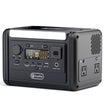
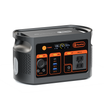
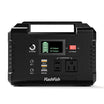
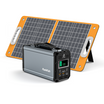
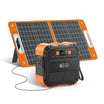
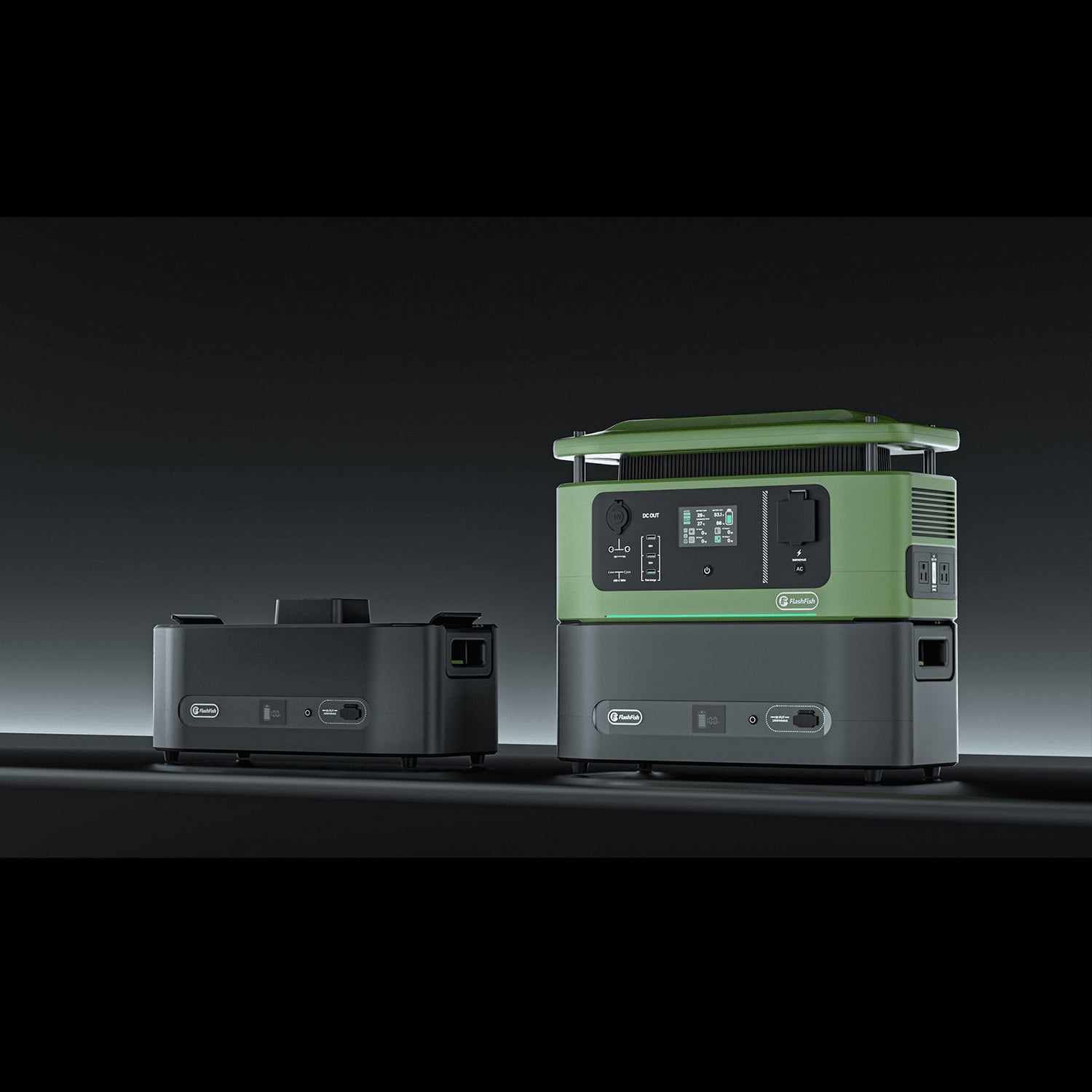
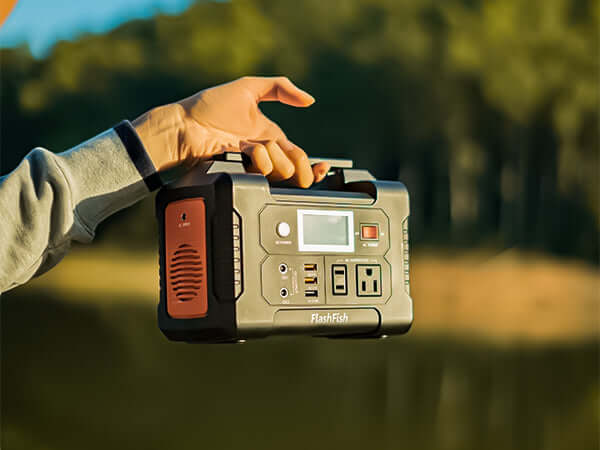
FlashFish E200 is documented with 151Wh capacity and a 200W continuous AC output. FlashFish E103 is documented with 179.2Wh capacity, a LiFePO4 battery, and a 300W continuous pure-sine AC output. Those are station-side facts, not a finding that any particular game accessory, charger, or light will work with either model.
| Planning question | What to verify |
|---|---|
| How much equipment belongs on the table? | Each item’s label, manual, adapter, and intended connector. |
| Which station is in scope? | The model identity, documented capacity, and documented continuous-output limit. |
| Can everything run together? | Do not assume it. Review combined-load guidance in the station and device documentation. |
| What happens if conditions change? | Pause the setup, unplug equipment, and follow the venue or host plan. |
Make the tabletop layout easy to manage
Place the station beside the table rather than in a traffic path. Give chargers and adapters one side of the setup, keep drinks away from connectors, and leave enough room to read the display and disconnect a cable without moving the game. A small paper load list can be more useful than trying to remember what was plugged in after the sun goes down.
If a device needs an extension cord, add that cord and its condition to the pre-event check. Do not use a damaged cable, and do not use a connector or adapter just because it physically fits.
What to leave out of this plan
A tabletop game-night plan is not a substitute for appliance planning, home backup design, or a weatherproof outdoor installation. Keep high-draw or motor-driven household equipment separate from the entertainment list. For any equipment that will be left outdoors, exposed to moisture, or used at a managed park, use the applicable product documentation and local directions before proceeding.
Related event power checks
Use these current FlashFish pages and guides to continue your comparison:
- Browse current portable power stations
- Check gaming-console power labels
- Review watt-hours before estimating play time
FAQ
Can I calculate a guaranteed runtime from watt-hours?
No. Capacity is one input to planning, but actual use depends on the connected equipment and conditions. Check the specific device and station documentation.
Does a 200W or 300W station automatically fit my game-night equipment?
No. Compare the exact device and adapter labels with the station documentation; do not infer compatibility from a general activity category.
What is the most useful first step for a host?
Make a written list of the exact items, labels, adapters, and cable paths before guests arrive.

Leave a comment
Situs ini dilindungi oleh hCaptcha dan berlaku Kebijakan Privasi serta Ketentuan Layanan hCaptcha.