

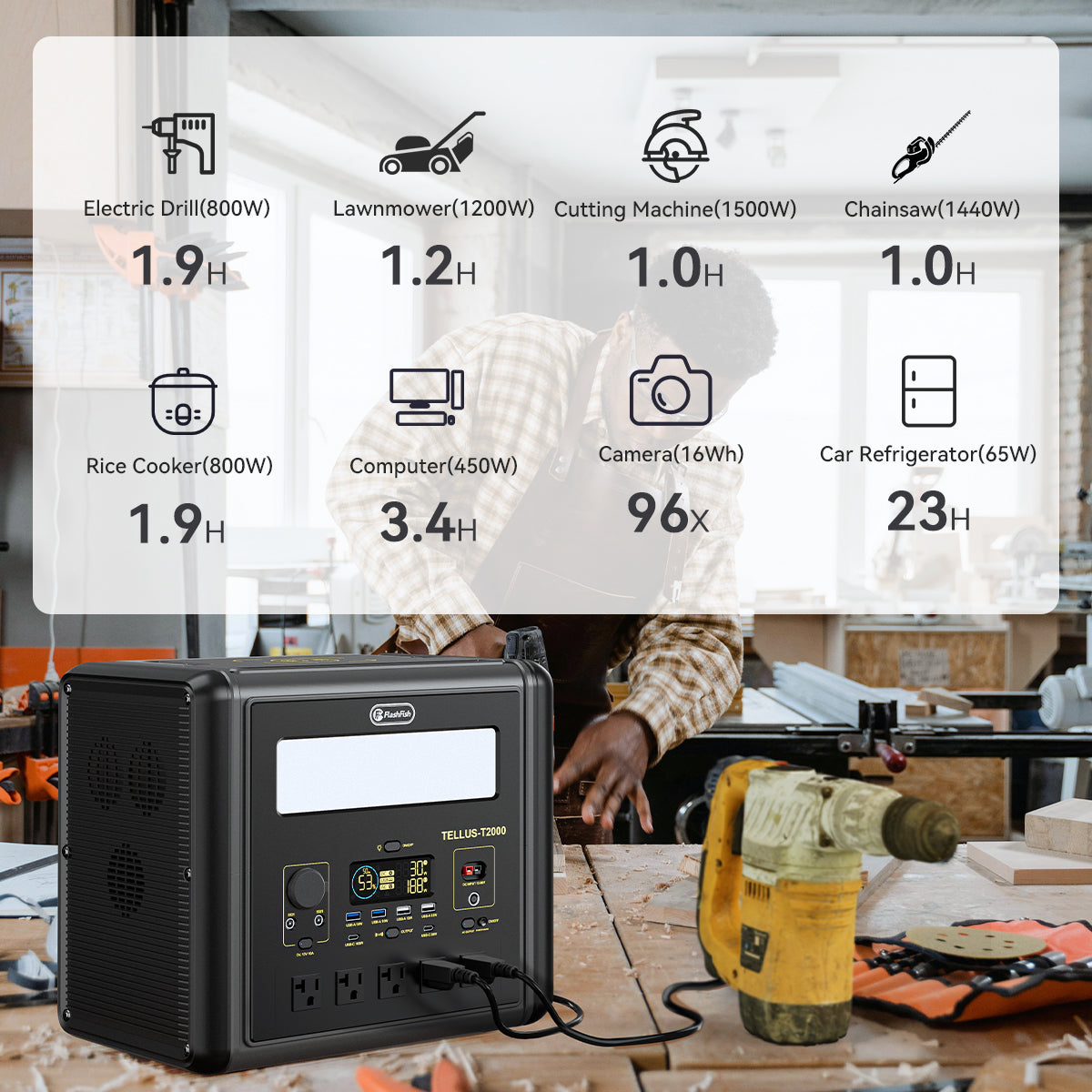
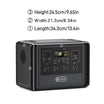
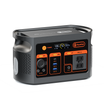
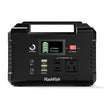

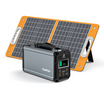
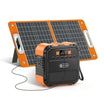
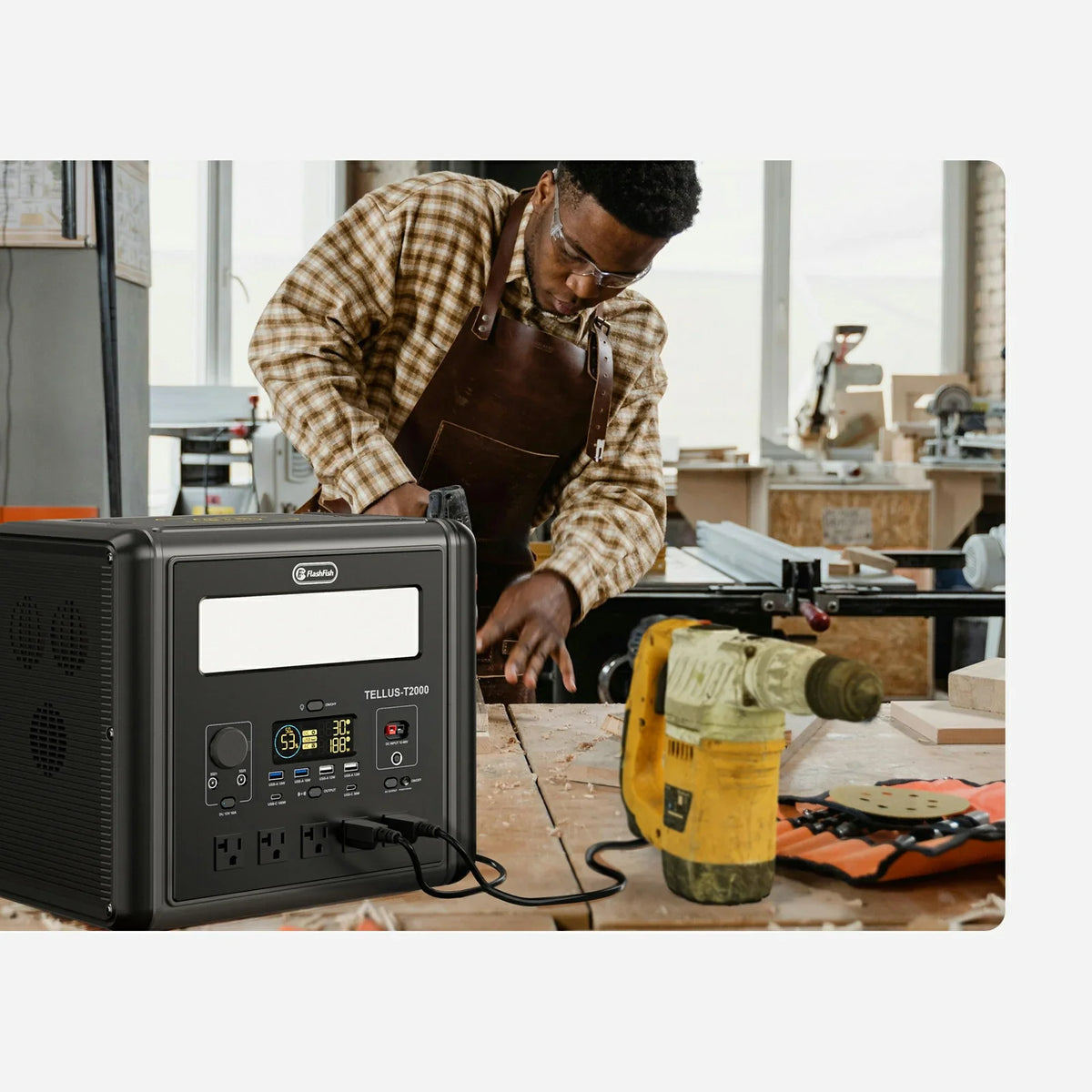
A standalone spare power station is not established as an expansion battery for another station merely because it has its own battery and outputs. Before describing expanded storage, require manufacturer documentation naming the exact host, approved battery, dedicated expansion interface, and system limits. The reviewed product information does not establish that E103 and T300Pro form such an expansion system.
For U.S. shoppers who already own a compact station, the first question is architectural: will an approved battery become part of the host's documented system, or are you considering another independently operated station? Resolve that distinction before comparing capacity or placing an order. Missing evidence means expansion is unconfirmed; it does not prove that every possible expansion arrangement is prohibited or unsupported.
Name the job you expect the extra unit to do
Write down whether you want more documented energy available through the existing host or a separate station for independent use. Those requests need different evidence. Buying a second standalone unit may address the latter, subject to its own instructions and device requirements, while leaving the host's expansion question unanswered.
Do not let a seller's broad phrase such as “extra battery” substitute for an exact model relationship. Ask whether it names a manufacturer-approved expansion battery for your host or simply another complete station. Keep the written answer beside the exact model numbers.
Build an architecture table before a capacity table
Use the host manual, proposed battery manual, and manufacturer's written compatibility information. Each must apply to the regional versions and revisions being considered. A general brand association, similar connector shape, or standalone rating cannot complete an empty compatibility field.
| Host | Proposed extra unit | Dedicated expansion interface | Exact compatibility evidence | System limits | Independent-use alternative | Status |
|---|---|---|---|---|---|---|
| E103, exact U.S. revision to confirm | T300Pro | Not established in the reviewed product information | No host-to-battery approval established in the reviewed information | No combined host system rating established | Evaluate each station separately under its matching instructions | Expansion unconfirmed |
| T300Pro, exact U.S. revision to confirm | E103 | Not established in the reviewed product information | No host-to-battery approval established in the reviewed information | No combined host system rating established | Evaluate each station separately under its matching instructions | Expansion unconfirmed |
| Your labeled host | A specifically named proposed expansion battery | Record the manufacturer's approved interface | Record exact models, versions, and document revision | Record only documented limits for that combination | Consider a separate station if that better matches the intended job | Pending exact documentation |
The first two rows report the boundary of the available evidence, not an electrical test or a manufacturer declaration that expansion is impossible. The third row is a template for a different, explicitly documented proposal. This article has not identified or approved an expansion battery for either FlashFish model.
Keep E103 and T300Pro ratings attached to their own units
FlashFish E103 has a nominal capacity of 179.2Wh, and T300Pro has a nominal capacity of 230Wh. T300Pro is also identified as T300PRO or TELLUS-T300Pro. These facts identify the individual stations; they do not establish energy delivered through one host from a connected pair.
Do not add those values and present the result as a usable expanded host rating. Likewise, two standalone output ratings do not create one combined outlet rating. This guide gives no cable arrangement, output-to-output connection, improvised charging method, or combined runtime calculation.
For a separate electrical suitability review, preserve the market boundary: the reviewed E103 manual-derived AC specification is 230V, while the T300Pro manual record is 120V. Those records cannot be treated as interchangeable U.S. units. Verify the exact label and applicable manual before considering an individual station for a device.
Compare the options by the requirement they actually satisfy
A documented expansion system can be evaluated against the manufacturer's stated host-and-battery relationship and limits. Its advantage for this decision is that the proposed architecture has a defined source of authority. Its constraint is that the approval must match the specific combination; a compatibility statement about another host does not transfer.
A separate spare station can be evaluated as its own power source, with its own controls and requirements. That may fit a shopper who wants independent use. It also creates another unit to manage and does not, by itself, satisfy a request for expanded storage through the existing host. This comparison does not allocate loads or recommend connecting stations together.
An undocumented proposal leaves the central purchasing requirement unresolved. A low price or familiar-looking port cannot repair that evidence gap. Keep the purchase pending if expansion through the existing host is essential.
Three hypothetical buying decisions
These examples describe evidence checks, not actual products, approvals, or test outcomes.
- A shopper finds two standalone capacity figures. The shopper records each under its own model and leaves the combined-system field blank. Neither figure identifies an expansion interface or an approved host-to-battery relationship.
- A seller names an expansion battery but cites another host. The shopper asks for the compatibility document covering the exact host and revision being purchased. The other host's approval does not close this comparison.
- A shopper only needs a separate portable source. The shopper changes the requirement to independent use and evaluates a second station under its own manual. The purchase can then be assessed without describing it as storage expansion for the original unit.
Ask a question that can produce a useful answer
Give the manufacturer the host's exact model and regional version, the proposed extra unit, and the function you want. Ask for the compatibility document, approved interface, applicable revisions, and system limits. A written answer that identifies those items is more useful than a general statement that two products belong to the same brand.
“Does [proposed battery model] have documented expansion approval for [exact host model, regional version, and revision]? Please identify the approved expansion interface, matching instructions, and limits for that combination. I need expansion through the host, rather than a separate station for independent use.”
Frequently asked questions
Does an input port establish expansion support?
No. A listed input describes an input on the individual product. This guide requires an explicit manufacturer-approved expansion architecture before describing expanded storage. A connector or charging specification alone does not identify the exact approved host, battery, and system relationship.
Does missing compatibility information prove E103 or T300Pro cannot expand?
No. The reviewed product information does not establish the proposed expansion capability. That is an evidence limitation, not proof of universal non-support. Request exact manufacturer documentation if expansion is essential, and keep the decision unconfirmed until the required relationship is documented.
Can a spare still be useful without being an expansion battery?
It may fit an independent-use requirement after its own electrical and operating requirements are checked. Describe that option accurately as a separate station. Do not turn it into an expanded host system by combining ratings or assuming an undocumented interconnection.
Choose the architecture before the model
Complete the host-and-battery evidence table first. If the requirement is independent use, compare the individual E103 and T300Pro specifications against that job. If expansion through the host is essential, obtain the exact compatibility documentation before treating either model as a solution.
The FlashFish model comparison lists individual-station specifications. It does not establish a host-to-expansion relationship for a proposed combination.
Next step: Compare FlashFish E103 specifications with your requirements.


Leave a comment
Situs ini dilindungi oleh hCaptcha dan berlaku Kebijakan Privasi serta Ketentuan Layanan hCaptcha.