



Short answer: Write down the exact vehicle's permitted cargo location and restraint instructions, then check the station's handling instructions against that plan. Weigh the complete packed kit. If the documents do not support the proposed anchor, attachment or location, leave transport unresolved and ask the manufacturers before driving. A station's carrying handle or low weight does not establish an approved vehicle restraint.
Start with the vehicle, not a strap shopping list
Record the model year, vehicle version and manual edition. Locate the load-carrying instructions, the vehicle's own loading label and the instructions for any cargo accessory you intend to use. Keep the relevant pages with your packing list. A hook that resembles an anchor is not enough information to select a restraint.
NHTSA's guidance on securing vehicle loads calls for securing cargo, avoiding overloading and checking the load. Its guidance is general: it does not approve a FlashFish station, identify your vehicle's anchors or provide a universal strap rating. Use it to prompt a load check, not to fill missing manufacturer instructions.
A documented vehicle example can rule a location out
The 2018 Ford Escape U.S./Canada owner's manual, printed page 200, warns against putting objects on the cargo shade. That makes the shade an unsuitable proposed station shelf in this example. The same manual's load-carrying section discusses vehicle weight limits. Having weight capacity left does not cancel the location restriction.
This is a document-reading example, not a Ford-approved installation for E200 or T200. It establishes one exclusion; it does not establish an alternative anchor or tie-down path. Owners of another year or vehicle must use their own instructions.
Build a kit record that exposes missing information
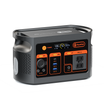
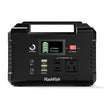
E200's documented net mass is about 1.85 kg; T200's is 2.5 kg. Those are station-only reference values. Neither includes your bag, adapters, panel or restraint hardware. Weigh what will actually go into the vehicle rather than treating a product's shipping weight as your packed mass.
| Item | Measured packed mass | Proposed location | Supporting instructions | Unresolved issue |
|---|---|---|---|---|
| Station and carrying case | Enter scale reading | Enter exact cargo position | Vehicle location and restraint pages; station handling instructions | Attachment path or enclosure loading not documented? |
| Adapter and cables | Weigh packed accessories | Enter contained location | Applicable cargo-container instructions | Loose items still able to move? |
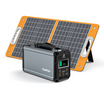
| Optional folded panel | Weigh panel and case | Record separately | Panel and vehicle instructions | Do not assume the station restraint also retains the panel |
The TELLUS-T200 original manual, printed page 3, cautions against impacts, falls, severe vibration and heavy objects stacked on the product. These handling restrictions do not supply a vehicle anchorage design. Find the matching E200 instructions through the FlashFish U.S. model manual directory; do not substitute T200 instructions for E200.
Three ways the check can end
- Excluded location: In the Ford example, a proposed cargo-shade placement fails the documented location check before strap selection begins.
- Incomplete restraint: A hypothetical camper weighs a packed T200 kit but has no instructions permitting the proposed handle attachment. The mass entry is complete; the restraint decision remains unresolved.
- Documented plan: In a hypothetical completed record, the exact vehicle and accessory instructions support the location and restraint, and the station manufacturer confirms the proposed handling arrangement. Keep those documents and perform their specified checks. This article supplies no such confirmation for a real installation.
Before the next drive
Resolve each blank by asking a specific question: which cargo point is permitted, which restraint system applies, and whether the proposed attachment loads the station in an allowed way. Do not calculate a crash load from station mass or improvise a tension value. This guide concerns transport as cargo; charging while driving is a separate question.
FAQ
Does a carry handle double as a tie-down point?
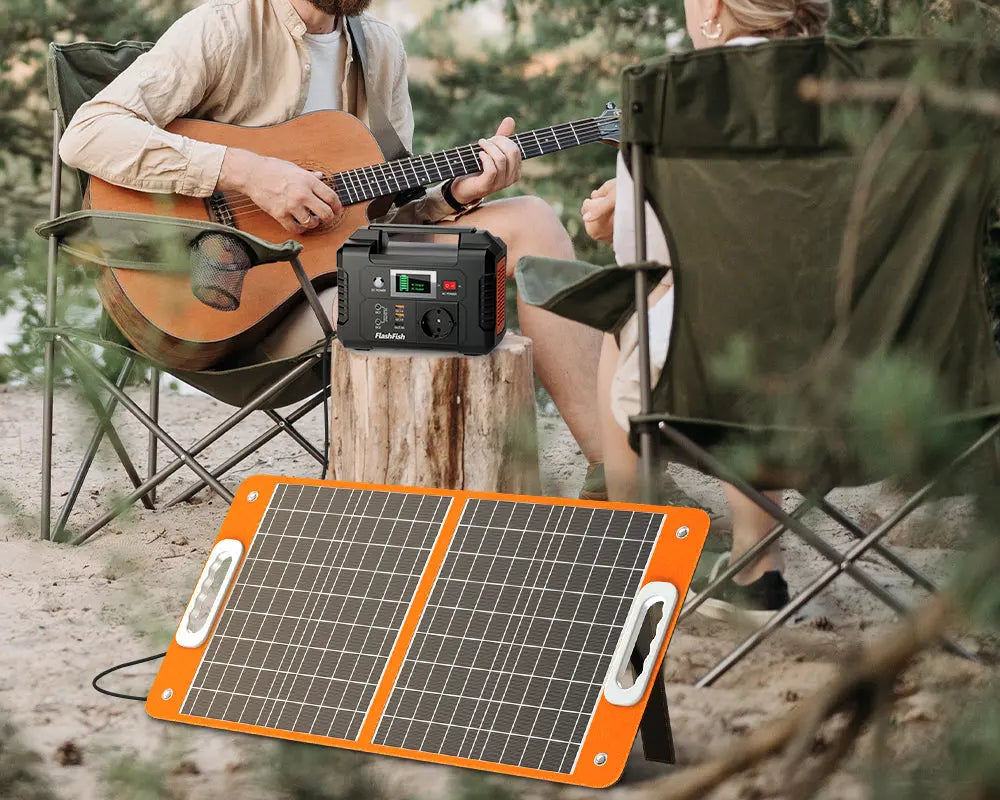
Only manufacturer instructions supporting that use can establish it. A handle shown in a product photograph establishes a carrying feature, not a rated cargo attachment.
Can I use the station-only weight in my cargo record?
Keep it as a reference, but enter a scale reading for the actual packed kit. List separately packed accessories so they are not omitted or counted twice.
What if the vehicle manual and station instructions leave a conflict?
Leave the proposed arrangement unresolved and obtain matching manufacturer guidance. A generic strap recommendation cannot settle a model-specific restriction.
Method: this is a comparison of written instructions and a blank packing record, not a road or crash test.
Next step: Review the FlashFish E200 product details.

Leave a comment
Situs ini dilindungi oleh hCaptcha dan berlaku Kebijakan Privasi serta Ketentuan Layanan hCaptcha.