

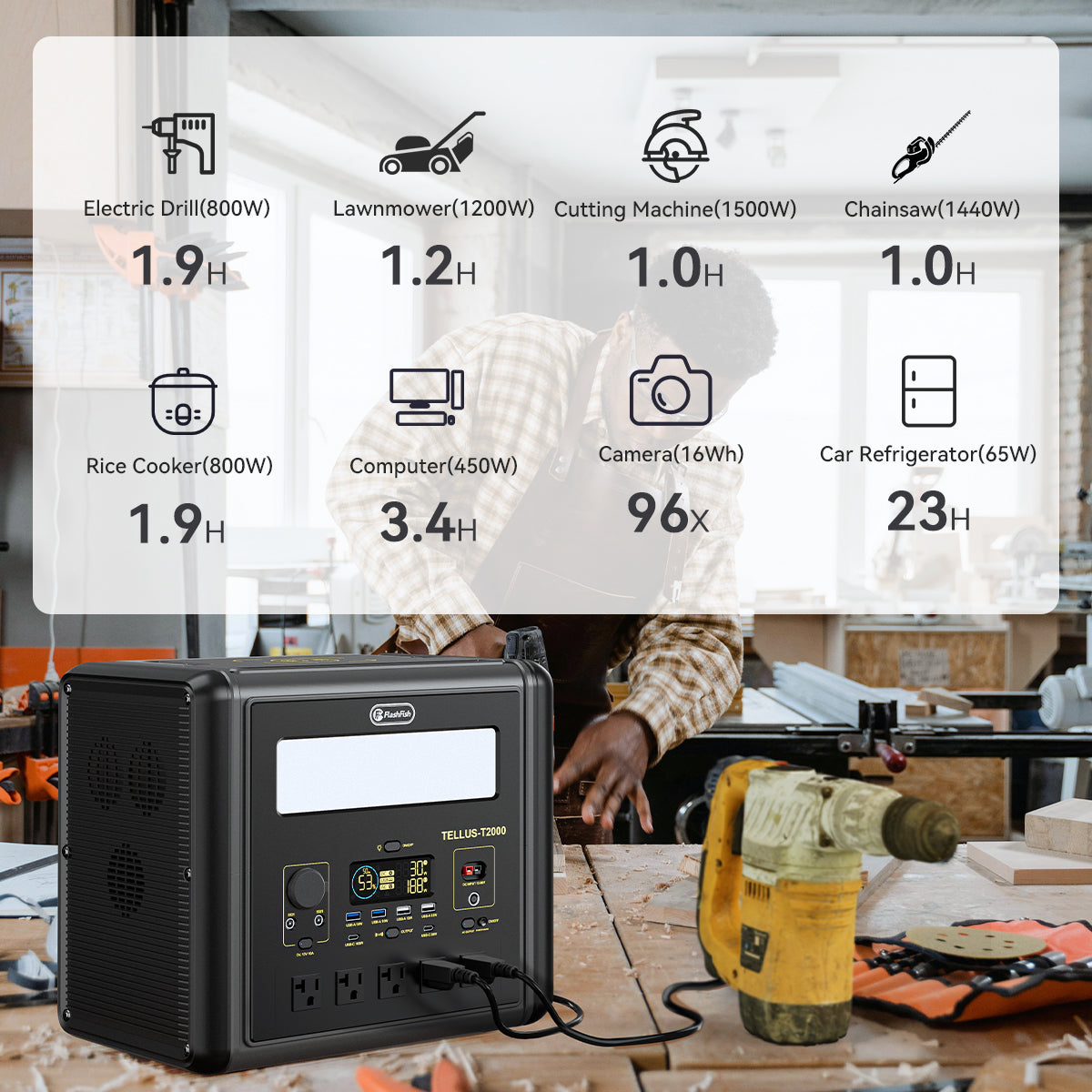
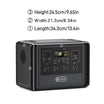
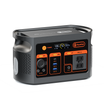
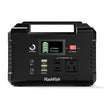

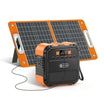
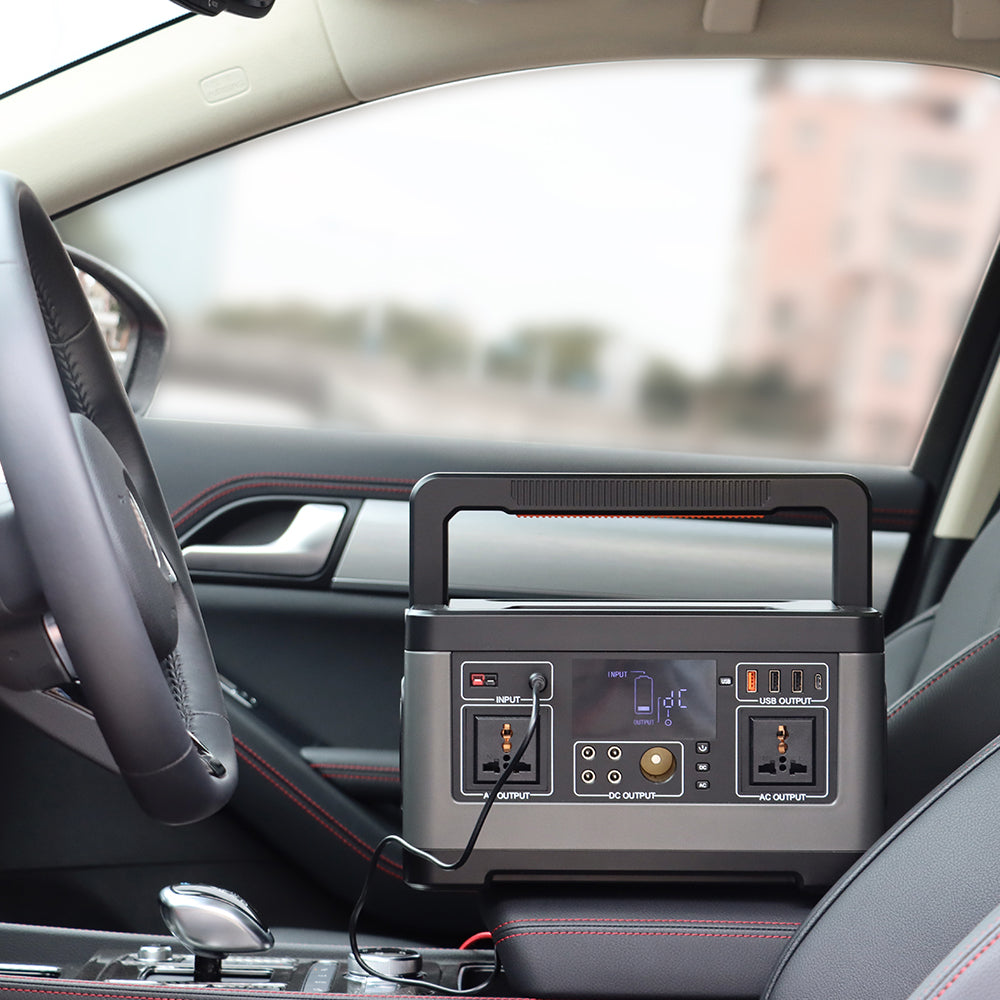
Match the E200 model label, regional output information, visible port configuration, and manual source before relying on a specification. Record any printed revision or other unit identifier without guessing what it means. When a retail page, manual, and hardware label disagree, preserve all three claims and request confirmation of the instructions for that exact unit. A newer packaging record does not automatically replace an electrical specification.
This guide helps U.S. FlashFish E200 owners build a source record for support. It does not diagnose an electrical fault or approve a cable connection. The goal is a short, traceable answer to “Which source applies to my unit, and what is still unresolved?”
Start with the unit you actually own
Copy the model exactly as printed on the accessible exterior label. Record the labeled AC output, input information, and any printed hardware or revision identifier. Photograph the visible port layout and retain your order's exact variant description. Use “not provided” when a field is absent; do not derive a revision from a purchase date, case color, or similar-looking listing.
Keep private identifiers out of public posts. If support needs a serial number, supply it through the appropriate private support channel. An exterior photograph and exact text often make the discrepancy clearer than a cropped marketing image whose variant is unknown.
Identify the manual, not just its download title
For each candidate document, record its filename, printed model, relevant language section, regional specification, and the page containing the disputed claim. Keep the original document and note when you obtained it. A filename can help locate a source, but a number in a filename is not automatically a printed revision or publication date.
The E200 manual distinguishes regional output specifications. Find the section that matches your exterior label and retain the relevant page. A download filename alone does not establish which hardware revision an individual owner has.
Build a claim-by-claim source table
Do not choose one entire source as the winner simply because it looks newer. Match the source to the particular claim and unit. A document about carton dimensions may be useful for packing, while still providing no authority to change AC output, waveform, or charging instructions.
| Claim | Hardware identity needed | Source | Market or correction | Documented specification | Unresolved point |
|---|---|---|---|---|---|
| Nominal capacity | Exact E200 model and any printed revision | FlashFish E200 manual | Capacity specification | 151 Wh | Confirm source applies to owner's unit |
| AC output voltage | Exterior regional output label | FlashFish E200 manual | Regional variants distinguished | 110V listed for US/BR/Japan; 230V listed for other specified regions | Individual unit's region not inferred |
| AC rated and peak output | Unit and matching instructions | FlashFish manual and field-specific clarification | Rated and peak figures kept separate | 200 W rated; 400 W peak | No peak duration or device-start approval established here |
| AC waveform | Matching unit and manual specification | FlashFish E200 manual | Manual primary | Modified sine wave | Conflicting retail statement needs resolution |
| USB outputs | Visible ports and their labels | FlashFish E200 manual | USB output specifications | Two USB-A outputs up to 18 W; one up to 12 W | Combined output and device fit not established by port count |
| Packaging revision | Actual parcel and supplied documentation | Separate logistics record | Not an electrical manual revision | Retained as logistics evidence | Does not identify electrical revision by itself |
These specifications do not map your serial number or purchase date to a hardware revision. Check the matching original manual before relying on a disputed connection or operating instruction.
Separate a correction from an observation
A documented correction changes a specific accepted field with an identifiable authority and date. A retail observation records what a page said at a particular time. Those are different forms of evidence. A marketing page can be relevant to identifying an offer without automatically superseding a conflicting manual value.
E200 is specified at 200 W rated and 400 W peak. These are distinct figures. The peak figure does not supply a duration, authorize continuous 400 W use, or establish that a particular device can start.
Three illustrative disagreements and their next steps
These cases are hypothetical support situations. They are not reports of current FlashFish listings, actual customer incidents, or newly inspected units.
Example 1: The manual opens on a different regional specification
An owner sees 110V on the unit's exterior label while the page they saved shows a 230V specification. Keep both entries, identify the document's regional section, and ask support which instructions match the labeled unit. Do not assume that the first English-language page describes every market variant.
Example 2: Retail copy and the manual waveform disagree
A saved retail description calls an E200 “pure sine wave,” while the FlashFish E200 manual says modified sine wave. Record the retail text and capture date alongside the manual field. Request exact-variant confirmation and the applicable manual before relying on the conflicting retail description.
Example 3: A newer carton label is mistaken for a new manual
A parcel document carries a later packaging designation, and the owner wonders whether its electrical output changed. Record the packaging designation in a separate row. Request the matching electrical documentation; the shipping label alone does not establish a new rated-output value or charging procedure.
Send a focused identity question to support
Prepare a short message you can send: “My exterior label says [exact model and output]. My order variant is [exact text]. The manual is [filename and printed identifier, if present], and page [number] says [claim]. Another source says [conflicting claim]. Which manual and regional specification apply to this unit?” Attach only the relevant label, port, and document images.
Ask for the applicable manual or a written field-specific clarification. Retain the response date and the unit identity it covers. Until the disagreement is resolved, leave that field open rather than turning a support question into a compatibility or performance claim.
FAQ
Is “E200” enough to select a manual?
It identifies the model family, but the E200 manual distinguishes regional AC specifications. Match the exterior output label and other available identity fields as well. If a printed revision or unit-to-manual mapping is missing, record that gap and ask support to identify the applicable instructions.
Does 400 W peak replace the 200 W rated figure?
No. E200 has two separate specifications: 200 W rated and 400 W peak. They describe different limits. This source summary does not establish peak duration or approve a particular startup event, so it cannot justify treating 400 W as continuous output.
What if my label conflicts with the manual?
Preserve the label text, manual title and relevant page. Request the instructions for your exact unit and a written clarification of the conflicting field. Until it is resolved, leave that configuration unconfirmed rather than choosing whichever figure is more convenient.
Leave with a matching record or a precise open question
Your finished sheet should name the unit, matching regional source, accepted claims, and any unresolved revision or specification. With that record in hand, review the corresponding FlashFish E200 details or request the matching manual before choosing accessories or relying on a disputed power path.
Next step: View the current FlashFish E200 product details.

Leave a comment
Situs ini dilindungi oleh hCaptcha dan berlaku Kebijakan Privasi serta Ketentuan Layanan hCaptcha.