


Choose USB-A QC or USB-C PD by matching the source, device and cable documentation. Connector shape and maximum watts do not establish the supported charging profile. Leave missing profile evidence unresolved.
A phone may offer more than one charging method, but that does not make every USB-A or USB-C port an equivalent choice. The useful question is which documented path your particular phone or tablet can use with the particular source port and cable you intend to carry.
Keep connector, protocol and power profile separate
USB-A and USB-C describe connectors. QC and PD describe charging technologies. USB-IF's Power Delivery material explains that a source advertises capabilities and the receiving device requests power. Qualcomm's Quick Charge FAQ says QC support is built into a device by its manufacturer. Those principles make the device documentation an essential part of the comparison.
A watt rating is a power limit, not a complete compatibility statement. Two ports with the same headline wattage can have different protocol evidence. A higher-rated source also does not establish how much a particular device will request or how quickly its battery will fill.
Write down the exact device model, source port label and cable model before collecting specifications. Avoid merging two generations of the same phone or treating every port on a station as identical.
Make a supported-profile intersection
- Source: find the protocol, supported voltage/current profiles and limits for the selected output port.
- Device: find the manufacturer's supported charging method and input requirements for that exact model.
- Cable: confirm the required connector arrangement, rating and any manufacturer conditions for that charging path.
- Intersection: identify a documented arrangement satisfying all three. Mark gaps as unresolved rather than filling them with headline watts.
For a fixed profile, record the matching voltage and the applicable current limit. This is a documentation check, not permission to force a voltage or assume the device always draws its maximum. For QC, preserve the generation or mode actually documented; a generic “QC” entry does not independently identify QC 3.0.
Keep PPS as a separate question. USB-IF describes PPS as programmable power operation within PD. A PD label alone is insufficient evidence that a specific port supplies PPS or meets a device's PPS requirements.
Use a matrix that exposes missing evidence
| Path | Source protocol evidence | Device profile | Cable requirement | Matched profile | Unknowns |
|---|---|---|---|---|---|
| USB-A QC | Exact port's documented QC version or mode | Exact device's supported QC charging path | Manufacturer-specified arrangement and rating | Enter only the documented common path | Unspecified QC version, voltage or device support |
| USB-C PD | Exact port's PD output profiles | Device's accepted PD inputs | Required USB-C cable and rating | Common supported profile, if documented | Missing source profiles or cable evidence |
| USB-C PPS | Explicit PPS range and current evidence | Device's PPS requirements | Required cable documentation | Leave blank until all requirements are established | PD branding alone does not settle this row |
The matrix can lead to three useful outcomes: one documented path, multiple documented paths, or no established match yet. The last outcome is a reason to obtain missing documentation before buying an adapter or replacing a station.
Three hypothetical documentation cases
These invented cases explain the method. They do not describe a tested phone, cable or FlashFish pairing.
Example 1. Both charging paths have complete evidence
Suppose a device manual documents a QC path and a fixed PD path, and the source and cable documentation establish both. Both may remain candidates. Choose based on the documented arrangement you can carry and verify, rather than declaring one universally faster. A speed comparison would require comparable measurements for that device.
Example 2. Only the PD path is documented
Suppose the device lists fixed PD inputs but says nothing about QC. A QC label on the source cannot supply the missing device evidence. Keep QC unconfirmed and evaluate the PD intersection. Equal 18W labels would not make the two paths interchangeable.
Example 3. The preferred mode requires PPS
Suppose a tablet's preferred charging mode names a PPS range, while the source record says only “PD.” Leave that preferred mode unresolved. A separate fixed-PD path is a candidate only if the tablet and source documentation establish it. Do not infer a fallback, a fast-charge result or a supported PPS range.
Apply the method to A101 and E103
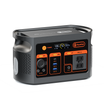
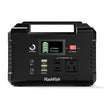
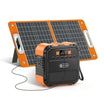
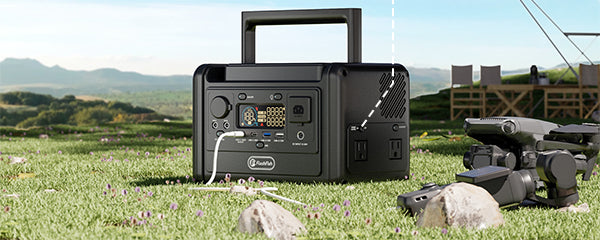
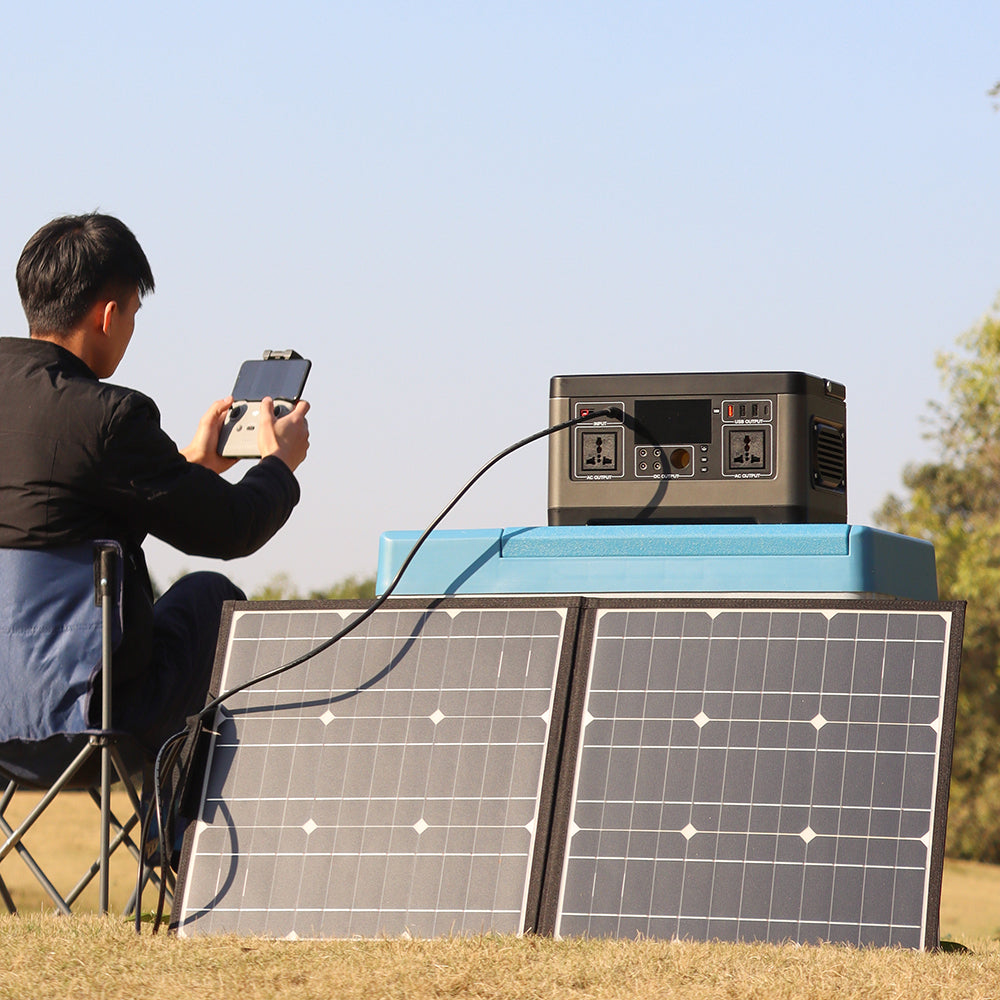
The available FlashFish A101 record lists two USB-A QC 3.0 outputs up to 18W each and two USB-C PD outputs up to 18W each. The E103 record lists two USB-A QC outputs up to 18W each and one USB-C PD output up to 60W.
The records establish those protocol labels and maxima, but do not supply a complete source-profile intersection for your device. E103's generic QC label should not be rewritten as a specific QC generation. Neither entry establishes PPS support for this comparison. The E103 manual source is a 230V regional record; its AC information must not be treated as proof of the exact U.S. configuration.
A101 is a candidate when its documented USB paths match your equipment. E103 is another candidate when its documented path meets your requirements. The larger E103 USB-C maximum does not guarantee a faster charge for an unspecified phone or tablet. Individual maxima also do not establish a combined multiport budget.
Frequently asked questions
Is USB-C always the better charging choice?
Connector shape does not answer the device-specific question. Choose an established charging path with the right source and cable evidence.
Does seeing a charging icon prove the intended protocol is active?
The icon alone does not identify the negotiated protocol or profile. Use the device's documented status information or an appropriate supported measurement method when that distinction matters.
Can I estimate charge time from the port's maximum watts?
No reliable charge-time estimate follows from that maximum alone. The device's actual charging behavior and starting conditions are missing.
Choose the path before choosing the station
Complete one matrix row for your exact device and cable. If a source profile is missing, obtain that specification before treating A101 or E103 as a confirmed match. Once the path is established, compare the remaining port and energy needs to the exact U.S. model documentation.
If the connector choice is still unclear, start with the AC, USB-C, USB-A and DC port guide. For the separate programmable-charging question, read the PD and PPS verification guide; PD alone does not establish PPS.
Next step: Compare FlashFish A101 specifications with your requirements.

Commenta
Questo sito è protetto da hCaptcha e applica le Norme sulla privacy e i Termini di servizio di hCaptcha.