

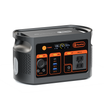
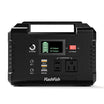

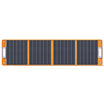
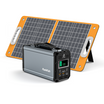
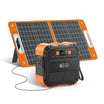
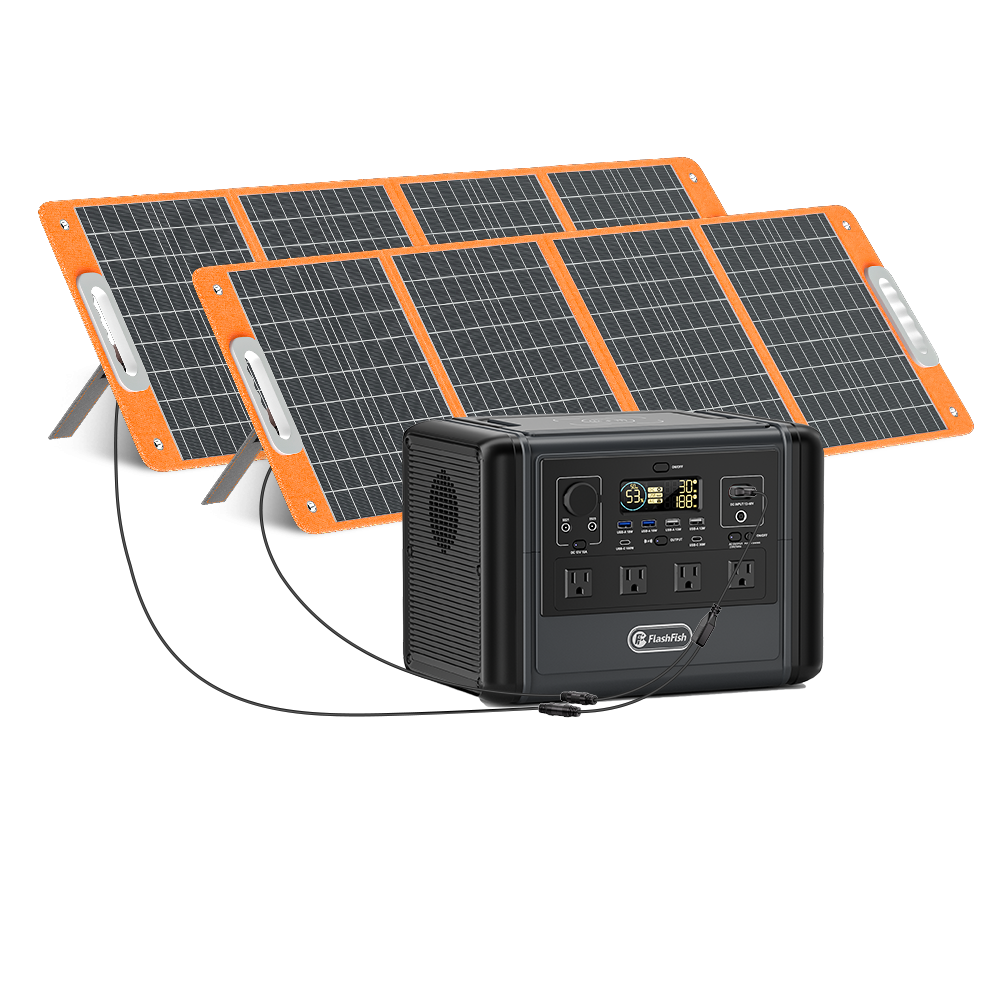
Short answer: A 60W portable solar panel is usually the lighter, more compact choice for small power stations and simple top-ups, while a 100W panel gives more charging headroom when the power station can accept the extra input. Real output still depends on sunlight, angle, shade, weather, and the station input limit. For FlashFish shoppers, the TSP60 fits compact starter kits, while the TSP100 is the better planning match for larger small-station kits.
The easiest mistake is choosing a panel by wattage alone. Panel wattage matters, but the power station decides how much input it can actually use. A larger panel cannot force a station to charge above its solar or DC input limit, and a smaller panel can be the more practical pick when packability matters more than speed.
60W vs 100W at a glance
| Decision point | 60W panel | 100W panel |
|---|---|---|
| Best fit | Compact kits, small batteries, light daytime top-ups | Larger portable stations, shorter sun windows, more charging headroom |
| Portability | Usually easier to carry and pack | Still portable, but larger and heavier |
| Input-limit fit | Makes sense when the station accepts around 40W to 60W solar input | Makes sense when the station can accept near 100W or more |
| Field conditions | More sensitive to long charging needs because there is less panel headroom | More headroom, but still limited by shade, clouds, angle, and temperature |
FlashFish panel facts
| Panel | Rated output | DC output | Weight | Useful notes |
|---|---|---|---|---|
| FlashFish TSP60 | 60W | 18V, 3.34A DC output | 1.9kg | Foldable monocrystalline panel with USB-C PD and USB-A QC3.0 outputs |
| FlashFish TSP100 | 100W | 18V, 5.6A DC output | 2.8kg | Foldable monocrystalline panel with USB-C PD and USB-A QC3.0 outputs |
Both panels are designed to convert sunlight into electricity; they do not store power by themselves. The product documentation also notes that conversion depends on direct sunlight angle, temperature, weather, and charging time, so treat the rated wattage as a planning reference rather than a guaranteed outdoor result.
Match the panel to the station input limit
| FlashFish station | Verified capacity | Verified solar/DC input limit | Panel planning note |
|---|---|---|---|
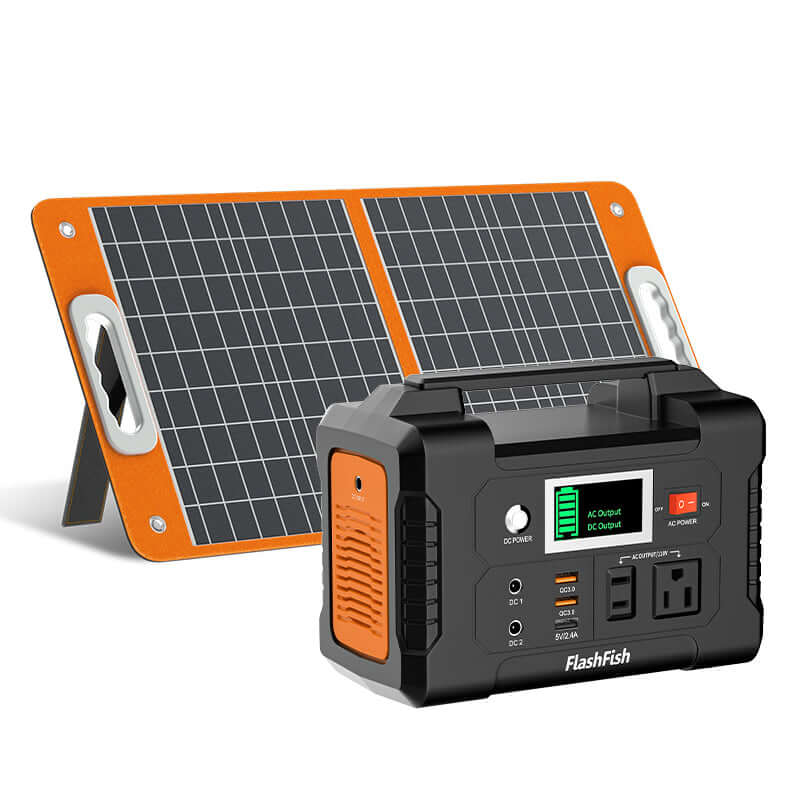
| E200 | 151Wh | 40W max solar/DC input | A compact panel makes the most sense; a larger panel should still be planned around the 40W input limit. |
| T200 | 153.6Wh | 60W max solar input | A 60W panel is a direct fit for the stated solar input class. |
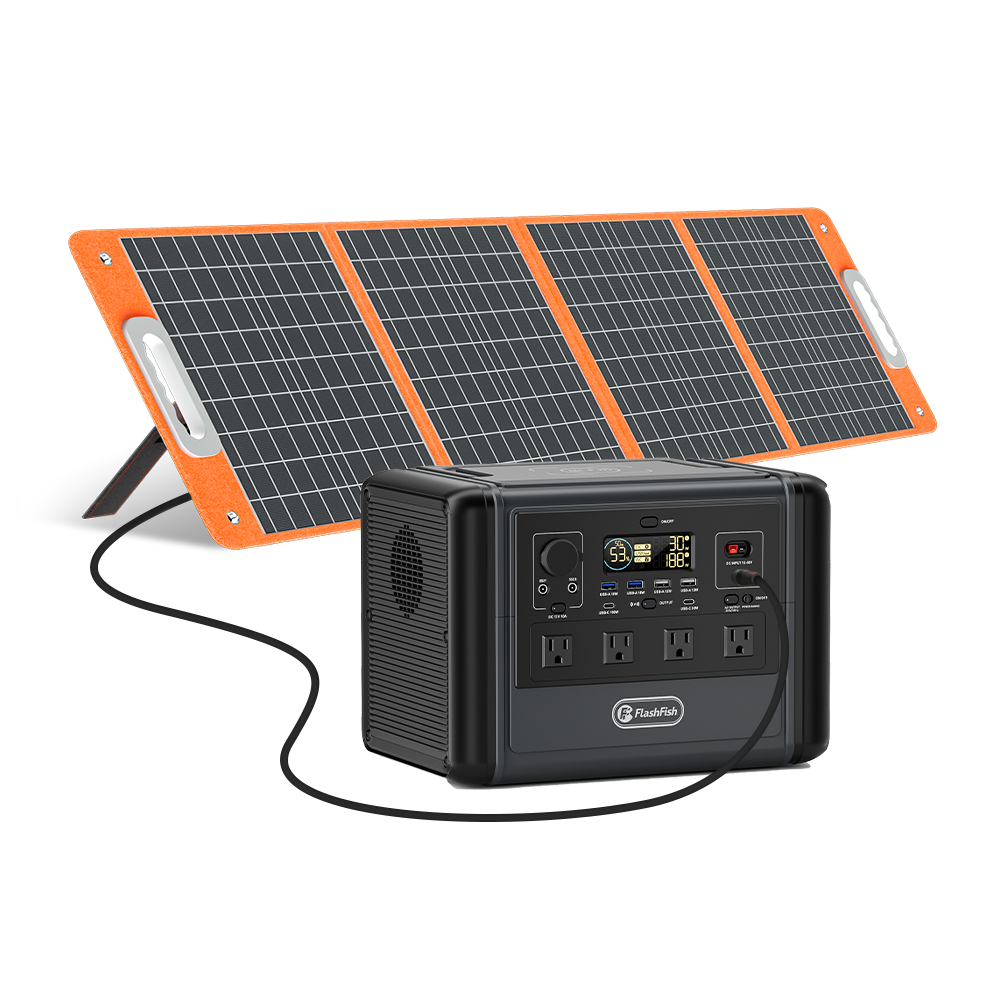
| T300PRO | 230Wh | 120W max solar input | A 100W panel gives useful headroom without exceeding the station's listed input class. |
| T1200S | 768Wh | 400W max solar input | A 100W panel is a starter solar option; more panel capacity may be considered only with compatible setup and safe connection planning. |
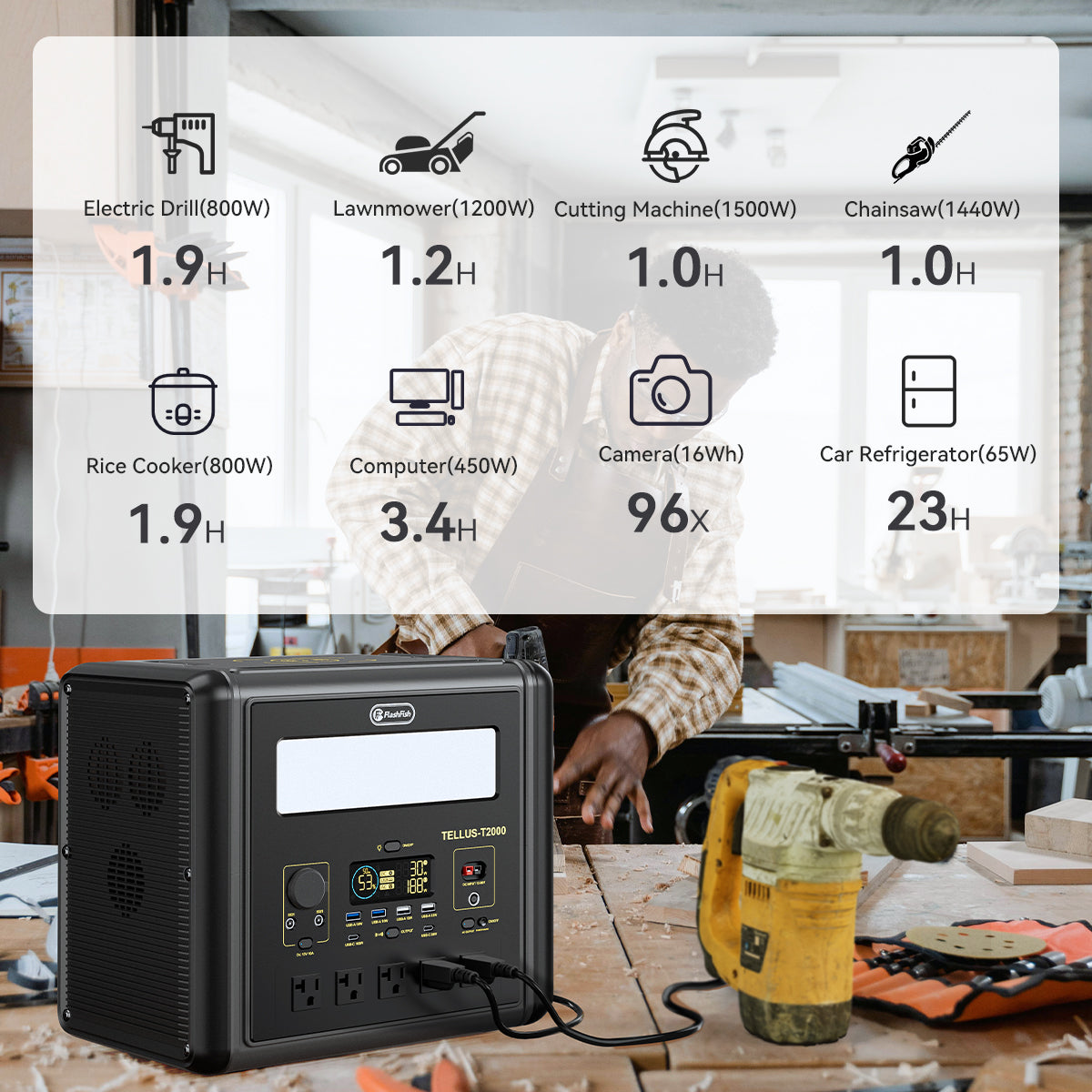
| T2000 | 1536Wh | 600W max solar input | A 100W panel can support top-ups, but the station has much more input headroom than one 100W panel can fill. |
When a 60W panel fits best
Choose a 60W panel when the main goal is a small, simple, packable solar setup. This is the more natural choice for compact stations, light phone or lighting use, short camping trips, and users who do not want to carry a larger panel. It is also the safer way to think about stations with lower input limits, where extra panel wattage would not translate into equal extra charging power.
The FlashFish TSP60 is the practical fit when the buyer wants a starter solar accessory for small power-station use. It is also easier to explain in a beginner kit: battery first, then a modest panel for sunny daytime recovery.
When a 100W panel is worth choosing
Choose a 100W panel when the power station can accept more input and the user expects shorter charging windows, larger battery capacity, or less predictable sunlight. The FlashFish TSP100 is a better match for T300PRO, T1200S, and T2000 planning because those stations have higher solar input limits than the smallest models.
A 100W panel is not a magic fix for shade or clouds. It simply gives more panel capacity to work with when the sun, setup angle, connector, and station input limit all support it.
Connector and input-limit checklist
- Check the station's input voltage, current, connector, and maximum solar/DC input before connecting a panel.
- Do not assume a higher-watt panel will charge a low-input station faster than the station allows.
- Place the panel in direct outdoor sun and adjust angle during the day when practical.
- Avoid planning around window glass, deep shade, or blocked sunlight.
- Use product-page and manual connector details as the final authority before purchase.
Compare current FlashFish portable solar panels
Use these current FlashFish pages and guides to continue your comparison:
- View the current FlashFish TSP60 product page
- View the current FlashFish TSP100 product page
- Compare TSP60 and TSP100 direct USB charging
FAQ
Is a 60W solar panel enough for a portable power station?
It can be enough for compact stations, light top-ups, and users who value portability. It is not the right choice if the user expects fast recovery for a larger battery in limited sun.
When is a 100W solar panel worth choosing?
A 100W panel is worth considering when the station can accept the input and the user wants more solar headroom for camping, yard charging, or outage top-ups.
Can I use a 100W panel with a station that has a lower input limit?
Only if the voltage, connector, and manual guidance are compatible, and the station will still be limited by its maximum input rating. Do not expect the station to accept more power than its listed limit.
What matters more, panel wattage or power station battery size?
Both matter. Battery size tells you how much energy the station can store, while panel wattage and input limits shape how quickly solar can help recover that energy in real sun.
Should I buy a station-plus-panel kit or separate pieces?
A kit is simpler when the product pairing already matches the intended station and panel. Separate pieces can work when the user checks connector type, input limits, and use case carefully.

Commenta
Questo sito è protetto da hCaptcha e applica le Norme sulla privacy e i Termini di servizio di hCaptcha.