


A meaningful portable-power-station discount needs a current eligible price and a documented reference for the same exact variant, market, currency, and package. A crossed-out amount alone does not establish a previous selling price. Calculate a reduction only when the reference basis is known, and label missing price history unknown. Then compare the amount you would actually pay with the specifications your setup needs.
A large percentage can be persuasive before you notice that one amount describes a station and the other describes a station-plus-panel package. The useful decision is whether today's eligible offer is worth its cost to you. Establishing a historical saving is a separate evidence question.
Identify the item before comparing amounts
Record the exact model and selected variant, destination market, currency, included equipment, and seller. Keep standalone stations separate from solar kits and other combinations. Similar product-page titles or a shared page do not make different variants interchangeable.
Next, write down what the reference amount claims to be: a suggested retail price, a previously observed offer, a receipt from an earlier purchase, or an unexplained crossed-out figure. Those are different reference bases. An observation can document the advertised amount at a particular time; it does not prove how long that amount applied or that purchases occurred at it.
A bounded U.S. catalog check
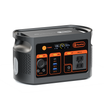
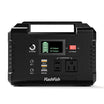
A read-only check of the FlashFish U.S. Shopify catalog captured on October 8, 2026, at 04:28 China Standard Time, corresponding to October 7 at 20:28 UTC, returned USD 99.99 for the standalone E200 variant and USD 119.99 for the standalone T200 variant. These are captured catalog amounts, not guaranteed checkout totals or verified sale discounts.
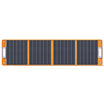
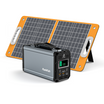
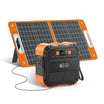
The same capture listed separate panel-package variants under those products. Their prices must not be substituted for the standalone variants' reference amounts. The retrieved snapshot did not supply compare-at values, historical selling-price evidence, or coupon conditions. It therefore cannot substantiate a percentage-off claim for either standalone model.
Prices can change after capture. Confirm the selected variant, eligible code if any, and order details before acting. Do not infer inventory, shipping timing, or purchase eligibility from the recorded price.
Build a reference-price evidence sheet
| Exact variant | Current captured amount | Reference basis | Dated evidence | Code conditions | Verified or unknown saving |
|---|---|---|---|---|---|
| Standalone E200 | USD 99.99 | Not supplied in snapshot | U.S. catalog capture, October 7 UTC / October 8 China time | Not supplied | Historical reduction unknown |
| Standalone T200 | USD 119.99 | Not supplied in snapshot | Same capture; distinct exact variant | Not supplied | Historical reduction unknown |
| Your selected offer | Record current eligible amount | State exactly what the reference represents | Save source, date, currency, and package | Check eligibility and application | Calculate only if the comparison is supported |
Calculate the reduction without overstating it
For a positive, documented comparable reference, use: reduction percentage = (reference amount minus current eligible item price) / reference amount × 100. Also record the dollar difference. Label the result according to its evidence, such as “lower than my dated receipt” or “below the documented suggested price.” Neither label establishes a general price history.
Keep the basis consistent. If the reference excludes shipping and tax, compare item prices first and show checkout totals separately. If a code applies only after a threshold or to a particular variant, do not assume it applies to your basket. Missing or ineligible conditions leave that candidate discounted amount unverified.
Three examples of discount evidence
Hypothetical example 1: a documented like-for-like receipt. A reader's receipt shows USD 160 for the same standalone variant under comparable item-price conditions. A newly verified eligible item price is USD 120. The difference is USD 40, and 40 / 160 × 100 = 25%. The supported conclusion is “25% below that receipt's item price,” not “the lowest price ever.” These amounts are illustrative and are not FlashFish offers.
Hypothetical example 2: an unexplained crossed-out price. A display shows USD 200 crossed out next to USD 120. The arithmetic difference is 40%, but the historical reference is undocumented. Record the current amount and “reference basis unknown.” Do not describe the arithmetic as a verified 40% saving against a previous selling price.
Hypothetical example 3: the package changed. A dated USD 220 observation includes a panel, while today's USD 150 offer is station-only. They are not the same package, so the apparent USD 70 difference does not establish a discount. Find a matching reference or compare the packages as different purchase options.
Product fit still comes before the sale badge
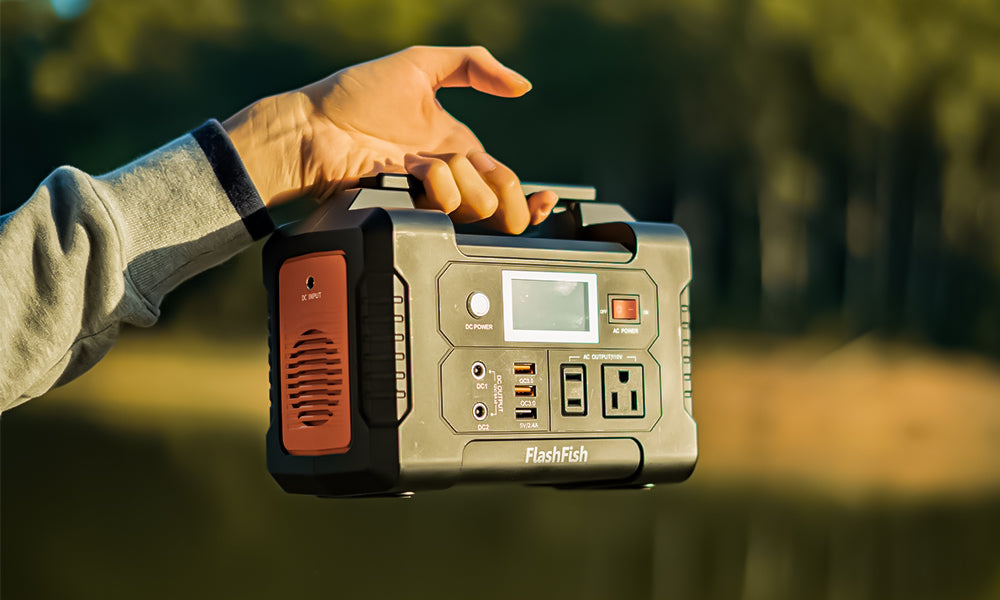
FlashFish E200 is specified at 151 Wh with 200 W rated modified-sine AC output and three USB-A outputs: two up to 18 W and one up to 12 W. FlashFish T200 (TELLUS-T200) is specified at 153.6 Wh with 200 W continuous pure-sine AC output and USB-C outputs up to 60 W and 18 W.
Those differences give you concrete requirements to check against your equipment. Capacity is stored-energy specification, not a delivered-energy or runtime promise. Port ratings do not establish device compatibility or simultaneous totals. The exact U.S. variant and original instructions must resolve electrical suitability before you treat either model as a fit.
A lower item price can be useful if the documented outputs meet your needs. Its limitation is that it does not account for a missing port, a different package, or accessories your setup requires. A larger claimed percentage also cannot repair a product mismatch.
Frequently asked questions
Does a compare-at price prove the product used to sell at that price?
It does not by itself establish historical transactions or the duration of an earlier offer. Identify the stated reference basis and seek dated evidence before making that stronger claim.
Can I judge an offer when price history is missing?
Yes. You can compare the verified eligible amount with your budget and required specifications while leaving the historical discount unknown.
Does this worksheet determine whether an advertised discount is legally compliant?
No. It is a purchasing evidence worksheet and makes no legal-compliance finding. Missing reference evidence alone is not a legal verdict.
Decide what to verify next
Save the exact variant and package, confirm your eligible item price and final total, and ask for the reference basis if the claimed saving matters to your decision. Compare E200 and T200 against your actual output requirements. Proceed from a documented fit and an acceptable current cost; keep unsupported historical savings labeled unknown.
Next step: Check the current FlashFish E200 product details and price.


Commenta
Questo sito è protetto da hCaptcha e applica le Norme sulla privacy e i Termini di servizio di hCaptcha.