


An existing credit balance and a discount belong in different columns. In a quote where the seller treats an eligible balance as a payment source, applying it reduces the new cash due against that order. A confirmed discount reduces the order price. Compare the complete order total before payment sources, the eligible credit actually applied, and the additional cash required.
This is a quote-reconciliation worksheet for otherwise equivalent portable power kits. It does not assert that FlashFish currently offers store credit, that any balance is redeemable, or that a promotion can be combined with another benefit. No actual checkout quote or reader account terms were supplied. All dollar amounts below are fictional.
Confirm what the balance actually does
Start with the seller's description and the dated terms for the exact balance. A price reduction, a payment balance, and an account-specific offer may have different eligibility conditions. Do not assign one treatment to everything called a credit. Copy the actual checkout treatment into the worksheet, and leave it unknown if the terms and checkout do not establish it.
Useful evidence includes eligible items, any restriction on combining benefits, applicable balance limits, and the balance that remains after the transaction. These are questions to resolve from the actual offer, not descriptions of a current FlashFish program. Avoid recording account numbers, redemption codes, or other private identifiers in a shared comparison.
Compare the same complete kit
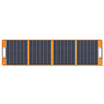
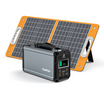
A lower amount due today can conceal a different purchase. Match the station model and regional variant, included items, required accessories, quantities, destination, and the quote's treatment of shipping and tax. Record the seller's confirmed figures rather than calculating tax eligibility from assumptions.
If one quote omits a required adapter, mark the kit incomplete. If one has an unresolved delivery charge, mark the total incomplete. The worksheet can still reveal those gaps, but it cannot rank incomplete and complete totals as if they covered the same purchase.
| Column | What belongs here | Evidence needed |
|---|---|---|
| Equivalent kit | Exact variant, quantity, and required included or added items | Matching itemized quotes |
| Actual discount | Confirmed reduction shown by the quote | Applicable offer terms and checkout treatment |
| Order total before payment sources | Confirmed post-discount total with all quoted charges | Dated complete checkout quote |
| Eligible credit applied | Amount accepted against that order as payment | Account eligibility and actual application |
| New cash due | Confirmed order total minus eligible applied balance | Reconciliation to checkout's remaining amount |
| Unused credit | Remaining balance, retained separately | Documented balance and redemption terms |
| Term gaps | Unresolved restrictions, expiration, or missing charges | Specific confirmation still required |
Reconcile the arithmetic without relabeling the purchase
For a confirmed payment balance, new cash due equals the confirmed post-discount order total minus the eligible balance applied. Applied credit cannot exceed the amount eligible for that payment source. Do not subtract the same benefit as both a discount and a payment.
The remaining balance deserves its own row because spending it on this order changes what is left for another eligible purchase. That does not establish a resale value, a cash redemption right, or a particular tax treatment. It simply keeps the current transaction visible. A smaller cash payment today is a useful budgeting fact; keep it distinct from a smaller order total.
Three hypothetical quote comparisons
Hypothetical example 1: equal totals, different payment sources
Two fictional quotes cover the same complete kit at a $240 order total. Quote A accepts $60 of an existing eligible payment balance, leaving $180 in new cash due. Quote B requires $240 in cash. Both order totals remain $240; Quote A uses $60 of the reader's existing balance.
Hypothetical example 2: the discount and cash rankings differ
A fictional $260 complete order receives a confirmed $20 discount, leaving a $240 total. Applying $50 of eligible credit leaves $190 in new cash due. Another equivalent quote totals $230 and accepts no credit. The second has the lower order total; the first needs less new cash. Preserve both results instead of calling one universally cheaper.
Hypothetical example 3: the balance exceeds the eligible order
Assume a fictional $180 order is entirely eligible for payment from a $220 balance, and the documented terms retain unused credit. Applying $180 leaves no new cash due and $40 unused. This arithmetic describes the assumptions; it does not turn the purchase into a zero-cost order or establish the value of the remaining balance.
Keep product fit ahead of payment convenience
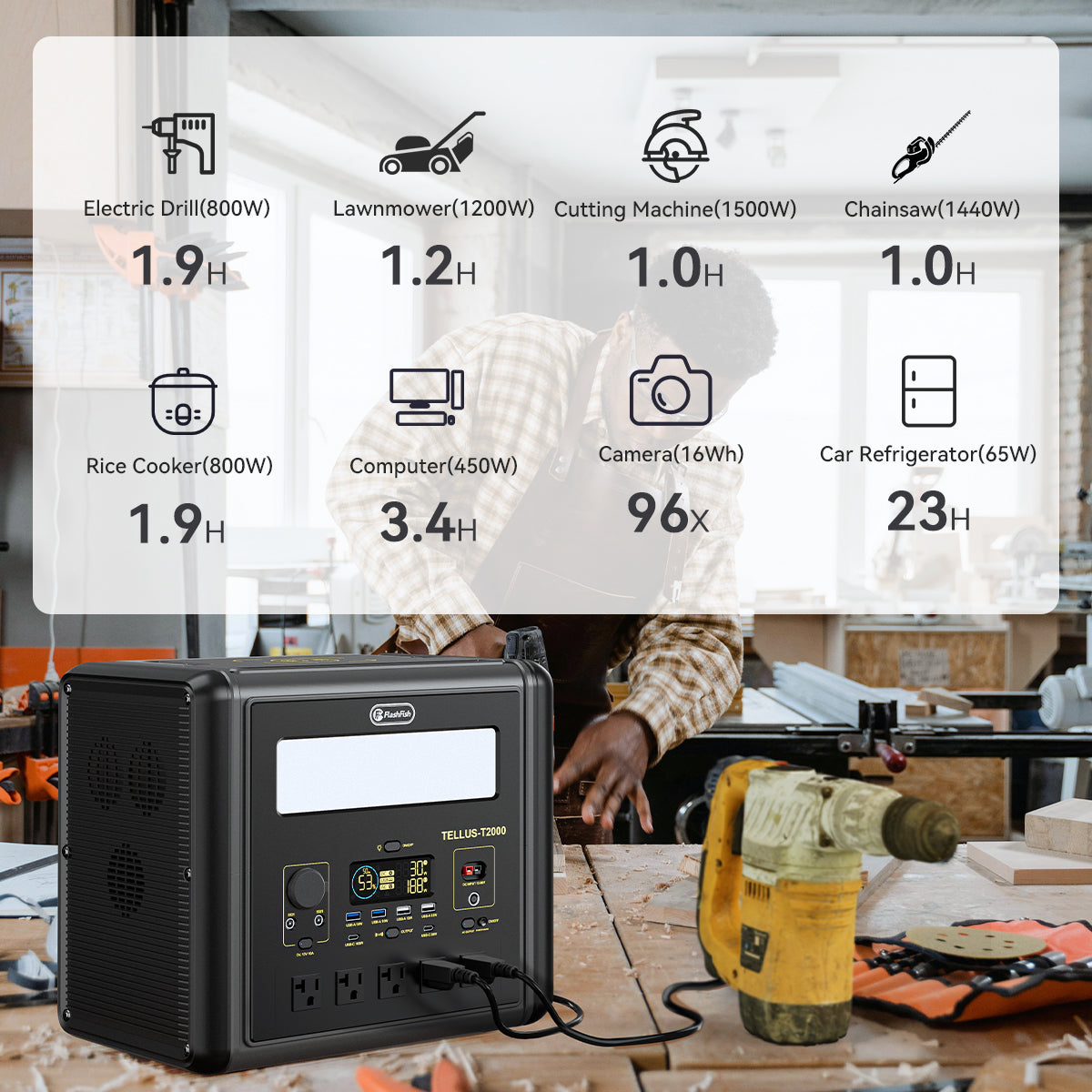
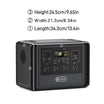
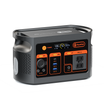
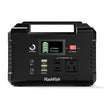
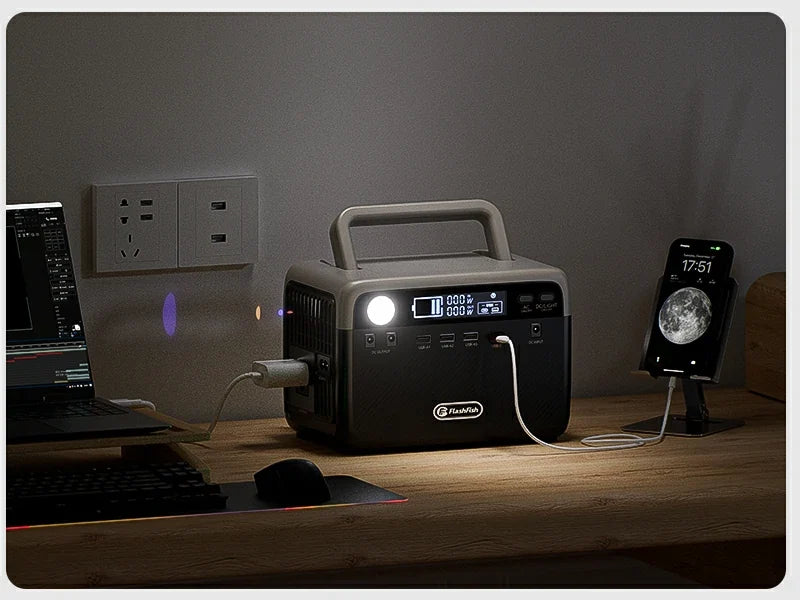
FlashFish A101 has a nominal capacity of 97.68Wh; E200 has a nominal capacity of 151Wh. Swapping one model for the other does not preserve an equivalent-kit comparison. Capacity alone also does not establish which model meets a particular device's requirements.
A101 socket types and E200 AC configurations vary by region. Confirm the actual U.S. variant and the task's required ports, adapter, and accessories before pricing the kit. No device pairing, charging time, current price, availability, or offer eligibility is established by this worksheet.
Frequently asked questions
Should I subtract credit from the price?
Record how the actual seller treats it. When it is an accepted payment balance, keep the order total and credit payment separate. An undocumented label is insufficient to choose the treatment.
Can I combine a discount with a balance?
Only the applicable terms and actual checkout can establish that for your order. This article confirms no current combination.
Which quote should I keep?
Retain complete, equivalent, eligibility-confirmed quotes and compare order total and new cash due separately. Keep an unresolved quote marked incomplete until the missing terms or charges are documented.
Build one complete comparison today
Write the exact kit specification, request a dated itemized quote, and reconcile its total, applied balance, and new cash due. Then check the exact FlashFish model details against that kit specification before making a purchase decision.
For the separate station check, use FlashFish user guides to locate instructions matching the model and electrical version on your unit.
Next step: Check the current FlashFish A101 product details and price.



Commenta
Questo sito è protetto da hCaptcha e applica le Norme sulla privacy e i Termini di servizio di hCaptcha.