



Short answer: To choose optional camping tasks within a measured energy allowance, list each complete task's energy cost, use the upper end of its measured range, and compare the totals for different task combinations. Pick the feasible combination that best matches your priorities. Keep essential requirements outside this competition, and name the optional task you are leaving out.
This approach is for campers who already have an allowance for discretionary electronics but cannot do everything on their list. It answers a narrower question than choosing a battery size: with the equipment and remaining allowance you have, which optional activities deserve a place?
Start with an allowance you can actually defend
Write down your optional allowance in watt-hours (Wh), where it was established, and what it includes. A manufacturer's nominal battery capacity is not a measured amount available to your particular devices. A battery percentage alone also does not establish how many Wh remain usable through a specific output.
Use an allowance established for the same station, output path, starting condition, and task conditions you intend to use. If you do not have that evidence, label your plan provisional. Do not turn an assumed allowance into a promise that a task will finish.
Essential requirements must already be covered separately. A task that you cannot afford to omit is a constraint, not a low-scoring optional item. This worksheet is for discretionary activities such as reviewing photos or watching a saved video; it is not a plan for medical equipment or other critical loads.
Measure complete tasks, not just devices
“Charge the tablet” is too vague to compare with “back up today's photos.” Define the tablet's starting and ending charge levels, or the photo session's duration and completion point. Keep the actual adapter, cable, brightness, and relevant settings with the measurement record.
Measure energy at a consistent boundary. If one measurement includes an adapter's consumption and another measures energy entering a device battery, the two figures do not describe the same cost. A task range should reflect the conditions you observed; it is not automatically a statistical confidence interval.
For a conservative worksheet, use the largest observed task cost in the relevant range. If costs may rise outside those observations, retain additional unallocated allowance based on your own evidence. Do not claim that a selected subset is robust to conditions you have never measured.
Build a short task table
The following task measurements and preference scores are hypothetical. They are not FlashFish tests, typical device consumption, or product runtime estimates. Each task is indivisible for this exercise: completing half does not deliver the chosen outcome.
| Optional task | Illustrative Wh range | Planning cost | Completion requirement | Reader preference points |
|---|---|---|---|---|
| A: Back up one day's photos | 12–16 Wh | 16 Wh | Finish the defined backup | 8 |
| B: Watch one saved video | 18–24 Wh | 24 Wh | Finish the selected video | 7 |
| C: Review a saved trail journal | 6–8 Wh | 8 Wh | Finish the defined review | 4 |
Preference points express one camper's choices. They are not a product score or a universal ranking of activities. Adding them assumes the benefits are reasonably independent. If two tasks deliver overlapping value, rank the complete combinations instead of adding their points.
Compare every feasible combination
With three optional tasks, there are only eight subsets, including doing nothing. Listing all of them prevents an appealing individual task from hiding a better combination. The table uses the upper-bound costs above.
| Subset | Total planning cost | Preference points |
|---|---|---|
| None | 0 Wh | 0 |
| A | 16 Wh | 8 |
| B | 24 Wh | 7 |
| C | 8 Wh | 4 |
| A + B | 40 Wh | 15 |
| A + C | 24 Wh | 12 |
| B + C | 32 Wh | 11 |
| A + B + C | 48 Wh | 19 |
Reject any subset that exceeds the stated allowance. Among the remaining subsets, choose by your declared preference rule. When two combinations have equal value, a reasonable tie-breaker is lower energy cost, but decide that rule before seeing the result.
Three hypothetical allowance decisions
Example 1: An 18 Wh allowance
A and C fit individually; together they require 24 Wh. Choose A for 8 preference points, leaving 2 Wh unallocated. Omit B and C. Splitting that remainder among unfinished tasks would not satisfy their completion requirements.
Example 2: A 26 Wh allowance
A + C costs 24 Wh and earns 12 points. B alone also costs 24 Wh but earns 7. Choose A + C, omit B, and leave 2 Wh unallocated. Choosing only the highest-value individual activity would miss this feasible pair.
Example 3: A 42 Wh allowance
A + B costs 40 Wh and earns 15 points, more than either other feasible pair. Choose A + B and omit C. All three require 48 Wh, so “only one small extra task” still exceeds the allowance by 6 Wh.
Check product fit separately from task priority
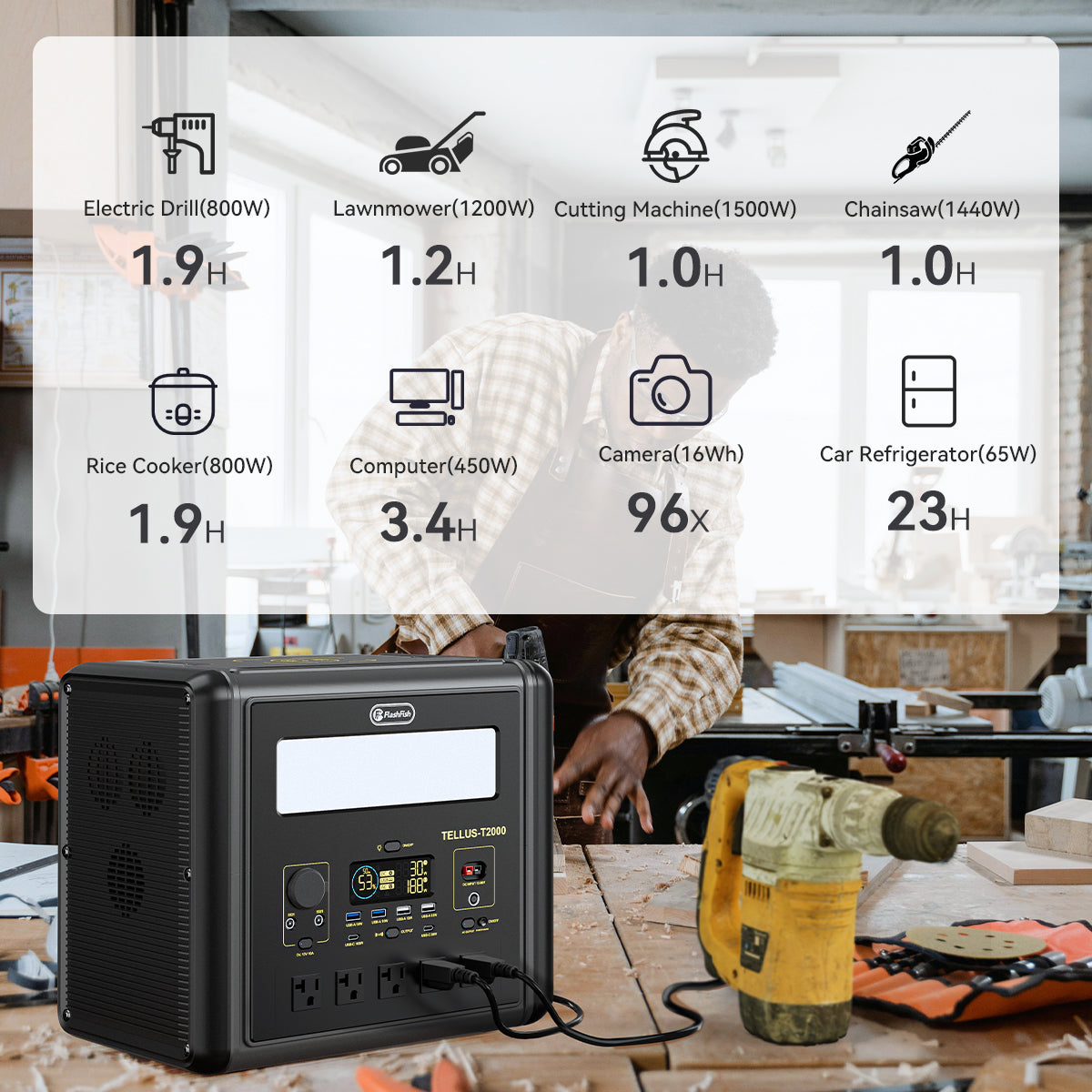
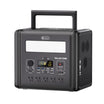
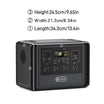
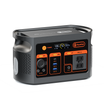
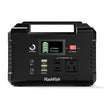
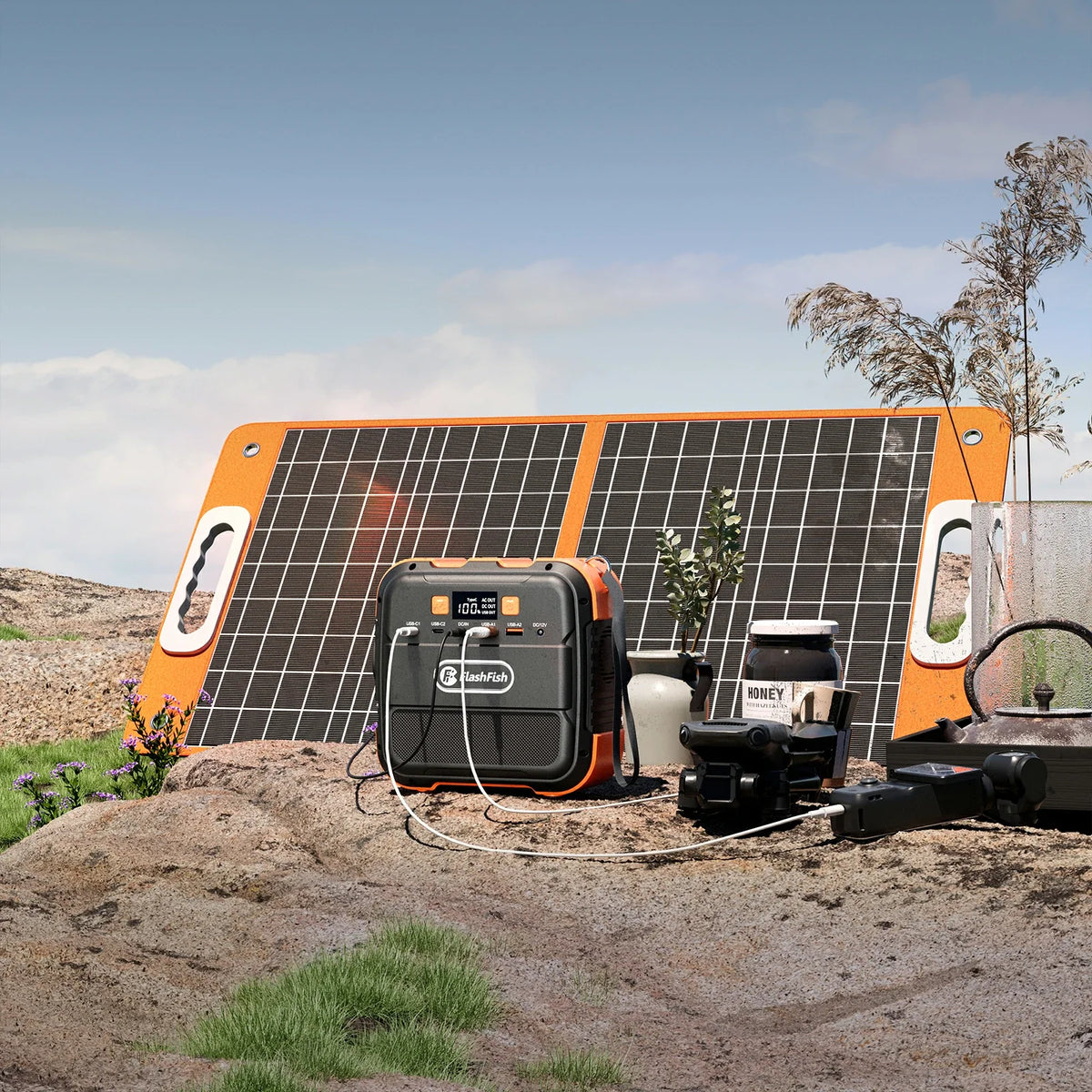
FlashFish E103 is specified at 179.2 Wh nominal capacity and T200 (TELLUS-T200) at 153.6 Wh. E103 has a documented USB-C output up to 60 W; T200 has USB-C outputs up to 60 W and 18 W. These are capacity and port-rating facts, not the allowances used above.
A subset that fits a Wh budget still needs compatible device requirements, cables, protocols, and output limits. This selection method does not establish combined-output limits. The E103 manual record is a 230 V version, so do not transfer its AC configuration to a U.S. unit without exact variant documentation.
Choose a candidate station only after those requirements are resolved. If your current equipment already supports the selected tasks and has a demonstrated allowance, an optional task you dislike omitting is not by itself evidence that you need a different station.
Frequently asked questions
Should I choose the task with the best points per Wh?
That ratio can help you scan a long list, but it does not guarantee the best subset when tasks are indivisible. Compare feasible combinations and their actual outcomes. Dependencies and overlapping benefits can also make a simple points total misleading.
Can I count expected solar charging in the allowance?
Do not count an unmeasured future contribution as available energy. If charging actually changes your demonstrated allowance, update the worksheet using evidence for the exact setup. A panel's rated power does not establish the energy it will deliver during your camping session.
What if the preferred task becomes essential?
Remove it from the optional competition and establish how its requirement will be covered before allocating the remainder. Do not merely increase its preference score. Changing an activity from optional to mandatory changes the constraints of the whole plan.
Finish with a decision you can use
Record the allowance, selected subset, omitted tasks, total upper-bound cost, and unallocated remainder on one sheet. Keep the measurements and preference rule beside it. Then compare the exact U.S. model's documented ports and device requirements with that sheet before making a purchase decision.
Next step: Compare FlashFish E103 specifications with your equipment list.


Commenta
Questo sito è protetto da hCaptcha e applica le Norme sulla privacy e i Termini di servizio di hCaptcha.