


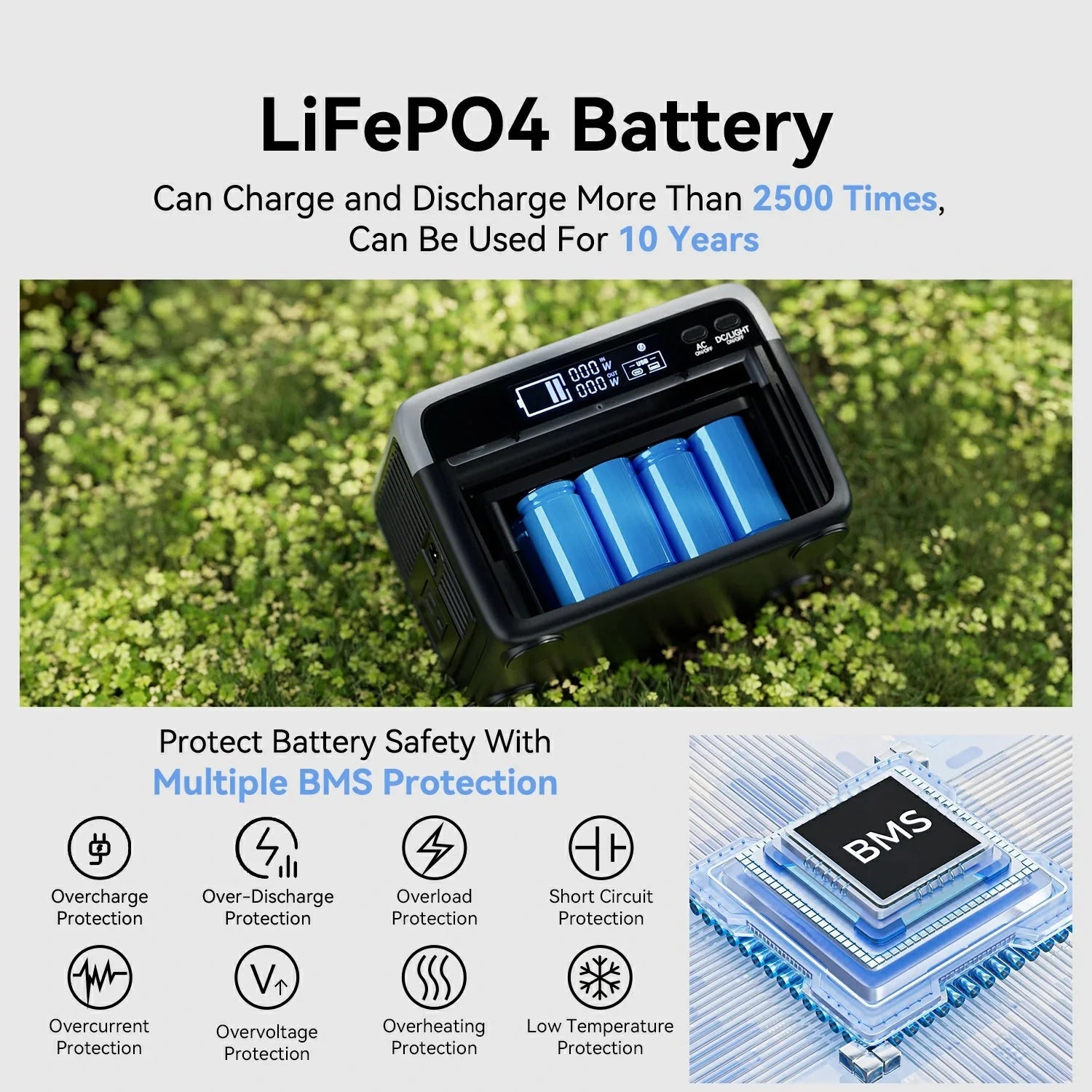
Quick answer: LiFePO4, also called LFP, is one member of the broader lithium-ion battery family. Chemistry affects cycle records, weight, energy density, temperature behavior, and product design, but chemistry alone does not determine whether a complete power station fits a use case.
Lithium-ion is a family, not one chemistry
The Department of Energy explains that rechargeable batteries store energy chemically and move electrons through an external circuit while ions move through an electrolyte. Read the DOE battery overview for the basic mechanism.
Different lithium-ion products use different cathode materials and pack designs. A label that says lithium-ion does not automatically identify LFP, cycle life, output, or safety performance. Those values must come from the exact model documentation.
What LFP changes in a product comparison
| Decision factor | What to verify | Why it matters |
|---|---|---|
| Chemistry | The exact model specification | Do not apply one model's chemistry to the whole brand. |
| Cycle record | Cycle count, test condition, and remaining capacity | A cycle number is not the same as a calendar-life promise. |
| Capacity | Watt-hours | Capacity supports energy planning but not exact runtime. |
| Output | Continuous watts, peak watts, and waveform | Chemistry does not replace load compatibility checks. |
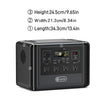
| Weight | Documented net weight | Carry needs can matter as much as battery chemistry. |
FlashFish models use more than one chemistry
The local FlashFish product database documents different battery records across the range:
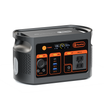
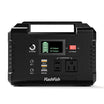
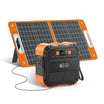
- FlashFish E200: 151Wh, 18650 lithium-ion cells, and a record of more than 800 cycles.
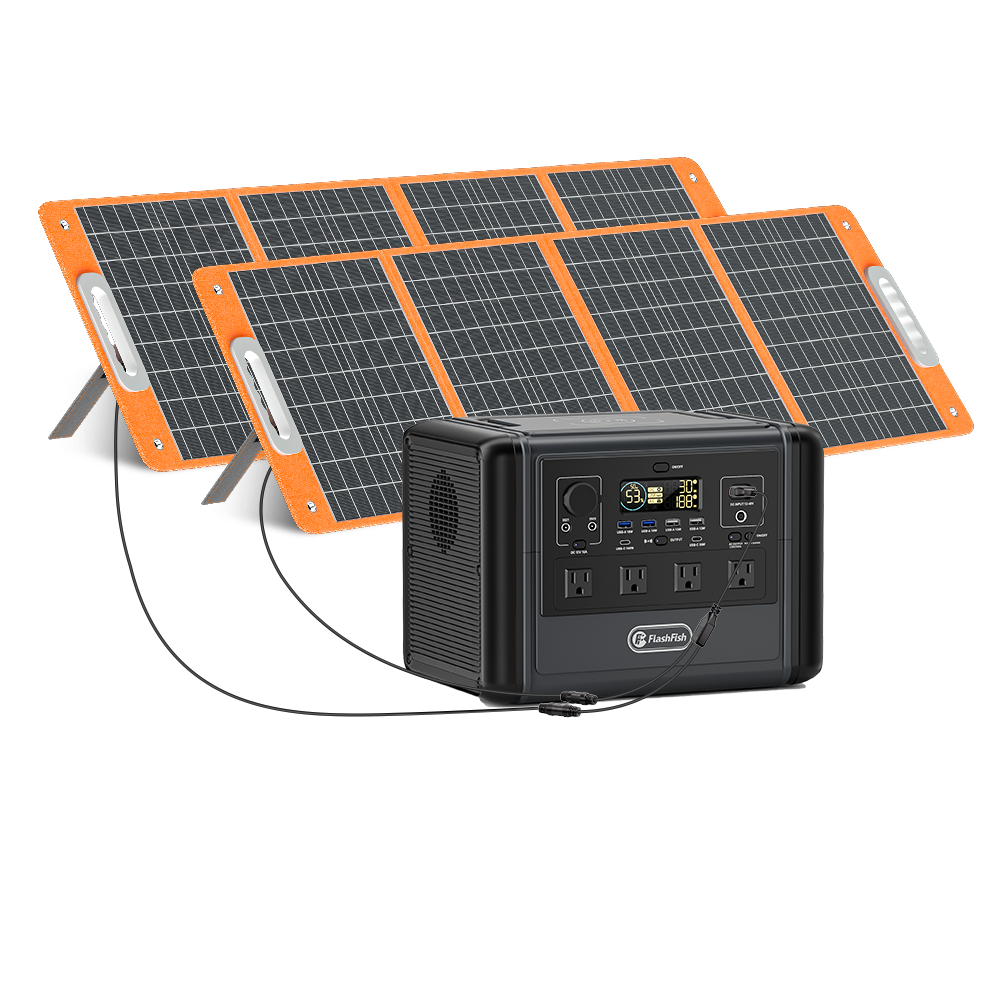
- FlashFish T300PRO: 230Wh LiFePO4 battery and more than 3,500 cycles with remaining capacity above 80%.
- FlashFish T1200S: 768Wh LiFePO4 battery and more than 3,500 cycles with remaining capacity above 80%.
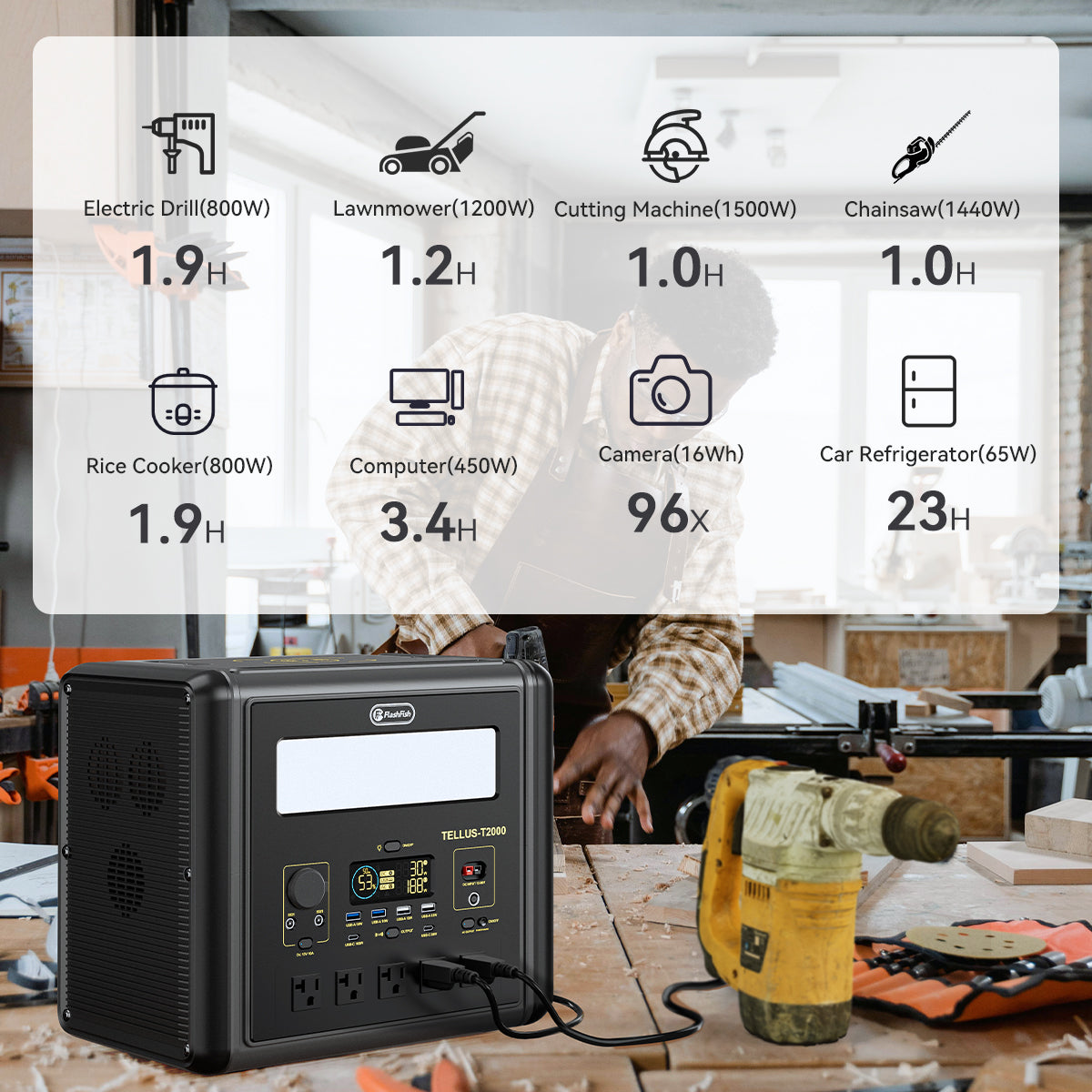
- FlashFish T2000: 1536Wh LiFePO4 battery and more than 3,500 cycles with remaining capacity above 80%.
These are manual-derived model records, not a statement that every FlashFish product uses LFP or that a model will last a fixed number of years.
Cycle life is not calendar life
A documented cycle record is measured under stated or implied test conditions. Storage temperature, depth of discharge, charge behavior, load, and time can all affect real battery condition. Compare the wording of the source record and avoid converting a cycle figure into a guaranteed decade of use.
Handle lithium batteries carefully at end of life
The U.S. Environmental Protection Agency says lithium-ion batteries should not go into household trash or municipal recycling bins. Use a dedicated collection or recycling location and follow local instructions. See the EPA lithium-ion battery FAQ.
Frequently asked questions
Is LiFePO4 the same as lithium-ion?
LiFePO4 is a lithium-ion chemistry. The broader lithium-ion category also includes other cell chemistries and designs.
Does every FlashFish power station use LiFePO4?
No. The product database documents LiFePO4 for selected models and 18650 lithium-ion cells for the E200. Check the exact model record.
Does a cycle rating guarantee years of use?
No. It is a model record tied to cycling and remaining capacity, not a fixed calendar-life guarantee.

Commenta
Questo sito è protetto da hCaptcha e applica le Norme sulla privacy e i Termini di servizio di hCaptcha.