



Portable Energy Revolution: How Dry Cells Changed Our Lives Forever
Portable energy became a household reality not through massive power lines, but through a small, sealed container that could fit in a coat pocket. For most of human history, the great frustration of electricity was its immobility — if you wanted power, you had to be tethered to a heavy, leaking vat of acid. The dry cell battery broke that chain forever.
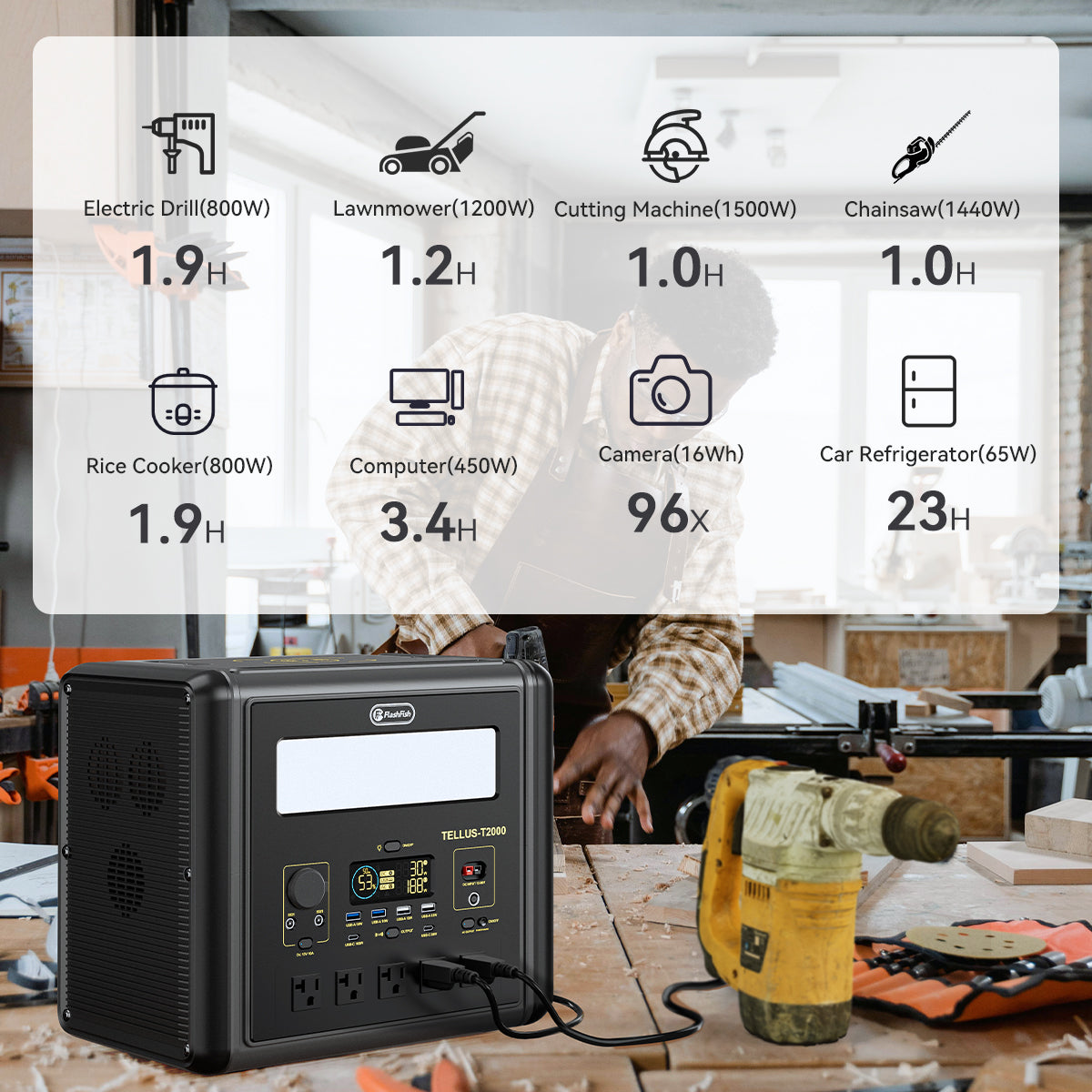
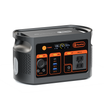
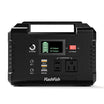
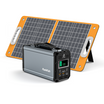
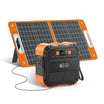
Today, we face a similar but far larger challenge: our high-tech lives demand more power than any pocket battery can provide. This is where FlashFish steps in — taking the founding principle of the dry cell and scaling it into a high-capacity portable power station capable of running your entire digital ecosystem, off-grid.
The Zinc-Carbon Breakthrough: No More Spills
Before the late 1880s, all practical batteries were "wet cells." They relied on liquid electrolytes — typically sulfuric acid — that would spill, corrode metal contacts, and emit toxic fumes if tilted even slightly. This made them useful only in fixed installations like telegraph offices and early telephone exchanges.
That changed in 1886, when German scientist Carl Gassner patented the first commercially successful dry cell. By replacing the liquid electrolyte with a moist paste of ammonium chloride mixed with plaster of Paris, he created a battery that worked in any orientation — upright, sideways, or upside down.
This was the birth of the zinc-carbon battery. It wasn't merely a scientific milestone; it was a liberation. Electricity could finally leave the laboratory and enter everyday life.
The Dawn of Consumer Electronics
The dry cell triggered a cascade of inventions that defined the 20th century. Two devices, in particular, permanently changed human behavior:
- The Flashlight (1899): The "Eveready" hand torch proved that ordinary people could carry light in their pocket. It turned darkness from a daily hazard into a minor inconvenience.
- The Portable Radio (1920s): For the first time, news and music weren't confined to the living room. Families could take entertainment to the park, the beach, or the backyard — marking the true beginning of consumer electronics.
These inventions fundamentally shifted our relationship with technology. We began to expect that our devices should follow us — not the other way around. That expectation has never stopped growing.
From Household Convenience to Professional Power Demand
As dry cells became mass-produced commodities, they powered everything from hearing aids to military field radios. But as our devices grew more complex — from simple bulbs to laptops, drones, and medical equipment — the humble zinc-carbon cell reached its limits.
The world needed something bigger, smarter, and rechargeable.
The "convenience" of the 1900s has evolved into the "necessity" of the 2020s. We no longer carry a single flashlight — we carry smartphones, laptops, cameras, and portable speakers, all demanding simultaneous power. FlashFish continues the legacy of portability by replacing thousands of disposable dry cells with a single, high-capacity LiFePO4 power station — ensuring the freedom gained in the 20th century is never lost in the 21st.
Frequently Asked Questions
Why was the dry cell considered a revolution?
Before the dry cell, batteries contained liquid acids that were dangerous, heavy, and position-sensitive. The dry cell's paste electrolyte allowed any-orientation use — the essential mechanical requirement for portable energy to become a reality.
Are modern batteries still "dry cells"?
Technically, most household alkaline and lithium batteries qualify as dry cells because they contain no free-flowing liquid. However, modern FlashFish portable power stations use advanced Lithium Iron Phosphate (LiFePO4) chemistry — far safer, more energy-dense, and longer-lasting than the original zinc-carbon design, with 3,000+ charge cycles.
What was the first mass-market product to use dry cell batteries?
The electric flashlight was the first widely adopted consumer product powered by dry cells. It demonstrated to the general public that batteries were safe, reliable, and genuinely useful in daily life — paving the way for every portable electronic device that followed.
Carry the Legacy Forward with FlashFish
Carl Gassner's dream was simple: energy that goes where you go. At FlashFish, we've turned that 19th-century vision into a professional-grade reality. Our portable power stations deliver high-wattage, clean output in a package you can carry with one hand — whether you're preparing for a power outage, heading off-grid, or powering a remote worksite.
The dry cell started a revolution. FlashFish is continuing it.
👉 Explore FlashFish Power Stations →
📚 More from the Battery History Series
- Ancient Battery History: Was the Baghdad Battery the First Power Source? — Explore the mysterious 2,000-year-old artifact that may have generated electricity long before Volta.
- Alessandro Volta and the Voltaic Pile: Origins of Batteries — How a single experiment in 1800 gave the world its first true battery.
- Industrial Revolution Battery: The Silent Engine of the Telegraph Age — How early wet cells powered the world's first global communication network.

Commenta
Questo sito è protetto da hCaptcha e applica le Norme sulla privacy e i Termini di servizio di hCaptcha.